The global magazine and marketplace for classic car enthusiasts, by enthusiasts.


Filter
Classic Rolland-Pilain, Hupmobile for sale - Rolland-Pilain, Hupmobile cars for sale
-

Rolland Pilain
I am selling a 1913 Rolland Pilain RP 10HP in very good condition. It has a standard registration document in my name, and the MOT will be carried out prior to the sale. -
1912 Hupmobile Model 32 Torpedo Touring | RM Sotheby's | The Hershey Auction
To Be OFFERED AT AUCTION WITHOUT RESERVE at RM Sothebys' The Hershey Auction event, 7 - 8 October 2026. Offered Without Reserve | $15,000 - $25,000 USD Rare Canadian-delivery example delivered through The Automobile & Supply Co. Ltd. of TorontoOwnership believed to span just four families A showcase of advanced engi.. -
Mid 1920s Hupmobile R series open tourer project car
Mid 1920s Hupmobile R series open tourer project car. Chassis N° R 179775, castingnumber on engine 52900. Very good condition older restored chassis. Also work done on both engine and rearaxle. Radiator shell is straight but needs to be renickeled. A number of smaller parts are in boxes and not shown. Suitable inexpensive project car fo..


Rolland-Pilain
France, 1906 – 1931
SA des Etablissements Rolland-Pilain, Tours
Unusual among French marques of its period, Rolland Pilain cars made their greatest impact after World War 1. Their first product was a 20hp 4-cylinder model Rolland Pilain cars with a monobloc engine, though smaller 2.2-litre shaft-driven Rolland Pilain cars were available in 1909 and a 3-speed 1½-litre Rolland Pilain 8/10CV in 1910, in which year the Rolland Pilain car company was also experimenting with ‘valveless’ engines and 4-wheel brakes. Though racing was in the doldrums, the Rolland Pilain car company went to the trouble of building a big chain-driven Rolland Pilain car for the 1911 Grand Prix de France, and a complex 1912 range started with a Rolland Pilain 9CV of 1.7-litres and went up to a chain-driven 4-cylinder 60 Rolland Pilain car of 130x270mm. The 6-cylinder Rolland Pilain 18CV had a ‘valveless’ engine, and even in 1913 chain drive was still optional on the biggest fours of 20CV and 24CV Rolland Pilain cars. Only 1.9-litre and 4-litre 4-cylinder Rolland Pilain cars with sv monobloc engines and unit gearboxes were listed in 1914.
These basic types of Rolland Pilain cars, still with pedal-operated transmission brakes, were available again after World War 1, but far more advanced was the 2.2-litre Rolland Pilain 14/16 of 1921, which boasted not only overhead valves and a detachable head, but also front-wheel brakes (hydraulic at the front and mechanical at the rear). This Rolland Pilain car was still catalogued in 1926. Even more ambitious was the 2-litre twin ohc straight-8 GP Rolland Pilain car of 1922, with desmodromic valves, ball-bearing crankshafts and 4-wheel hydraulic brakes. A victory of a Rolland Pilain car at San Sebastian in 1923 was the limit of the success of Rolland Pilain cars on the circuits, but the type found its way into the catalogue as the Type A22 Rolland Pilain car at 90.000fr, and one of the racers also ran with a 2-litre, 6-cylinder cuff-valve Schmid engine. In 1925 came a 2-litre ohv 4-cylinder Rolland Pilain car with 4-wheel mechanical brakes, selling for £725 in England, while a 1½-litre development, the Rolland Pilain D26, was introduced for 1927. In 1929 Rolland-Pilain car, along with several other French firms, tried a Franco-American theme by introducing a range of big luxury chassis with sv Continental engines. Both the 6-cylinder, 3-litre, and the 4-litre straight-8 Rolland Pilain cars had centralized chassis lubrication, though the elegant bodywork of the Rolland Pilain car was marred by the use of artillery wheels. At the 1930 Paris Salon the Rolland Pilain car company shared a stand with the BNC (also going through a Franco-American phase), but this was the end, though the Rolland Pilain car firm’s Paris depot was still advertising spare parts for Bignan as well as Rolland Pilain cars in 1934.
Source: Georgano, encyclopedia of motorcar; MCS
The information is written with the greatest of care. However, if you have any suggested amendments please contact us at office@prewarcar.com
Hupmobile
US, 1908 – 1940
Hupp Motor Car Corp., Detroit, Mich.; Cleveland, Ohio
Robert and Louis Hupp, the founders of the Hupmobile company, started with a 2.8-litre 4-cylinder light runabout, with two bucket seats and a bolster tank, distinguished by a 2-speed sliding-type gearbox. This Hupmobile car sold for $750 and was joined in 1911 by a Hupmobile touring car with 3 forward speeds and a longer wheelbase of 9ft 2in, listed at only $900. Hupmobile, like Dodge and Chevrolet, adhered to the 4-cylinder sv unit for many years and made nothing else until 1924, though the Hupmobile cars acquired electric lighting and starting in 1914. A Hupmobile car with a 10ft 6in wheelbase was made available for seven-seater bodywork in 1916. Sales were good: 12.000 Hupmobile cars in 1913, and climbing up to 38.000 by 1923. By 1918 a rounded cowl and bonnet line had replaced the original angular configuration and fuel feed was by vacuum from a tank at the rear. Open Hupmobile car models were listed at $1.250. Aluminium pistons were featured in 1924 and balloon tyres on the Hupmobile car in 1925, the last year of the four. Interestingly enough, Hupmobile’s 4-litre straight-8 appeared in 1925, a year before the first six. This Hupmobile car was a conventional machine with contracting Lockheed hydraulic brakes, mechanical actuation being used on the 6-cylinder Hupmobile cars. The Hupmobile car company stayed in the medium-price field, sixes selling at $1.295 in 1929, while prices of the Hupmobile M-series sv eight started at $1.825. In 1929 Chandler’s plant in Cleveland was acquired and was used for the manufacture of the less expensive Huppmobile Hupps. Like most of America’s independent makes, the Hupmobile car company was hit hard by the Depression, sales of Hupmobile cars dropping from 50.374 in 1929 to 17.450 in 1931, although in the next two years, in 1932 and 1933 some very handsome Hupmobile cars were made.
In 1934 the Hupmobile Aerodynamic range with three-piece wrap-around windscreens and headlamps faired into the bonnet sides appeared. An experimental front wheel drive version was not proceeded with. The aerodynamic Hupmobile cars were made in 4-litre, 6-cylinder and 5-litre straight-8 forms, but sales were poor and the Hupmobile car factory closed down halfway through the 1936 season. It was reopened, but the 1937 and 1938 Hupmobile cars were of little interest apart from the standardization of automatic overdrive on the eights. Like Graham, Hupmobile tried to stay in business by adapting the body dies on the discontinued 810/812 Cord series to their conventional running gear. These Hupmobile Skylarks were built in the Graham factory; the last Hupmobile cars were completed in July 1940, but were sold as 1941 models.
Source: Georgano, encyclopedia of motorcar; MCS
The information is written with the greatest of care. However, if you have any suggested amendments please contact us at office@prewarcar.com


Featured
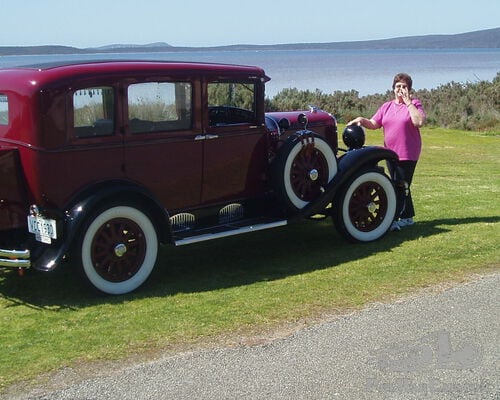
1930 Chrysler 66 Six-Wheel Equipped Royal Sedan
An exceptionally well restored and highly awarded Chrysler 66 Royal Sedan, with only two owners in nearly 97 years.The present owner ..
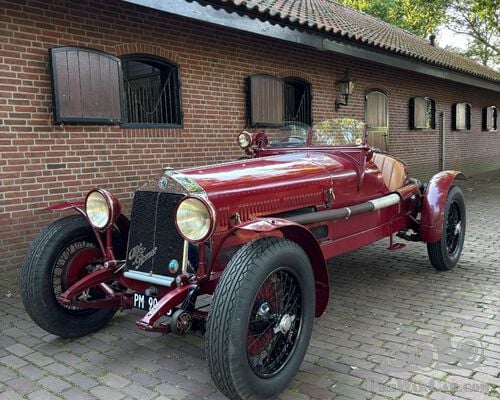
1930 Alfa Romeo 6C 1750 Spider
1930 Alfa Romeo 6C 1750 Spider with complete history from delivery to first owner in 1930 in Firenze till today with copy Libretto/license plate.
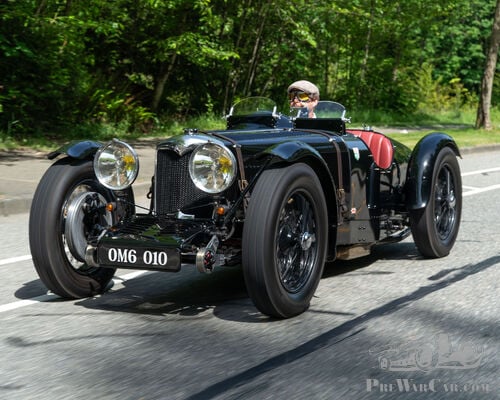
Riley 14/6 Special 1933
The ExperienceStep into the golden age of British motoring. This 1933 Riley 14/6 Special is a masterclass in pre-w..