The global magazine and marketplace for classic car enthusiasts, by enthusiasts.


Filter
Classic Hurtu for sale - Hurtu cars for sale
-

1929 Rolls-Royce 20/25 Estate Car
Extremely unusual well-proportioned estate coachwork from Burbage & SonsThoroughly well sorted benefitting from significant work from ourselvesCharming and practical vehicle accompanied by an interesting early history Coming off test on Christmas Eve 1929, GDP 43 was delivered to coachbuilder Th.. -
1924 Rolls Royce 20hp Doctors Coupe
1924 Rolls Royce 20hp Doctors Coupe Registration No: DS9474 Chassis No: GRK6 According to its accompanying copy build sheets, ‘GRK6’ was dispatched as a rolling chassis to Rolls-Royce of America Inc (Springfield, Massachusetts) in July 1924. Originally intended to carry Br.. -
1938 BMW 328 Roadster 1938 for sale
1938 BMW 328 Roadster Chassis number 85316 Registration number: TBA €790,000.00 Part of a small collection of rare BMW cars: This 328 was found as a wreck in the late 1960's with the then Czechslovakian title documents going back to 4th November 1970 when it was registered in Bratislava. The registration lists a succe.. -
'Halford Special' 1923 Aston Martin
One of the most advanced race cars of the mid-1920s, the Halford Special was built by engine designer Major Frank Halford using Aston Martin chassis, number ‘1916’. In its original configuration, this chassis was the first Aston Martin built for sale and competed at Brooklands in 1923 but crashed in a Voiturette race in Boulogne the following ye.. -
Marmon Type 70 Sedan 1930 for sale
Marmon-Roosevelt straight eight sedan. Model 97, Type 70. The body was built by Hayes Corp. Roosevelt is the companion make to Marmon, nevertheless the Marmon label is featured on the car. The car makes a striking impression with it's six wire wheels and handsome headlights. It runs and drives but it requires work. The restoration is older and .. -
5 ROVERS in the BICYCLE COLLECTORS ONLINE AUCTION
5 ROVER BICYCLES in the BICYCLE COLLECTORS ONLINE AUCTIONhttps://auction.onlinebicyclemuseum.co.uk -
1921 Ansaldo type 4C rolling chassis
1921 Ansaldo type 4C rolling chassis. Complete engine and gearbox no 17634 and chassis no 1763. All components are in excellent condition including the 5 original wirespoked wheels and three of the beaded edge tyres. Good radiator. Suitable project to build a Special from. OHC engine. € 18500 negotiable. .. -
Chenard & Walcker Model G
The Chenard & Walcker is a 1905 Model G, equipped with a 5-liter, four-cylinder engine producing 20 horsepower, enabling the car to reach a top speed of approximately 85 km/h | 50 mp/h. The body is a Double Phaeton and was crafted by the renowned coachbuilder Jean-Henri Labouredette. In addition to the radiator b.. -
1939 Rolls Royce Wraith James Young Razor Edge Saloon
1939 Rolls Royce Wraith James Young Razor Edge Saloon Chassis Number: WEC72 Registration Number: 39D25 (Ireland) £200k spent upon the restoration of this car to make it in effect a brand new Rolls Royce Wraith being delivered 86 years late!!! Simply.. -
1936 Bentley Derby 4.25 Sedanca by Thrupp & Maberly
1936 Bentley Derby 4.25 Sedanca by Thrupp & Maberly Chassis number: B-36-GA Registration Number: CXE213 A stunningly beautiful car which wows onlookers wherever it is seen, this 4.25 Litre Derby Bentley Sedanca Coupe has fabulous and possibly unique aluminium Sedanca coachwork by Thrupp and Maberly...


Hurtu
France, 1896 – 1930
Compagnie des Autos et Cycles Hurtu, Albert, Somme; Neuilly, Seine; Rueil, Seine-et-Oise
Like Opel in Germany, Hurtu cars progressed from sewing-machines through bicycles to cars. Hurtu made a few hundred Bollée voiturettes for that concern, then went into Hurtu car manufacture on their own account. Like most other pioneer motor manufacturers, Hurtu cars began as copies of established machines, in this case the belt-driven single-cylinder Benz, and incorporating improvements. Equally predictably, when this Hurtu car was superseded in 1900 by a more modern car, the latter was a Hurtu voiturette with a single-cylinder 3½hp De Dion engine and shaft drive. Single-, 2-, and 4-cylinder Aster engines were also fitted on Hurtu cars. Indeed, the Hurtu car firm never departed very far from standard practice, for even the dashboard radiator used on smaller models from 1907 to 1920 was a common sight. Hurtu cars continued to specialize in light cars until 1914, their most popular offering being a 10hp Hurtu car of modern design with a monobloc 4-cylinder engine and unit construction of engine and gearbox, though an 8hp single was made as late as 1912. In 1922, however, a Hurtu touring car with a 2-litre push-rod overhead valve engine and front-wheel brakes was introduced, and a good-looking sports alternative appeared two years later. However, the market for the classic French fast tourer declined towards the end of the 1920s, and Hurtu had no popular, cheap small Hurtu car now to cater for the biggest market. Hurtu car production ceased in 1930.
Source: Georgano, encyclopedia of motorcar; TRN
The information is written with the greatest of care. However, if you have any suggested amendments please contact us at office@prewarcar.com


Featured
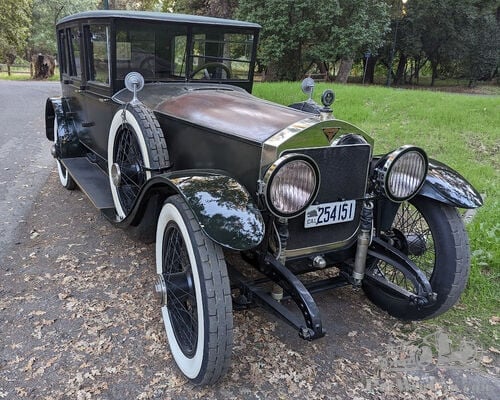
1916 Simplex, Crane model 5
1916 Simplex, Crane MODEL 5CUSTOM MADE HISTORIC PRESERVATION VEHICLE – READY TO TOUR!This Simplex recently completed th..
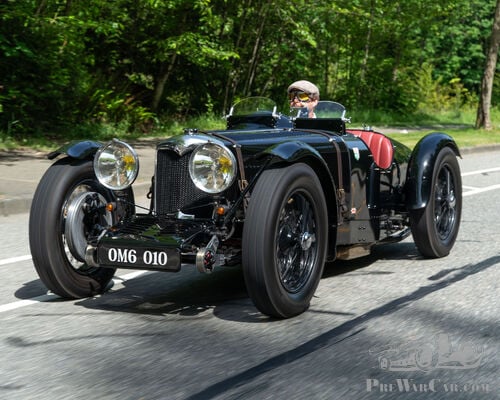
Riley 14/6 Special 1933
The ExperienceStep into the golden age of British motoring. This 1933 Riley 14/6 Special is a masterclass in pre-w..
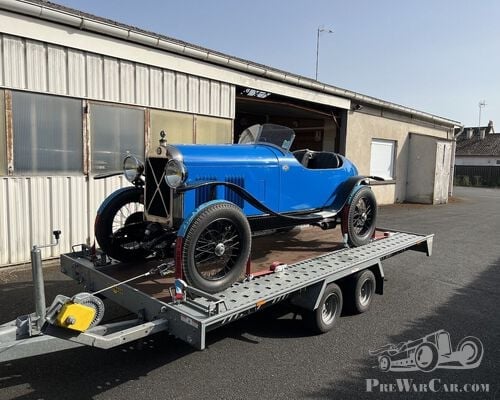
Salmson VAL 3 Séries 7
1927 Salmson VAL3 Series 7. Completely restored a few years ago, in very good overall condition, both bodywork and mechanics. Bordino-style bodywor..