The global magazine and marketplace for classic car enthusiasts, by enthusiasts.


Filter
Classic Imperia, Léon Bollee for sale - Imperia, Léon Bollee cars for sale
-

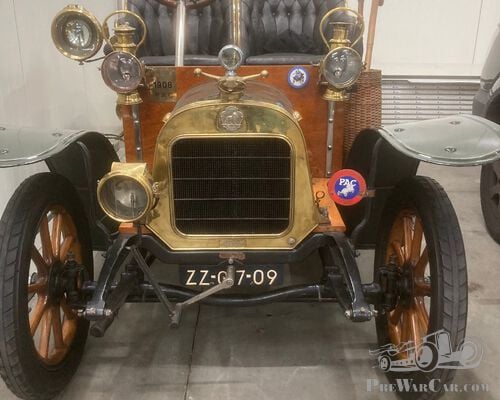
Imperia 8/25 racing/sport car
Imperia 8/25 racing/sport car with Couchard patent slide-valve engine. Fully restored car, the radiator cooling design is very special and unique. Hallot cable braking system. (make an offer or proposal for an exchange) -
Imperia 8/25 1923
Imperia 8/25 1923,Couchard patent slide-valve engine,fully restored rolling chassis,interior still needs finishing.(make an offer or proposal for an exchange)


Imperia
B, 1906 – 1949
(1) Automobiles Imperia, Liège, Nessonvaux, 1906 – 1929
(2) SA des Automobiles Imperia-Excelsior, Nessonvaux, 1929 – 1949
The first Imperia cars were the work of the German Paul Henze, who himself handled an 8-litre car in the 1907 Kaiserpreis. At first only a Imperia 24/30hp four of 4.9-litres was marketed with low tension magneto and coil-ignition, 4-speed gearbox, and shaft or side-chain drive. The smaller 3-litre Imperia car that followed was shaft-driven, and a 1.767cc monobloc four arrived during 1909. As late as 1911 an immense, Kaiserpreis-inspired chain-driven 9.9-litre 50/60 Imperia car was still offered. In 1912 Imperia cars merged with Springuel, but though the latter name soon vanished, Jules Springuel took over the management, and some Springuel designs were sold under the Imperia car companies name. In 1914 Imperia cars in a range of conventional, well-made small volume fours, of 1.8-litres, 2.6-litres, 3.6-litres and 5-litres was offered.
In 1919 the Imperia car company took over the manufacture of the Spanish Abadal (this had always had a substantial Belgium content), offering both a 3-litre Imperia Type E, and the Hispano-Suiza-like 80x180mm 3.6-litre Imperia Type T, complete with handsome V-radiator as found on subsequent Imperias. These Imperia cars were made in small numbers until 1922, though a 6-litre twin-carburettor sohc Imperia-Abadal straight-9 with Perrot fwb on a 12ft wheelbase never progressed beyond the prototype stage. Equally short-lived Imperia car, was a promosing sports car, the long-stroke 16-valve ohc 4-cylinder 3-litre with which de Tornaco won the 1922 Belgium GP. In 1923 M.A. van Roggen, now in charge at Nessonvaux, came up with his side-valve 1.100cc 6CV Imperia car, a small tourer of Panhard-like appearance, but with an unusual servo-assisted foot transmission brake – brakes on the front wheels were standardized in 1925 on Imperia cars. This Imperia car was quite successful, winning the small-car class of the 1926 Monte Carlo Rally and selling 504 Imperia cars in 1927, but Van Roggen’s ‘empire-building’ did not prosper: plans to produce 6CVs in France (at the Voisin works) and at the British GWL factory proved abortive. The 1928 Imperia car season brought a companion 1.642cc six, later enlarged to 1.8-litres and available in 3-carburettor sporting form, and in this period Imperia cars acquired Excelsior, Nagant (who were converted to making 6-cylinder engines), and the Matthys et Osy coachbuilding works. The slide-valve Imperia car models survived until 1934, acquiring hydraulic brakes at the end, but in 1934 Imperia took out a licence to build fwd Adlers, and until 1940 these were their staple; the 995cc Trumpf-Junior, the 1.645cc Trumpf, and the later Zweiliter were all made. In 1935 the Imperia car company fused with the only other surviving Belgian private-car maker, Minerva, and the big sleeve-valve models from Antwerp disappeared for good.
In 1947 there was a brief revival by Imperia cars with the Imperia TA8, a synthesis of pre-World War 2 fwd models by Adler and Amilcar, powered by the 1.340cc ohv 4-cylinder engine used in 1940 Amilcars. Features of this Imperia car were fravity feed, hydraulic brakes, a 3-speed gearbox with dashboard change, and composite wood and metal coachwork.
D, 1935
Imperia-Werk AG, Bad Godesberg
The German Imperia factory, well-known for its motorcycles, had already experimented with Imperia cars in 1924/ 1925, but production on a limited scale of Imperia cars was not started until 1935. A 3-cylinder 2-stroke 750cc radial engine mounted in the rear of the Imperia car was used for a streamlined two-seater coupé and for a small monoposto racing Imperia car, both with independent wheel suspension. Financial difficulties stopped production of Imperia cars at an early stage.
Source: Georgano, encyclopedia of motorcar; MCS, HON
The information is written with the greatest of care. However, if you have any suggested amendments please contact us at office@prewarcar.com
Léon Bollee
France, 1895 – 1933
(1) Automobiles Léon Bollée, Le Mans, 1895 – 1924
(2) Morris Motors Ltd, Usines Léon Bollée, Le Mans, 1925 – 1931
(3) Sté Nouvelle Léon Bollée, Le Mans, 1931 – 1933
Leon Bollee was a son of Amédée Bolllée père, the most important pioneer of steam road vehicles in France. Leon Bollee, however, turned to really small petrol Leon Bollee cars. He was the first to do so, and therefore had to invent a new name for his Leon Bollee car of 1895 – he called it a Leon Bollee voiturette. This Leon Bollee car was a tandem two-seater 3-wheeler that was faster than any other petrol-engined vehicle on the road when the Leon Bollee car was working, thanks to a powerful 3hp engine and light weight, but the power unit was unreliable on the Leon Bollee car. The Leon Bollee car had a single air-cooled cylinder of 650cc and used hot-tube ignition. There were 3 forward speeds on the Leon Bollee car, with belt final drive. The frame was tubular. Four years after the Leon Bollee voiturette appeared, Leon Bollee superseded it with a 4-wheeler with independent front suspension by double transverse leaf springs. This Leon Bollee car had a single-cylinder, water-cooled engine. Unlike the Leon Bollee voiturette, this Leon Bollee car made no mark. The design rights were sold to Darracq, and around 1901 the name of Leon Bollee cars vanished. Meanwhile, the term voiturette had been taken up by the trade and public in general as the name for a small light car.
The Leon Bollee car reappeared in 1903 as an entirely normal, full-sized car in the more expensive class, backed by Vanderbilt money and designed for the American market. This Leon Bollee car was made in 28hp (4.6-litres) and 45hp (8-litres) versions, with four cylinders and chain drive, and led on to a 11.9-litre six Leon Bollee car in 1907, in which year the first shaft driven Leon Bollee car appeared. From 1909 there was also a small modern four, the Leon Bollee 10/14hp. The 1910 range embraced 9 Leon Bollee cars, including 2 of over 10-litres capacity. Electric lighting became available on Leon Bollee cars in 1913, but the Leon Bollee grew increasingly old-fashioned after World War 1 despite the introduction of ohv in 1922 on Leon Bollee cars and front wheel brakes in 1923. Late in 1924 Sir William Morris bought the Le Mans Leon Bollee car factory. From making a wide range of conservative French Leon Bollee fours, it turned to thinly-disguised products of Cowley, Oxford, the idea being to breach the French tariff walls from the inside. The first Morris- Leon Bollee had a 12CV 2½-litre 4-cylinder unit-construction engine made by Hotchkiss, the engine manufacturers controlled by Morris, but it had push-rod overhead valves and bore little evidence of its parentage. Not so the 18CV Morris- Leon Bollee car of 1928. This was a 3-litre straight-8 with single overhead camshaft that reflected Morris’ takeover of Wolseley two years earlier. Morris’ own new six of 1928 was mirrored in the 15CV 2.6-litre Le Mans product of 1929. The bodies for the Morris- Leon Bollee car were all made in France and were usually considerably more dashing and attractive than their British counterparts. Chassis of this Morris- Leon Bollee car were made in France, and all cars had a 4-speed gearbox. At one time, 50 12CV Morris- Leon Bollee cars were being turned out each week. However, Morris’ enterprise was not a success, and he discontinued it in the hard times of the Depression. A new syndicate was formed in September 1931 to sell the same range of cars under the name of Leon Bollee cars. This lasted for less than two years and few Leon Bollee cars were made.
Source: Georgano, encyclopedia of motorcar; TRN
The information is written with the greatest of care. However, if you have any suggested amendments please contact us at office@prewarcar.com


Featured
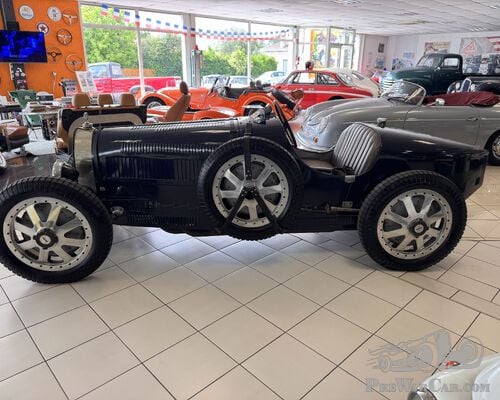
Bugatti 35 B Pur Sang
Bugatti 35 B Pur Sang,importée par un membre délégué de la FFVE il y’a une quinzaine d années.Participation à de nombreux Rallyes Bug..

Alfa 6C1750 Spider
Alfa 6C1750 Spider with complete history from delivery in 1930 to first owner in Firenze till today with copy Libretto/license plate all the years