The global magazine and marketplace for classic car enthusiasts, by enthusiasts.


Filter
Classic Imperia, Yale for sale - Imperia, Yale cars for sale
-

Imperia 8/25 1923
Imperia 8/25 1923,Couchard patent slide-valve engine,fully restored rolling chassis,interior still needs finishing.(make an offer or proposal for an exchange) -
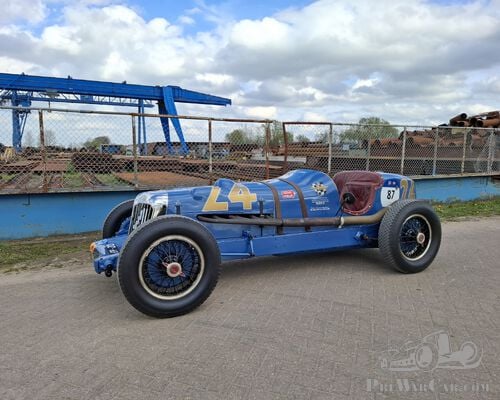
Imperia 8/25 racing/sport car
Imperia 8/25 racing/sport car with Couchard patent slide-valve engine. Fully restored car, the radiator cooling design is very special and unique. Hallot cable braking system. (make an offer or proposal for an exchange)


Imperia
B, 1906 – 1949
(1) Automobiles Imperia, Liège, Nessonvaux, 1906 – 1929
(2) SA des Automobiles Imperia-Excelsior, Nessonvaux, 1929 – 1949
The first Imperia cars were the work of the German Paul Henze, who himself handled an 8-litre car in the 1907 Kaiserpreis. At first only a Imperia 24/30hp four of 4.9-litres was marketed with low tension magneto and coil-ignition, 4-speed gearbox, and shaft or side-chain drive. The smaller 3-litre Imperia car that followed was shaft-driven, and a 1.767cc monobloc four arrived during 1909. As late as 1911 an immense, Kaiserpreis-inspired chain-driven 9.9-litre 50/60 Imperia car was still offered. In 1912 Imperia cars merged with Springuel, but though the latter name soon vanished, Jules Springuel took over the management, and some Springuel designs were sold under the Imperia car companies name. In 1914 Imperia cars in a range of conventional, well-made small volume fours, of 1.8-litres, 2.6-litres, 3.6-litres and 5-litres was offered.
In 1919 the Imperia car company took over the manufacture of the Spanish Abadal (this had always had a substantial Belgium content), offering both a 3-litre Imperia Type E, and the Hispano-Suiza-like 80x180mm 3.6-litre Imperia Type T, complete with handsome V-radiator as found on subsequent Imperias. These Imperia cars were made in small numbers until 1922, though a 6-litre twin-carburettor sohc Imperia-Abadal straight-9 with Perrot fwb on a 12ft wheelbase never progressed beyond the prototype stage. Equally short-lived Imperia car, was a promosing sports car, the long-stroke 16-valve ohc 4-cylinder 3-litre with which de Tornaco won the 1922 Belgium GP. In 1923 M.A. van Roggen, now in charge at Nessonvaux, came up with his side-valve 1.100cc 6CV Imperia car, a small tourer of Panhard-like appearance, but with an unusual servo-assisted foot transmission brake – brakes on the front wheels were standardized in 1925 on Imperia cars. This Imperia car was quite successful, winning the small-car class of the 1926 Monte Carlo Rally and selling 504 Imperia cars in 1927, but Van Roggen’s ‘empire-building’ did not prosper: plans to produce 6CVs in France (at the Voisin works) and at the British GWL factory proved abortive. The 1928 Imperia car season brought a companion 1.642cc six, later enlarged to 1.8-litres and available in 3-carburettor sporting form, and in this period Imperia cars acquired Excelsior, Nagant (who were converted to making 6-cylinder engines), and the Matthys et Osy coachbuilding works. The slide-valve Imperia car models survived until 1934, acquiring hydraulic brakes at the end, but in 1934 Imperia took out a licence to build fwd Adlers, and until 1940 these were their staple; the 995cc Trumpf-Junior, the 1.645cc Trumpf, and the later Zweiliter were all made. In 1935 the Imperia car company fused with the only other surviving Belgian private-car maker, Minerva, and the big sleeve-valve models from Antwerp disappeared for good.
In 1947 there was a brief revival by Imperia cars with the Imperia TA8, a synthesis of pre-World War 2 fwd models by Adler and Amilcar, powered by the 1.340cc ohv 4-cylinder engine used in 1940 Amilcars. Features of this Imperia car were fravity feed, hydraulic brakes, a 3-speed gearbox with dashboard change, and composite wood and metal coachwork.
D, 1935
Imperia-Werk AG, Bad Godesberg
The German Imperia factory, well-known for its motorcycles, had already experimented with Imperia cars in 1924/ 1925, but production on a limited scale of Imperia cars was not started until 1935. A 3-cylinder 2-stroke 750cc radial engine mounted in the rear of the Imperia car was used for a streamlined two-seater coupé and for a small monoposto racing Imperia car, both with independent wheel suspension. Financial difficulties stopped production of Imperia cars at an early stage.
Source: Georgano, encyclopedia of motorcar; MCS, HON
The information is written with the greatest of care. However, if you have any suggested amendments please contact us at office@prewarcar.com
Yale
US, 1903 – 1907
(1) Kirk Mfg Co, Toledo, Ohio, 1903
(2) Consolidated Mfg Co, Toledo, Ohio, 1903 – 1907
One model of the Yale car, with a single-cylinder engine, remained virtually unchanged through the life of the Yale car make. There were also 2-cylinder and 4-cylinder Yale cars, the latter with a 24/28hp engine. The advertising slogan of the Yale car was ‘The Beau Brummell of the Road’.
US, 1916 – 1918
Saginaw Motor Car Co, Saginaw, Mich.
The Yale car appeared only as an ivory and black seven-seater touring model. The Yale car had V8 engine of 3.5-litres, with a 3-speed transmission.
Source: Georgano, encyclopedia of motorcar; GMN
The information is written with the greatest of care. However, if you have any suggested amendments please contact us at office@prewarcar.com


Featured

1939 Wanderer W 23 Gläser(Dresden) Convertible
Wanderer W 23 Gläser(Dresden) Convertible in original condition Built in 1939 for sale. Ready to drive with TÜV and approval as a historic vehicle..
1932 - Graham " Lucenti " Indianapolis
Original participant of the 1932, 1934 and 1935 Indy 500. Best result: finishing 10th overall in the 1934 Indy 500 with driver “Herb” Ardinger...

Daimler Flat six 15 Saloon - Fluid Flywheel / pre-selector
The E20 was manufactured between 1935 and 1939. It offered the choice of a coachbuilt saloon, Sports Saloon, Fixedhead Coupé and Drophead Coupé bod..