The global magazine and marketplace for classic car enthusiasts, by enthusiasts.


Filter
Classic Imperial for sale - Imperial cars for sale
-

1917 Buick for sale
4 cylinder over head valve engine 35hp.3 speed conventional gear box.Electric start,electric lights and indicators fitted.Side screens and full length hood for weather protection.Older restoration,new radiator core fitted recently.An excellent reliable car with Veteran Car Club Certificate -
Riley TT Sprite
1935 6-cylinder TT Sprite replica. Chassis # 46A2722. Engine # 6A2722. Original Ulster Imp body. Restoration nearing completion. Engine, Gearbox and Diff have been rebuilt.Requires aluminium bonnet (material supplied), wiring, seat upholstery and fettling to finish.Comes with many spares including complete pre-select and ma.. -
Rosengart LR4N2 1938 – Rare Pre-War French Saloon – Restoration Project
For sale: 1938 Rosengart LR4N2, an exceptionally rare French pre-war automobile and an increasingly hard-to-find restoration project. The car is registered in Poland and comes with valid registration documents. The original Rosengart identification plate is present. The vehicle retains a high level of originality and appears largely complete, i.. -
rare Peerless for sale
The Peerless Motor Corporation of Cleveland, Ohio, manufactured high-quality cars between 1900 and 1931. Peerless, along with Packard and Pierce-Arrow, became known as the ‘Three P’s of Motordom’ (top-of-the-range cars) in the United States. The car offered for sale is one of the very few vehicles still in existence today. The new car was import.. -
Lancia Lambda 3rd Series Torpedo
With a monocoque body, four-wheel brakes, independent front suspension and V4 overhead camshaft engine, many enthusiasts view the Lancia Lambda as one of the great and innovative automobiles of all time. The Lambda was also successful in competition with privately entered cars finishing fourth and fifth behind the works OMs in the first Mille Migli.. -
Highly Awarded 1936 Delahaye 135 Competition Streamlined Disappearing Top Convertible, Figoni-Falaschi Masterpiece
This is the 1936 "Talk of Paris" car, the beginning of the famed Figoni Streamlined Teardrop Period, an objet d'artFigoni et Falaschi Centennial One of one; pièce unique Figoni streamlined Design #581One of the most highly awarded cars in the world....Best of.. -
1939 Packard 1707 Twelve 2/4-Passenger Coupe | RM Sotheby's | The Hershey Auction
To Be OFFERED AT AUCTION WITHOUT RESERVE at RM Sothebys' The Hershey Auction event, 7 - 8 October 2026. Offered Without Reserve | $100,000 - $125,000 USD One of about 12 examples builtWell-preserved and maintained older restoration with rare accessoriesFormerly owned by noted actor and Packard enthusiast Ken Kercheval -
1932 Rolls-Royce Phantom II Continental Drophead Coupe by Carlton
Vintage and Prestige are proud to offer this 1932 Rolls-Royce Phantom II Continental Drophead Coupe by Carlton For Sale. Previous UK Registration: 544 YUS Chassis no: 32MS Engine no: HD 55 Mileage shown: 22,480 32MS was first ordered by the Duke of Sutherland; Sir G.. -
1928 Packard 533 Golfers Coupe
1928 Packard 533 Golfers Coupe Chassis number 144148RRegistration number: UC1064 Vintage and Prestige Fine Motor Cars are proud to be offering this 1928 Packard 533 Golfers Coupe for sale. A spectacular Packard in mint order throughout. This right hand drive example was sold new to the UK in 1928 and has remained here since... -
1925 Triumph Model P Mk1
1925 Triumph Model P Frame Number: 903083 Well presented and restored to a high standard Mk1 Model P Triumph, correct numbers and complete with a dating letter from the Triumph Owners Club. A Landmark model produced by Triumph from 1924 onwards at their Priory Street factoryFitt..


Imperial
US, 1954 to date
Chrysler Corporation, Detroit, Mich.
The name of this Imperial car, used by the Chrysler Corporation for their luxury-car line from 1926 onwards, became to make in its own right in 1954. The object of this move was to put the Imperial car on a par with Cadillac and Lincoln in the public mind, but the Imperial cars remained large Chryslers, with overhead-valve V8 oversquare engines and automatic transmission as standard equipment. Year-to-year improvements on Imperial cars followed those of Chrysler’s other products, with ‘flight-sweep’ styling in 1955 and alternator ignition in 1960. 1955 Imperial cars had Chrysler’s caliper disc brakes as standard. Since 1957 the name of Le Baron, a custom coachbuilder whose work often appeared on the Chrysler Imperial cars of the 1920s and 1930s, had been associated with the costliest models. In 1966 the Imperial car had an engine of over 7 litres’ capacity developing 350bhp; prices, at $5.733 upwards, were comparable with Cadillac’s De Ville series and the Lincoln Continental. Unitary construction was adopted in 1967 on Imperial cars, and in 1971 Imperial cars were available with America’s first 4-wheel anti-skid brake system. That year’s engines had a capacity of 7.211cc and an output of 335bhp, drastically reduced to 225bhp in 1972, when electronic ignition was standardized. There were only detail changes on the Imperial car for 1973.
Source: Georgano, encyclopedia of motorcar; GNG, GMN, MCS
The information is written with the greatest of care. However, if you have any suggested amendments please contact us at office@postwarclassic.com


Featured
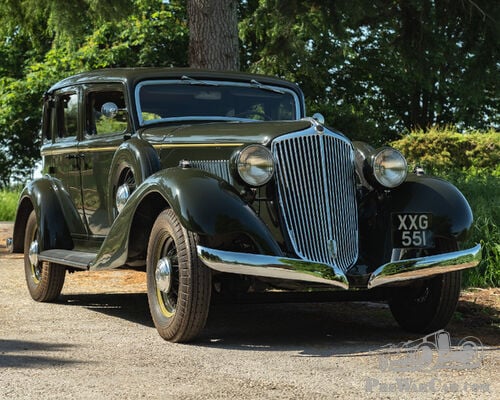
Graham Model 64 Standard Eight 'Blue Streak'
UK Registration No: XXG 551Chassis No: 1801069MOT: ExemptH&H ClassicsKelham Hall | Newark, Nottinghamshire
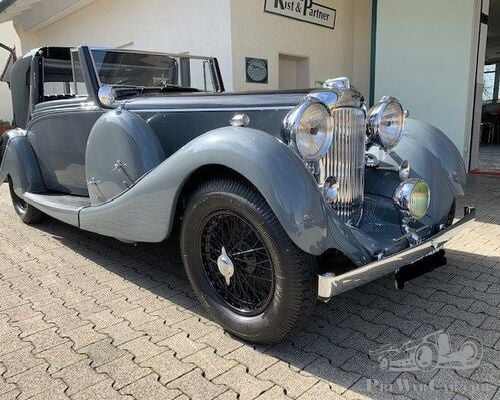
Lagonda LG 45 Coupe de Ville Sedanca by Mayfair
The successor to the M45, the LG45 was built around the same highly capable, competition-proven 4.5-litre Meadows inline-six engine, but featured r..
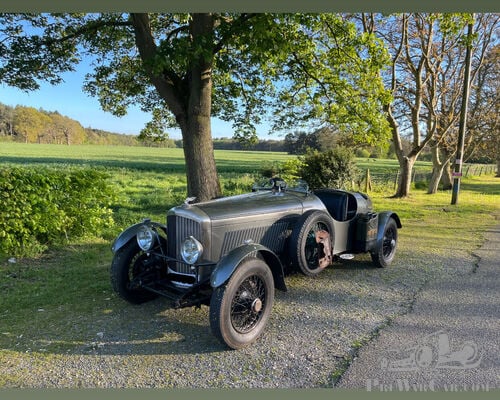
Derby Bentley Special 4-1/4
Sadly i am having to sell on my Bentley special ( Icarus). It is currently a work in progress and still needs finalising/ refining. A great o..