The global magazine and marketplace for classic car enthusiasts, by enthusiasts.


Filter
Classic Brush, International for sale - Brush, International cars for sale
-

1901 International Charette 6HP - VCC Dated
1901 International Charette 6HP Double Phaeton Engine No. 62 Engine Displacement. 823VCC Dated 8 time London to Brighton finisher The International Motor Car Company, of London, England, was not related in any way to the more famous International Harvester Company of the United..

Brush
GB, 1902 – 1904
(1) Brush Electrical Engineering Co Ltd, London S.E., 1902 – 1904
(2) Brush Electrical Engineering Co Ltd., Loughborough, Leics., 1904
The first Brush car appeared on the market in March 1902. It was powered by a 10hp 2-cylinder Abeille engine, and had a Sage 3-speed gearbox and double chain drive. For 1902 it was joined by 4-cylinder Brush cars of 12, 16 and 20hp, also using Abeille engines and chain drive. For part of 1904 these cars were still made in London, but at the same time a completely different design known as the Brushmobile was made at Brush’s other factory at Loughborough. This Brush had a 5 or 6hp single-cylinder horizontal engine, single chain drive and coil suspension. It was identical in design, though not in appearance, to the 6hp Vauxhall, and all but the last six Brushmobiles made were, in fact, built in the Vauxhall factory.
US, 1907 – 1913
(1) Brush Motor Car Co, Detroit, Mich.
(2) Brush Runabout Co, Detroit, Mich.
The US Brush was a popular two-seater runabout with coil springs all round, and a wooden frame and axles. The initial Brush model for sale had a single-cylinder, 12hp engine, with chain-drive and solid tyres, priced at $780. By the end of 1907 the price of the Brush was down to $500, and in 1912, a stripped version, the Liberty-Brush, sold for only $350. Brush chassis with an abbreviated landaulette body were marketed in 1912 for taxicab use under the name Titan. Later Brush models used a larger engine and pneumatic tyres, but the basic design of the car remained unchanged. The Brush car was designed by Alanson P. Brush, and the company was formed by Frank Briscoe. Later, Brush became a division of U.S. Motors Co and ceased production with the collapse of this combine in 1913.
Source: Georgano, encyclopedia of motorcar; GNG, GMN
The information is written with the greatest of care. However, if you have any suggested amendments please contact us at office@prewarcar.com
International
GB, 1898 – 1904
(1) International Motor Car Co, London, 1898 – 1900
(2) International Motor Car Co Ltd, London, 1900 – 1904
Oscar Seyd’s firm never built a car, though some International car offerings were assembled in their Great Portland Street Showrooms and a certain amount of work was also undertaken at the service depot in Kilburn, where International cars had been operating since 1896. The original International-Benz was in fact a French-built Roger, a car which had become hard to sell in France; International added their own improvements to the International car, among them a reverse, a British-built version of the ‘Crypto’ gear and bodywork made to their order. Single- and twin-cylinder variations on the Benz theme were offered until 1901, later International car being German-built after the demise of M. Roger’s company. In 1899 International presented a ‘light two-seater racing car’ with wheel steering, a Benz-based 12hp with wheel steering, pneumatic tyres and double phaeton coachwork on the International car at £800, and a 9hp ‘vibrationless’ flat-twin (not on Benz lines) in addition to their regular range of International car. International cars became a limited liability company in 1900, when two Coventry firms, Payne and Bates (Godiva) and Allard, were approached to make a new design for the International car. The Payne and Bates-built International car(possibly the twin-cylinder Royal with steel frame and wheel steering, offered for £367 10s) proved unsatisfactory, but Allard’s effort, the International Charette, introduced in November 1900, sold in some numbers. This International Charette car was a belt-driven light car with front vertical 823cc engine of De Dion type (designed to run at only 1.000rpm), a coal-shovel shaped bonnet and rack-and-pinion steering. It sold for £165. Early International cars were rated at 5hp (later increased to 6hp) and there were 2-speed and 3-speed variants. All International Charette chassis were delivered to London under their own power. This type International car was not offered after 1903 and apart form the Mountaineer motorcycle, the later cars of the International company were of French origin. The International Armstrong (1902) was a single-cylinder 1.100cc machine with shaft drive on Renault lines and this gave way in 1903 to the Aster-engined Portlands, also shaft-driven and offered in a variety of sizes from a 6hp single at £205 up to a big 24hp 4-cylinder car with a 4-speed gearbox.
The smallest International car, the Portland was still available in 1904, but by this time the International car company was mainly concerned with importing the Diamant car. International were defunct by 1905.
US, 1900
International Motor Carriage Co, Stamford, Conn.
This International car company showed a light car with a 2-stroke engine designed to run on paraffin at the Madison Square Garden show in 1900, but this International car did not go into production.
Source: Georgano, encyclopedia of motorcar; MCS, GNG
The information is written with the greatest of care. However, if you have any suggested amendments please contact us at office@prewarcar.com


Featured
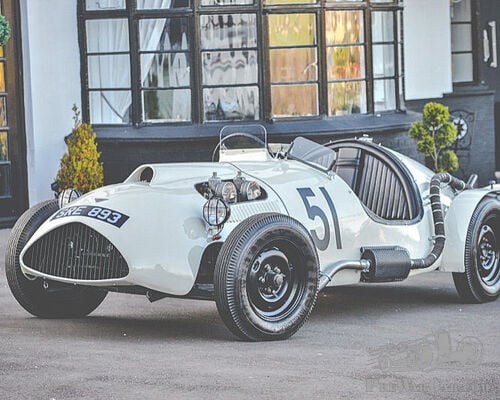
1933 Alvis 3.0 Special - One-Off Alloy Body | Period Competition Car | Featured in “Alvis – A Century of Drivers”
1933 Alvis 3. 0 Special - One-Off Alloy-Body | Period Competition Car | Featured in “Alvis – A Century of Drivers”
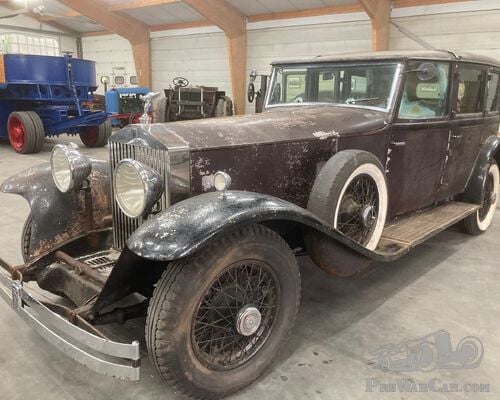
Rolls-Royce
Rolls-Royce Phantom ll chassisnummer 287 AJS. bouwjaar 1932, Links gestuurd, Brewster Keswick Sedance Towncar
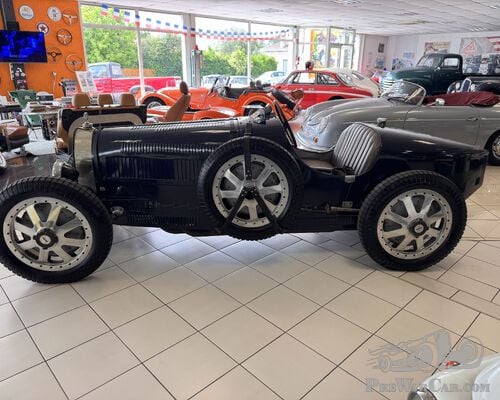
Bugatti 35 B Pur Sang
Bugatti 35 B Pur Sang,importée par un membre délégué de la FFVE il y’a une quinzaine d années.Participation à de nombreux Rallyes Bug..