The global magazine and marketplace for classic car enthusiasts, by enthusiasts.


Filter
Classic Calthorpe, International for sale - Calthorpe, International cars for sale
-

1901 International Charette 6HP - VCC Dated
1901 International Charette 6HP Double Phaeton Engine No. 62 Engine Displacement. 823VCC Dated 8 time London to Brighton finisher The International Motor Car Company, of London, England, was not related in any way to the more famous International Harvester Company of the United..

Calthorpe
GB, 1904 – 1932
Calthorpe Motor Co Ltd, Birmingham
In 1904 G.W. Hands, a bicycle manufacturer, introduced the first Calthorpe car. It was a small, low-priced, 10hp 4-cylinder machine with shaft drive, continued as a Calthorpe 12/14hp. Bigger Calthorpe cars were made, of which the best-known was the Calthorpe 16/20, announced for 1907. The really large 28/40hp of that year was short-lived: light cars remained the Calthorpe company’s forte. Generally, they were powered by White & Poppe engines. Works teams of Calthorpe cars, based on the 12/14hp and its successor the Calthorpe 13.9hp, entered the Coupe de l’Auto races in France more consistently than any other British make, but with no success.
The car which made the Calthorpe firm’s name more than any other before World War 1 was the little Calthorpe Minor, a beautifully-made 10hp light car current from 1913 to 1915. Like all Calthorpe cars for sale, it was a conventional machine, with 4-cylinder side-valve engine and 3-speed gearbox. Hands left the Calthorpe company after the war to make the Hands light car, but the Calthorpe 10hp was continued. It was a notably good-looking and well-finished machine with a good performance, but the handsomest Calthorpe cars were its two- and four-seater sports variants, with polished aluminium bodies by Mulliner, a subsidiary company. Their alloy reciprocating parts were drilled for extra lightness and balance, permitting higher engine revolutions. These Calthorpe sports cars were good for over 60mph. A new Calthorpe for sale, the Calthorpe Twelve, followed in 1923, which was more refined but heavier and less attractive. An obscure Calthorpe 15hp six with overhead camshaft, which had been the last Hands model, was the company’s last new car. It was introduced in 1925, by which time G.W. Hands had returned to the firm. Very few Calthorpe cars were made after 1927, though motor cycle manufacture continued. The car factory was reopened in the same year as the Colmore Depot Ltd’s Morris service centre.
Source: Georgano, encyclopedia of motorcar; TRN
The information is written with the greatest of care. However, if you have any suggested amendments please contact us at office@prewarcar.com
International
GB, 1898 – 1904
(1) International Motor Car Co, London, 1898 – 1900
(2) International Motor Car Co Ltd, London, 1900 – 1904
Oscar Seyd’s firm never built a car, though some International car offerings were assembled in their Great Portland Street Showrooms and a certain amount of work was also undertaken at the service depot in Kilburn, where International cars had been operating since 1896. The original International-Benz was in fact a French-built Roger, a car which had become hard to sell in France; International added their own improvements to the International car, among them a reverse, a British-built version of the ‘Crypto’ gear and bodywork made to their order. Single- and twin-cylinder variations on the Benz theme were offered until 1901, later International car being German-built after the demise of M. Roger’s company. In 1899 International presented a ‘light two-seater racing car’ with wheel steering, a Benz-based 12hp with wheel steering, pneumatic tyres and double phaeton coachwork on the International car at £800, and a 9hp ‘vibrationless’ flat-twin (not on Benz lines) in addition to their regular range of International car. International cars became a limited liability company in 1900, when two Coventry firms, Payne and Bates (Godiva) and Allard, were approached to make a new design for the International car. The Payne and Bates-built International car(possibly the twin-cylinder Royal with steel frame and wheel steering, offered for £367 10s) proved unsatisfactory, but Allard’s effort, the International Charette, introduced in November 1900, sold in some numbers. This International Charette car was a belt-driven light car with front vertical 823cc engine of De Dion type (designed to run at only 1.000rpm), a coal-shovel shaped bonnet and rack-and-pinion steering. It sold for £165. Early International cars were rated at 5hp (later increased to 6hp) and there were 2-speed and 3-speed variants. All International Charette chassis were delivered to London under their own power. This type International car was not offered after 1903 and apart form the Mountaineer motorcycle, the later cars of the International company were of French origin. The International Armstrong (1902) was a single-cylinder 1.100cc machine with shaft drive on Renault lines and this gave way in 1903 to the Aster-engined Portlands, also shaft-driven and offered in a variety of sizes from a 6hp single at £205 up to a big 24hp 4-cylinder car with a 4-speed gearbox.
The smallest International car, the Portland was still available in 1904, but by this time the International car company was mainly concerned with importing the Diamant car. International were defunct by 1905.
US, 1900
International Motor Carriage Co, Stamford, Conn.
This International car company showed a light car with a 2-stroke engine designed to run on paraffin at the Madison Square Garden show in 1900, but this International car did not go into production.
Source: Georgano, encyclopedia of motorcar; MCS, GNG
The information is written with the greatest of care. However, if you have any suggested amendments please contact us at office@prewarcar.com


Featured
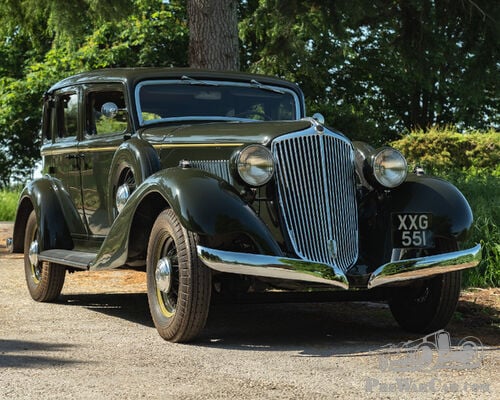
Graham Model 64 Standard Eight 'Blue Streak'
UK Registration No: XXG 551Chassis No: 1801069MOT: ExemptH&H ClassicsKelham Hall | Newark, Nottinghamshire
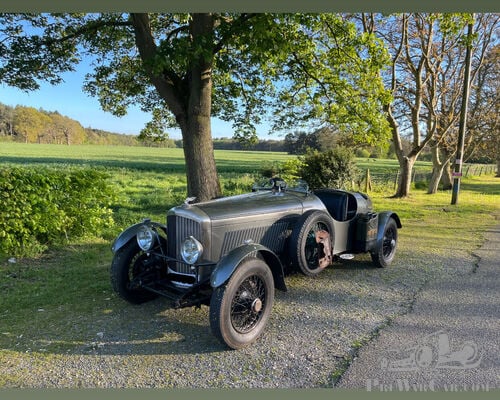
Derby Bentley Special 4-1/4
Sadly i am having to sell on my Bentley special ( Icarus). It is currently a work in progress and still needs finalising/ refining. A great o..
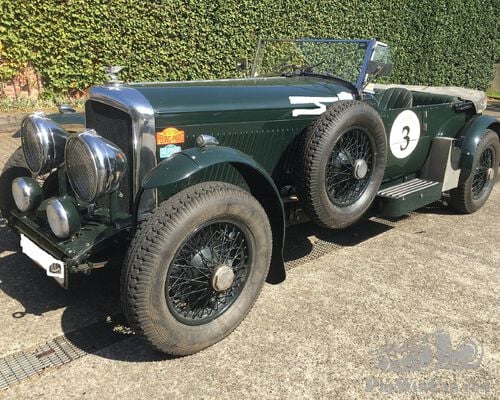
Bentley Derby Special Open Rally Car
This Bentley Derby, manufactured in 1935, has been rebuilt into a short and long-distance rally car. Full rebuilt engine in 2021, Since 2021 low mi..