The global magazine and marketplace for classic car enthusiasts, by enthusiasts.


Filter
Classic Chalmers, International for sale - Chalmers, International cars for sale
-

1901 International Charette 6HP - VCC Dated
1901 International Charette 6HP Double Phaeton Engine No. 62 Engine Displacement. 823VCC Dated 8 time London to Brighton finisher The International Motor Car Company, of London, England, was not related in any way to the more famous International Harvester Company of the United..

Chalmers / Chalmers-Detroit
US, 1908 – 1924
Chalmers Motor Car Co, Detroit, Mich.
The Chalmers was one of the most popular automobiles made in the United States for more than a decade. The Chalmers was the successor to the Thomas-Detroit which was built by a company which had been founded in 1906 by E.R. Thomas (builder of the Thomas car in Buffalo, N.Y.), Roy D. Chapin and Howard Earle Coffin; the two latter had previously served at Oldsmobile. The Thomas-Detroit of which some 500 were sold during the first year of production, was marketed through the parent firm in Buffalo which manufactured a larger line of cars under the Thomas emblem. The Thomas-Detroit was a medium priced four-cylinder car which had been designed by Coffin. In 1907, Hugh Chalmers, vice president of the National Cash Register Co and a noted salesman, entered the firm. Shortly after, he bought a half of E.R. Thomas’ stock and became president of the company which became the Chalmers-Detroit Motor Company. The Thomas-Detroit became the Chalmers-Detroit in 1908 and in 1910, the Chalmers. Open and closed Chalmers models in two lines comprised the Chalmers four-cylinder cars, with self-starters appearing in 1912. Chalmers (as Chalmers-Detroit) had distinguished itself in road races as early as 1908 when W.R. Burns won the Motor Parkway Sweekstakes at Jericho, N.Y., averaging 48.7mph in the six-lap 140.76 mile run.
In 1913, the Chalmers brought out its first 6-cylinder model, as well as the four and apart from small mechanical and design changes, continued both until 1914. The Chalmers four was dropped from the 1915 line, however, and sixes were to be used exclusively in Chalmers until the ending of manufacture. By 1915, some 20.000 Chalmers cars per year were coming off the Chalmers production line and would even exceed that figure before the advent of World War 1. In 1917, an L-head motor replaced the earlier overhead-valve type and on August 4th, Chalmers again headed racing news when Joe Dawson won the 24-hour stock Car Endurance Run at Sheepshead Bay, N.Y. Sales flagged following the end of the war and Hugh Chalmers, always the salesman, and with the realization that a competitor, Maxwell, wasn’t faring well either, arranged to lease his Chalmers plants to Maxwell, using his salesmanship to promote the two concerns and getting the benefit of Maxwell tooling and manufacturing equipment. By the early 1920s, however, many makes of cars were in financial difficulties due to over-expansion and recession, and Walter P. Chrysler was called in to try and reorganize Maxwell. Chrysler was at this time planning his own corporation and in 1922 Chalmers was taken over by Maxwell which had become a Chrysler subsidiary. The last Chalmer cars for sale were equipped with Lockheed hydraulic brakes but 1923 was the last year of Chalmers production with some 9000 units leaving the factories. The Maxwell survived until 1925 when it became the Chrysler Four.
Source: Georgano, encyclopedia of motorcar; KM
The information is written with the greatest of care. However, if you have any suggested amendments please contact us at office@prewarcar.com
International
GB, 1898 – 1904
(1) International Motor Car Co, London, 1898 – 1900
(2) International Motor Car Co Ltd, London, 1900 – 1904
Oscar Seyd’s firm never built a car, though some International car offerings were assembled in their Great Portland Street Showrooms and a certain amount of work was also undertaken at the service depot in Kilburn, where International cars had been operating since 1896. The original International-Benz was in fact a French-built Roger, a car which had become hard to sell in France; International added their own improvements to the International car, among them a reverse, a British-built version of the ‘Crypto’ gear and bodywork made to their order. Single- and twin-cylinder variations on the Benz theme were offered until 1901, later International car being German-built after the demise of M. Roger’s company. In 1899 International presented a ‘light two-seater racing car’ with wheel steering, a Benz-based 12hp with wheel steering, pneumatic tyres and double phaeton coachwork on the International car at £800, and a 9hp ‘vibrationless’ flat-twin (not on Benz lines) in addition to their regular range of International car. International cars became a limited liability company in 1900, when two Coventry firms, Payne and Bates (Godiva) and Allard, were approached to make a new design for the International car. The Payne and Bates-built International car(possibly the twin-cylinder Royal with steel frame and wheel steering, offered for £367 10s) proved unsatisfactory, but Allard’s effort, the International Charette, introduced in November 1900, sold in some numbers. This International Charette car was a belt-driven light car with front vertical 823cc engine of De Dion type (designed to run at only 1.000rpm), a coal-shovel shaped bonnet and rack-and-pinion steering. It sold for £165. Early International cars were rated at 5hp (later increased to 6hp) and there were 2-speed and 3-speed variants. All International Charette chassis were delivered to London under their own power. This type International car was not offered after 1903 and apart form the Mountaineer motorcycle, the later cars of the International company were of French origin. The International Armstrong (1902) was a single-cylinder 1.100cc machine with shaft drive on Renault lines and this gave way in 1903 to the Aster-engined Portlands, also shaft-driven and offered in a variety of sizes from a 6hp single at £205 up to a big 24hp 4-cylinder car with a 4-speed gearbox.
The smallest International car, the Portland was still available in 1904, but by this time the International car company was mainly concerned with importing the Diamant car. International were defunct by 1905.
US, 1900
International Motor Carriage Co, Stamford, Conn.
This International car company showed a light car with a 2-stroke engine designed to run on paraffin at the Madison Square Garden show in 1900, but this International car did not go into production.
Source: Georgano, encyclopedia of motorcar; MCS, GNG
The information is written with the greatest of care. However, if you have any suggested amendments please contact us at office@prewarcar.com


Featured
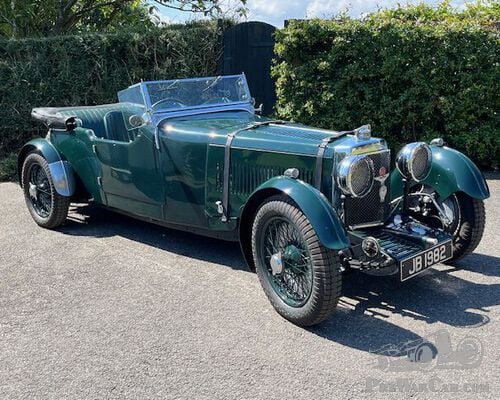
1933 Aston Martin Le Mans
Exceptional 1933 Astron Martin Le MansOriginally bodied as a Standard (Chassis No. L2/222), this unique vehicle was thoughtfully re-bodied i..
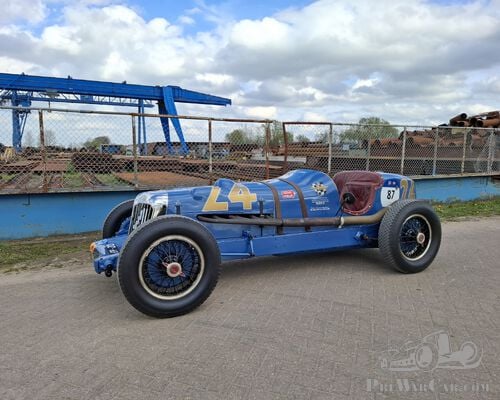
1932 - Graham " Lucenti " Indianapolis
Original participant of the 1932, 1934 and 1935 Indy 500. Best result: finishing 10th overall in the 1934 Indy 500 with driver “Herb” Ardinger...
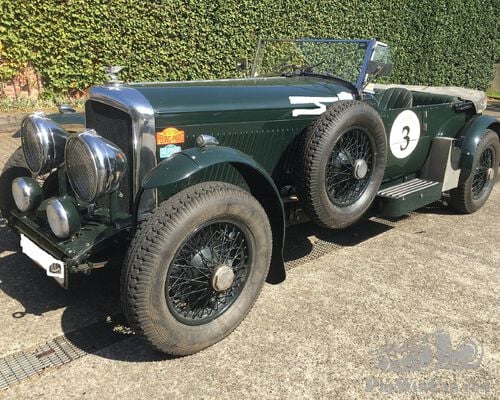
Bentley Derby Special Open Rally Car
This Bentley Derby, manufactured in 1935, has been rebuilt into a short and long-distance rally car. Full rebuilt engine in 2021, Since 2021 low mi..