The global magazine and marketplace for classic car enthusiasts, by enthusiasts.


Filter
Classic International, Léon Bollee for sale - International, Léon Bollee cars for sale
-

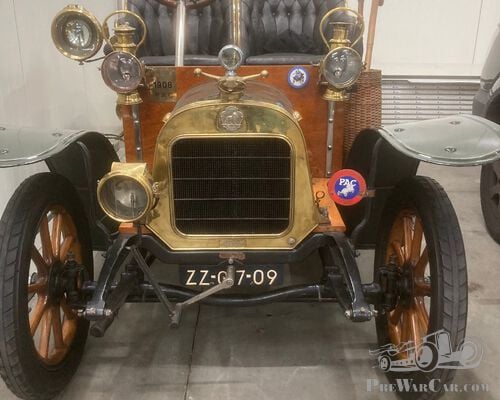
1901 International Charette 6HP - VCC Dated
1901 International Charette 6HP Double Phaeton Engine No. 62 Engine Displacement. 823VCC Dated 8 time London to Brighton finisher The International Motor Car Company, of London, England, was not related in any way to the more famous International Harvester Company of the United..

International
GB, 1898 – 1904
(1) International Motor Car Co, London, 1898 – 1900
(2) International Motor Car Co Ltd, London, 1900 – 1904
Oscar Seyd’s firm never built a car, though some International car offerings were assembled in their Great Portland Street Showrooms and a certain amount of work was also undertaken at the service depot in Kilburn, where International cars had been operating since 1896. The original International-Benz was in fact a French-built Roger, a car which had become hard to sell in France; International added their own improvements to the International car, among them a reverse, a British-built version of the ‘Crypto’ gear and bodywork made to their order. Single- and twin-cylinder variations on the Benz theme were offered until 1901, later International car being German-built after the demise of M. Roger’s company. In 1899 International presented a ‘light two-seater racing car’ with wheel steering, a Benz-based 12hp with wheel steering, pneumatic tyres and double phaeton coachwork on the International car at £800, and a 9hp ‘vibrationless’ flat-twin (not on Benz lines) in addition to their regular range of International car. International cars became a limited liability company in 1900, when two Coventry firms, Payne and Bates (Godiva) and Allard, were approached to make a new design for the International car. The Payne and Bates-built International car(possibly the twin-cylinder Royal with steel frame and wheel steering, offered for £367 10s) proved unsatisfactory, but Allard’s effort, the International Charette, introduced in November 1900, sold in some numbers. This International Charette car was a belt-driven light car with front vertical 823cc engine of De Dion type (designed to run at only 1.000rpm), a coal-shovel shaped bonnet and rack-and-pinion steering. It sold for £165. Early International cars were rated at 5hp (later increased to 6hp) and there were 2-speed and 3-speed variants. All International Charette chassis were delivered to London under their own power. This type International car was not offered after 1903 and apart form the Mountaineer motorcycle, the later cars of the International company were of French origin. The International Armstrong (1902) was a single-cylinder 1.100cc machine with shaft drive on Renault lines and this gave way in 1903 to the Aster-engined Portlands, also shaft-driven and offered in a variety of sizes from a 6hp single at £205 up to a big 24hp 4-cylinder car with a 4-speed gearbox.
The smallest International car, the Portland was still available in 1904, but by this time the International car company was mainly concerned with importing the Diamant car. International were defunct by 1905.
US, 1900
International Motor Carriage Co, Stamford, Conn.
This International car company showed a light car with a 2-stroke engine designed to run on paraffin at the Madison Square Garden show in 1900, but this International car did not go into production.
Source: Georgano, encyclopedia of motorcar; MCS, GNG
The information is written with the greatest of care. However, if you have any suggested amendments please contact us at office@prewarcar.com
Léon Bollee
France, 1895 – 1933
(1) Automobiles Léon Bollée, Le Mans, 1895 – 1924
(2) Morris Motors Ltd, Usines Léon Bollée, Le Mans, 1925 – 1931
(3) Sté Nouvelle Léon Bollée, Le Mans, 1931 – 1933
Leon Bollee was a son of Amédée Bolllée père, the most important pioneer of steam road vehicles in France. Leon Bollee, however, turned to really small petrol Leon Bollee cars. He was the first to do so, and therefore had to invent a new name for his Leon Bollee car of 1895 – he called it a Leon Bollee voiturette. This Leon Bollee car was a tandem two-seater 3-wheeler that was faster than any other petrol-engined vehicle on the road when the Leon Bollee car was working, thanks to a powerful 3hp engine and light weight, but the power unit was unreliable on the Leon Bollee car. The Leon Bollee car had a single air-cooled cylinder of 650cc and used hot-tube ignition. There were 3 forward speeds on the Leon Bollee car, with belt final drive. The frame was tubular. Four years after the Leon Bollee voiturette appeared, Leon Bollee superseded it with a 4-wheeler with independent front suspension by double transverse leaf springs. This Leon Bollee car had a single-cylinder, water-cooled engine. Unlike the Leon Bollee voiturette, this Leon Bollee car made no mark. The design rights were sold to Darracq, and around 1901 the name of Leon Bollee cars vanished. Meanwhile, the term voiturette had been taken up by the trade and public in general as the name for a small light car.
The Leon Bollee car reappeared in 1903 as an entirely normal, full-sized car in the more expensive class, backed by Vanderbilt money and designed for the American market. This Leon Bollee car was made in 28hp (4.6-litres) and 45hp (8-litres) versions, with four cylinders and chain drive, and led on to a 11.9-litre six Leon Bollee car in 1907, in which year the first shaft driven Leon Bollee car appeared. From 1909 there was also a small modern four, the Leon Bollee 10/14hp. The 1910 range embraced 9 Leon Bollee cars, including 2 of over 10-litres capacity. Electric lighting became available on Leon Bollee cars in 1913, but the Leon Bollee grew increasingly old-fashioned after World War 1 despite the introduction of ohv in 1922 on Leon Bollee cars and front wheel brakes in 1923. Late in 1924 Sir William Morris bought the Le Mans Leon Bollee car factory. From making a wide range of conservative French Leon Bollee fours, it turned to thinly-disguised products of Cowley, Oxford, the idea being to breach the French tariff walls from the inside. The first Morris- Leon Bollee had a 12CV 2½-litre 4-cylinder unit-construction engine made by Hotchkiss, the engine manufacturers controlled by Morris, but it had push-rod overhead valves and bore little evidence of its parentage. Not so the 18CV Morris- Leon Bollee car of 1928. This was a 3-litre straight-8 with single overhead camshaft that reflected Morris’ takeover of Wolseley two years earlier. Morris’ own new six of 1928 was mirrored in the 15CV 2.6-litre Le Mans product of 1929. The bodies for the Morris- Leon Bollee car were all made in France and were usually considerably more dashing and attractive than their British counterparts. Chassis of this Morris- Leon Bollee car were made in France, and all cars had a 4-speed gearbox. At one time, 50 12CV Morris- Leon Bollee cars were being turned out each week. However, Morris’ enterprise was not a success, and he discontinued it in the hard times of the Depression. A new syndicate was formed in September 1931 to sell the same range of cars under the name of Leon Bollee cars. This lasted for less than two years and few Leon Bollee cars were made.
Source: Georgano, encyclopedia of motorcar; TRN
The information is written with the greatest of care. However, if you have any suggested amendments please contact us at office@prewarcar.com


Featured
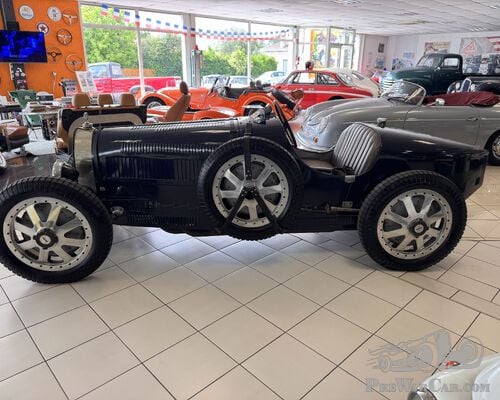
Bugatti 35 B Pur Sang
Bugatti 35 B Pur Sang,importée par un membre délégué de la FFVE il y’a une quinzaine d années.Participation à de nombreux Rallyes Bug..

Alfa 6C1750 Spider
Alfa 6C1750 Spider with complete history from delivery in 1930 to first owner in Firenze till today with copy Libretto/license plate all the years