The global magazine and marketplace for classic car enthusiasts, by enthusiasts.


Filter
Classic Invicta, DeSoto for sale - Invicta, DeSoto cars for sale
-

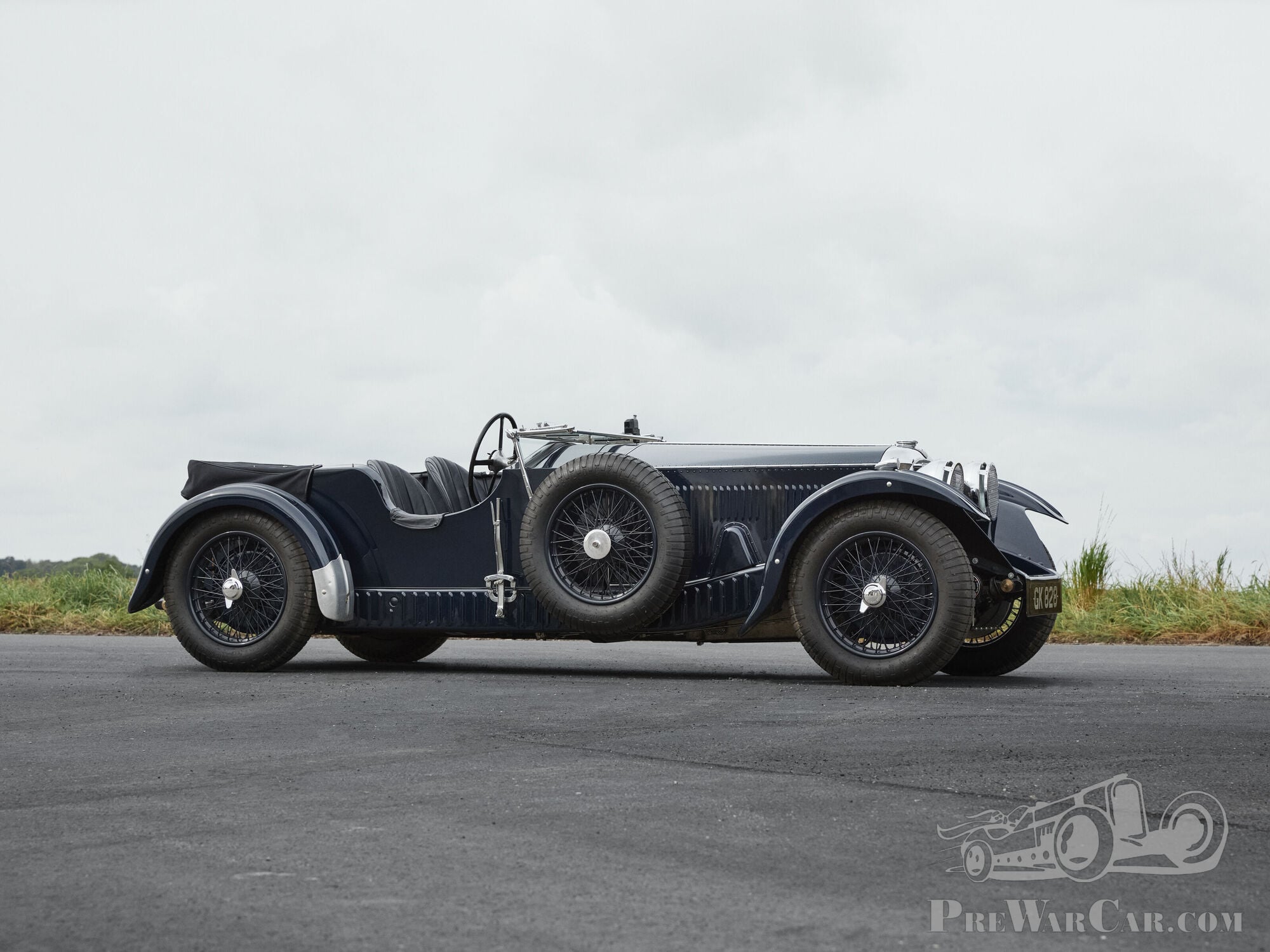
1931 Invicta 4.5 Litre Low Chassis By Salmons & Sons.
1931 Invicta 4.5 Litre Low Chassis By Salmons & Sons. Chassis Number: S161 Registration: Belgium BGX303 Totally original 1931 Invicta S type, believed to be the only S-type bodied by Salmon and Son.Recently restored and in the best condition.Absolutely ne.. -
1928 INVICTA 4.5 Litre HIGH CHASSIS LC-Type
1928 INVICTA 4.5 Litre HIGH CHASSIS LC-TypeChassis Number: LC253Registration Number: DS7872A real Performance car & seriously fast. This car has benefitted from a recent restoration & rebuild in excess of 400,000 euros by vintage car specialists Historic Cometition services. The 4.5 litre engine has been bored ou.. -
Invicta 4.5 Litre
Invicta 4½-liter (Series A)Built in 1931 (first registration January 2, 1931, built in 1930).Chassis number A204, engine number 7918.Exterior color Oxford blue combined with a black chassis and black wire wheels.Blue leather interior trimmed with blue carpet and a black mohair hood. Duri.. -
Invicta 4.5Litre Low Chassis Type S (A). Superb vintage sports tourer
Most vintage cars have a certain presence to them but very few have got the same presence as the Invicta Type S with its dramatic, low chassis.It is believed just 1,000 Invictas of all types were build before the company had to bow down in the autumn of 1933 as a result of the early 1930s economic depression. Invicta existed for less than.. -
1931/32 INVICTA 12/45hp
1931/32 INVICTA 12/45hp in original condition. Opportunity to buy a rare car ! I bought this chassis underslung Invicta in London in 1967 and it was kept in our museum collection of rare cars always inside ever since. A 6cylinder prewar AC engine and gearbox will be supplied with the car. Suitable to make a Special of but I would restore this pr.. -
1931 Invicta 4½-Litre S-Type ‘Low Chassis’ Sports by Vanden Plas | RM Sotheby's | The London Auction
To Be OFFERED AT AUCTION at RM Sothebys' The London Auction event, 31 October 2026. £450,000 - £650,000 GBP Please check back soon as our dedicated cataloguing team is preparing the description for this lot. To view this car and others currently consigned to this auction, please visit the RM website at rmsothebys.com/auctions/lf26/. -
1934 Invicta S Type by Carbodies
‘Invicta Cars’ was founded and run by the successful businessman, Noel Macklin. He was born in 1886, educated at Eton and in the Great War served as a Captain in the Royal Horse Artillery. He was wounded and invalided out in 1915. He established the Invicta Company in buildings on his estate in Cobham, Surrey in 1925. He had the financial backin..




Invicta
GB, 1900 – 1905
H.E. Richardson, Finchley, London N.
The Invicta car from Finchley was seen as a bicycle, a motor cycle and as a voiturette. Rather surprisingly for such a small concern, the latter two were powered by engines of the firm’s own manufacture.
Italy, 1906
Stabilimento Meccanico Carlo Mantovani & Cia, Turin
Carlo Mantovani had been technical director of Bender and Martiny (Perfecta) and he built a few light cars named Invicta cars with side-chain drive and 3-speed gearboxes in their old factory. The 6/8hp Invicta car was a twin and the 10/12hp a four with pair-cast cylinders; neither lasted long
GB, 1913 – 1914
Clark’s Engineering Works, Leamington, Warwickshire
The short-lived Invicta car from Leamington was one of the cyclecar breed. The Invicta car was powered by a watercooled V-twin JAP engine of 8hp, driving through a 3-speed gearbox and shaft primary drive to chain final drive.
GB, 1925 – 1938, 1946 – 1950
(1) Invicta Cars, Cobham, Surrey, 1925 – 1933
(2) Invicta Cars, Chelsea, London S.W.3, 1933 – 1938
(3) Invicta Car Development Co Ltd, Virginia Water, Surrey, 1946 – 1950
In 1925 Noel Macklin and Oliver Lyle, both of them with experience of motor design and Macklin a former manufacturer as well (Eric Campbell, Silver Hawk) introduced a type of car, the Invicta car, that was quite new to the British market. The idea behind the Invicta car was to combine in an assembled car the American concept of flexibility and performance with British quality and road-holding, thus getting the best of both worlds. The engine in the Invicta car, the Meadows 2½-litre, 6-cylinder engine had push-rod overhead valves. Its low-speed torque permitted the Invicta car to accelerate from a walking pace to 60mph in top gear, but a four-speed gearbox was provided, all the same, and the Invicta car make’s sustained high-speed cruising capabilities became legendary after winning the Dewar Trophy for long-distance reliability runs in 1927 and 1929. In outward appearance the first Invicta car was very staid, and it was marred by the fact that the brakes on the Invicta car were poor. The rivets down the bonnet were copied from the Rolls-Royce. During 1926, an engine with a bigger bore, providing 3 litres, was offered on Invicta cars alongside the original unit, and by 1927 was the only one sold. In that year real speed arrived for the fist time in the shape of the 4½-litre Invicta car. This Invicta car had a larger bore still, with an 85mph maximum and really shattering acceleration in spite of pulling a 3.9:1 axle ratio. By late 1929, the 3-litre Invicta car had been dropped. The 1931 4½-litre came in two types: the Invicta 4½-litre high-chassis, and the Invicta 4½-litre ‘100-mph’ low-chassis model. The latter Invicta car was lowered by underslinging the rear springs. This invicta car was capable of 95mph.
Unfortunately the splendid Invicta car was always expensive, and its roadholding reputation was damaged among sportsmen, who were by now its most important customers, by a highly-publicized accident to S.C.H. Davis at Brooklands in 1931. In spite of a win in the Monte Carlo Rally of an Invicta car, a Coupe des Glaciers in the Alpine Trial that year and almost equal success in the same events in 1932, only about 1.000 Invicta cars were made before production ceased in 1935. Invicta tried to stave off the end by introducing a small Invicta car for a more popular market in 1932. This Invicta 12/45 was not a success because the single overhead-camshaft 6-cylinder engine, amade by Blackburne, was of only 1½-litres’ capacity. However efficient this Invicta car was, it could not cope with its heavy chassis without the aid of an axle ratio of 6:1. This gave the famed flexibility, but not the performance you would expect on an Invicta car. The 12/45 was supplemented in 1933 by the supercharged Invicta 12/90, but only a handful were made. Both Invicta cars were seen with Wilson self-changing gearbox, the weight of which cannot have helped. After Invicta ended, Macklin went on to make the Railton, a machine with the traditional Invicta car performance characteristics allied to low price. For 1938, three new Invicta cars, in 2½-, 3- and 4-litre form, were planned. All these Invicta cars were to have 6-cylinder, overhead-valve engines, all-synchromesh gearboxes, and independent front suspension by transverse spring. Nothing was seen of these Invicta cars, the chassis of which seem to have been disguised Darracqs and the bodies similar to those of the 3-litre D670 Delage.
The old Invicta name was revived briefly after World War 2, when it was attached to a luxury car called the Invicta Black Prince, powered by a 6-cylinder Meadows engine of three litres, with two overhead camshafts and two plugs per cylinder. This unit produced 120bhp at 5.000rpm. Unlike earlier Invicta cars, the car’s other characteristics were highly unconventional. There was no gearbox in the Invicta car; instead, a Brockhouse hydrokinetic turbo transmitter that provided automatic transmission on any ratio between 15:1 and 4,27:1. Suspension was independent all round, by torsion bars. But the new Invicta car was another horribly expensive car, although plans envisaged an output of 250 a year, it met the same fate as its predecessors after only a score or so had been made. AFN Ltd, manufacturers of the Frazer Nash, acquired the assets of the dead firm.
Source: Georgano, encyclopedia of motorcar; TRN
The information is written with the greatest of care. However, if you have any suggested amendments please contact us at office@prewarcar.com
DeSoto
US, 1913 – 1916
DeSoto Motro Car Co, Auburn, Ind.
The DeSoto appears to have succeeded the Zimmerman. This was a large car with a 55hp, 6-cylinder engine, which was furnished with a compressed-air starter. The DeSoto model Six-55 five-seater touring car sold for $2185.
US, 1928 – 1960
Chrysler Motors Corp, Detroit, Mich.
The DeSoto was launched in 1928 as a 3.2-litre side valve six to compete with Oldsmobile, Pontiac and the cheaper Nashes. Styling and general design of the DeSoto were in line with the 1929 Chryslers, and at $885 for a DeSoto sedan 90.000 were sold in the first twelve months. A 3.4-litre straight-8 DeSoto on a 9ft 6in wheelbase was announced for 1930 as the world’s cheapest 8-cylinder car. However, DeSoto suffered badly in the Depression, and in 1932, when flexible rubber engine mountings and free wheels were made available, sales dropped to 26.000 DeSoto cars.
The DeSoto disappeared from the British market about this time, though certain ‘Chrysler’ models listed in England (the Mortlake, Croydon, and some of the Richmonds) were in fact DeSoto cars in all but name. A 6-cylinder version of Chrysler’s advanced unitary-construction Airflow, the SE-type with a 4-litre engine, was brought out in 1934, but was an unsuccessful as its bigger sister. Later DeSotos followed regular Chrysler lines closely though in later years there was a tendency for DeSoto to move into a higher price class than Dodge; by 1952 DeSotos started $300 higher than the companion make.
By 1939 the DeSoto cars for sale were being made with independent front suspension, hypoid back axles and column change. There was a choice at DeSoto of two 6-cylinder engines and three wheelbase lengths, the longest of these being reserved for seven-seater bodywork – DeSoto continued to offer a really roomy family car right up to 1954. A 4-speed semi-automatic Vacumatic transmission became an option in 1941, but DeSoto’s big post-war change of models did not take place until 1952, when the division followed Chrysler’s lead in adopting the oversquare ohv V8; the DeSoto version was of 4½-litre capcity and developed 16-bhp. With the advent of Chrysler’s ‘flight sweep’ styling in 1955, the side-valve sixes were dropped and the standard engine in a DeSoto was now a 4.8-litre eight, giving 185bhp in Firedome guise, and 200bhp in Fireflite form. Though this redesigning saved Chrysler sales generally, the slump in the medium-price class had an adverse effect on DeSoto and in 1959 the DeSoto division was merged with Plymouth. Last of the DeSotos were the 1961 models, unitary-construction cars with a choice of three engines: Plymouth’s 145bhp ohv ‘slant six’ as used in the Valiant, and V8s of 230 and 265bhp, the two former only in Canadian DeSotos. Production of DeSoto cars ceased in November 1960 after only a few had been delivered.
Source: Georgano, encyclopedia of motorcar; MCS
The information is written with the greatest of care. However, if you have any suggested amendments please contact us at office@prewarcar.com


Featured
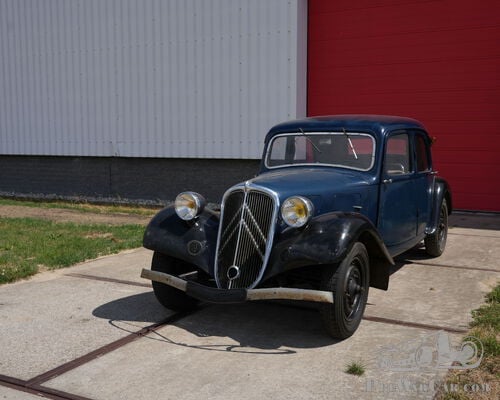
1935 Citroën Traction Avant
Early-production Traction AvantExceptionally original, unrestored conditionRecently part of a major museum collection
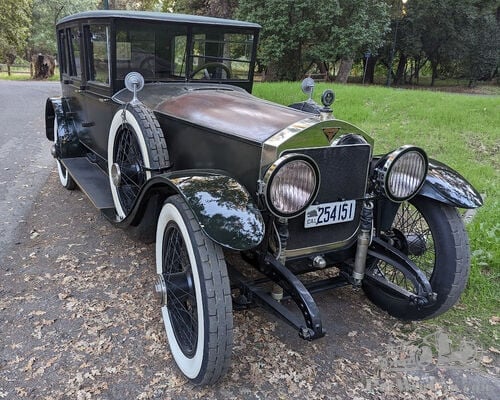
1916 Simplex, Crane model 5
1916 Simplex, Crane MODEL 5CUSTOM MADE HISTORIC PRESERVATION VEHICLE – READY TO TOUR!This Simplex recently completed th..
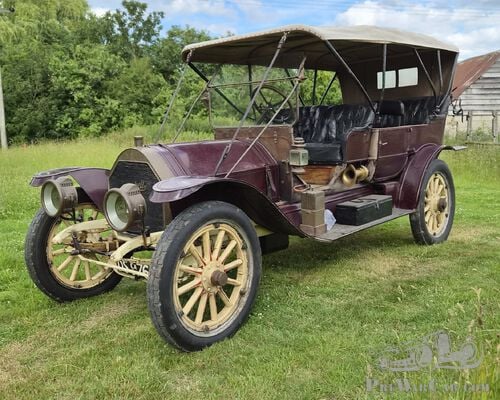
1910 Mitchell Model S - 50HP Six Cylinder
Based in Racine, Wisconsin and being the largest wagon manufacturer in the USA, Mitchell-Lewis produced their first motor car in 1903. Sales grew ..