The global magazine and marketplace for classic car enthusiasts, by enthusiasts.


Filter
Classic Invicta, Léon Bollee for sale - Invicta, Léon Bollee cars for sale
-

Invicta 4.5 Litre
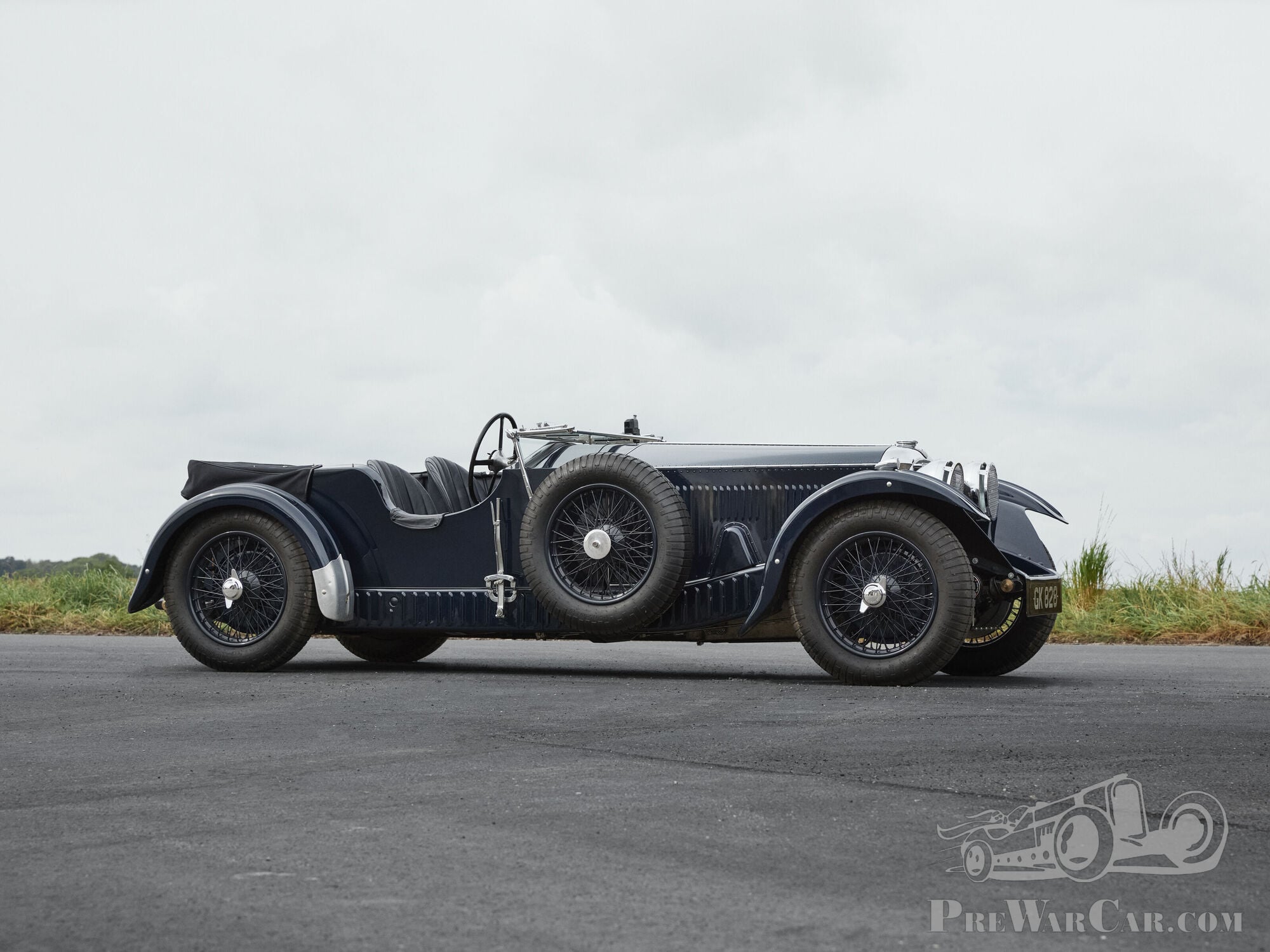
Invicta 4½-liter (Series A)Built in 1931 (first registration January 2, 1931, built in 1930). Chassis number A204, engine number 7918. Exterior color Oxford blue combined with a black chassis and black wire wheels. Blue leather interior trimmed with blue carpet and a black mohair hood. .. -
1931/32 INVICTA 12/45hp
1931/32 INVICTA 12/45hp in original condition. Opportunity to buy a rare car ! I bought this chassis underslung Invicta in London in 1967 and it was kept in our museum collection of rare cars always inside ever since. A 6cylinder prewar AC engine and gearbox will be supplied with the car. Suitable to make a Special of but I would restore this pr.. -
1928 INVICTA 4.5 Litre HIGH CHASSIS LC-Type
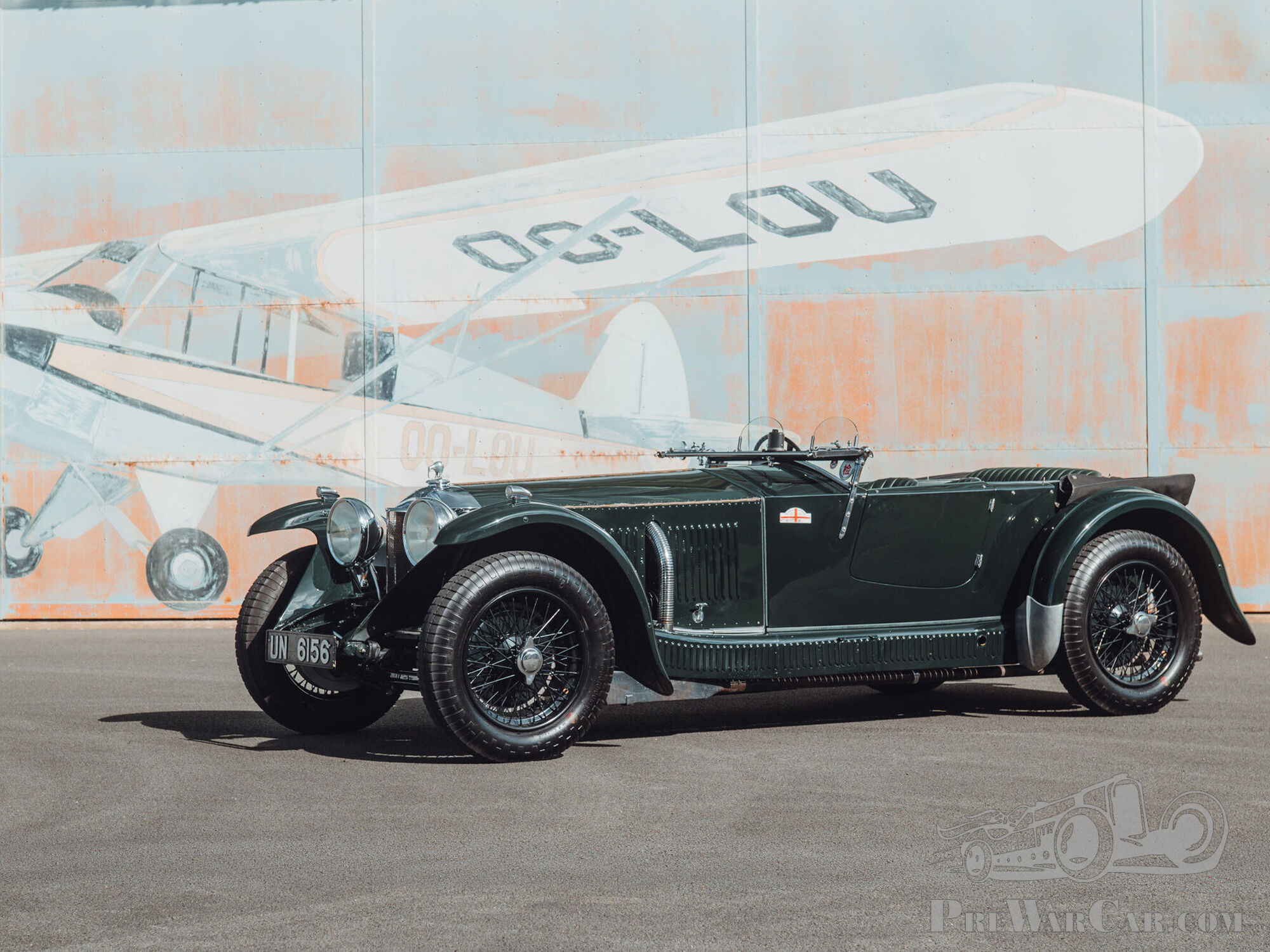
1928 INVICTA 4.5 Litre HIGH CHASSIS LC-TypeChassis Number: LC253Registration Number: DS7872A real Performance car & seriously fast. This car has benefitted from a recent restoration & rebuild in excess of 400,000 euros by vintage car specialists Historic Cometition services. The 4.5 litre engine has been bored ou.. -
1931 Invicta S-Type Low Chassis
1931 Invicta S-Type Low ChassisCarbodies Tourer, Chassis S42, nicknamed “Sandstone”Raced by Charles Mortimer in the 1950s at Silverstone and PrescottLater owned by Broadway director and Juilliard Professor John StixLovin.. -
Invicta 4.5Litre Low Chassis Type S (A). Superb vintage sports tourer
Most vintage cars have a certain presence to them but very few have got the same presence as the Invicta Type S with its dramatic, low chassis.It is believed just 1,000 Invictas of all types were build before the company had to bow down in the autumn of 1933 as a result of the early 1930s economic depression. Invicta existed for less than.. -
1934 Invicta S Type by Carbodies
‘Invicta Cars’ was founded and run by the successful businessman, Noel Macklin. He was born in 1886, educated at Eton and in the Great War served as a Captain in the Royal Horse Artillery. He was wounded and invalided out in 1915. He established the Invicta Company in buildings on his estate in Cobham, Surrey in 1925. He had the financial backin..



Invicta
GB, 1900 – 1905
H.E. Richardson, Finchley, London N.
The Invicta car from Finchley was seen as a bicycle, a motor cycle and as a voiturette. Rather surprisingly for such a small concern, the latter two were powered by engines of the firm’s own manufacture.
Italy, 1906
Stabilimento Meccanico Carlo Mantovani & Cia, Turin
Carlo Mantovani had been technical director of Bender and Martiny (Perfecta) and he built a few light cars named Invicta cars with side-chain drive and 3-speed gearboxes in their old factory. The 6/8hp Invicta car was a twin and the 10/12hp a four with pair-cast cylinders; neither lasted long
GB, 1913 – 1914
Clark’s Engineering Works, Leamington, Warwickshire
The short-lived Invicta car from Leamington was one of the cyclecar breed. The Invicta car was powered by a watercooled V-twin JAP engine of 8hp, driving through a 3-speed gearbox and shaft primary drive to chain final drive.
GB, 1925 – 1938, 1946 – 1950
(1) Invicta Cars, Cobham, Surrey, 1925 – 1933
(2) Invicta Cars, Chelsea, London S.W.3, 1933 – 1938
(3) Invicta Car Development Co Ltd, Virginia Water, Surrey, 1946 – 1950
In 1925 Noel Macklin and Oliver Lyle, both of them with experience of motor design and Macklin a former manufacturer as well (Eric Campbell, Silver Hawk) introduced a type of car, the Invicta car, that was quite new to the British market. The idea behind the Invicta car was to combine in an assembled car the American concept of flexibility and performance with British quality and road-holding, thus getting the best of both worlds. The engine in the Invicta car, the Meadows 2½-litre, 6-cylinder engine had push-rod overhead valves. Its low-speed torque permitted the Invicta car to accelerate from a walking pace to 60mph in top gear, but a four-speed gearbox was provided, all the same, and the Invicta car make’s sustained high-speed cruising capabilities became legendary after winning the Dewar Trophy for long-distance reliability runs in 1927 and 1929. In outward appearance the first Invicta car was very staid, and it was marred by the fact that the brakes on the Invicta car were poor. The rivets down the bonnet were copied from the Rolls-Royce. During 1926, an engine with a bigger bore, providing 3 litres, was offered on Invicta cars alongside the original unit, and by 1927 was the only one sold. In that year real speed arrived for the fist time in the shape of the 4½-litre Invicta car. This Invicta car had a larger bore still, with an 85mph maximum and really shattering acceleration in spite of pulling a 3.9:1 axle ratio. By late 1929, the 3-litre Invicta car had been dropped. The 1931 4½-litre came in two types: the Invicta 4½-litre high-chassis, and the Invicta 4½-litre ‘100-mph’ low-chassis model. The latter Invicta car was lowered by underslinging the rear springs. This invicta car was capable of 95mph.
Unfortunately the splendid Invicta car was always expensive, and its roadholding reputation was damaged among sportsmen, who were by now its most important customers, by a highly-publicized accident to S.C.H. Davis at Brooklands in 1931. In spite of a win in the Monte Carlo Rally of an Invicta car, a Coupe des Glaciers in the Alpine Trial that year and almost equal success in the same events in 1932, only about 1.000 Invicta cars were made before production ceased in 1935. Invicta tried to stave off the end by introducing a small Invicta car for a more popular market in 1932. This Invicta 12/45 was not a success because the single overhead-camshaft 6-cylinder engine, amade by Blackburne, was of only 1½-litres’ capacity. However efficient this Invicta car was, it could not cope with its heavy chassis without the aid of an axle ratio of 6:1. This gave the famed flexibility, but not the performance you would expect on an Invicta car. The 12/45 was supplemented in 1933 by the supercharged Invicta 12/90, but only a handful were made. Both Invicta cars were seen with Wilson self-changing gearbox, the weight of which cannot have helped. After Invicta ended, Macklin went on to make the Railton, a machine with the traditional Invicta car performance characteristics allied to low price. For 1938, three new Invicta cars, in 2½-, 3- and 4-litre form, were planned. All these Invicta cars were to have 6-cylinder, overhead-valve engines, all-synchromesh gearboxes, and independent front suspension by transverse spring. Nothing was seen of these Invicta cars, the chassis of which seem to have been disguised Darracqs and the bodies similar to those of the 3-litre D670 Delage.
The old Invicta name was revived briefly after World War 2, when it was attached to a luxury car called the Invicta Black Prince, powered by a 6-cylinder Meadows engine of three litres, with two overhead camshafts and two plugs per cylinder. This unit produced 120bhp at 5.000rpm. Unlike earlier Invicta cars, the car’s other characteristics were highly unconventional. There was no gearbox in the Invicta car; instead, a Brockhouse hydrokinetic turbo transmitter that provided automatic transmission on any ratio between 15:1 and 4,27:1. Suspension was independent all round, by torsion bars. But the new Invicta car was another horribly expensive car, although plans envisaged an output of 250 a year, it met the same fate as its predecessors after only a score or so had been made. AFN Ltd, manufacturers of the Frazer Nash, acquired the assets of the dead firm.
Source: Georgano, encyclopedia of motorcar; TRN
The information is written with the greatest of care. However, if you have any suggested amendments please contact us at office@prewarcar.com
Léon Bollee
France, 1895 – 1933
(1) Automobiles Léon Bollée, Le Mans, 1895 – 1924
(2) Morris Motors Ltd, Usines Léon Bollée, Le Mans, 1925 – 1931
(3) Sté Nouvelle Léon Bollée, Le Mans, 1931 – 1933
Leon Bollee was a son of Amédée Bolllée père, the most important pioneer of steam road vehicles in France. Leon Bollee, however, turned to really small petrol Leon Bollee cars. He was the first to do so, and therefore had to invent a new name for his Leon Bollee car of 1895 – he called it a Leon Bollee voiturette. This Leon Bollee car was a tandem two-seater 3-wheeler that was faster than any other petrol-engined vehicle on the road when the Leon Bollee car was working, thanks to a powerful 3hp engine and light weight, but the power unit was unreliable on the Leon Bollee car. The Leon Bollee car had a single air-cooled cylinder of 650cc and used hot-tube ignition. There were 3 forward speeds on the Leon Bollee car, with belt final drive. The frame was tubular. Four years after the Leon Bollee voiturette appeared, Leon Bollee superseded it with a 4-wheeler with independent front suspension by double transverse leaf springs. This Leon Bollee car had a single-cylinder, water-cooled engine. Unlike the Leon Bollee voiturette, this Leon Bollee car made no mark. The design rights were sold to Darracq, and around 1901 the name of Leon Bollee cars vanished. Meanwhile, the term voiturette had been taken up by the trade and public in general as the name for a small light car.
The Leon Bollee car reappeared in 1903 as an entirely normal, full-sized car in the more expensive class, backed by Vanderbilt money and designed for the American market. This Leon Bollee car was made in 28hp (4.6-litres) and 45hp (8-litres) versions, with four cylinders and chain drive, and led on to a 11.9-litre six Leon Bollee car in 1907, in which year the first shaft driven Leon Bollee car appeared. From 1909 there was also a small modern four, the Leon Bollee 10/14hp. The 1910 range embraced 9 Leon Bollee cars, including 2 of over 10-litres capacity. Electric lighting became available on Leon Bollee cars in 1913, but the Leon Bollee grew increasingly old-fashioned after World War 1 despite the introduction of ohv in 1922 on Leon Bollee cars and front wheel brakes in 1923. Late in 1924 Sir William Morris bought the Le Mans Leon Bollee car factory. From making a wide range of conservative French Leon Bollee fours, it turned to thinly-disguised products of Cowley, Oxford, the idea being to breach the French tariff walls from the inside. The first Morris- Leon Bollee had a 12CV 2½-litre 4-cylinder unit-construction engine made by Hotchkiss, the engine manufacturers controlled by Morris, but it had push-rod overhead valves and bore little evidence of its parentage. Not so the 18CV Morris- Leon Bollee car of 1928. This was a 3-litre straight-8 with single overhead camshaft that reflected Morris’ takeover of Wolseley two years earlier. Morris’ own new six of 1928 was mirrored in the 15CV 2.6-litre Le Mans product of 1929. The bodies for the Morris- Leon Bollee car were all made in France and were usually considerably more dashing and attractive than their British counterparts. Chassis of this Morris- Leon Bollee car were made in France, and all cars had a 4-speed gearbox. At one time, 50 12CV Morris- Leon Bollee cars were being turned out each week. However, Morris’ enterprise was not a success, and he discontinued it in the hard times of the Depression. A new syndicate was formed in September 1931 to sell the same range of cars under the name of Leon Bollee cars. This lasted for less than two years and few Leon Bollee cars were made.
Source: Georgano, encyclopedia of motorcar; TRN
The information is written with the greatest of care. However, if you have any suggested amendments please contact us at office@prewarcar.com


Featured
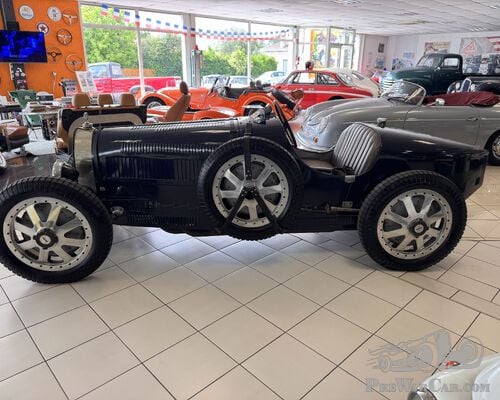
Bugatti 35 B Pur Sang
Bugatti 35 B Pur Sang,importée par un membre délégué de la FFVE il y’a une quinzaine d années.Participation à de nombreux Rallyes Bug..

Alfa 6C1750 Spider
Alfa 6C1750 Spider with complete history from delivery in 1930 to first owner in Firenze till today with copy Libretto/license plate all the years