The global magazine and marketplace for classic car enthusiasts, by enthusiasts.


Filter
Classic Itala for sale - Itala cars for sale
-

1921 Ansaldo type 4C rolling chassis
1921 Ansaldo type 4C rolling chassis. Complete engine and gearbox no 17634 and chassis no 1763. All components are in excellent condition including the 5 original wirespoked wheels and three of the beaded edge tyres. Good radiator. Suitable project to build a Special from. OHC engine. € 18500 negotiable. .. -
Chenard & Walcker Model G
The Chenard & Walcker is a 1905 Model G, equipped with a 5-liter, four-cylinder engine producing 20 horsepower, enabling the car to reach a top speed of approximately 85 km/h | 50 mp/h. The body is a Double Phaeton and was crafted by the renowned coachbuilder Jean-Henri Labouredette. In addition to the radiator b.. -
1939 Rolls Royce Wraith James Young Razor Edge Saloon
1939 Rolls Royce Wraith James Young Razor Edge Saloon Chassis Number: WEC72 Registration Number: 39D25 (Ireland) £200k spent upon the restoration of this car to make it in effect a brand new Rolls Royce Wraith being delivered 86 years late!!! Simply.. -
1936 Bentley Derby 4.25 Sedanca by Thrupp & Maberly
1936 Bentley Derby 4.25 Sedanca by Thrupp & Maberly Chassis number: B-36-GA Registration Number: CXE213 A stunningly beautiful car which wows onlookers wherever it is seen, this 4.25 Litre Derby Bentley Sedanca Coupe has fabulous and possibly unique aluminium Sedanca coachwork by Thrupp and Maberly... -
Cadillac V16 - Series 452 - 1930 - Imperial Sedan 4330
Offers invited a round € 200.000 - This ONE of 4 Survivors of Serie 4330 body style - book C.W. Cummings - 2014) ***excellent driving car, the V16 gives you a special experience, no other car has***https://www.prewarcar.com/a-stately-cadillac-v16-in-the-netherlandsBuilt; no 9 of 50 - Engine no. 700163Lengt.. -
1925 Lancia Lambda 5th Series Torpedo
With a monocoque body, four-wheel brakes, independent front suspension and V4 overhead camshaft engine, many enthusiasts view the Lancia Lambda as one of the great and innovative automobiles of all time. The Lambda was also successful in competition with privately entered cars finishing fourth and fifth behind the works OMs in the first Mille Mi.. -
1930 Bentley Speed Six
1930 Bentley Speed Six Chassis Number: SB2774 Engine Number: SB2772 Reistration Number: GH8974 New to market & freshly restored to perfection. This car has over the past two years been fully rebuilt & built up as a LeMans style tourer by noted Rolls Royce &.. -
Renault NN Torpedo Commerciale (1926)
Highlights Complete, coherent, unmodified exampleExcellent base for a full restorationAttractive 1920s torpedo body styleVery accessible entry priceIdeal for workshops or enthusiasts looking for a rewarding project Restoration project – Complete car – Solid base but major work r.. -
Société des Automobiles Pilain
The 1911 Pilain is the Type 4.0, equipped with a four-cylinder engine and a single Zenith carburetor. This car has undergone a comprehensive restoration over the past few years. Since the original body was too deteriorated to restore, it was decided to install an alternative body. The current elegant body is sourced from a Bianchi, which perfect.. -
Lane Model 15 | Steam car
This unique steam car is a completely original 1909 Lane Model 15, offering a highly distinctive design that sets it apart from most other steam vehicles. It is the only surviving Lane Model 15 in existence. Experts consider the Lane to be one of the finest steam cars of the early automotive era, produced between 1900 and 1910. Lan..


Itala
Italy, 1904 – 1934
(1) Fabbrica Automobili Itala S.A., Turin, 1904 – 1929
(2) Itala S.A., Turin, 1929 – 1931
(3) S.A. Costruzioni Automobilistiche, Turin, 1931 – 1934
After leaving the Ceirano concern Matteo Ceirano joined Guido Bigio to form Itala, though he left in 1906 to start S.P.A., and Bigio remained in effective charge until his death in a road accident seven years later. Early Itala cars followed the Mercédès idiom with 4-cylinder engines, side valves in a T-head, and low-tension magneto ignition; the Itala cars were, however, invariably shaft-driven. The first Itala car model was a 4.6-litre Itala 24, but bigger Itala cars soon followed, some of them with twin water-cooled transmission brakes. The Itala company soon established a reputation on the circuits, Raggio’s 15.3-litre ioe Itala car being the first large shaft-driven car to win a major race, the 1905 Coppa Florio. Cagno’s stripped Itala touring model was first in the 1906 Targa Florio, and a similar Itala car won the Pekin-Paris marathon of 1907, in which year Itala entered both a 14.432cc Itala car grande voiture (victor of the Coppa della Velocita at Brescia) and an oversquare 8-litre Itala car for the Kaiserpreis. A 12-litre Itala car with 120bhp four unsuccessfully contested the 1908 French GP, and was subsequently catalogued until 1912. These successes won Itala royal patronage (Queen Mother Margherita of Italy had five Itala cars), and induced the British BSA and Weigel companies to produce some blatant copies of the successful 7.4-litre 35/40 Itala car.
By 1908 the range of Itala cars was extensive: at the bottom end was a modest 2.6-litre Itala 14/20 with high-tension magneto ignition and 4-speed gearbox, but for the wealthy there were two enormous sixes with capacities of 11.2 and 12.9-litres; the latter cost £1.600 as a chassis in England and this Itala car was still catalogued as late as 1915 with the old-fashioned make-and-break ignition. More modern Itala cars followed, L-head monobloc units making their appearance in 1910 on the 1.9-litre Itala 12/16, a small vehicle by Italian standards that helped the Itala car company to sell 720 Itala cars in 1911. That year also brought a new 2.235cc 14/18 Itala car on similar lines. In 1912 Alberto Balloco experimented with an abortive variable-stroke engine; by contrast, his rotary-valve unit was marketed, and quite a few of these Itala cars were sold in various sizes ranging up to monsters of over 8 litres’ capacity, later ones having pear-shaped radiators in the now prevailing Italian idiom. Some Itala cars were actually raced in the 1913 French GP, though without success. By 1914 home-market buyers had the choice of 11 Itala cars, three of them with rotary valves. Electric lighting was standard on the Itala car, and 14/20 Itala cars came with electric starters as well.
Bigio’s untimely death and an unsuccessful wartime attempt to build Hispano-Suiza V8 aero engines had a catastrophic effect on Itala, and their post-World War 1 range of Itala cars (based on the 2.6-litre Itala Tipo 39 prototype of 1916) was merely the 1914 idiom updated with spiral bevel back axle and full electrics. Itala Tipo 50 was a 2.8-litre sv four with fixed head and foot transmission brake, and the Itala Tipo 54 and 56 of 1922/ 1923 were scaled-down 2-litre versions. Rather better was the Itala 51S, a 55bhp development of the 50 with aluminium pistons that could achieve 80mph and this Itala car won its class in the Targa Florio races of 1921 and 1922. A new rotary-valve engine Itala car came in 1922, the 4.4-litre 6-cylinder Itala Tipo 55 with unit gearbox, twin carburetors and 4-wheel brakes, but 4-wheel brakes were available on the fours by late 1923, and these persisted on Itala cars until 1926.
Meanwhile G.C. Cappa had joined Itala from FIAT, and his Itala Tipo 61 appeared in 1924; this Itala car was an attractive 7-bearing pushrod light six of 1.991cc with alloy block and pistons, 3-speed unit gearbox, and 4-wheel brakes; it had received servo assistance by 1926 when an extra forward ratio was also provided. With its Rolls Royce type radiator it was a handsome Itala car that should have rivalled the OM Tipo 665 (it cost £850 in England), but never did.
Despite assistance from the IRI, the government-run Reconstruction Finance Corporation, Itala’s finances went from bad to worse, and they lost 21 million lire in 1929. An attempt to re-enter Grand Prix racing with an Itala car with a Lilliputian V12 in 1.100cc and 1.500cc forms failed utterly; a wooden-framed prototype of the Itala car was made in 1926 and still exists, but this Itala car never ran under its own power. Nor did they succeed with the Itala Tipo 65, a redesigned dohc 2-litre based on the 61, but with coil ignition, twin electric fuel pumps, and a rear axle passing through the chassis frame. Two re-organizations followed, in 1929 and 1931, and in 1932 there was actually a new Itala car, a rehashed 2.3-litre development of the Tipo 61 Itala car designated Itala Tipo 75.
Source: Georgano, encyclopedia of motorcar; MCS
The information is written with the greatest of care. However, if you have any suggested amendments please contact us at office@prewarcar.com


Featured
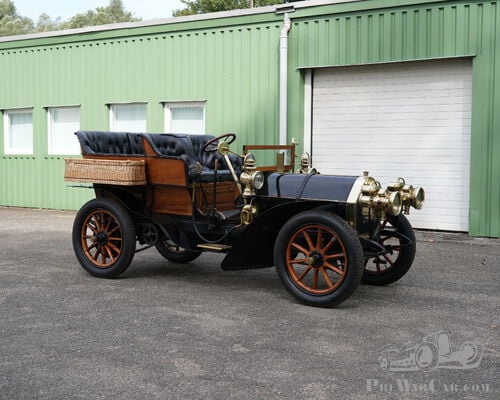
1904 Aster 16/20 HP Four-Cylinder Five-Seat Rear-Entrance Tonneau
Powerful four-cylinder engineFour-speed gearboxChain driveFive seatsMore than €100,000 recently invested
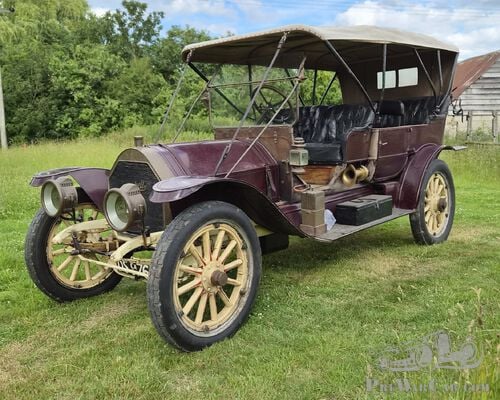
1910 Mitchell Model S - 50HP Six Cylinder
Based in Racine, Wisconsin and being the largest wagon manufacturer in the USA, Mitchell-Lewis produced their first motor car in 1903. Sales grew ..
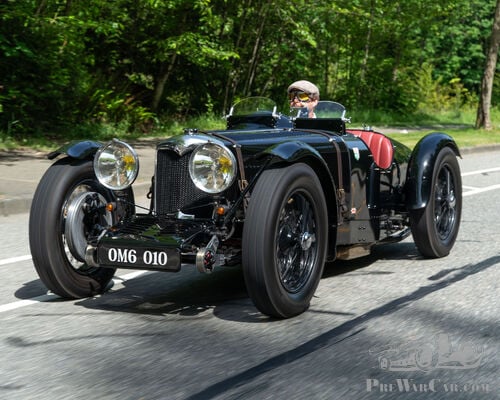
Riley 14/6 Special 1933
The ExperienceStep into the golden age of British motoring. This 1933 Riley 14/6 Special is a masterclass in pre-w..