The global magazine and marketplace for classic car enthusiasts, by enthusiasts.


Filter
Classic Jackson for sale - Jackson cars for sale
-

1940 Buick Super Convertible Coupe | RM Sotheby's | The Hershey Auction
To Be OFFERED AT AUCTION WITHOUT RESERVE at RM Sothebys' The Hershey Auction event, 7 - 8 October 2026. Offered Without Reserve | $50,000 - $60,000 USD Formerly owned by well-known enthusiast Alan EgelseerFinished in the classic Sequoia Cream over red leather interiorWell-optioned and accessorized; attractive older rest.. -
Bentley 4½ Litre Blower 1930 - Birkin Spec
Some cars are admired. Others are experienced. This Bentley Blower belongs firmly in the latter category. Shaped in period by the respected H.J.K. Townshend, a craftsman trusted by original Team Bentley owners, this example reflects a deep understanding of what defines a true Blower. Authentic in spirit and purposeful in execution,.. -
1923 Rolls Royce Silver Ghost Alpine Eagle
1923 Rolls Royce Silver Ghost Alpine Eagle. Chassis Number: 44SG Registration Number: Spanish Registered. An extraordinary car with an extraordinary story: This Silver Ghost was bricked up in a Spanish nobleman's mansion in 1936. It slumbered there .. -
1930 Standard Avon Alvis 12/50 Supercharged Special
1930 Standard Avon Alvis 12/50 Supercharged Special Chassis Number: 29035 Registration Number: BF9202 The present owner began building the A-A in 1965. He had enjoyed driving his first real car, a 1929 12/50 Alvis Betleback and when he acquired a 1930 Standard Avon, he found tha.. -
1906 FIAT BREVETTI COUPÉ DE VILLE Coachwork by Carrozzeria Italiana Cesare Sala, Milan
1906 FIAT BREVETTI COUPÉ DE VILLE Coachwork by Carrozzeria Italiana Cesare Sala, Milan Chassis No. 788 Coachwork No. 5699 Location: Siena, Tuscany, Italy AN EXCEPTIONALLY ORIGINAL SURVIVING FIAT BREVETTI Offered for sale is this exceptionally rare 1906 FIAT Brevetti, chassis no. 788, featuring distinguished Coupé de Ville coachwork by the renow.. -
1899 Beeston Ladies’ Model Motor Tricycle
A rare opportunity to acquire what is believed to be the only surviving Beeston Ladies’ Model motor tricycle. The New Beeston Cycle Co. was one of the earliest British cycle manufacturers to enter the emerging motor-vehicle industry. After experimenting with prototypes from 1896, the company introduced motor tricycles powere.. -
1924 Bentley 3 4 ½ Litre
•Sold new to Major EG Thomson of Edinburgh, of Ecuire Ecosse fame •Owned for more than 50 years by the Martin family•Upgraded to 4.5 Litre spec using original crankcase•Extensive history file includes factory records and buff logbooks•Fully restored by Paul Grist to his ‘ultimate’ period look and specification .. -
Rosengart LR4N2 1938 – Rare Pre-War French Saloon – Restoration Project
Na sprzedaż: Rosengart LR4N2 z 1938 roku Rzadki francuski samochód przedwojenny, projekt do renowacji. -
1921 Rolls Royce 20hp Experimental tourer
1921 Rolls Royce 20hp Experimental tourer. Chassis number: 4G2 Registration Number: CH2892 Sir Henry Royces' personal car used for development of the 20HP chassis. He is pictured in it both at his French house; La Villa Mimosa in Le Canadel & also near his UK home "Elmsted" .. -
Oldsmobile Curved Dash Model 6C 7hp 1904
We have available for sale this exceptionally original 7hp Curved Dash Oldsmobile. Manufactured in 1904. Continuous ownership/history for many years. This is the larger engined motor car with rear brakes & larger hp. These are exceptionally good strong motor cars and can certainly cover some miles without any issues, well built & very go..


Jackson
GB, 1899 – 1915
(1) Yorkshire Motorcar Manufacturing Co Ltd, Bradford, Yorks., 1899 – 1900
(2) Reynold-Jackson & Co Ltd, London W., 1903 – 1915
The original Jackson car used an imported single-cylinder engine, probably a De Dion Bouton, but the few production Jackson cars made in Yorkshire used a 4hp horizontal 2-cylinder Mytholm engine (Later cars were called Mytholms). In 1900 R. Reynold-Jackson went to London where he sold the American Century, Buckmobile and Covert cars. In 1903 he began to sell Jackson cars under his own name, using Lacoste et Battmann chassis and 6 or 9hp De Dion engines. The Jackson cars were originally dos-a-dos dogcarts, but soon conventional seating was adopted.
Later Jackson cars included a wide variety of vehicles such as early examples of estate wagon and some astonishing Jackson sports cars using very long stroke De Dion Bouton single-cylinder engines. The 1909 Jackson Black Demon racer had a 9/11hp engine whose dimensions were 104x213mm, and a sloping slipper-shaped bonnet coming to a sharp point. Other Jackson cars in the 1909 range included a 6hp two-seater at 100gns, a 9hp 2-cylinder and a 12/15hp 4-cylinder Jackson car. The 1913 light Jackson car used a 4-cylinder Chapuis-Dornier engine and a pointed radiator à la Métallurgique, while the Jackson car company also made a 3-wheel cyclecar that year; this had a 1.350cc V-twin JAP engine.
US, 1903 – 1923
Jackson Automobile Co, Jackson, Mich.
For their first year of production this Jackson car company made both steam and petrol cars, both called Jaxon. The Jackson car steamer used a 3-cylinder vertical engine of 6hp, chain drive and a folding seat. It was out of production by 1904. The petrol Jackson car had a single-cylinder engine, and generally resembled the Curved Dash Oldsmobile. A 2-cylinder Jackson car was introduced in 1904, and a 4-cylinder in 1906, in which year there were three Jackson car models, an old type 20hp 2-cylinder with engine under the seat, and chain drive, and two front-engined, shaft-driven cars, a 20hp 2-cylinder and a 30/35hp 4-cylinder. From then on, the Jackson car followed conventional lines, a Northway-engined six being introduced in 1913, and V8 with ohv Ferro engine from 1916 to 1918.
Later Jackson cars had a Rolls-Royce type radiator, but the last Jackson car, made in 1923, was a very ordinary looking car made by the Associated Motors combine who had also acquired Dixie Flyer and National. The 1923 Jackson Six was sold in its final models as the National Model 6-51.
Source: Georgano, encyclopedia of motorcar; GNG
The information is written with the greatest of care. However, if you have any suggested amendments please contact us at office@prewarcar.com


Featured
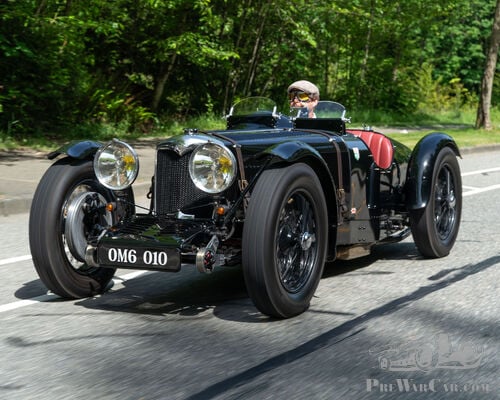
Riley 14/6 Special 1933
The ExperienceStep into the golden age of British motoring. This 1933 Riley 14/6 Special is a masterclass in pre-w..
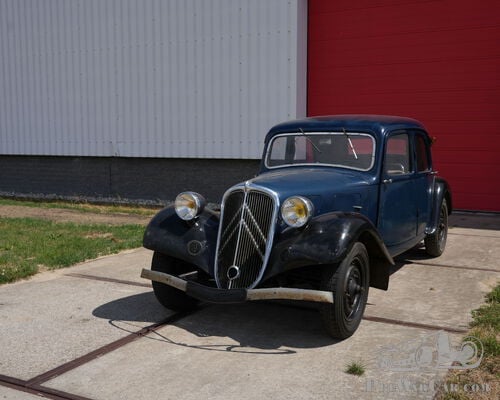
1935 Citroën Traction Avant
Early-production Traction AvantExceptionally original, unrestored conditionRecently part of a major museum collection
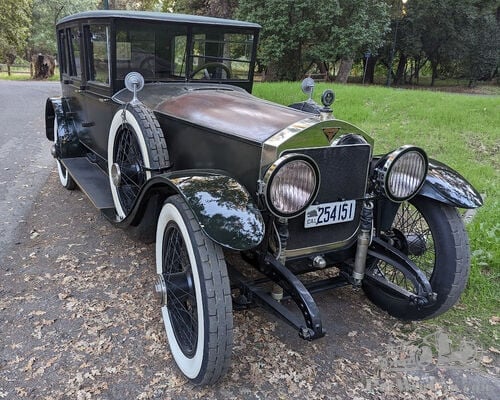
1916 Simplex, Crane model 5
1916 Simplex, Crane MODEL 5CUSTOM MADE HISTORIC PRESERVATION VEHICLE – READY TO TOUR!This Simplex recently completed th..