The global magazine and marketplace for classic car enthusiasts, by enthusiasts.


Filter
Classic Jewel for sale - Jewel cars for sale
-

1937 Bentley 4 ¼ Litre Vanden Plas 'Allweather' Tourer B179JY
An unusual and very interesting, attractive, practical four door open cabriolet configuration make this a particularly desirable Derby Bentley, being easy to access through large doors, and ‘wide-bodied’, giving increased spaciousness and elbow room, and nicely weather resistant, with well-constructed hood, wind up windows, tonneau cover, etc, i.. -
Have you seen this Bentley Le Mans Special? - Brooklands Birkin Racer
Who can tell me more about the whereabouts of the following car? I’m looking for information about a “Red Bentley” replica with a Mark VI chassis and a RR straight-8 B81 engine. The car was built in the Netherlands and was for sale roughly 25 years ago at Imparts in Ede. I even test-drove it there at the time. After that, it was exported to the .. -
1913/14 Ford Model T runabout
1913/14 Ford Model T runabout. 3/4 restored brass Model T Ford. The following has been done: New chassis, fully overhauled engine no 1095067 and gearbox, rearaxle with driveshaft and brakes. New ex-USA painted mudguards ( 4× ) ,tailend and new wooden bodyframe, all new bodypanels bonnet and hoodbows with hoodmaterial, 4 good condition brass.. -
1927 Cadillac V8 complete and restored rolling chassis
1927 Cadillac V8 complete and restored rolling chassis. With good radiator, beautiful original headlights, bonnet, cowling and dashboard. On restored wooden spoked wheels with the original hubcaps. Ideal car for racing and build your own body on ! We also have most of the dismantled original tourer body and the original fenders (guards) in good con.. -
1928 Bentley 4.5 Litre Lemans style tourer.
1928 Bentley 4.5 Litre Chassis No. KM3083 Engine No. KM3086 Registration No. UC 8791 Mint restored condition and all ready for some serious fun. This 4.5 Litre Bentley started life as a Martin Walter Saloon. in 2011 it was rebuilt to Lemans spec by the late Stanley Mann. Since converion it has .. -
Ford Model A Pickup Truck
Ford Model A Pickup Truck Dieser schöne Ford wurde 2014 von einem Oldtimerliebhaber in Kalifornien, USA gekauft, nach Deutschland verschifft und war seitdem Teil seiner privaten Klassiker-Sammlung. Es liegt eine ältere Postkarte bei auf der der schöne Pickup als Teil des Motivs diente. Pickups gehören beim Ford Model .. -
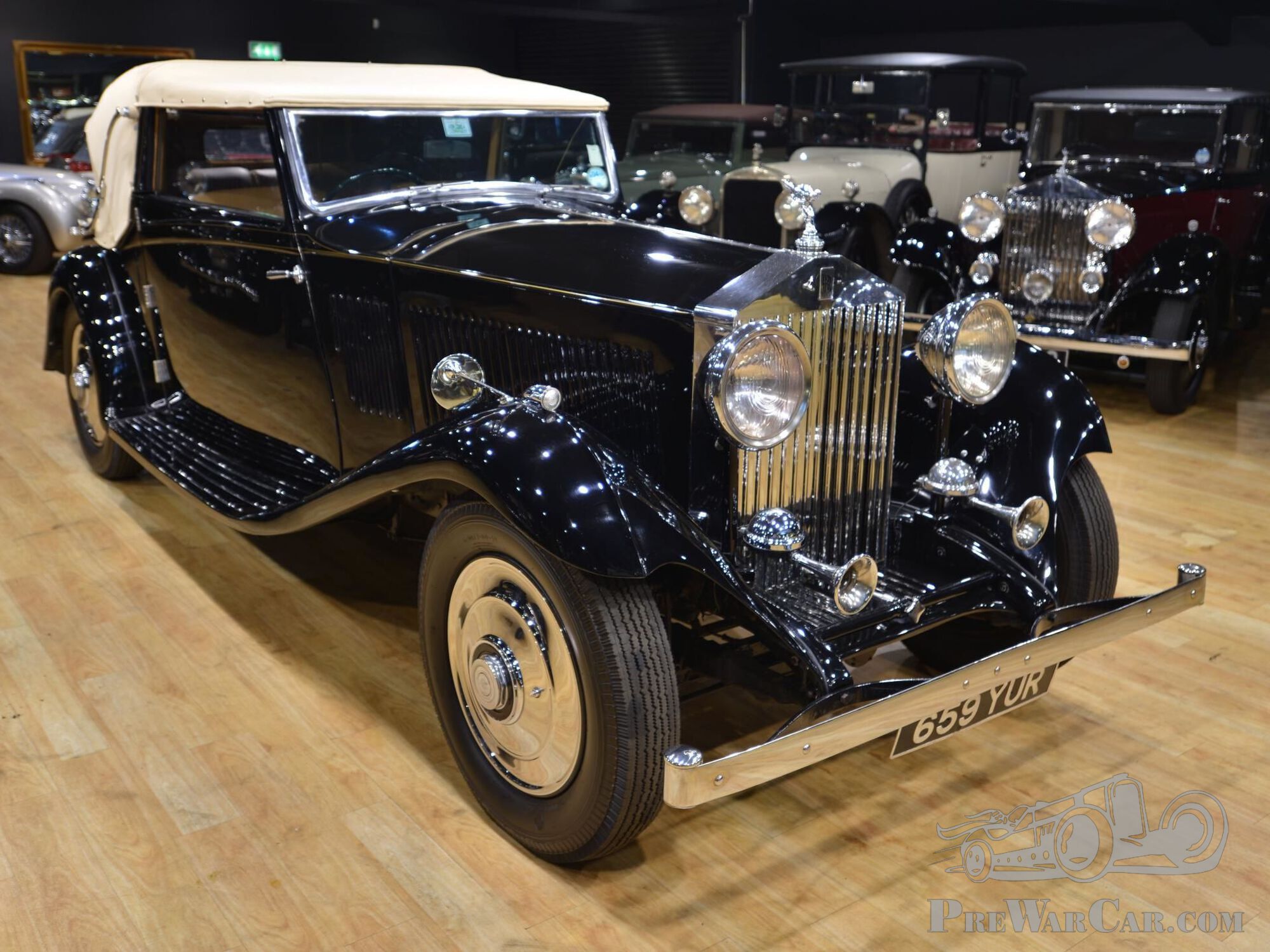
1934 Rolls-Royce 20/25 Gurney Nutting Owen Sedanca 3 position drophead for sale
Vintage and Prestige are proud to offer this 1934 Rolls-Royce 20/25 Gurney Nutting Owen Sedanca 3 position drophead for sale.Chassis number: GYD69Registration number: 659YUROrdered new by one Stanley Morris of Blundellsands Lancs; The car carries most desirable coachwork by J. Gurney Nutting taking the form of an Owen 3 posi.. -
1927 Renault NN1 & Brian James braked trailer
Imported from France in 1997, current owner from 2010, complete engine rebuild, approx 4000 miles, new clutch, dynastart and carburettor restored.Good hood and new tonneau cover. All new inner tubes fitted, spare magneto.Maintenance manual in French and English with other spares available.Includes a Brian James braked traile.. -
1933 Rolls-Royce Phantom II All Weather Touring
This beautiful Rolls is the epitome of 1930’s stunning designs; the exclusive Hooper & co. coachwork is far from conservative. The mile long hood combined with the dramatically raked, low windshield, window pillars and doors give it the appearance of speeding when it’s standing still! And with its astonishing 150” wheelbase she..




Jewel
US, 1906 – 1909
(1) Forest City Motor Co, Cleveland, Ohio, 1906
(2) Forest City Motor Co, Massillon, Ohio, 1906 – 1909
(3) Jewel Motor Car Co, Massillon, Ohio, 1909
For 1906 and 1907 the Jewel car make offered only a two-seater with a 2-stroke, single cylinder engine of 8hp. During these years, the Jewel car make was spelled ‘Jewell’. In 1908, the Jewel 40 was introduced, powered by a Rutenber engine of 4-cylinders and 5.8-litres. Roadster and seven-seater touring models of Jewel cars were mounted on a chassis of 10ft wheelbase. The Jewel car was replaced by the Croxton-Keeton.
GB, 1921 – 1939
John E. Wood, Bradford, Yorks.
The first Jewel cars were cyclecars powered by either Precision or Coventry-Simplex 2-cylinder engines, with friction transmission and chain final drive. Like most of their kind the Jewel cars were only made for about two years, but unlike most cyclecar builders, John E. Wood then turned to the manufacture of small 4-cylinder Jewel cars, which he continued to turn out in very small numbers for a further 17 years. For 1923 he used for the Jewel car an 8.9hp Coventry-Simplex unit, replaced in 1934 by a 9.8hp Meadows. This was continued until 1939, although an 11.9hp engine was also listed. The Jewel cars were built to special order and there was considerable variation in minor details between all Jewel cars. Disc wheels were normally used, at least up to 1934, but wire wheels were available if desired. Most Jewel cars were tourers, but a 4-door saloon was also made during the 1930s.
Source: Georgano, encyclopedia of motorcar; GMN, GNG
The information is written with the greatest of care. However, if you have any suggested amendments please contact us at office@prewarcar.com


Featured
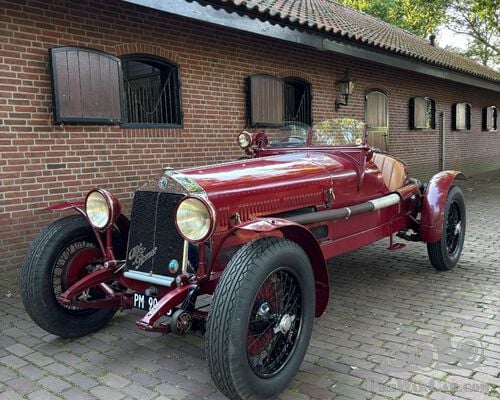
1930 Alfa Romeo 6C 1750 Spider
1930 Alfa Romeo 6C 1750 Spider with complete history from delivery to first owner in 1930 in Firenze till today with copy Libretto/license plate.
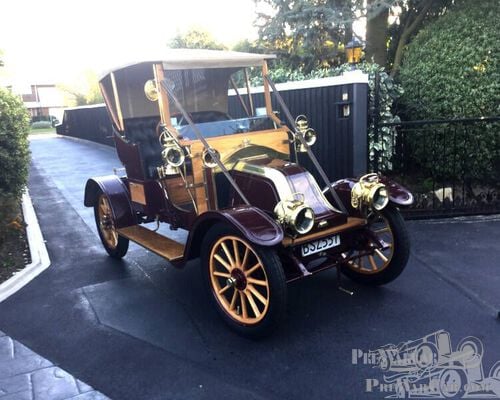
Renault /AX 1913 - named
Purchased fully renovated from New Zealand and imported to the UK. We have owned her for over10 years. Gigi is currently living in France where she..
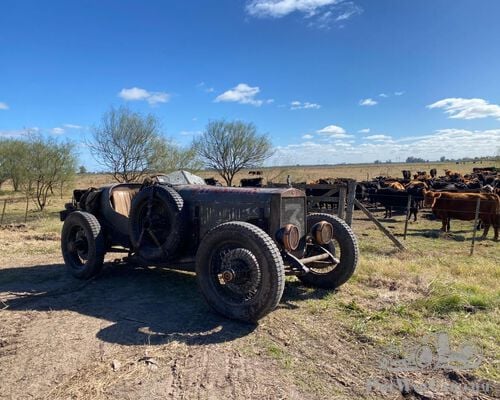
Studebaker 1927 for sale
Authentic race car of the time - Everything is working - All parts of its original mechanics - I have the history of the car - 6 cylinders - Ready ..