The global magazine and marketplace for classic car enthusiasts, by enthusiasts.


Filter
Classic Kissel, Oakland for sale - Kissel, Oakland cars for sale
-

1939 Rolls Royce Wraith James Young Razor Edge Saloon
1939 Rolls Royce Wraith James Young Razor Edge Saloon Chassis Number: WEC72 Registration Number: 39D25 (Ireland) £200k spent upon the restoration of this car to make it in effect a brand new Rolls Royce Wraith being delivered 86 years late!!! Simply.. -
1936 Bentley Derby 4.25 Sedanca by Thrupp & Maberly
1936 Bentley Derby 4.25 Sedanca by Thrupp & Maberly Chassis number: B-36-GA Registration Number: CXE213 A stunningly beautiful car which wows onlookers wherever it is seen, this 4.25 Litre Derby Bentley Sedanca Coupe has fabulous and possibly unique aluminium Sedanca coachwork by Thrupp and Maberly... -
Cadillac V16 - Series 452 - 1930 - Imperial Sedan 4330
Offers invited a round € 200.000 - This ONE of 4 Survivors of Serie 4330 body style - book C.W. Cummings - 2014) ***excellent driving car, the V16 gives you a special experience, no other car has***https://www.prewarcar.com/a-stately-cadillac-v16-in-the-netherlandsBuilt; no 9 of 50 - Engine no. 700163Lengt.. -
Bugatti Type 30 short chassis roadster. Fully restored on a replica chassis
This car has had a full restoration and is build from a lot of original parts on a replice chassis built in Germany, It has chassis number BC 189 from the UK Bugatti Owners Club. Car has done only about 500km since restoration but health problems dictate that it must go. Please email for fullest details of the source of all the parts and a vide.. -
1930 Bentley Speed Six
1930 Bentley Speed Six Chassis Number: SB2774 Engine Number: SB2772 Reistration Number: GH8974 New to market & freshly restored to perfection. This car has over the past two years been fully rebuilt & built up as a LeMans style tourer by noted Rolls Royce &.. -
1936 Cadillac Series 60 Convertible Coupe | RM Sotheby's | The Hershey Auction
To Be OFFERED AT AUCTION WITHOUT RESERVE at RM Sothebys' The Hershey Auction event, 7 - 8 October 2026. Offered Without Reserve | $50,000 - $70,000 USD Please check back soon as our dedicated cataloguing team is preparing the description for this lot. To view this car and others currently consigned to this auction, please visit the RM website a.. -
Renault NN Torpedo Commerciale (1926)
Highlights Complete, coherent, unmodified exampleExcellent base for a full restorationAttractive 1920s torpedo body styleVery accessible entry priceIdeal for workshops or enthusiasts looking for a rewarding project Restoration project – Complete car – Solid base but major work r.. -
Renault 12 HP Coupé de Ville Carrosserie Kellner Type CB – 1911
HighlightsExceptional original conditionRare Kellner coachworkComplete, authentic, coherent exampleOriginal paint and interiorMuseum‑grade preservationIdeal for concours preservation class Kellner Coupé de Ville – Exceptional original condition This.. -
De Dion‑Bouton Type D (1899)
HighlightsRare early De Dion‑Bouton, highly collectibleBeautiful presentation and coherent historyEligible for major international veteran eventsA centrepiece for any prestigious collection Vis‑à‑vis “La Petite Voiture” – High‑quality restoration – Veteran car eligible .. -
1940 Buick Super Convertible Coupe | RM Sotheby's | The Hershey Auction
To Be OFFERED AT AUCTION WITHOUT RESERVE at RM Sothebys' The Hershey Auction event, 7 - 8 October 2026. Offered Without Reserve | $50,000 - $60,000 USD Please check back soon as our dedicated cataloguing team is preparing the description for this lot. To view this car and others currently consigned to this auction, please visit the RM website a..


Kissel
US, 1906 – 1931
Kissel Motor Co, Hartford, Wisc.
At first the name of Kissel was associated with agricultural equipment, then with stationary gas engines. A conventional shaft-driven 35hp 4-cylinder Kissel automobile called, rather unfortunately, the Kissel Kar (originally the Badger), was offered from 1906. This Kissel car was made almost entirely by the company; few parts were bought out. A Kissel six with ‘square’ dimensions (121x121mm) appeared in 1909, electric starting came in 1913 on the Kissel car, and there was a short-lived Kissel V12 powered by Weidely, built from 1917 to 1918. None of these Kissel cars had any sporting pretensions. From 1918, however, the policy of the Kissel car company changed rapidly. The metamorphosis had begun in the previous year, when the Kissel Kar Silver Special Speedster was unveiled. This Kissel car was named after its designer, C.T. Silver. At the New York Show of January 1918 the Kissel car firm’s new speedster policy was taken a step further with the Kissel Gold Bug, a development of the Kissel Silver Special Speedster. It earned its name because from 1919 chrome yellow was the make’s standard colour. It had a Kissel-made 6-cylinder sv engine at first, of 4.3-litres, later 4.7-litres. More touring Kissel cars were offered as well, such as the Kissel Coach-Sedan and the Kissel Tourer, which used the same engines as the Gold Bug. In 1924 external contracting Lockheed hydraulic brakes were a listed option. In that year, too, the alternative of a straight-8 with a modified Lycoming engine could be had on Kissel cars. 1928 was the last year of Kissel-built engines. The handsome 1929 Kissel White Eagle with 3-litre 6-cylinder and 4- and 4.9-litre straight-8 engines, as well as internally expanding hydraulic brakes, could not compete at prices ranging from $1.595 to $3.885, and only 1.531 Kissel cars were sold. In 1930 the Kissel car firm assembled a few Ruxton cars on contract to New Era Motors, and in 1933 a reorganized company was hired to build Lever engines in order to demonstrate them to a large manufacturer for possible mass production.
Source: Georgano, encyclopedia of motorcar; TRN
The information is written with the greatest of care. However, if you have any suggested amendments please contact us at office@prewarcar.com
Oakland
US, 1907 – 1931
Oakland Motor Car Co, Pontiac, Mich.
The original Oakland car was the work of A.P. Brush, designer both to the original single-cylinder Cadillac and of the Brush Runabout. The Oakland car was a 2½-litre vertical-twin with planetary transmission, selling for $1.300. The power unit on the Oakland car rotated anti-clockwise. In 1909, when General Motors took over, the Oakland car company was also marketing a conventional 4-cylinder Oakland car with sliding-type gearbox at $1.600. For the next few years Oakland car with fours were the stape product, 3.3- and 4.4-litre engines being used in 1912. 1913 Oakland cars had rounded V-radiators reminiscent of the Belgian Métallurgique, and these Oakland cars were made in 4- and 6-cylinder forms with electric lighting and starting. Left-hand drive was adopted on Oakland cars in 1915, when the bigger ‘Oakland 6-49’ model used a Northway engine. Four Oakland car models – a 5½-litre V8, two sixes, and a four – were offered in 1916, in which year the Oakland car firm’s own small ohv 6-cylinder unit appeared. This Oakland car was in a car modestly priced at $795, of which Oakland sold over 35.000 Oakland cars in 1917. From 1919 to 1923, this ohv car was the only Oakland car model listed, but in 1924 the Oakland car firm brought out a new and inexpensive sv six which offered both front wheel brakes and Duco cellulose finish for $995. 1926 saw the introduction of the companion make, Pontiac, but unlike other maker’s cheap lines this rapidly overshadowed the Oakland car, sales of which dropped from some 58.000 in 1926 to 30.826 Oakland cars in 1929.
An inexpensive sv V8 Oakland car on the lines of Oldsmobile’s Viking was introduced as a replacement for the six in 1930, but demand continued to fall and after 1931 only Pontiacs were made.
Source: Georgano, encyclopedia of motorcar; MCS
The information is written with the greatest of care. However, if you have any suggested amendments please contact us at office@prewarcar.com


Featured
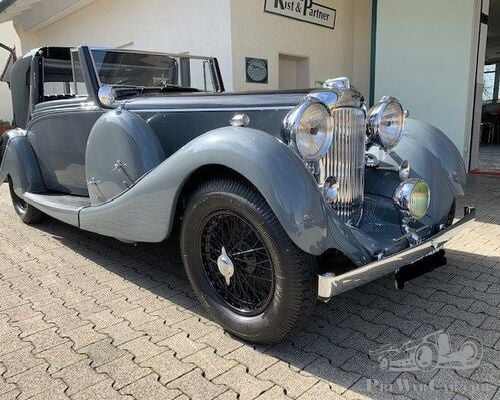
Lagonda LG 45 Coupe de Ville Sedanca by Mayfair
The successor to the M45, the LG45 was built around the same highly capable, competition-proven 4.5-litre Meadows inline-six engine, but featured r..
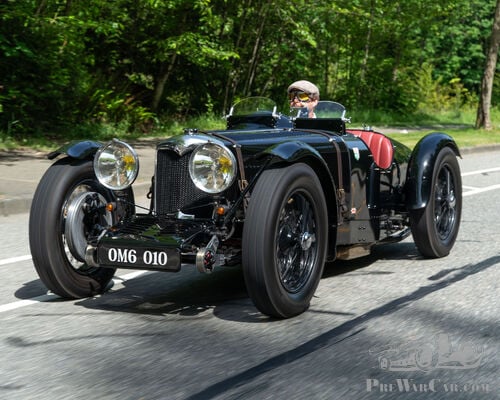
Riley 14/6 Special 1933
The ExperienceStep into the golden age of British motoring. This 1933 Riley 14/6 Special is a masterclass in pre-w..

1915 Rolls-Royce Silver Ghost Barker Tourer
⁃ An exceptionally rare original bodied pre-war Silver Ghost⁃ Desirable Barker tourer in exciting barn find condition⁃ ..