The global magazine and marketplace for classic car enthusiasts, by enthusiasts.


Filter
Classic Kissel for sale - Kissel cars for sale
-

Marquette 1930 – 4 door sedan. Only year made .
Previous owner bought it in the seventies . Took it apart and newer came ahead with the restoration . Fairly complete . very sound body . original upholstery. New radiator core . Danish registration document. Original literature and many copies. Original photos , from when he drowe it home by its own power . EUR 3.900.. -
2-door 15.7hp six cylinder saloon
The car is a 6-cylinder 2-door saloon described as the "Sportsman's coach built coupé". Only three of this model are known to have survived. I have owned this car for 64 years, carrying out such repair work as required to keep it roadworthy and presentable. It is in good condition, very original and runs well. -
Société des Automobiles Pilain
The 1911 Pilain is the Type 4.0, equipped with a four-cylinder engine and a single Zenith carburetor. This car has undergone a comprehensive restoration over the past few years. Since the original body was too deteriorated to restore, it was decided to install an alternative body. The current elegant body is sourced from a Bianchi, which perfect.. -
Lagonda M45 T7 ready for new adventures
The Lagonda car company was founded in 1906 in Staines, Middlesex by the American Wilbur Gunn (1859-1920) who named it after a river near his home town of Springfield, Ohio. Having established its reputation, Lagonda concentrated mainly on the production of light cars before reverting to sporting and luxury models in the mid-1920s with the introduc.. -
1931 Ford Model A De Luxe 2-Door Phaeton | The Audrain Auction 2026
Chassis No. A4762447 Engine No. A4262247 Body No. 159-7386 Chassis number A4762447 wears 2-Door Phaeton bodywork finished in period-correct Washington Blue over black fenders and running boards, with a tan canvas folding top, brown leather interior, square-weave carpet, folding front bucket seats, rear seats featuring armrests, a.. -
1937 Bentley 4¼-Litre Gurney Nutting Aerofoil Sport | The Zoute Concours Auction 2026
Chassis No. B90KT Engine No. N3BY J. Gurney Nutting & Co. Limited was founded in 1919 and within a few short years the coachbuilder had become on of Bentley's primary body suppliers. Its clients included the Prince of Wales and the Duke of York, and the firm earned a Royal Warrant in the early 1930s along with the nickname "coachbu.. -
Chenard & Walcker Model G
The Chenard & Walcker is a 1905 Model G, equipped with a 5-liter, four-cylinder engine producing 20 horsepower, enabling the car to reach a top speed of approximately 85 km/h | 50 mp/h. The body is a Double Phaeton and was crafted by the renowned coachbuilder Jean-Henri Labouredette. In addition to the radiator b.. -
rare Peerless for sale
The Peerless Motor Corporation of Cleveland, Ohio, manufactured high-quality cars between 1900 and 1931. Peerless, along with Packard and Pierce-Arrow, became known as the ‘Three P’s of Motordom’ (top-of-the-range cars) in the United States. The car offered for sale is one of the very few vehicles still in existence today. The new car was import.. -
Lancia Lambda 3rd Series Short-Chassis Torpedo
With a monocoque body, four-wheel brakes, independent front suspension and V4 overhead camshaft engine, many enthusiasts view the Lancia Lambda as one of the great and innovative automobiles of all time. The Lambda was also successful in competition with privately entered cars finishing fourth and fifth behind the works OMs in the first Mille Migli.. -
1932 Rolls-Royce Phantom II Continental Drophead Coupe by Carlton
Vintage and Prestige are proud to offer this 1932 Rolls-Royce Phantom II Continental Drophead Coupe by Carlton For Sale. Previous UK Registration: 544 YUS Chassis no: 32MS Engine no: HD 55 Mileage shown: 22,480 32MS was first ordered by the Duke of Sutherland; Sir G..


Kissel
US, 1906 – 1931
Kissel Motor Co, Hartford, Wisc.
At first the name of Kissel was associated with agricultural equipment, then with stationary gas engines. A conventional shaft-driven 35hp 4-cylinder Kissel automobile called, rather unfortunately, the Kissel Kar (originally the Badger), was offered from 1906. This Kissel car was made almost entirely by the company; few parts were bought out. A Kissel six with ‘square’ dimensions (121x121mm) appeared in 1909, electric starting came in 1913 on the Kissel car, and there was a short-lived Kissel V12 powered by Weidely, built from 1917 to 1918. None of these Kissel cars had any sporting pretensions. From 1918, however, the policy of the Kissel car company changed rapidly. The metamorphosis had begun in the previous year, when the Kissel Kar Silver Special Speedster was unveiled. This Kissel car was named after its designer, C.T. Silver. At the New York Show of January 1918 the Kissel car firm’s new speedster policy was taken a step further with the Kissel Gold Bug, a development of the Kissel Silver Special Speedster. It earned its name because from 1919 chrome yellow was the make’s standard colour. It had a Kissel-made 6-cylinder sv engine at first, of 4.3-litres, later 4.7-litres. More touring Kissel cars were offered as well, such as the Kissel Coach-Sedan and the Kissel Tourer, which used the same engines as the Gold Bug. In 1924 external contracting Lockheed hydraulic brakes were a listed option. In that year, too, the alternative of a straight-8 with a modified Lycoming engine could be had on Kissel cars. 1928 was the last year of Kissel-built engines. The handsome 1929 Kissel White Eagle with 3-litre 6-cylinder and 4- and 4.9-litre straight-8 engines, as well as internally expanding hydraulic brakes, could not compete at prices ranging from $1.595 to $3.885, and only 1.531 Kissel cars were sold. In 1930 the Kissel car firm assembled a few Ruxton cars on contract to New Era Motors, and in 1933 a reorganized company was hired to build Lever engines in order to demonstrate them to a large manufacturer for possible mass production.
Source: Georgano, encyclopedia of motorcar; TRN
The information is written with the greatest of care. However, if you have any suggested amendments please contact us at office@prewarcar.com


Featured
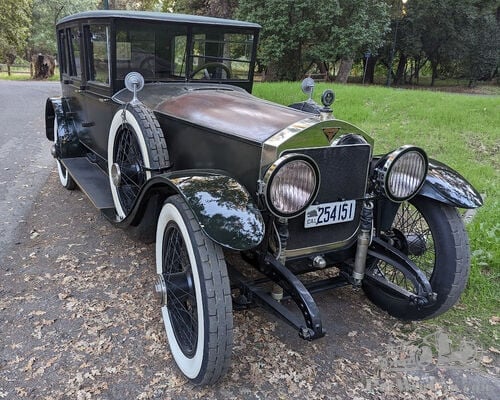
1916 Simplex, Crane model 5
1916 Simplex, Crane MODEL 5CUSTOM MADE HISTORIC PRESERVATION VEHICLE – READY TO TOUR!This Simplex recently completed th..
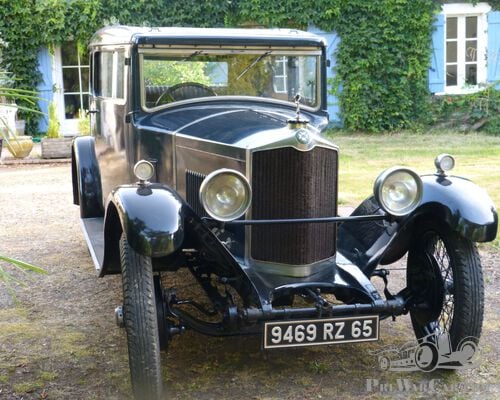
2-door 15.7hp six cylinder saloon
The car is a 6-cylinder 2-door saloon described as the "Sportsman's coach built coupé". Only three of this model are known to have survived. I have..
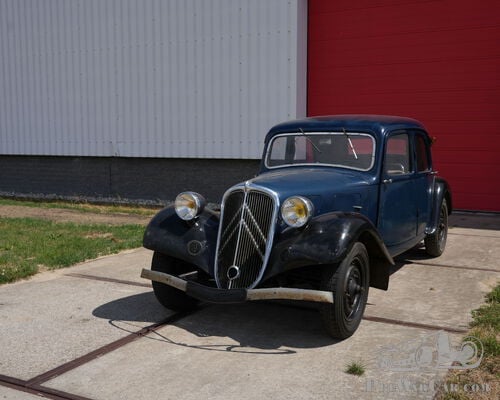
1935 Citroën Traction Avant
Early-production Traction AvantExceptionally original, unrestored conditionRecently part of a major museum collection