The global magazine and marketplace for classic car enthusiasts, by enthusiasts.


Filter
Classic Lacoste et Battmann for sale - Lacoste et Battmann cars for sale
-

1942 Mercedes 770K Grosser Offener Tourenwagen
1942 Mercedes 770K Grosser Offener Tourenwagen Available immediately with fresh engine & concours condition. Non Armoured 8 seat configuration. Viewings East of Munich by prior appointment. Full photos & chassis number available to Qualifi.. -
1930 Alfa Romeo 6C 1750 GS Testa Fissa
1930 Alfa Romeo 6C 1750 GS Testa FissaChassis number: 8513089Engine Number: 8513089Registration Number: 102 hp, 1752 cc dual overhead cam six-cylinder engine with Memini supercharger, four-speed manual gearbox, semi-elliptic leaf spring suspension, and four-wheel mechanical drum brakes. Wheelbase: 2920 mm• The .. -
1938 Mercedes-Benz 540 K Cabriolet A by Sindelfingen | RM Sotheby's | The Paris Auction
To Be OFFERED AT AUCTION at RM Sothebys' The Paris Auction event, 3 February 2027. €1,900,000 - €2,200,000 EUR Please check back soon as our dedicated cataloguing team is preparing the description for this lot. To view this car and others currently consigned to this auction, please visit the RM website at rmsothebys.com/auctions/pa27/... -
1934 BUGATTI TYPE 57 STELVIO Cabriolet
1934 BUGATTI TYPE 57 STELVIO Cabriolet Chassis Number: 57202 Registraton number: Swiss Registered. The old saying 'like father, like son' springs to mind when considering Ettore and Jean Bugatti. Ettore's name is always associated with innovative, race-winning sports cars and beautiful grand tourers constructe.. -
1936 Bugatti Type 57 Atalante
1936 Bugatti Type 57 Atalante. We have two available, both with european papers. Both are fully matching numbers with complete history from day one. Qualified principals please call Richard Biddulph 0044 7967 260673 for full details. -
1934 Mercedes-Benz 500 K “Spezial Roadster” in the style of Sindelfingen | The Las Vegas Auction 2026
Chassis No. 105179 Engine No. 105179 In March 1934, Daimler-Benz unveiled a new eight-cylinder car at the International Motor and Motorcycle Show in Berlin. The five-liter supercharged newcomer appeared in a single Autobahn-Kurierwagen body built for high speed, with the sales brochure calling it the "star attraction of the show." .. -
1930 Bugatti Type 49 Coupe "The Berlin Bugatti"
1930 Bugatti Type 49 Coupe "The Berlin Bugatti" Chassis Number: 49194 Registration Number: WRD49T Supplied to Bugatti agent Bucar of Zurich on 23rd Dec 1930 and driven there on temporary licence plate 1766-WW5 Owners: Kitty St Clair Abry (nee Holbrook) 31.5 1.. -
1936 Mercedes 500K special roadster
1936 Mercedes 500K roadster Coming soon. This car was rebodied with the current roadster body we find on it today. The car was in period returned to the Mercedes factory & had the original engine uprated to 540k spec which is still installed today making it a matching numbers car.The car has been the recent recipient of a fastidious nut &.. -
Pur Sang SSK
Built by Pur Sang in ArgentinaVery sporty short bodySuitable for ralliesThe Mercedes-Benz SSK is still considered one of the most legendary sports cars of thepre-war era. Developed as an uncompromising high-performance vehicle, it combinedenormous engine power with a purist, competition-oriented design... -
1934 Duesenberg Model J Convertible Berline by Murphy | RM Sotheby's | The Hershey Auction
Sold | $1,022,500 USD Offered from two decades in current ownershipRare body style, with streamlined styling and raked windshieldFormerly owned by Charles M. Knipe, Lorin Tryon, and Jack FindenNot shown for many years and largely forgotten to the Duesenberg communityA CCCA Full Classic Pleas..


Lacoste et Battmann
France, 1897 – 1913
(1) Lacoste et Battman, Paris, 1897 – 1905
(2) Lacoste et Battman Ltd, Paris, 1905 – 1913
The Lacoste et Battman firm seldom sold cars under their own name, preferring to supply complete vehicles (and components) to other ‘manufacturers’, including several in England. Thus the Lacoste et Battman car products were marketed under such aliases as Napoleon (1903), Régal (1903), Gamage (1903), Speedwell (1904), Cupelle (1905), Lacoba (1906) and Simplicia (1910). Some, but not all models of Jackson in the 1905-1906 period are also clearly of Lacoste origin. The diversity of types offered indicates that specification was tailored to the trade client’s requirements.
The first Lacoste et Battmann car was a 4hp motor Lacoste et Battman quadricycle with electric ignition offered in 1897, and by 1902 the Lacoste et Battman car company had progressed to conventional voiturettes with Aster or Mutel engines, marketed as the ‘L and B’ by H. Cintrat, a dealer with premises both in Paris and in London. A good selection of Lacoste et Battman car models was available in 1903, smallest of which was a 6hp single-cylinder runabout styled in the manner of a De Dion Bouton, with underslung radiator, 3-speed gearbox and shaft drive, which cost £195. Bigger 12hp Lacoste et Battman cars resembled the smaller Panhards and had 2-cylinder De Dion engines, while later in 1903 a 24hp 4-cylinder Lacoste et Battman car with a Mutel engine was available. In 1904 a tubular-framed 700cc Lacoste et Battman single could be bought for about £125, and a year later Régal, Speedwell and Jackson cars were being advertised as ‘built on the Lacoste principles!’. Like Darracq, the Lacoste et Battman car company was now British-registered and though Lacoste et Battman cars were still made with armoured wood as well as steel frames, all the Lacoste et Battman cars sold in Britain had mechanically-operated inlet valves and rounded radiators. Over the next two seasons the choice of Lacoste et Battman cars was wide, including the singles, a 10hp 2-litre twin, a fairly small L-head 2½-litre four and two bigger fours of 3.3-litres and 4.9-litres. Though pair-cast engines were found on some of the 4-cylinder machines, a 12/16hp Lacoste et Battman car exhibited at Manchester in 1906 had separate cylinders. Single-cylinder Lacoste et Battman cars ran (under their own name) in voiturette races sponsored by L’Auto in 1905 and 1907, René Thomas being one of the drivers of a Lacoste et Battman car on the former occasion. During the 1905 – 1907 period the Lacoste et Battman car firm was said to be making a wide range with De Dion or Aster engines: in 1907, there were three Lacoste et Battman cars with singles, a twin and two fours, with ratings from 4½hp to 24hp, and prices between 2.350fr and 10.000fr. Light electric Lacoste et Battman cars were also said to be available. The Lacoste et Battman car company was reported defunct in 1909, but a year later had staged a comeback with the Lacoste et Battman Simplicia, which used a 1.8-litre 4-cylinder Aster engine in a tubular backbone chassis with transverse front suspension and central gearchange. This Lacoste et Battman car was on the British market at £320 and was still being made two years later, but by 1913 Lacoste et Battman cars were out of business.
Source: Georgano, encyclopedia of motorcar; MCS
The information is written with the greatest of care. However, if you have any suggested amendments please contact us at office@prewarcar.com



Featured
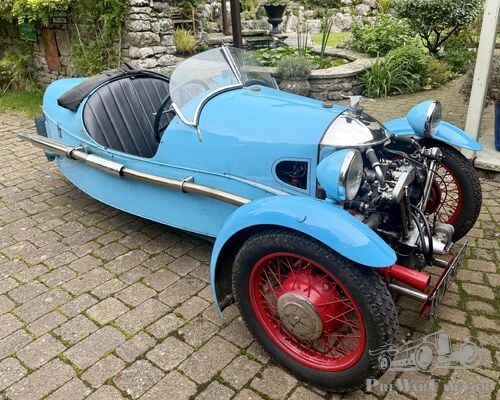
1933 Morgan Three-Wheeler Super Sports, Beetle Back • Show-Specification Car
First registered24 March 1933RegistrationXJ 6336 - original and transferableChassis numberD174Engine numberDTZE 94 H 31..
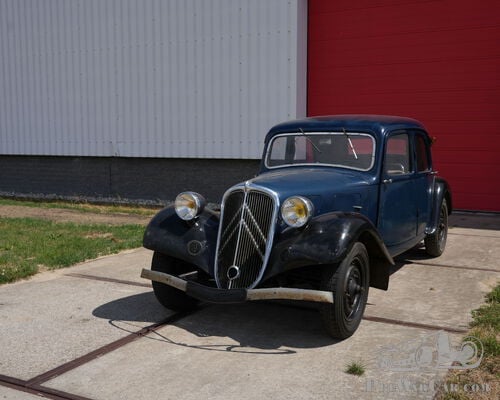
1935 Citroën Traction Avant
Early-production Traction AvantExceptionally original, unrestored conditionRecently part of a major museum collection
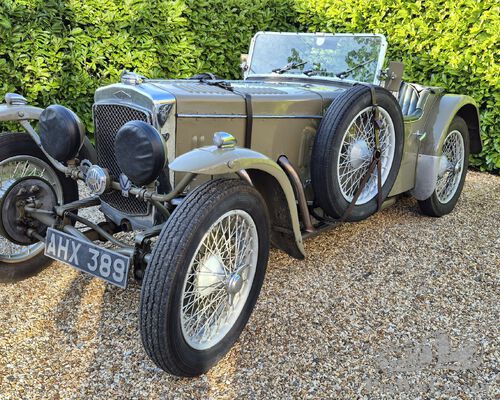
Fraser Nash TT Replica
AHX 389 ( chassis no. 2073, engine no. 10367).An important and correct short-chassis TT Replica with known history from new. Ex. H. P..