The global magazine and marketplace for classic car enthusiasts, by enthusiasts.


Filter
Classic Star, Lagonda for sale - Star, Lagonda cars for sale
-

1939 Lagonda LG6 long saloon with sunroof | Reeman Dansie Auction | 20th Jun, 2026
Reg. no. SN 8865Chassis no. 12521Engine no. 12521. Originally ordered new by the Scottish Racing car enthusiast Major Hartley Whyte of Whyte Mackay Whisky and kept by him until his death in 1977. Only 25,830 genuine miles from new and wonderful, mostly original condition. Recent engine overhaul and mech.. -
1936 Lagonda LG45 Drop head Coupe
1936 Lagonda LG45 Drop head Coupe Chassis number: 12104 Registration number: HXV183 (Previous) Fully Nut & bolt restored some years ago; this car has seen very sparing dry weather only use ever since & has also been the winner of some Lagonda club awards. Unusually the c.. -
Lagonda LG 45 Coupe de Ville Sedanca by Mayfair
The successor to the M45, the LG45 was built around the same highly capable, competition-proven 4.5-litre Meadows inline-six engine, but featured refinements such as synchromesh gears and a central lubrication system.Introduced in 1936, the public and motoring press alike immediately recognized the model’s merits, with British publication.. -
1937 Lagonda LG45 Drophead Coupe
Details:Oldtimer Australia is delighted to offer for sale a beautifully restored 1937 Lagonda LG45 Drophead Coupe.This particular example was first registered in the UK on 22nd February 1937 and it carried the registration number AJB 282. According to documentation in the history file the car was originally black in colour. The Lag.. -
1937 Lagonda LG45 ‘Rapide’ four-seater Tourer
Chassis number 12178, engine number M45/160, steering box number 6087/47.Colour grey metallic combined with a dark red leather interior and a black mohair hood and tonneau cover. The Lagonda LG45 is a very rare automobile, only 278 examples were built in the years 1936 – 1937. The engine shows the directly bolte.. -
Rare Low Chassis Continental Tourer
Please visit our homepage for further information and pictures: www.scuderia-renania.comModel History:The 2-Litre L/C "Continental" was introduced in April 1932 and was the final stage in the development of the successful 2 -litre model. It was built on the desirable low chassis, providing a lower centre of gr.. -
1937 Lagonda LG 45 Special
Lagonda LG 45 Sport Special, year 1937. Chassis number 12158G10, engine number 12153, original UK registration number BKU999. Colours: Dark blue bodywork, silver wire wheels combined with a dark brown leather interior finished with dark blue carpet. Black cloth hood and hood cover. This fantastic Lagonda LG45 .. -
1933 Lagonda 4½-Litre M45 T7 Tourer
"Lagonda cars have always upheld a reputation for effortless fast touring and the pride of ownership which fine detail work and distinguished coachbuilding can give. The 4½-Litre model retains these characteristics, but scores considerably over its forebears by its high power-to-weight ratio. The chassis is no bigger than the three-litre car, and t.. -
Lagonda LC Tourer 1934
The Lagonda story began in 1901 in Staines, a small town in the UK. The company enjoyed its greatest successes around 1935. During this period, the company fielded a private team at the ‘24 Hours of Le Mans’ and achieved at least some sporting success there. However, the economic boom that had been hoped for failed to materialise.But let’..


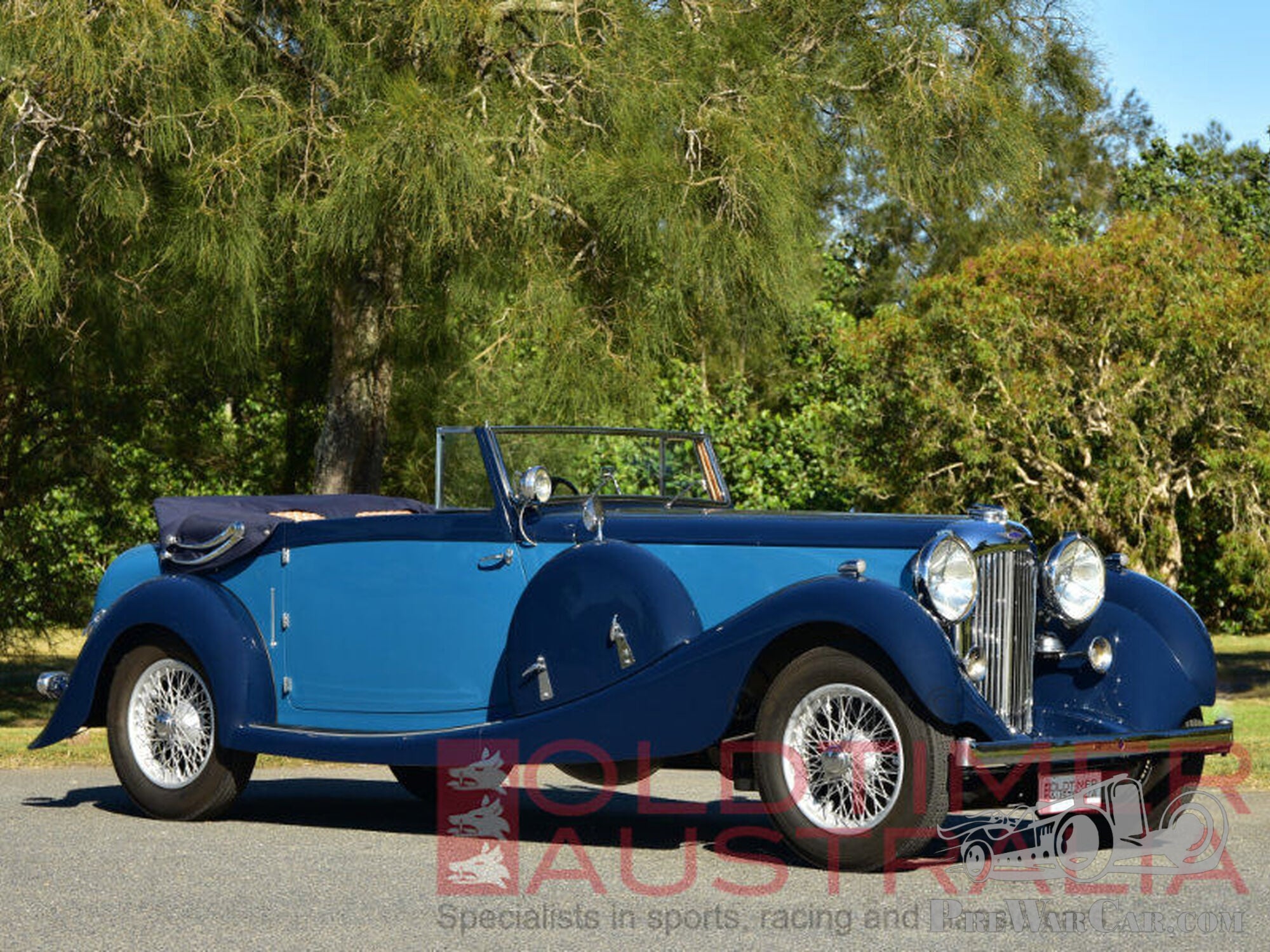


Star
GB, 1898 – 1932
Star/ Starling/ Stuart
(1) Star Motor Co, Wolverhampton, Staffs., 1898 – 1902
(2) Star Engineering Co, Wolverhampton, Staffs., 1902 – 1909
(3) Star Cycle Co, Wolverhampton, Staffs., 1905 – 1909
(4) Star Engineering Co Ltd, Wolverhampton, Staffs., 1909 – 1928
(5) Star Motor Co Ltd, Wolverhampton, Staffs., 1928 – 1932
Edward Lisle Sr’s Star Motor Co, an offshoot of the Star Cycle Co, produced its first Star car in 1898, and offered the Star car for sale in the following year. The Star car was a Benz-based machine, with a single-cylinder, water-cooled 3½hp engine, belt primary drive and chain final drive. It was an improvement in that water circulation on the Star car was assisted by a pump. In 1900 there followed a 2-cylinder Star car with 3 forward speeds, still on Benz lines. 1901 brougth De Dion-engined single-cylinder Star cars, and 1902 an 8hp twin of Panhard type in addition. Other, larger Star cars of Panhard ancestry joined the 8hp, up to a 20hp four Star car. By 1904, although a De Dion-powered single and Panhard-type twin were still there, the bigger machines were of Mercédès pattern, these Star cars came with honeycomb radiators, mechanically-operated inlet valves and pressed-steel frames. All veteran Star cars up to 1914 were extremely well-made, well-furnished, conventional, rather expensive cars lacking in technical originality, showing a line of development appearance in the 1907 range. The best-known Star car of the veteran period was the excellent 15hp Star car of 1909, a shaft-driven 2.8-litre four which had become the 3-litre 15.9hp by 1914. A great variety of other Star cars, basically similar models were turned out, not only by Star but also by the Star Cycle Co. The latter, run by Edward Lisle Jr, had made motor tricycles and bicycles, and produced the Starling car in 1905. It had 2 forward speeds and a De Dion single-cylinder engine, but was otherwise of Panhard type, with armoured wood frame and chain drive. One year later the Star car company supplemented it with the more modern Stuart car, which had 2-cylinders, 3-speeds and shaft drive. This name was dropped in 1908, all models being called Starlings, but these too, disappeared in 1909 when Star cars cheaper line was entrusted to the new Brion Motor Co, a more indepented concern that was still run by Edward Lisle Jr. So popular was the Star car that its makers were among the six largest in the country before 1914.
The 15.9hp Star car was continued after World War 1, together with another sv four Star car of pre-war origin, the 20hp Star car of 3.8-litres. A modern light Star car of fashionable type, the 11.9hp, arrived in 1921. This Star car used a 1.795cc sv engine with a detachable head, made in unit with a 3-speed gearbox which had central change. By 1924, the 11.9 Star car had grown up into the 2-litre 12/25hp Star car. It shared cylinder dimensions with the 18hp Star car, which was a new 3-litre six. The 12/25 Star car could be had as a very fine fast touring car with overhead valves and 54bhp, in which form the Star car was called 12/40hp. Thereafter, the Star car range reverted to its pre-war complexity. By 1927, there were three sv Star car models and two additional and more up-to-date Star cars with overhead valves. The 14/40hp Star car, new in 1926, was a solid 2-litre, ohv machine which in spite of having only 4-cylinders and 3 forward speeds, this Star car was a notably smooth and flexible car, thanks to a 5-bearing crankshaft. The ohv 20/60hp Star car, a 2½-litre six with the same bore and stroke as the 14/40 and a 7-bearing crankshaft, was the most luxurious Star car. A light six, the popular ohv 18/50hp, joined the Star car range in 1928, the year of the Star car company’s acquisition by Guy, and replaced the 14/40 Star car for 1929. By this time, the sv Star cars had gone, leaving the two sixes. As the 18hp Star Comet and the 21hp Star Planet, these Star cars were revised with handsome bodies and very full, luxurious equipment, including one-shot chassis lubrication, thermostatically-controlled radiator shutters and a built-in jacking system. Two other engines, of 14hp (2-litres) and 24hp (3.6-litres) were also obtainable in Star cars for 1932, as alternative Comet and Planet power units. These Star car were the last new Star cars, for they were too expensive to make, and the times favoured the mass-produced economy car. Production of Star cars ended in March 1932, but the unsold stock was sold by McKenzie and Denley of Birmingham, and the Star car was quoted in the Buyer’s Guide lists until 1935.
US, 1903 – 1904
(1) Star Automobile Co, Cleveland, Ohio
(2) H.S. Moore, Cleveland, Ohio
This Star car was driven by a single-cylinder, watercooled engine of 1.9-litres, mounted beneath the front seat, with false bonnet and coil radiator in front. A champion planetary transmission and double chain drive was used on this Star car. Both two- and five-seater Star cars were made, the latter with rear entrance.
US, 1908
Star Automobile Co, Chicago, Ill.
Star runabouts were offered in three models, selling for $500, $600 and $700 respectively. The smallest Star car was an open two-seater, and shaft drive was employed on all Star cars.
US, 1908
Model Automobile Co, Peru, Ind.
The short-lived Star car from Peru was offered in conventional 2- and 4-cylinder forms. The twin was chain-driven, while the big, expensive four Star car ($4.000) had shaft drive.
US, 1922 – 1928
Durant Motor Co of New Jersey, Elizabeth, N.J.; Lansing, Mich; Oakland, Calif.
William Crapo Durant’s Star Four was one of the most serious attempts to take away some of the Model T Ford’s market, for the cheapest practical car. Unlike the Ford, the Star car was an assembled machine.The Star car had a 2.2-litre, 4-cylinder engine by Continental, and was conventional in design in every way except the gearbox, which was separate; a feature common to all the vehicles in Durant’s empire, but very unusual in American mass-produced cars by the early 1920s. The touring Star car cost only $443 in 1923, which helped Star to be the seventh biggest seller in America that year. The Star car was sold outside the United States as the Rugby. In 1926, a 2.8-litre six Star car was introduced. Front wheel brakes appeared in 1927 but a year later the Star car make disappeared in the collapse of the Durant interests. By this time, 250 Star cars a day were being turned out. Only the Four was still called the Star car for the 1928 model year, as the Six was now known as the Durant Model 55.
Source: Georgano, encyclopedia of motorcar; TRN, GMN, MJWW, TRN
The information is written with the greatest of care. However, if you have any suggested amendments please contact us at office@prewarcar.com
Lagonda
GB, 1906 – 1963
(1) Lagonda Motor Co Ltd, Staines, Middlesex
(2) Lagonda Ltd, Staines, Middlesex
(3) Lagonda Ltd, Feltham, Middlesex
(4) Aston-Martin-Lagonda Ltd, Newport Pagnell, Bucks.
Wilbur Gunn, the founder of the Lagonda Car Company, hailed over Springfield, Ohio. He came to England in about 1897. In 1898 he built an air-cooled cycle in a greenhouse at Staines. On this site the first vehicle to bear the Lagonda car name was assembled in 1900, an improved version of the air-cooled cycle; and it was here that Lagonda cars were to be built until 1947.
To his new product, the Lagonda car, Gunn gave the French form of the American Indian name for Buck Creek, the stream near his home town. In 1905 the Lagonda car company’s first racing success came when a V-twin cycle won the London-Edingburgh trial. This victory encouraged Gunn to enter the motor car field with a 20hp 4-cylinder Lagonda car. Developed in 1906, this first Lagonda car was brought out the following year as the Lagonda Torpedo. A 6-cylinder version followed; the Lagonda car carried Wilbur Gunn and Bert Hammond to win the Moscow – St Petersburg Reliability Trial in 1910. The big tourer Lagonda car was a result ‘greatly favoured’ by Tsar Nicholas II, and the Lagonda Car Company’s early fortune was made form exporting these Lagonda cars to Russia until war broke out in 1914.
At home a dapper Lagonda 14/4 replaced the earlier Lagonda 12/4 in 1909. This gave way in 1913 to an 11.1hp light Lagonda car of radically advanced design. Among its more striking innovations were a riveted monocoque body of unit construction; an anti-roll bar to assist the suspension; and the Lagonda car had the earliest known fly-off hand brake. The Lagonda car enjoyed a wide market, being subsequently enlarged into a 11.9 in 1920 and a 12/24 in 1924, though later Lagonda cars no longer had monocoque construction.
In 1925 Arthur Davidson designed the 1954cc ohv-engined Lagonda car which marks the beginning of the Lagonda as a sports car. The Lagonda 14/60 engine featured 4-fully-machined hemispherical combustion chambers, the first to be marketed, aspirated by interchangebale valves opposed at 90 degrees. Twin camshafts were carried high in the block of the Lagonda car. A Rubury braking system of prodigious efficiency was fitted. Grouped chassis lubrication nipples were featured, as was a clutch stop. The whole Lagonda car was superbly finished.
The Lagonda 2-litre Speed Model, a modified version of the 14/60 Lagonda car, was developed late in 1927 for the 1928 season. The chief difference between it and the earlier Lagonda car lay in the valve-timing overlap, twin carburetors on a direct manifold, and a raised compression ratio of 6.8:1. These alterations combined to give the Lagonda Speed Model tourer an acceleration from rest to 80mph in 50 seconds, and the new Lagonda car did well in competition. A 2½-litre 6-cylinder Lagonda car with push-rod operated ohv was introduced in 1926, and this was subsequently enlarged to 3-litres on Lagonda cars in 1928. For 1930 the chassis of the Lagonda 2-litre was lowered and during that year a supercharged Lagonda car became available. In 1932 came the last of the 4-cylinder 2-litres Lagonda cars, the Lagonda Continental, which had smaller wheels and a sloping radiator, and this finally gave way to the Lagonda 16/80, a 2-litre six with a push-rod operated ohv engine of Crossley manufacture. This Lagonda car was later fitted with an ENV preselector gearbox. This was an attractive car but, like all the Lagonda 2-litres, it suffered from excessive weight.
In the meantime a version of the 3-litre known as the Lagonda Selector Special appeared. This Lagonda car was fitted with a Maybach gearbox that gave eight forward speeds, four high and four low, by means of an internal reduction gear with semi-automatic control. This Lagonda car was something of a failure, however, and was quietly dropped.
At the 1933 Motor Show two outstanding Lagonda cars were introduced: the 1.104cc Lagonda Rapier, with twin overhead camshafts and the 4½-litre Lagonda M45, having a similar Meadows 6-cylinder ohv engine to that in the now defunct Invicta. At last a Lagonda car had real performance and it is noteworthy that the Lagonda Car Company made their own very attractive coachwork.
For 1935 two additional Lagonda car models made their appearance, the 4½ Lagonda Rapide and the Lagonda 3½-litre, both using the same shortened chassis. It was no doubt this complexity of models which caused the Lagonda car company to get into financial difficulties, and a victory at Le Mans by a Lagonda Rapide came too late to save the day.
When in the summer of 1935 Alan Good saved the Lagonda Car Company from absorption by Rolls-Royce, he appointed W.O. Bentley as chief designer. The Lagonda LG45 model with which Bentley attacked the Luxury market in 1936 had longer road springs and Luvax dampers, but retained the Lagonda M45R engine and chassis. Not until the 1936 Motor Show could Bentley’s influence on the Meadows engine be seen in its definitive form in Lagonda cars. The Sanction III unit featured an improved coss-flow inlet manifold cast integrally into the head, onto which the carburetors were now bolted directly. Various other improvements on the engine of the Lagonda cars including a lightened flywheel allowed the line on the revolution counter to be moved up to 4.000rpm.
The last of the 4½-litre Lagonda cars was the Lagonda LG6 of 1938. This Lagonda car had independent front suspension, hydraulic brakes and outboard rear springs, but still used the Meadows engine. The V12 engine, brought out for the 1937 Lagonda car season, is considered the finest of W.O. Bentley’s designs. This 180bhp unit could raise the Lagonda car’s speed from 7 to 103,45mph on top gear without snatching; and this flexibility could be supplemented by revving freely to 5.000rpm on the indirects. Regrettably the Lagonda car design was never developed fully, for production was stopped in 1940, a few months after Lagonda Rapide versions had been placed third and fourth at Le Mans.
In 1947 the Lagonda car firm was taken over by the David Brown complex. Contrary to spelling the end of the traditional Lagonda car, the new merger enabled Bentley’s last motor-car design to be realized. This was the Lagonda 2.6-litre model which appeared in 1948. Its brilliant but unorthodox layout embraced a true cruciform chassis, independent rear suspension unique amongst British cars, and a twin ohc 6-cylinder engine. A bored-out edition of the 2.6 Lagonda car was offered as the 3-litre in 1951, featuring luxurious styling, rich appointments and a top speed of 110mph. HRH the Duke of Edingburgh had two Lagonda cars for his personal use, and for many years was a honorary member of the Lagonda Club.
The Lagonda Rapide was announced in 1961. Using a DB4 engine of 3.996cc capacity, the Lagonda car was set up on a platform chassis with independent springing all round, servo-assisted disc brakes and a De Dion rear axle. An elegant, aluminium Superleggera body by Touring of Milan contributed greatly to the Lagonda car’s massive acceleration. The Lagonda Rapide’s top speed was a genuine 125mph with comfortable cruising at 120; its sumptuous finish and appointments were in kepping with a price of £5.000. Production of Lagonda cars ceased in 1963, though a 4-door saloon version of the V8 Aston Martin DBS built for Sir David Brown in 1970 bore the Lagonda emblem.
Source: Georgano, encyclopedia of motorcar; HAF
The information is written with the greatest of care. However, if you have any suggested amendments please contact us at office@prewarcar.com


Featured
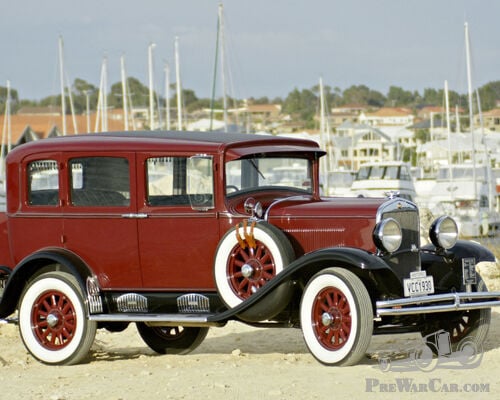
1930 Chrysler 66 Six-Wheel Equipped Royal Sedan
An exceptionally well restored and highly awarded Chrysler 66 Royal Sedan, with only two owners in nearly 97 years.The present owner ..
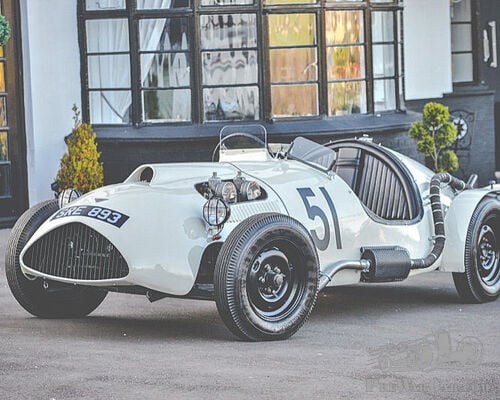
1933 Alvis 3.0 Special - One-Off Alloy Body | Period Competition Car | Featured in “Alvis – A Century of Drivers”
1933 Alvis 3. 0 Special - One-Off Alloy-Body | Period Competition Car | Featured in “Alvis – A Century of Drivers”
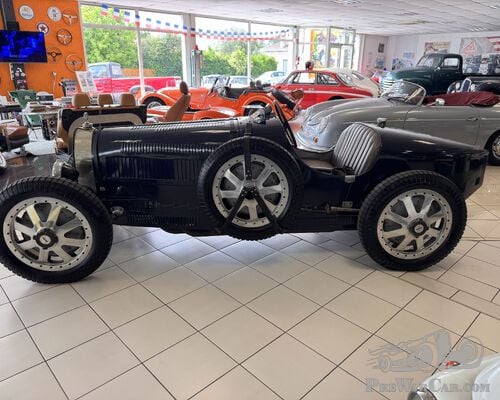
Bugatti 35 B Pur Sang
Bugatti 35 B Pur Sang,importée par un membre délégué de la FFVE il y’a une quinzaine d années.Participation à de nombreux Rallyes Bug..