The global magazine and marketplace for classic car enthusiasts, by enthusiasts.


Filter
Classic Lasalle, Orient for sale - Lasalle, Orient cars for sale
-

Beautiful Lasalle, light project
This is a light project car. Engine has been totally rebuild and needs to be re-assembly. The car is 100% complete and in very good condition. Odometer shows 26,000 miles only and believe to be original. Interior is perfect. Rebuild radiator. Swedish registration and documents in my name. Car is located in the south of Sweden, 100km. from Goth.. -
1934 LaSalle Series 50 Convertible Coupe | RM Sotheby's | The Hershey Auction
To Be OFFERED AT AUCTION at RM Sothebys' The Hershey Auction event, 7 - 8 October 2026. $150,000 - $200,000 USD Among the most beautiful American production cars of its eraBelieved to be one of only 18 delivered to CanadaWell-known enthusiast history for decadesAttractive, award-winning restoration in striking .. -
1905/6 Orient Buckboard
Build by Waltham , mass. Usa . very original and unrestored , except the engine which is restored and running .Known history back to before ww2 . Last ovner found it in 1950.Eur 25.800 -
Lasalle V8
Prachtige LaSalle van 1940Met zijn krachtige V8 motor en luxueus interieur, rij je met deze wagen op wolkjes.Ideale wagen om in verschillende omgevingen mee te cruisen. Heeft meer dan genoeg kracht om een bergachtige rit moeiteloos uit te rijden, maar ook in een stad is deze wagen heel aangenaam te besturen door zijn vernieuwde rem..


LaSalle
US, 1927 – 1940
Cadillac Motor Car Co, Detroit, Mich.
Launched as a smaller and less expensive running-mate for the Cadillac, the LaSalle car was conceived in its entirety by General Motors’ stylist Harley J. Earl – a very unusual practice for the period. Unlike other makers ‘cheap lines’, the LaSalle car was manufactured to Cadillac standards throughout, though the wheelbase of the La Salle car was 7in shorter and at $2.495 a La Salle sedan was about $700 cheaper. The engine of the La Salle car was an sv V8 of 5-litres’ capacity. Synchromesh, safety glass and chromium plating were innovations of La Salle cars shared with Cadillac in 1929 and the La Salle car grew steadily in size: first to 5.4 litres, then to 5.6-litres, with a further increase to 5.8-litres in 1930. The whole concept of La Salle cars was changed in 1934 – though the La Salle car was the guinea-pig for the turret-top steel bodies to be used in 1935 by all G.M. divisions save Buick, the La Salle car was cheapened in other respects, having a 4.2-litre straight-8 engine as used in the bigger Oldsmobiles. The price of the La Salle car was $1.595 (£725 in England). A reversion was made to the traditional V8 in 1937, the La Salle cars sharing body shells with Oldsmobile and the more expensive Buicks, and the price of the La Salle car was cut again to $1.205. The La Salle car was squeezed out of the market by the lower list prices of the simpler Cadillac models. The 1940 La Salle cars were as good as their predecessors but at $1.446 as against $1.752 for a Cadillac, there was no longer room for the La Salle car marque.
Source: Georgano, encyclopedia of motorcar; MCS
The information is written with the greatest of care. However, if you have any suggested amendments please contact us at office@prewarcar.com
Orient
US, 1898 – 1908
Waltham Mfg Co, Waltham, Mass.
The Orient car company made an experimental electric runabout in 1898, but did not put this Orient car into production. Their first petrol-engined Orient cars were motor cycles, tricycles and light runabouts powered by De Dion engines. In 1902 they introduced the Orient Buckboard, a very simple Orient car consisting of two seats on a wooden platform, with a 4hp air-cooled engine geared to the rear axle, and, originally, only one speed. There were no springs on this Orient car, as the wooden platform was said to have enough resilience. The weight was 350lb and the price $375.
Although the simple Buckboard was continued, more sophisticated Orient cars were gradually introduced, including a four-seater version Orient car which in turn became a side-entrance tonneau. Wheel steering and small bonnets to cover the driver’s feet appeared in 1904, although the engine of the Orient car was still at the back, and the Buckboard ancestry remained obvious.
In 1905 a completely new Orient car appeared, known as the Waltham Orient. This Orient car had a 4-cylinder air-cooled 18/20hp engine mounted in front in the conventional manner, friction transmission and shaft drive. A slightly smaller 16hp Orient car model was also made. In 1908 Waltham merged with the C.H. Metz Company, and for the following year the cars were known as Metz.
Source: Georgano, encyclopedia of motorcar; GNG
The information is written with the greatest of care. However, if you have any suggested amendments please contact us at office@prewarcar.com


Featured
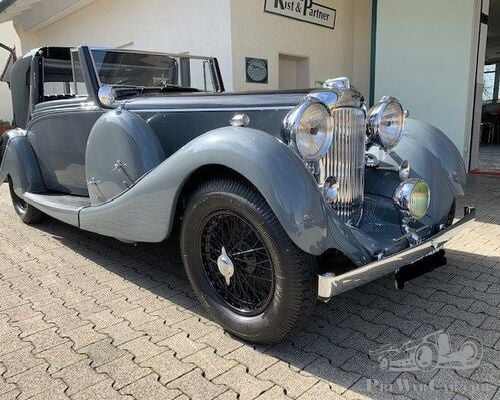
Lagonda LG 45 Coupe de Ville Sedanca by Mayfair
The successor to the M45, the LG45 was built around the same highly capable, competition-proven 4.5-litre Meadows inline-six engine, but featured r..
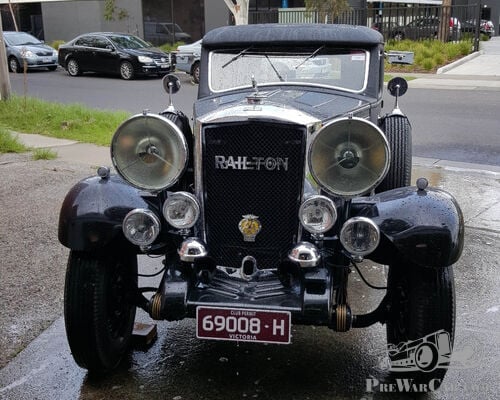
Railton straight 8 sports coupe for rallying REDUCED PRICE run with the bentleys at a fraction of the price
1934 Railton Sports CoupeBuilt for long distance rallyingRebuilt 2017built up at a cost of $160,000AUD, OFFERED FOR SALE AT A ..
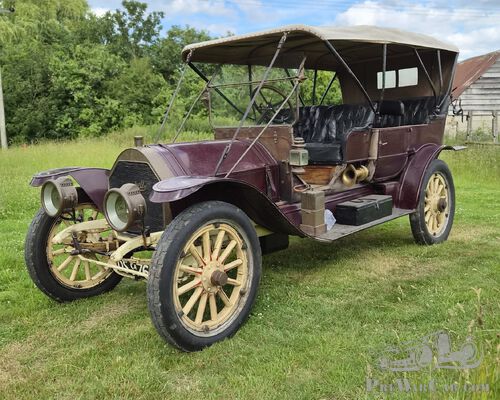
1910 Mitchell Model S - 50HP Six Cylinder
Based in Racine, Wisconsin and being the largest wagon manufacturer in the USA, Mitchell-Lewis produced their first motor car in 1903. Sales grew ..