The global magazine and marketplace for classic car enthusiasts, by enthusiasts.


Filter
Classic Lasalle, Rauch & Lang for sale - Lasalle, Rauch & Lang cars for sale
-

1939 LaSalle Series 50 Convertible Coupe by Fisher | RM Sotheby's | The Hershey Auction
To Be OFFERED AT AUCTION WITHOUT RESERVE at RM Sothebys' The Hershey Auction event, 7 - 8 October 2026. Offered Without Reserve | $30,000 - $40,000 USD One of approximately 1,044 Convertible Coupes built for 1939Originally shipped to prominent West Coast Cadillac distributor Don Lee in Los AngelesFactory-equipped with r.. -
1933 LaSalle Series 345-C Five-Passenger Town Sedan by Fisher | RM Sotheby's | The Hershey Auction
To Be OFFERED AT AUCTION WITHOUT RESERVE at RM Sothebys' The Hershey Auction event, 7 - 8 October 2026. Offered Without Reserve | $20,000 - $30,000 USD One of 3,381 LaSalles produced for 1933 and one of only 752 Five-Passenger Town Sedans built that model yearFormerly owned by Pennsylvania-born Broadway and silent-film actress C.. -
1940 LaSalle Series 50 Convertible Coupe | RM Sotheby's | The Hershey Auction
To Be OFFERED AT AUCTION at RM Sothebys' The Hershey Auction event, 7 - 8 October 2026. $75,000 - $90,000 USD Offered from the Steve Plunkett CollectionOne of just 598 produced in the last year of LaSalle productionFormerly owned by noted enthusiast Jim MillerMeticulously maintained, high-quality restoration in.. -
Beautiful Lasalle, light project
This is a light project car. Engine has been totally rebuild and needs to be re-assembly. The car is 100% complete and in very good condition. Odometer shows 26,000 miles only and believe to be original. Interior is perfect. Rebuild radiator. Swedish registration and documents in my name. Car is located in the south of Sweden, 100km. from Goth.. -
1918 Rauch & Lang Model B26 Brougham | RM Sotheby's | The Hershey Auction
To Be OFFERED AT AUCTION at RM Sothebys' The Hershey Auction event, 7 - 8 October 2026. $150,000 - $175,000 USD One of the finest surviving examples of the Rauch & Lang electric carBeautiful show-quality, AACA First Junior-winning restorationKnown history, with only three long-term caretakers since the 1950s -
Lasalle V8
Prachtige LaSalle van 1940Met zijn krachtige V8 motor en luxueus interieur, rij je met deze wagen op wolkjes.Ideale wagen om in verschillende omgevingen mee te cruisen. Heeft meer dan genoeg kracht om een bergachtige rit moeiteloos uit te rijden, maar ook in een stad is deze wagen heel aangenaam te besturen door zijn vernieuwde rem.. -
1934 LaSalle Series 50 Convertible Coupe | RM Sotheby's | The Hershey Auction
To Be OFFERED AT AUCTION at RM Sothebys' The Hershey Auction event, 7 - 8 October 2026. $150,000 - $200,000 USD Among the most beautiful American production cars of its eraBelieved to be one of only 18 delivered to CanadaWell-known enthusiast history for decadesAttractive, award-winning restoration in striking ..


LaSalle
US, 1927 – 1940
Cadillac Motor Car Co, Detroit, Mich.
Launched as a smaller and less expensive running-mate for the Cadillac, the LaSalle car was conceived in its entirety by General Motors’ stylist Harley J. Earl – a very unusual practice for the period. Unlike other makers ‘cheap lines’, the LaSalle car was manufactured to Cadillac standards throughout, though the wheelbase of the La Salle car was 7in shorter and at $2.495 a La Salle sedan was about $700 cheaper. The engine of the La Salle car was an sv V8 of 5-litres’ capacity. Synchromesh, safety glass and chromium plating were innovations of La Salle cars shared with Cadillac in 1929 and the La Salle car grew steadily in size: first to 5.4 litres, then to 5.6-litres, with a further increase to 5.8-litres in 1930. The whole concept of La Salle cars was changed in 1934 – though the La Salle car was the guinea-pig for the turret-top steel bodies to be used in 1935 by all G.M. divisions save Buick, the La Salle car was cheapened in other respects, having a 4.2-litre straight-8 engine as used in the bigger Oldsmobiles. The price of the La Salle car was $1.595 (£725 in England). A reversion was made to the traditional V8 in 1937, the La Salle cars sharing body shells with Oldsmobile and the more expensive Buicks, and the price of the La Salle car was cut again to $1.205. The La Salle car was squeezed out of the market by the lower list prices of the simpler Cadillac models. The 1940 La Salle cars were as good as their predecessors but at $1.446 as against $1.752 for a Cadillac, there was no longer room for the La Salle car marque.
Source: Georgano, encyclopedia of motorcar; MCS
The information is written with the greatest of care. However, if you have any suggested amendments please contact us at office@prewarcar.com
Rauch & Lang
US, 1905 – 1928
(1) Rauch & Lang Carriage Co, Cleveland, Ohio, 1905 – 1916
(2) Baker, Rauch & Lang Co, Cleveland, Ohio, 1916 – 1922
(3) Rauch & Lang Electric Car Manufacturing Co, Chicopee Falls, Mass., 1922 – 1928
Rauch & Lang were an old-established carriage building firm (founded 1853) when they began to make electric Rauch & Lang cars in 1905. These Rauch & Lang cars followed the usual pattern for such electric vehicles, being mainly closed town cars, although a few open phaeton Rauch & Lang cars were also made. The biggest Rauch & Lang cars were heavier vehicles and included a six-seater limousine with separate outside seat for the chauffeur. Some Rauch & Lang cars had 4-doors, a very unusual feature in electric cars. In 1916 the Rauch & Lang cars became part of the Baker, Rauch & Lane group and production declined. From 1919 onwards the Rauch & Lang cars were sometimes listed as Raulangs, and from 1922 this became the official name of the Rauch & Lang cars.
By this time production of Rauch & Lang cars had been transferred to the Stevens-Duryea factory at Chicopee Falls where the number of private cars made was very small. The factory, which was still turning out a few Stevens-Duryeas, also made petrol and electric taxi-cabs under the name Rauch & Lang cars, and bodies for Stanley Steamers.
Source: Georgano, encyclopedia of motorcar; GNG
The information is written with the greatest of care. However, if you have any suggested amendments please contact us at office@prewarcar.com


Featured
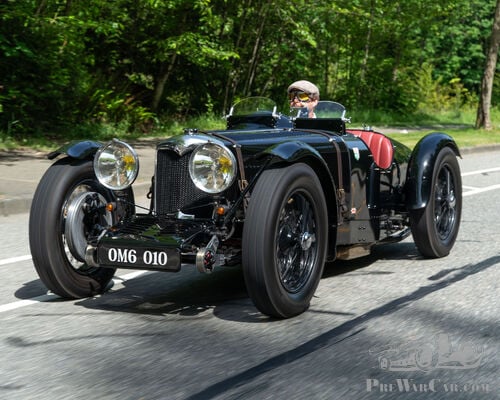
Riley 14/6 Special 1933
The ExperienceStep into the golden age of British motoring. This 1933 Riley 14/6 Special is a masterclass in pre-w..
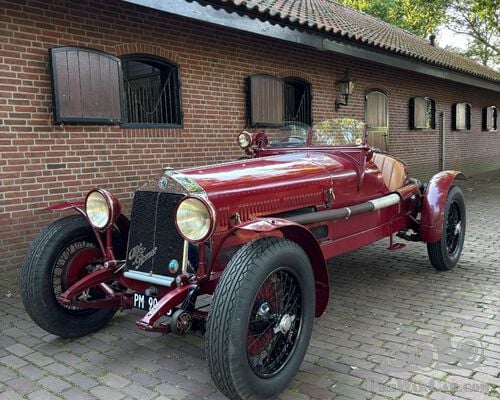
1930 Alfa Romeo 6C 1750 Spider
1930 Alfa Romeo 6C 1750 Spider with complete history from delivery to first owner in 1930 in Firenze till today with copy Libretto/license plate.
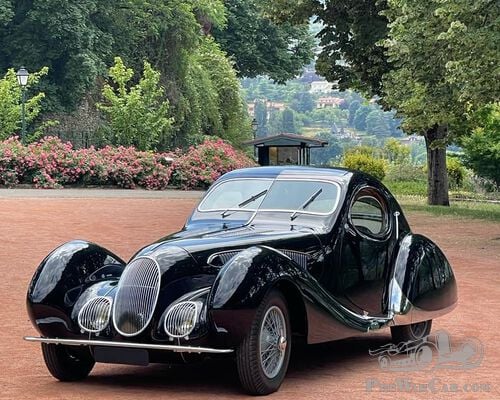
1939 Talbot-Lago T150C “Goutte d’Eau” — Iconic French Coachbuilt Masterpiece
Talbot-Lago T150C ‘Teardrop’ — An Icon of French Automotive Art There are motor cars that define an era. And then there are those tha..