The global magazine and marketplace for classic car enthusiasts, by enthusiasts.


Filter
Classic Donnet/ Donnet-Zédel, Le Zèbre for sale - Donnet/ Donnet-Zédel, Le Zèbre cars for sale
-

1933 Aston Martin Le Mans
Exceptional 1933 Astron Martin Le MansOriginally bodied as a Standard (Chassis No. L2/222), this unique vehicle was thoughtfully re-bodied in the 1960s using a complete and original Le Mans 4-seater body from Chassis No. 13 310L. This included, wings, tank, bonnet, windscreen, hood and radiator. Both Standard and Le Mans models share the.. -
1934 Packard Eight 1101 Club Sedan
1934 Packard Eight 1101 Club Sedan Chassis Number: 377903 Registration Number: YXG567 A magnificent & fully restored Packard in simply superb running condition. The current owner at some 90 years old has decided to part with it due to his advanced years. During his tenure a .. -
1929 Rolls-Royce 20HP All-Weather Tourer
1929 Rolls-Royce 20HP All-Weather Tourer Chassis Number: GV058 Registration Number: WC1633 Copies of the original works chassis records show that chassis GVO 58 was first tested on 13 August 1929. A period dyno sheet accompanies the file, confirming that the chassis had covered .. -
Fraser Nash TT Replica
AHX 389 ( chassis no. 2073, engine no. 10367).An important and correct short-chassis TT Replica with known history from new.Ex. H. Porter-Hargreaves, Bunty Richmond & Midge Wilby.Purchased at the renowned sale of Midge Wilby's effects in 1986 and subsequently restored by Derek Hall, a lifelong Fraser Nash enthusiast, aff.. -
Bentley 4 Litre Blower, 1931
he Bentley 4-Litre is one of the rarest Bentley models produced under the direction of W.O. Bentley before the Rolls-Royce takeover in 1931. Only fifty 4-Litre cars were built, and this example is a rare survivor. In 2017, the car was completely disassembled by Altena Classic Service and improved without affecting the original patina. The.. -
1925 Gray open tourer
1925 Gray open tourer , mechanically complete but comes with spare engine and rearaxle. Panelwork to be done to the body and guards. Is in our Dutch storage. Rare Canadian built righthanddrive car. This is the last year of Gray motorcars € 9500. -
1925 Rolls Royce Phantom 1 Hooper all weather cabriolet
1925 Rolls Royce Phantom 1 Hooper all weather cabrioletA very early Phantom 1 with a 2" taller then usual Radiator as used on late silver Ghosts whom's production overlapped this car. Coachwork takes the form of a very versatile Salamanca, or All Weather Cabriolet body by Hooper known in period as "The King of Coachbuilders". Whe.. -
1931 Rolls-Royce Phantom II Continental Drophead Coupe by Barker | RM Sotheby's | The Monterey Auction
To Be OFFERED AT AUCTION WITHOUT RESERVE at RM Sothebys' The Monterey Auction event, 13 - 15 August 2026. Offered Without Reserve | $275,000 - $375,000 USD Please check back soon as our dedicated cataloguing team is preparing the description for this lot. To view this car and others currently consigned to this auction, please visit the RM websi.. -
1929 Alfa Romeo Zagato style 6C 1750 SS
This Alfa Romeo 6C 1750 ran in the 2001 Mille Miglia. It is currently going through the FIVA certification. Price has just been reduced to $750,000.00 US from $800, 000. 00 Can help with shipping. Car needs nothing to run smoothly in vintage events having been recently serviced. Will consider trade/ cash with interesting postwar car like.. -
1936 Rolls Royce 25/30 Pass & Joyce All Weather Cabriolet
1936 Rolls Royce 25/30 Pass & Joyce All Weather CabrioletChassis number: GUL66Registration Number: CB021SR (Italian.)Residing in the sunny climes of Italy since 1988. This beautiful 25/30 was bodied by Pass & Joyce as an all weather cabriolet; coachwork that it wears until this day. It was & is owned as part of a small collection of ..


Donnet / Donnet-Zédel
France, 1924 – 1934
SA des Automobiles Donnet, Nanterre, Seine; Neuilly, Seine, Pontarlier, Doubs.
After Zédel and Vinot et Deguingand ceased production, Donnet, a new company constituted from them in 1924, offered two new cars called Donnet-Zédel. A light car was made, the 7CV Donnet-Zedel Type G, which had a side-valve 4-cylinder engine of 1100cc and (unusual for so small a vehicle) a 4-speed gearbox. It was a solidly-built machine, and a Donnet-Zedel sports model was listed. There was, in addition, a medium-sized four of about 2¼-litres. From 1926, the Donnet-Zedel firm came to concentrate upon a 2½-litre six, also with side valves, which proved a popular car. Another, smaller six with 1.3-litres (later 1.8-litre) Sainturat-designed engine was also offered by Donnet-Zedel. In the 1932 range however, was a new small Donnet-Zedel car in the shape of a 750cc 2-stroke. This, a violet design, had been sold as the Dequingand until 1930. A fwd 2-litre 6-cylinder Donnet-Zedel, shown at the 1931 Paris Salon came to nothing. With the demise of Donnet, Simca took over the Donnet-Zedel factory.
Source: Georgano, encyclopedia of motorcar; TRN
The information is written with the greatest of care. However, if you have any suggested amendments please contact us at office@prewarcar.com
Le Zèbre
France, 1900 – 1932
SA Le Zèbre, Suresnes, Puteaux, Seine
Towards the end of the first decade of the 20th century, most French light car makers were adding cylinders rather than deducting them, but the little 600cc 5hp Le Zebre car was popular in spite of having only one to start with. The Le Zebre car had two forward speeds and shaft drive. Not until late 1912 did a 4-cylinder Le Zebre car appear. The bore was tiny, 50mm, but the stroke was long, at 120mm. Cubic capacity of the Le Zebre car was 950cc, later reduced to 785cc. This Le Zebre car (and, by now, the single) had a 3-speed gearbox. It was continued for a short time after the war. The engineers who were responsible for the Le Zebre car achieved greater fame than their car. Salomon went on to help design the 5CV Citroën, while Lamy performed the same service for Amilcar.
In 1925 a completely new design of Le Zebre car appeared. This Le Zebre car had a 2-litre sv engine with Ricardo head, 4-speed gearbox and front wheel brakes, and was still offerd in 1930. The Le Zebre car make’s last appearance was at the 1931 Paris Salon when they exhibited an otherwise conventional light Le Zebre car, but with single-cylinder opposed-piston Lilloise diesel engine.
Source: Georgano, encyclopedia of motorcar; TRN
The information is written with the greatest of care. However, if you have any suggested amendments please contact us at office@prewarcar.com


Featured
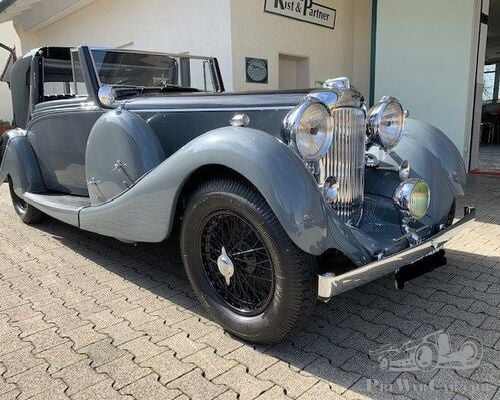
Lagonda LG 45 Coupe de Ville Sedanca by Mayfair
The successor to the M45, the LG45 was built around the same highly capable, competition-proven 4.5-litre Meadows inline-six engine, but featured r..

1915 Rolls-Royce Silver Ghost Barker Tourer
⁃ An exceptionally rare original bodied pre-war Silver Ghost⁃ Desirable Barker tourer in exciting barn find condition⁃ ..
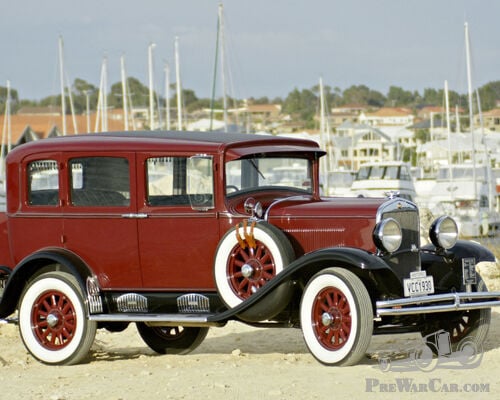
1930 Chrysler 66 Six-Wheel Equipped Royal Sedan
An exceptionally well restored and highly awarded Chrysler 66 Royal Sedan, with only two owners in nearly 97 years.The present owner ..