The global magazine and marketplace for classic car enthusiasts, by enthusiasts.


Filter
Classic BMW, Lea Francis for sale - BMW, Lea Francis cars for sale
-

BMW 315/1 Sport Roadster 1935
Charming and rare little sporty roadster, light and fitted with a lively engine. Authentic car most probably sold new to Switzerland. Documented five swiss owners since 1950, the last one for 44 years. Aging restoration with at lot of charm and some patina. Coachbuilder: BMW Sport roadster.Year: 1935.Chassis:.. -
BMW 326 Cabriolet
AVAILABLE – NEAR PARISRare two-door Convertible version.EU import duties paid, supplied with its US title.Requires a complete restoration. The car is complete and is sold with an additional complete engine. -
1938 BMW 328 Roadster 1938 for sale
1938 BMW 328 Roadster Chassis number 85316 Registration number: TBA €790,000.00 Part of a small collection of rare BMW cars: This 328 was found as a wreck in the late 1960's with the then Czechslovakian title documents going back to 4th November 1970 when it was registered in Bratislava. The registration lists a succe.. -
BMW 319 Drauz Cabriolet 1936
Beautiful and powerfull BMW 319 CabrioletCabriolet Body build by Drauz from Heidelborn.Engine rebuild by previous owner.Been in a BMW collection for a long preriod in the NetherlandsRegistered in the Netherlands since 1959Now on a Belgium road registration -
BMW 319 - 1935 Cabrio/Sport
BMW 319 - 1935 Cabriolet/SportFully Original/Genuine /Engine/gearboxInterior Pristine conditionsCar can drive all distancesRefer to photos/Internet literature (only few dozens built!).Price to discuss (+32478/993635)Car Selected to Villa Cavrois ConcourseAdditional info on request -
1938 BMW 327/28 Cabriolet - top restored condition
Attractive, contemporary two-tone paintwork in black and dark red, black leather interior with red piping, and a black soft topA genuine BMW 327/28 from the very beginning, with 80 hpComprehensive ‘frame-off’ restoration of the highest quality, carried out by a renowned specialist in pre-war BMWs in GermanyBMW cer.. -
1940 BMW 327 - Original Dutch delivered car
The 1940 BMW 327 was delivered on January 27, 1940, in Enzianblau by BMW importer Nibbrig & Greeve. After a period of deterioration, the car was restored by its current owner, a passionate restorer. Despite the car's poor condition, the owner saw potential in the project. The restoration began with a complete disassembly of the vehicle, with.. -
Lea Francis Hyper 4 Seater Tourer
The first time on the market since the 1970's, an elegant 4 seater tourer with a 4ED meadows supercharged engine.We have quite a bit of history with this car, at some point in its life it was converted to a two seater with a streamlined racing body and then rebulit to its original specification in 1995 by A.B Price Ltd, its original body.. -
BMW 327/328 convertible 1939
This BMW left the BMW factory in januari 1939 to BMW Versuchsabteilung. Car was delivered to her first owner in December 1939 through dealer Bovenkamp in Wuppertal. Original color of the car is black. Engine and gearbox ar completely overhauled. Invoices available. Chassis and brake system is overhauled as well. Dashboard and instruments are res..


B.M.W.
D, 1928 to date
(1) Bayerische Motoren-Werke, Eisenach, Munich, 1928 – 1939
(2) Bayerische Motoren-Werke AG, Munich, 1952 to date
The BMW firm developed from the Bayerische Flugzeug-Werke, Munich founded in 1916 for the production of aero engines. In 1922 the name was changed to Bayerische Motoren-Werke, and production of engines for boats, lorries and motor cycles began. In 1923 the first BMW motor cycle appeared. In 1928 the Eisenach Dixi works were acquired and car production began with the BMW-Dixi, an Austin Seven built under license. BMW car production was carried on in Eisenach, while production of BMW motorcycles remained in Munich. The BMW-Dixi was succeeded in 1932 by the 800cc BMW 3/20ps model with tubular backbone chassis and independent suspension.
In 1933 came the first 6-cylinder model, the BMW 303 for sale). The range of sixes continued with the ‘BMW 315’(1.490cc, 34 and 40bhp) and ‘BMW 319’ (1.911cc, 45 and 55bhp). The triple-carburettor sports versions of these BMW cars laid the foundation for the famous BMW sports cars, noted for their speed and appearance. The engine of the ‘BMW 326’ (1971cc, 50bhp) became the basis for the ‘BMW 327’ and ‘BMW 328’. The BMW 327 used the 55bhp engine, while the most successful BMW 328 developed 80bhp. Two of this model’s most remarkable successes amongst many in races, rallies and trials were a class win at Le Mans and the winning of the 1940 abbreviated Mille Miglia. The ‘BMW 327/328’ used an 80bhp engine in the ‘BMW 327’ longer wheelbase chassis and was also very successful in competitions. The last pre-World War 2 model was the ‘BMW 335’ with a 3.485cc 90bhp engine. It was intended for the British market and only a few hundred BMW 335’s were built. From 1935 to 1939 BMW’s were imported into the United Kingdom and marketed under the name of Frazer Nash-BMW.
The Eisenach factory was lost through nationalization in 1945. Production of BMW motorcycles was taken up again in the Munich factory and facilities for BMW car production were prepared. The first Munich-built BMW car appeared in 1952, the ‘BMW 501’ with a 6-cylinder 1.971cc engine, based on the last pre-war designs. This started the range of 6- and 8-cylinder prestige BMW cars. The last of this range was the ‘BMW 3200’ CS 2-door coupé with 3.2-litre 160bhp engine for sale. In 1955 BMW started production of the Isetta bubble car under licence, and this was followed in 1957 by the BMW ‘600’ 4-seater based on it. In 1960 the ‘BMW 700’ appeared with a 697cc air-cooled opposed twin-cylinder engine mounted in the rear. In 1962 BMW began to produce medium sized cars again, bringing out the 4-cylinder ‘BMW 1500’ (80bhp), which was developed into the ‘BMW 1800’(90bhp). The ‘BMW 1800TI’ and the ‘BMW 1800 TI/SA’ were tuned versions developing 110 and 130bhp respectively. In 1965 the ‘BMW 2000 C’ (100bhp) and the ‘BMW 2000 TI’ (120bhp) coupés appeared. In 1966 the ‘BMW 1600’ (83bhp), the ‘BMW 2000’ (100bhp) and the ‘BMW 2000 TI’ (120bhp) with 4-cylinder in-line engines of 1573cc and 1990cc capacity were added to the range. In 1967 the Frazer Nash-BMW name was revived for a special luxury model of the ‘BMW 2000TI’, selling in England for £1830. New for 1968 were the BMW 2002 for sale, combining the 135bhp 2-litre engine with the BMW 1600 chassis, and the BMW 1600GT, which used the body of the former Glas 1700, a result of the BMW-Glas merger of 1967. In 1969 the BMW company produced their first six since 1958, the BMW 2500. Mechanically this derived from the existing fours, but was powered by a 170bhp 2494cc 7-bearing engine. A bigger 2.8-litre version was also available By 1971 BMW were offering a 2985cc version with either twin carburetors or Bosch fuel injection; in the latter form it gave 200bhp. Also new in 1971 was a semi-estate car, the Touring, available in 1600, 1800, or 2000 guise. BMW ran a Formula 2 team in 1969, using special 1.6-litre engines in British Lola chassis, but though there were several victories in 1970, the BMW company retired from his branch of the sport after two seasons. The 1973 range embraced the 1600, 1800, 2000, and the sixes, as well as a new ohc BMW 520 for sale with 1990c 4-cylinder engine, wishbone and trailing-link front suspension, and saloon bodywork in the 2500 idiom. Options included 115bhp twin-carburettor or 130bhp fuel-injection models, and a choice of 4- and 5-speed manual and automatic transmissions. A 200bhp derivative of this unit powered a prototype mid-engined coupé, the turbo, with all-disc brakes.
Source: Georgano, encyclopedia of motorcar; HON
The information is written with the greatest of care. However, if you have any suggested amendments please contact us at office@prewarcar.com
Lea-Francis
GB, 1904 – 1906; 1920 – 1935; 1937 – 1953; 1960
(1) Lea & Francis Ltd, Coventry, Warwickshire, 1904 – 1935
(2) Lea-Francis Cars Ltd, Coventry, Warwickshire, 1937 – 1960
Lea Francis started as bicycle manufacturers, like so many car makers, but unlike most of the rest, never went over permanently and consistently to Lea Francis cars. These Lea Francis cars appeared in fits and starts. The first appeared in 1904, in the shape of a 15hp Lea Francis car with a 3-cylinder horizontal engine, the oddest feature of which was its connecting rods over 3ft long. In the same year, however, Lea Francis stopped making their cars, and Singer the Cycle Company began building Lea Francis cars under licence and under the Singer name. R.H. Lea had in fact worked for Singer before branching out on his own. Thus began another famous car name. Lea Francis made motor cycles from 1911, and they concentrated on these until 1920. In that year two Lea Francis cars reappeared beside the motorcycles; assembled 4-cylinder touring Lea Francis cars of 11.9 and 13.9hp. Few of either were made. Then, late in 1922, the Lea Francis car company found its feet at last, with an equally conventional assembled light Lea Francis car. This Lea Francis car had a 1.074cc 4-cylinder sv engine of 8.9hp by Coventry-Simplex, replaced in the following year by a 10hp Meadows unit of 1¼ litres with overhead valves. A Lea Francis car with 7hp Bradshaw flat-twin engine came to nothing. There were 3 forward speeds and quarter-elliptic springs at both ends. The 10hp Lea Francis car was very popular, and was made until 1928. Like other Lea Francise cars to come, it was well made, dependable, and lively. The great moment came for the Lea Francis cars in the very important RAC Small Car Trials of 1924, in which the Lea Francis car made the best all-round performance. During 1925 a wider family market was sought with the 12/22hp J-type Lea Francis car. This Lea Francis car had a longer wheelbase, allowing more spacious bodies, front-wheel brakes, a 1½-litre 4EC Meadows engine to cope with the weight and a 4-speed gearbox. For the sake of comfort, semi-elliptic springs were substituted at the rear on the P-type Lea Francis car introduced for 1928, which also had a plate clutch and 4ED meadows engine.
The Lea Francis car firm’s first serious sports car was the L-type with 4ED engine, announced for 1925. The Lea Francis 12/40hp was one of the best assembled cars in Britain, and appealed more widely than the light Lea Francis cars. It was, indeed, current until the second cessation of car production in 1935. However, Lea Francis also made some more ponderous, less lively Lea Francis cars, without the same degree of success. From 1925 until 1929, the Lea Francis range duplicated some of the heavy 6-cylinder machines offered by Vulcan of Southport, with whom Lea Francis cars had been associated since 1922. The 18hp Lea Francis car was a 2¼-litre car with cantilever rear springs and overhead worm drive. This Lea Francis car was succeeded by A.O. Lord’s Type T, with its advanced but unreliable Lea Francis LFS-type, double ohc engine of 1.7-litres. There was also, in 1928, a 2-litre six Lea Francis car. These Vulcan/ Lea Francis cars ended with the demise of the Vulcan. However, an excellent Lea Francis car with a six was at last introduced for 1931: the Lea Francis Ace of Spades model, with their own 2-litre, single ohc engine. This Lea Francis car continued alongside the old 12/40hp until 1935, together with a new 18hp Lea Francis car, which was a 2¼-litre enlargement of the Lea Francis Ace of Spades. However, a really powerful Lea Francis car was also listed from 1928. This Lea Francis Hyper Sports was a quite different car, with its heavily-modified, Cozette-supercharged Meadows 1½-litre engine, low build and raked radiator. The sports-racing two-seater Lea Francis car could attain 90mph, though a coupé and a short open tourer could also be had by those who did not intend to enter competitions. The Lea Francis Hyper Sports won the 1928 Ulster Trophy race.
A new company introduced two entirely new Lea Francis cars for 1938. These Lea Francis cars were designed by Hugh Rose, who had been responsible for the Riley Nine engine and, like the Riley, had 4-cylinder power units with push-rod overhead valves operated by two high camshafts. The Lea Francis car had ceased to be an entirely assembled car. A 12hp and a 14hp Lea Francis car were available, with cubic capacities of 1½ and 1.6-litres. Both had a 4-speed synchromesh gearbox. A sports version of the 1½-litre Lea Francis car was also sold, thus maintaining the old tradition. These two ‘Leafs’ were good cars, and as they were new, up-to-date Lea Francis carmodels, they could be continued after World War 2. Most of those built in this period were Lea Francis Fourteens, which were heavier but had a bigger bore and a capacity of 1.8-litres. A tuned sports Lea Francis car of the 14hp arrived for 1948. At the end of that year, an export version of the 14hp Lea Francis car, with torsion-bar independent front suspension, was shown and this suspension was adopted for both the 14hp and for the new 18hp, with a 2½-litre engine, in 1950. The sports model of the 18hp Lea Francis car was a fine car, with 100bhp available. The Lea Francis cars for 1953 had hydraulic brakes, but that was the last year in which the Lea Francis car appeared as a competitive production car. By mid-1952, output had fallen to six Lea Francis cars a week. An expensive car of specialist appeal, the post-war years were too hard for it. In 1960 a few prototypes of a new sports Lea Francis car, the Leaf-Lynx, were made, but it never reached production. The power unit of this Lea Francis car was a 2½-litre Ford Zephyr, there was independent front suspension and disc brakes were supplied, but the car was ill-favoured and ill received. No better luck attented the Lea Francis carfirm’s attempt to make the Nobel bubble-car.
Source: Georgano, encyclopedia of motorcar; TRN
The information is written with the greatest of care. However, if you have any suggested amendments please contact us at office@prewarcar.com


Featured
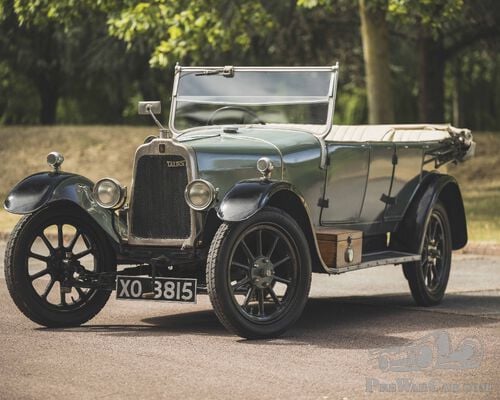
Rare RHD, low miles & great history file
This is an ONLINE-ONLY AUCTION at THE MARKET. The price shown here is the lower estimate. To see all the details, description, 250+ high-res photog..
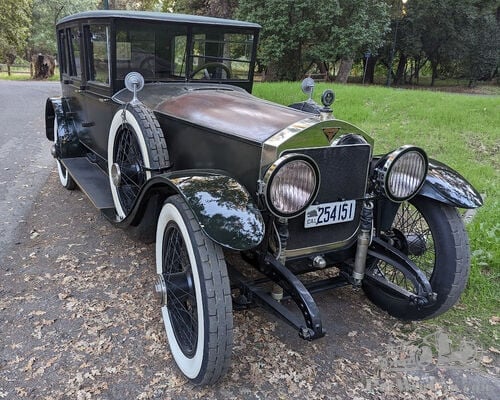
1916 Simplex, Crane model 5
1916 Simplex, Crane MODEL 5CUSTOM MADE HISTORIC PRESERVATION VEHICLE – READY TO TOUR!This Simplex recently completed th..
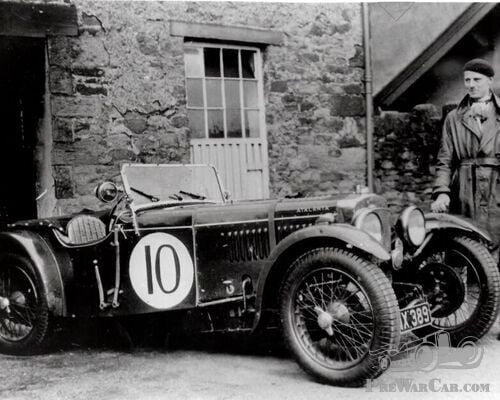
Fraser Nash TT Replica
AHX 389 ( chassis no. 2073, engine no. 10367).An important and correct short-chassis TT Replica with known history from new. Ex. H. P..