The global magazine and marketplace for classic car enthusiasts, by enthusiasts.


Filter
Classic Hotchkiss, Lincoln for sale - Hotchkiss, Lincoln cars for sale
-

1931 Lincoln Model K Town Sedan | RM Sotheby's | The Hershey Auction
To Be OFFERED AT AUCTION at RM Sothebys' The Hershey Auction event, 7 - 8 October 2026. $60,000 - $80,000 USD Please check back soon as our dedicated cataloguing team is preparing the description for this lot. To view this car and others currently consigned to this auction, please visit the RM website at rmsothebys.com/auctions/hf26/. -
Lincoln Model L V8,
This amazing Lincoln was purchased new 1928 in USA and shipped to Sweden. Of some reason it was not taken in use but stored in a garage until 1972 when it has it's first registration. I'm the 3rd owner. Odometer shows 27,248 miles that believe to be correct. Car is in very nice original unrestored condition except of a repaint in 1985. It driv.. -
1925 Lincoln Model L Sport Touring by Brunn | RM Sotheby's | The Hershey Auction
To Be OFFERED AT AUCTION WITHOUT RESERVE at RM Sothebys' The Hershey Auction event, 7 - 8 October 2026. Offered Without Reserve | $40,000 - $60,000 USD Please check back soon as our dedicated cataloguing team is preparing the description for this lot. To view this car and others currently consigned to this auction, please visit the RM website a.. -
1926 Lincoln Model L Touring by Brunn | RM Sotheby's | The Hershey Auction
To Be OFFERED AT AUCTION WITHOUT RESERVE at RM Sothebys' The Hershey Auction event, 7 - 8 October 2026. Offered Without Reserve | $8,000 - $15,000 USD Please check back soon as our dedicated cataloguing team is preparing the description for this lot. To view this car and others currently consigned to this auction, please visit the RM website at.. -
Lincoln 1930 Tonneau Cowl Sport Pheaton 176-B
This beautifull shaped Lincoln 1930 Tonneau Cowl Sport Pheaton 176-B which was sold for 4.400,- USD in 1930 and weighed 4.900 Pounds, a total of 90 where built in 1930 For more information please contact me FRANK KENNIS phone: 00.31.622.420.766 or mail me: info@KennisCars.NL Frank Kennis Phone: 00.31.622.420.766 or mail me: info@KennisCars.NL www.. -
1929 Lincoln Model L Sport Phaeton
1929 Lincoln Model L Sport PhaetonA masterpiece of American automotive history!The 1929 Lincoln Model L Sport Phaeton tells the fascinating story of the Lincoln Motor Company and the vision of its founder, Henry Martyn Leland. Originally established to produce aircraft engines for World War I, Leland introduced the.. -
1936 Lincoln Model K Coupe by LeBaron | RM Sotheby's | The Monterey Auction
To Be OFFERED AT AUCTION WITHOUT RESERVE at RM Sothebys' The Monterey Auction event, 13 - 15 August 2026. Sold | $168,000 USD Well-maintained and award-winning restoration in striking colorsOne of about 10 known surviving examples of 25 builtDelivered new to Philadelphia; known history back to 1955Part of The R.. -
Hotchkiss AM2 1926 for sale
Original condition 1926 Hotchkiss AM2, mechanically complete and sound. Lively 4 cylinder/13CV overhead valve engine. Four wheel brakes. Original wooden spoke wheels were rebuilt in the 1960s (spokes and felloes). Original Weymann saloon body was dismantled but is still with the car. Nice solid horseshoe Bugatti look-alike radiator in very good ..



Hotchkiss
France, 1903 – 1955
(1) Hotchkiss et Cie, St. Denis, Seine, 1903 – 1936
(2) Automobiles Hotchkiss, St. Denis, Seine, 1936 – 1955
The American Benjamin Berkeley Hotchkiss set up his ordnance Horchkiss car factory at St. Denis in 1867; the Hotchkiss cars were the result of an arm slump. The work of Terrasse, these first Hotchkiss cars were T-headed fours with pair-cast cylinders, 5-ball-bearing crankshafts, low-tension magneto ignition, round honeycomb radiators, 4-speed gearboxes, and the famous Hotchkiss drive by live axle and open propeller shaft. Initially cylinder capacities of Hotchkiss cars were 4.6-litres and 7.4-litres, but the Hotchkiss car company’s first racers of 1904 were 17.8-litre monsters notable for their aiv and chain drive. Though their 1905 successors conformed once more to touring-car practice, they were even bigger Hotchkiss cars, with 18.815cc and an alleged 130bhp. Hotchkiss’s last racing season was 1906 with their Grand Prix Hotchkiss cars had 16.3-litre L-head units and quick-detachable wire wheels. Though these Hotchkiss cars were unsuccessful, Hotchkiss sold 167 cars that year, with gate change standardized, and a choice of five Hotchkiss car models: a short-lived 4.2-litre petrol brougham, fours of 18, 30 and 42hp, and their first six. The last-mentioned Hotckiss car was the large V-type that evolved into a 9½-litre machine and was still being offered in 1912 as a Hotckiss car. Chassis price was £1.000 and it was capable of 60mph.
The slump following the Agadir crisis led to the abandonment of ball-bearing crankshafts on Hotchkiss cars; at the same time there was a move towards smaller Hotchkiss cars with the 3.1-litre T-type, with side valves in an L-head and high-tension magneto ignition. Two years later came something even smaller and more modern, the 12/16hp Hotchkiss X-type with 2-bearing crankshaft and three forward speeds at £390. Soon monobloc engines spread up the range to the 3.7-litre Hotckiss AB of 1912. From 1911 there were some smaller L-head sixes, the 4.678cc Hotchkiss X6 and the 5½-litre Hotchkiss AC6; 1912 sales were a record 598 Hotchkiss cars. Electric lighting was available from 1913, and all the 1914 Hotchkiss car models – the 2.6-litre Hotchkiss AG, the 4-litre Hotchkiss AF, the 5.7-litre Hotchkiss AC, and the 6-cylinder Hotchkiss AC6 – had semi-elliptic suspension all round.
The wartime demand for Hotchkiss machine guns led to the establishment of a branch factory under the Englishman Harry Ainsworth, this subsequently making engines for W.R. Morris until it was absorbed by him in 1923. At home Hotchkiss sold off their surplus works capacity at Lyons and concentrated on a revised Hotchkiss car again, the AF with full electrics and a horseshoe-shaped radiator in place of the traditional round one. Its successor, the Hotchkiss AH of 1921, had cantilever rear springs and torque tube drive, and a year later came the Hotchkiss AL with ohv, and a detachable head; front-wheel brakes were added for 1923. There was also a prototype luxury Hotchkiss car at the 1921 Paris Salon; this Hotchkiss AK had a 6.6-litre 6-cylinder ohc engine, dual ignition, 4-speed unit gearbox, servo-assisted 4-wheel brakes, and a cruciform-braced frame, but it never went into production.
The return of Ainsworth to St. Denis in 1923, coincided with the construction of a new Hotchkiss car factory and a more realistic type of car, the 2.4-litre 12CV Hotchkiss AM, with 4-cylinder sv engine, 4-speed unit box, four-wheel brakes, wire hwwls, and Hotchkiss drive once more. Between 1924 and 1928 it was the Hotchkiss car company’s staple product, selling at the rate of over a thousand a year and offering a 70mph performance at a modest outlay. It persisted until 1932, acquiring ohv in 1926 and rod-operated brakes in 1928, and its engine was used in some Morris-Léon Bollées. Even better was the Hotchkiss AM80 of 1929, largely the work of Bertarione. This was a short-stroke (80x100mm), 7-bearing ohv 3-litre six that owed a good deal to the AM2, though early cars featured torque tube drive; it was to be the basis from which all subsequent Hotchkisses were evolved. A silent 3rd gearbox featured on 1931 Hotchkiss car models, Hotchkiss drive reappeared in 1932, and 1933 improvements included Bendix brakes, cruciform-braked frames, down-draught carburetors and mechanical fuel pumps. Hotchkiss AM80 engines were also fitted to Sizaire Frères and Tracta cars.
The 1933 Hotchkiss car range was expanded both up and down, with new Hotchkiss 12CV (2-litre) and 13CV (1.3-litre) fours for the economy market, and an 85mph fast tourer, the 100bhp 3½-litre Hotckiss AM80S, for the enthusiast. This Hotchkiss car was based on the car with which Vasselle won the 1932 Monte Carlo Rally. Hotchkiss cars repeated this success in 1933 and 1934: in the latter year the Hotchkiss cars collected two Glazier Cups in the Alpine Trial. There were further wins in the Monte Carlo in 1938 and 1939; on the latter occasion a Grand Sport Hotchkiss car tied with a 3½-litre Delahaye. Radiators were moved forward on the 1934 Hotchkiss cars, and the 3-litre gave way to a 2.650cc 15CV that was not a success and lasted only one season. The 1935 Hotchkiss cars had synchromesh and integral boots, and at the top of the 3½-litre 20CV range was the twin-carburettor Hotckiss Paris-Nice, a 115bhp sports car capable of 95mph. Hydraulic brakes appeared in 1936 on Hotchkiss cars (to be quietly dropped halfway through 1937). The sports 20CV engine was now giving 125-130bhp and when allied to a short 9ft 2in wheelbase resulted in the Hotchkiss Grand Sport, a true 100mph saloon.
By 1938 the horseshoe radiator on the Hotchkiss car was now a wire-mesh grille, but despite the exigencies of French rearmament programmes the Hotchkiss car company managed to deliver 2.751 Hotchkiss cars that year, made up of the two fours, the reinstated 3-litre Hotchkiss 680, and the 3½-litre Hotchkiss 686 in various forms, including seven-seater limousines with the single-carburettor 100bhp engine. Hotchkiss also came to the rescue of the ailing Amilcar concern, helping to make the Grégoire-inspired 1.185cc Compound, a small fwd saloon with unitary construction in Alpax; this was sold in England, though not in France, as a Hotchkiss car. A 1.3-litre ohv development, the Hotchkiss B67, was ready for production when France collapsed in the summer of 1940.
Hotchkiss never really recovered from World War 2, though Peugeot were briefly interested in the Hotchkiss car company and Hotchkiss 686 cars won the first two post-war Monte Carlo Rallies of 1949 and 1950. The Hotchkiss 12CV and Hotchkiss 20CV were back in production, unchanged, by 1946, but the first year’s output was a miserable 117 Hotchkiss cars. Hydraulic brakes and independent front suspension did not appear until 1949 on Hotchkiss cars (though Hotchkiss had experimented with the latter in 1937), and a Cotal electric gearbox became a factory option. The 1951 Hotchkiss car models were ‘facelifted’ with V-screens, recessed headlamps and auxiliary coil rear suspension, but in the meantime there had been an expensive mistake: the acquisition by Hotchkiss of the rights to the Grégoire flat-4. This ingenious device was a development of the 1938 Amilcar theme featuring all-round independent suspension and a 4-speed overdrive gearbox, as well as front wheel drive. Production Hotchkiss car models with 2.2-litre engines were said to achieve 95mph and 30mpg, but the teething troubles were endless, and Hotchkiss only managed to make 250 Hotchkiss cars in the end. There was a shutdown in 1952 and the price of recovery was a merger with Delahaye that led inevitably to concentration on commercial vehicles. The old Hotchkiss cars 13CV and 20CV received another facelift in time for the 1954 Paris Salon, but his was their swansong, though medium-powered trucks continued to be made until 1970, along with a version of the American Jeep built under licence.
GB, 1920
Hotchkiss et Cie, Coventry, Warwickshire
Hotchkiss of Coventry, a British offshoot of the famous French Hotchkiss car firm, was set up during World War 1 to make engines in Britain. Their units became best known as the motive power for Morris and BSA light cars, but before they were taken over by William Morris, Hotchkiss experimented with a small car of their own. The Hotchkiss car consisted of their 1.080cc air-cooled V-twin ohv engine installed with a 3-speed gearbox in a pre-war Morris Oxford chassis. It never went into production.
Source: Georgano, encyclopedia of motorcar; MCS, TRN
The information is written with the greatest of care. However, if you have any suggested amendments please contact us at office@prewarcar.com
Lincoln
US, 1909
Lincoln Motor Vehicle Co, Lincoln, Ill.
This Lincoln car was a high-wheeler with solid rubber tyres, using a 4-stroke, 2-cylinder air-cooled engine of 1.7-litres. Three Lincoln car-models were made, two with shaft drive and one with a single chain.
US, 1911 – 1914
Lincoln Motor Car Works, Chicago, Ill.
After the closure of the Sears venture, the Lincoln Motor Car Works made a high wheeler of similar design to the Sears for a few years. Most Lincoln cars were commercial vehicles.
AUS, 1919 – 1924
Lincoln Motor Car Co, Sydney, N.S.W.
The Lincoln car was an attempt to place on the roads of Australia a car embodying the best of standard components and Australian workmanship, the latter including the radiator design and body. A Continental 6-cylinder engine was used on the Lincoln car for power and the touring Lincoln car sold in 1923 for £A590 with wire wheels extra. The Lincoln Motor Co of Detroit, Mich., requested the Lincoln car company to drop the Lincoln name in 1923, but it is not recorded that the Australian Lincoln car company did so.
US, 1920 to date
Lincoln Motor Co, Detroit, Mich.
After Henry M. Leland’s resignation from Cadillac in 1917, he evolved another big sv V8 which came on the market under the name of Lincoln in 1921. This Lincoln car had a capacity of 5.8-litres and developed 81bhp. Cylinder heads were detachable and full-pressure lubrication was adopted at a time when many American makers pinned their faith to splash systems. Over 70mph was possible with the Lincoln car and it was not excessively expensive at $4.300, but the style of the bodies did not match the quality of the mechanical components, and Henry Ford acquired the Lincoln car company after it had encountered financial difficulties in 1922. Both Leland and his son Wilfred resigned a few months later for the Lincoln car company , but Ford retained the traditions of quality, adding aluminium pistons from the time of his takeover. Lincoln cars were much used by both gangsters and police, the latter driving tuned versions capable of over 80mph and equipped with front wheel brakes, a luxury not available to the general public on Lincoln cars until 1927. President Coolidge bought a Lincoln car in 1924, establishing a link between the Lincoln car marque and the White House: Franklin D. Roosevelt’s Sunshine Special was one of the last 12-cylinder Lincoln car Ks, Harry S. Truman ordered an open Lincoln Cosmopolitan in 1950 and John F. Kennedy bought a Lincoln Continental in 1961.
Lincoln cars sold steadily in limited numbers – nearly 9.000 Lincoln cars in 1926. Engine capacity went up to 6.3-litres in 1928. 1931 Lincoln cars had a 12ft 1in wheelbase, downdraught carburation and 120bhp engines, but in 1932 there came a new 7.2-litre Lincoln KB-type V12 with vacuum booster brakes. This Lincoln car was joined the following year by a smaller 6.2-litre Lincoln KA-type 12 at $2.700, and all subsequent Lincoln cars made up to 1948 were to have 12-cylinder power units. In 1934 both Lincoln cars gave way to a 6.8-litre Lincoln K with aluminium cylinder heads, and a top speed of nearly 100mph. The Lincoln car Division could not, however, support itself on the dwindling prestige-car market, and for 1936 they offered a popular V12 Lincoln car, the 4.4-litre, 110bhp Lincoln Zephyr. Unitary construction was adopted on Lincoln cars; other characteristics were a synchromesh gearbox, headlamps faired into the front wings, a fastback style and an alligator-type bonnet. The brakes, however, were mechanical, and Ford’s traditional transverse suspension was used on Lincoln cars as well. It cost $1.320 and the engine of the Lincoln car was used in Anglo-American hybrids of the period: the Allard, Atalanta and Brough Superior. 1938 Lincoln Zephyrs had a dashboard gear change. Hydraulic brakes followed in 1939, and column change in 1940. Meanwhile the Model K Lincoln car had at last been dropped; sales for the combined 1939 and 1940 seasons had been 120 of these Lincoln cars and the black-bordered emblems on the last models were symbolic. To balance this, a new Lincoln car-product had been launched in 1939, the Lincoln Mercury. There were also some relatively inexpensive prestige Lincoln cars – Edsel Ford’s Zephyr-based Continental coupés and cabriolets, with 4.8-litre engines. Options on the Lincoln car in the last pre-war seasons included overdrive, a fluid coupling, and power-operated hoods and windows. No entirely new Lincoln cars appeared until 1949, when a change was made to Ford’s new styling and coil-spring independent front suspension for the Lincoln cars, while at the same time the 12-cylinder engine was replaced by an sv under-square 5½-litre V8. Manual transmission was dropped finally from Lincoln cars in 1951, and 1952 models swept the board in the touring-car class of that year’s Carrera Panamericana, the winning Lincoln car averaging 90mph. 205bhp ohv engines were introduced for 1953, and the 1956 line of Lincoln cars consisted of the 6-litre 285bhp Lincoln Premiere and Lincoln Capri, as well as a revived Lincoln Continental at $10.000 made in very limited numbers. Dual headlamps were adopted for the 1957 Lincoln cars, and 1958 Lincoln cars had unitary construction – this was the year of Lincoln-Mercury Division’s disastrous Edsel. After 1961 the Continental became the staple Lincoln car, and unusual body style being a 4-door convertible of a type not offered by the American motor industry for some years; this was discontinued in 1968, when Lincoln cars had 7.571cc 340bhp engines and front disc brakes (standardized in 1966 on Lincoln cars). This short-wheelbase Lincoln Continental III luxury 2-door hardtop introduced during the year reverted to the separate chassis and the traditional radiator grille. List price of the Lincoln car was $6.585. The company also built a $500.000 Lincoln car, a bullet-proof Lincoln Presidential limousine on a special 13ft 4in chassis.
All 1970 Lincoln carmodels had concealed headlamps an perimeter frames; that year’s production of 58.771 Lincoln cars was well below Cadillac’s level, but appreciably ahead of Chrysler’s prestige Imperial. By 1973 cylinder capacity was 7.359cc, and improvements on the Lincoln car for the year were mainly concerned with safety. Most expensive Lincoln car was the Lincoln Continental IV, basically the 1972 revision of the Continental III with a Rolls-Royce style grille. Prices for this Lincoln car ranged from $7.322 for the Continental 4-door sedan to $8.774 for the Continental Mark IV coupé.
Source: Georgano, encyclopedia of motorcar; GNG, GMN, MCS
The information is written with the greatest of care. However, if you have any suggested amendments please contact us at office@prewarcar.com


Featured
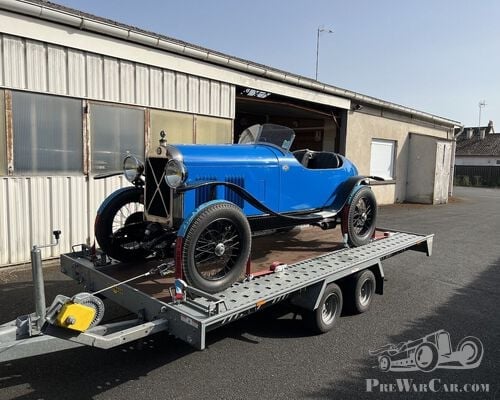
Salmson VAL 3 Séries 7
1927 Salmson VAL3 Series 7. Completely restored a few years ago, in very good overall condition, both bodywork and mechanics. Bordino-style bodywor..
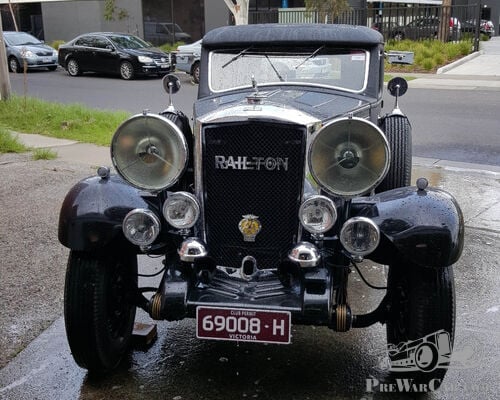
Railton straight 8 sports coupe for rallying REDUCED PRICE run with the bentleys at a fraction of the price
1934 Railton Sports CoupeBuilt for long distance rallyingRebuilt 2017built up at a cost of $160,000AUD, OFFERED FOR SALE AT A ..
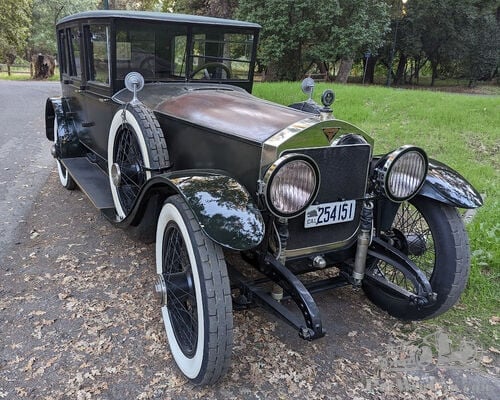
1916 Simplex, Crane model 5
1916 Simplex, Crane MODEL 5CUSTOM MADE HISTORIC PRESERVATION VEHICLE – READY TO TOUR!This Simplex recently completed th..