The global magazine and marketplace for classic car enthusiasts, by enthusiasts.


Filter
Classic Lion Peugeot for sale - Lion Peugeot cars for sale

Lion-Peugeot
France, 1906 – 1913
(1) Les Fils de Peugeot Frères, Beaulieu-Valentigney, 1906 – 1910
(2) SA des Automobiles et Cycles Peugeot, Audincourt, 1910 – 1913
The Lion-Peugeot car started as an independent venture by Robert Peugeot in the motor cycle factory at Beaulieu-Valentigney, which had been used for Lion-Peugeot car manufacture until the establishment of the SA des Automobiles Peugeot in 1897. These Michaux-designed voiturettes Lion-Peugeot cars were produced in direct competition with the cars from Audincourt, and the original chain-driven single at £125 filled a gap left by the discontinuation of the original Peugeot Baby. Already the Lion-Peugeot car company were trying their hand in the Coupe des Voiturettes, but made no impression in 1906 or 1907 against Sizaire-Naudin and Delage. The first of the classic racing V-twin Lion-Peugeot cars made its appearance in 1908, and from 1909 to 1911 the Lion-Peugeot car marque was renowned for some very odd machines, which took advantage of regulations more concerned with bores than with strokes. The 1909 Lion-Peugeot cars, victorious in both the Catalan Cup and the Coupe itself, were made with 1.9-litre engines, a single of 100x250mm and a twin of 80x192mm, the former having three valves per cylinder, but the peak of Lion-Peugeot cars was reached in 1910 with the fantastic Lion-Peugeot VX5, an 80x280mm V-twin with twin carburetors, developing 95bhp. The driver of the Lion-Peugeot car had to look round, rather than over the engine. There was a companion 65x260mm V4, really two twins in series. In spite (or perhaps because) of this, Lion-Peugeot cars had to be content with 2nd place in that year’s Coupe des Voiturettes. They tried once again in 1911 with a Lion-Peugeot V4, this time using the relatively modest stroke/bore rato of 2:1.
By 1910, the production Lion-Peugeot cars had grown up into 1.7-litre transverse V-twins with 3-speed gearboxes and shaft drive, though chain-driven versions were still available on Lion-Peugeot cars as late as 1911. The reunion of the two rival Peugeot companies, however, signaled the end of these eccentricities: though a touring V4 Lion-Peugeot car was announced in 1911 and was made with a 4-speed gearbox, pressure lubrication, and pedal-operated rear-wheel brakes, the Lion-Peugeot car designation was dropped at the end of 1913. The 1.9-litre VD Peugeot of 1914 marked the end of this line of development and none of the Lion-Peugeot car derivatives survived World War 1.
Source: Georgano, encyclopedia of motorcar; MCS
The information is written with the greatest of care. However, if you have any suggested amendments please contact us at office@prewarcar.com


Featured
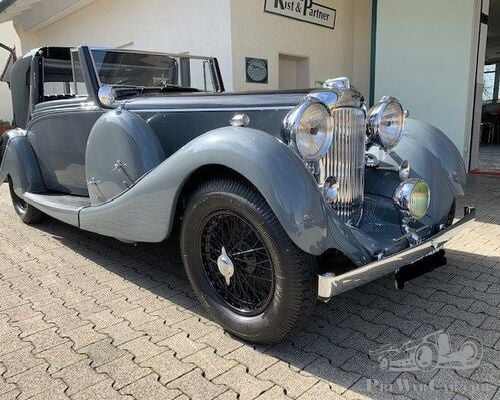
Lagonda LG 45 Coupe de Ville Sedanca by Mayfair
The successor to the M45, the LG45 was built around the same highly capable, competition-proven 4.5-litre Meadows inline-six engine, but featured r..
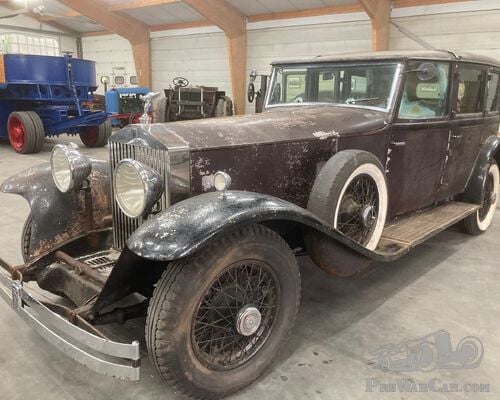
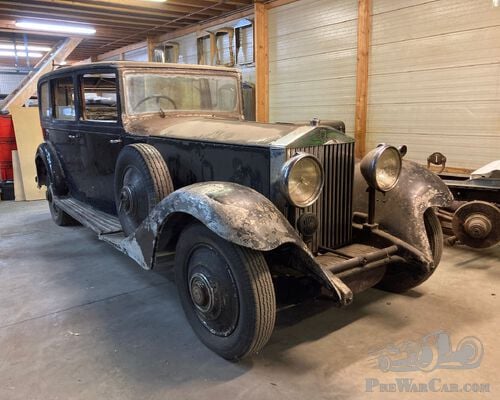
Rolls-Royce
Rolls-Royce Phantom ll chassisnummer 287 AJS. bouwjaar 1932, Links gestuurd, Brewster Keswick Sedance Towncar