The global magazine and marketplace for classic car enthusiasts, by enthusiasts.


Filter
Classic Marlborough for sale - Marlborough cars for sale
-

1903 Panhard Et Levassor 7HP Twin Cylinder Rear Entrance Tonneau - VCC Dated
1903 Panhard Et Levassor 7HP Twin Cylinder Rear Entrance TonneauRegistration No. T3372Engine No. 6376Chassis No. 6376VCC Dating Certificate No. 486 Panhard et Levassor sold their first automobile in 1890, based on a Daimler engine license. Levassor obtained his licence .. -
Derby Bentley Special 4-1/4
Sadly i am having to sell on my Bentley special ( Icarus). It is currently a work in progress and still needs finalising/ refining. A great opportunity to be able to buy a cheaper Derby special to finish with your own touch. Details on the car:The car was originally built by well known Bentley special builder and profe.. -
1924 Bentley 3-Litre Speed Model Tourist Trophy Two-Seater in the style of Jarvis | RM Sotheby's | The Woodcote Park Auction
To Be OFFERED AT AUCTION at RM Sothebys' The Woodcote Park Auction event, 8 July 2026. £90,000 - £110,000 GBP Tourist Trophy-style polished two-seater taper-tail body built in the style of Woolf Barnato’s Jarvis-bodied 3-LitreRetained by its consigning owner since 2009Driven extensively in current ownership on rallies a.. -
1910 OLDSMOBILE SPECIAL 40HP ROADSTER RHD
1910 OLDSMOBILE SPECIAL 40HP ROADSTER Chassis Number: 2037Registration Number: AA-00-41 Portugal Yellow with black pinstriping and black leather seats Engine: four cylinder, c336ci., 40bhp; Gearbox: four-speed manual; Suspension: front, semi-elliptic leaf springs, rear, three-quarter ellipt.. -
1920 HUDSON SUPER SIX
FOR SALE :1920 HUDSON SUPER SIX SEVEN SEAT TOURER. 4.7 litre six cylinder sidevalve engine producing 76bhp at 2445rpm. . The car stands on four excellent wooden wheels fitted with new Goodrich 35x5 tyres. The car also has 4 addition rims with tyres as supplied with the car when new. I've reluctantly to part with the car which has a lot of.. -
Ford model T racer 1925
This is an original “ Poor mans race car “ build in New Jersey by Ralph Cox , in 1935 - 39 .It has 2 speed rearend , Lovered chassis , another steering ect. Engine is standard .He was Aircraft pilot and made the body in the weymann / aircraft style with leather- clothe over padded frame. Price : please ask ! -
1938 Bugatti Type 57 Atalante by Gangloff | RM Sotheby's | The Monterey Auction
To Be OFFERED AT AUCTION at RM Sothebys' The Monterey Auction event, 13 - 15 August 2026. $1,500,000 - $1,800,000 USD A bespoke example for original owner Fernand CrouzetNumerous unique and special details throughout, as specified by Mr. CrouzetContinuously known ownership history since newWell-preserved concou.. -
1937 Delahaye 145 Cabriolet by Franay | RM Sotheby's | The Monterey Auction
To Be OFFERED AT AUCTION at RM Sothebys' The Monterey Auction event, 13 - 15 August 2026. $4,500,000 - $6,000,000 USD One of five competition 12-cylinder 145 chassis producedBelieved to be the car that famously beat Germany’s finest for the Prix du MillionFitted with astonishing custom roadgoing coachwork by Fran.. -
1937 Delahaye 135 Grand Prix | RM Sotheby's | The Monterey Auction
To Be OFFERED AT AUCTION at RM Sothebys' The Monterey Auction event, 13 - 15 August 2026. $250,000 - $400,000 USD Mr. Mann’s proven and very successful longtime vintage racing entrantBuilt by Pascal Morel to period Le Mans specificationRecipient of much sorting over the years by Competition Motors and Marcovicci-Wenz -
1937 Delage D8-120 S Aerodynamic Coupe by Pourtout | RM Sotheby's | The Monterey Auction
To Be OFFERED AT AUCTION at RM Sothebys' The Monterey Auction event, 13 - 15 August 2026. $5,000,000 - $6,000,000 USD Best of Show at the 2005 Pebble Beach Concours d’EleganceThe original prototype for the D8-120 S chassisThe personal automobile of Louis Delage Extraordinarily beautiful, unique coachwork of sup..


Marlborough
France, GB, 1906 – 1926
(1) Malicet et Blin, Aubervilliers, Seine, 1906 – 1924
(2) T.B. André and Co Ltd, London, 1909 – 1926
This Anglo-French Marlborough car started life as an entirely French car, but the British content incrased until with the final 2-litre type the Marlborough car was 100 percent British. Malicet et Blin were well-known suppliers of components to the French industry, and the first car to bear the name of Marlborough was a conventional 7hp single-cylinder runabout Marlborough car exhibited at the 1906 Show in London by C.C.C. of Taunton. The Marlborough cars next appearance was in 1909, when T.B. André of shock absorber fame took over the agency. These Marlborough cars were conventional medium-sized machines with pair-cast cylinders, magneto ignition, 3-speed gear boxes, cone clutches and shaft drive, selling at a modest £270 for a 12hp of 2.8-litres capacity. There was also a bigger 3.1-litre four Marlborough car, and a short-stroke (85x90mm) six selling at £350. These Marlborough cars had round radiators and were marketed until 1911, though by this time the six had acquired more conventional cylinder dimensions and a capacity of 3.6-litres. 1912, however, brought a change of direction and the Marlborough car emerged as one of the first 4-cylinder cyclecars, with a 1.130cc sv water-cooled power unit, a sharp V-radiator and shaft-and-bevel drive, selling for £185. Sir Francis Samuelson (with his wife as mechanic) drove one Marlborough car in the Year’s Cyclecar Grand Prix, and by the outbreak of World War 1 the Marlborough car was an altogether more substantial affair with artillery wheels and a capacity of 1.2-litres. An electrically-equipped coupé Marlborough car could be bought for £275.
Post-war Marlborough cars were still largely French and had acquired round radiators, an extra 100cc, and four forward speeds. Subsequent improvements on the Marlborough cars included 1½-litre British Anzani engines, rod-operated brakes and (in 1921) flat radiators. A rotary-valve machine was entered for the 1921 200 Miles Race at Brooklands, but this Marlborough car did not start. The Anzani-engined 1922 Marlborough Roadspeed model was guaranteed to reach 60mph, but a year later a differential-less light Marlborough car used the familiar 1.100cc ohv French C.I.M.E. power unit, these models being still listed in 1924 at £175. In 1923 T.B. André ventured into serious racing with the 1½-litre Marlborough-Thomas. Last of the Marlborough cars was a British-made 2-litre sporting six with an ohv Coventry-Climax engine, forced lubrication 4-wheel brakes and 75mph top speed, but this Marlborough car never went into production. André made a brief comeback in 1933 with a small 2-cylinder sports car under his own name.
NZ, 1919 – 1926
Designed by John North Birch, the Marlborough cars were large, beautifully-built machines powered by 5.8-litre 4-cylinder engines with five main bearings and full force-feed lubrication. Three Marlborough cars were laid down, but only two completed, the first Marlborough car in 1919 at Blenheim, South Island, and the second in 1926 at Gisborne, North Island. The second car was renamed Carlton, a name also used by Birch for the small car he built two years later.
Source: Georgano, encyclopedia of motorcar; MCS, GNG
The information is written with the greatest of care. However, if you have any suggested amendments please contact us at office@prewarcar.com


Featured

1939 Wanderer W 23 Gläser(Dresden) Convertible
Wanderer W 23 Gläser(Dresden) Convertible in original condition Built in 1939 for sale. Ready to drive with TÜV and approval as a historic vehicle..
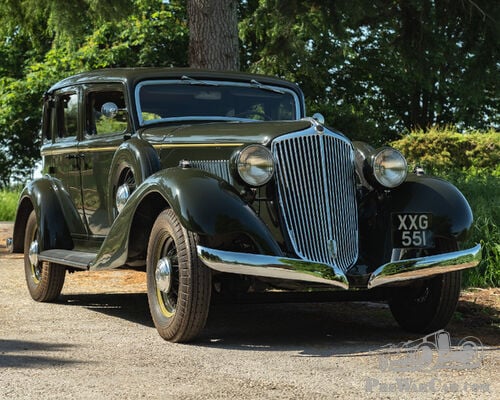
Graham Model 64 Standard Eight 'Blue Streak'
UK Registration No: XXG 551Chassis No: 1801069MOT: ExemptH&H ClassicsKelham Hall | Newark, Nottinghamshire