The global magazine and marketplace for classic car enthusiasts, by enthusiasts.


Filter
Classic Mitchell, Marmon for sale - Mitchell, Marmon cars for sale
-

Mitchell Type R Raceabout 1911
A “racing” car from the early 1910s,Equipped with an impressive overhead valve engine that delivers 30 HP.The engine has a starter motor and starts easily.The gearbox has 3 gears and operates normally.This Mitchell rides well.The Mitchell was part of the famous Lindley Bothwell collection in Los Angeles (USA) f.. -
Marmon Type 70 Sedan 1930 for sale
Marmon-Roosevelt straight eight sedan. Model 97, Type 70. The body was built by Hayes Corp. Roosevelt is the companion make to Marmon, nevertheless the Marmon label is featured on the car. The car makes a striking impression with it's six wire wheels and handsome headlights. It runs and drives but it requires work. The restoration is older and .. -
Mitchell Type R Raceabout 1911
A “racing” car from the early 1910s, Equipped with an impressive overhead valve engine that delivers 30 HP. The engine has a starter motor and starts easily. The gearbox has 3 gears and operates normally. This Mitchell rides well. The Mitchell was part of the famous Lindley Bo.. -
1932 Marmon Sixteen Five-Passenger Sedan by LeBaron | RM Sotheby's | The Monterey Auction
To Be OFFERED AT AUCTION at RM Sothebys' The Monterey Auction event, 13 - 15 August 2026. $300,000 - $375,000 USD A definitive example of Classic Era engineering and one of the finest driving automobiles of the 1930sFascinating history, including completing the Monte Carlo Antique Car Rallye in 1974Well-maintained resto.. -
1931 Marmon Sedan 88
MARMON - SEDAN 88 Year 1931GasolineHistorical, 8 cylinders, very good condition.


Mitchell
US, 1903 – 1923
(1) Mitchell Motor Car Co, Racine, Wisc., 1903 – 1910
(2) Mitchell-Lewis Motor Co, Racine, Wisc., 1910 – 1916
(3) Mitchell Motors Co Inc, Racine, Wisc., 1916 – 1923
Mitchell and Lweis had been wagon builders since 1834, and their first Mitchell car was a light two-seater powered by a 7hp air-cooled 2-cylinder engine, using single chain drive, and priced at $1.200. In 1905 a 9hp engine was used on the Mitchell car, and air or water cooling was available. 4-cylinder engines of 18 and 30hp appeared in the 1906 Mitchell car range, and in 1907 shaft drive was employed on all Mitchell car models. Until 1910, 20 and 35hp fours were made, having pair-cast cylinders in 1910 when they were joined by a 50hp 6-cylinder Mitchell car. In 1913 a new range of T-head engines was introduced in a Mitchell car designed by René Petard and known as the ‘American-built French car’. A 40hp four and 50 and 60hp sixes were made in this Mitchell car range, which had high-cowled torpedo-style bodies and electric starters. Piston strokes were very long at 7 inches. At this time it was said that the Mitchell car company made 96% of all components. In 1916 a short-lived Mitchell 48hp V8 was made, and the following year the Mitchell car company settled down to making a range of conventional sixes of no great distinction. In 1920 a sloping radiator gave rise to the epithet, ‘the drunken Mitchell’ and this was hastily replaced by a vertical radiator for 1921. However, the company had lost a lot of money on their 1920 Mitchell car models, and few of the redesigned Mitchell cars were sold, as they lacked any distinctive qualities.
The 6-cylinder engines of the Mitchell car had acapacity of 4.7-litres. After production ceased in 1923, the Mitchell car factory was bought by Nash.
Source: Georgano, encyclopedia of motorcar; GNG
The information is written with the greatest of care. However, if you have any suggested amendments please contact us at office@prewarcar.com
Marmon
US, 1902 – 1933
(1) Nordyke and Marmon Co, Indianapolis, Ind., 1902 – 1925
(2) Marmon Motor Car Co, Indianapolis, Inc., 1926 – 1933
Howard Marmon’s first cars were advanced machines, featuring air-cooled V4 engines of oversquare dimensions, with mechanically-operated overhead valves and pressure lubrication. Something approaching independent front suspension was achieved on Marmon cars by the use of double-three-point suspension, with a separate sub-frame for engine and transmission. Only the 2-speed gearbox of planetary type conformed on the Marmon cars to American practice of the period. These Marmon cars persisted until 1908, though 1907 brought the introduction of selective sliding-type gearboxes on the Marmon car and a short-lived 60hp V8. In 1908 buyers of Marmon cars had the choice of air or water cooling and cylinder heads were detachable. The following year Marmon went over to conventional T-head in-line fours rated at 40/45hp and 50/60hp, and two years later only the 5.2-litre Model 32 Marmon car with rear-axle gearbox was listed. Marmon cars did well in contemporary competition, with 54 1st places logged with a Marmon car between 1909 and 1912; Ray Harroun won the first Indianapolis 500 in 1911 with a specially-built 6-cylinder Marmon car, the well-known Marmon Wasp. An enormous 9.3-litre six rated at 48hp was available in 1914.
In 1916 the advanced ohv 6-cylinder Marmon 34 with aluminium cylinder block, body, bonnet and radiator shell, and double transverse rear suspension was introduced. The engine capacity of this Marmon car was 5½-litres, and its output 74bhp; developments of this Marmon car were still listed as late as 1927, acquiring Delco coil ignition in 1920, and the option of a Marmon car with front wheel brakes in 1923. The Marmon cars were expensive: $5.000 was asked for a touring car in 1921. A not very successful 3.1-litre ohv straight-8 in the Marmon car appeared in 1927, but the following season only Marmon cars with eights were made, the cheapest sv Marmon 68 selling for $1.395. In 1928 Marmon also entered some front-wheel-drive Marmon cars at Indianapolis, but they were in fact only revamped Millers. The Marmon car company sold 22.300 Marmon cars in 1929, thanks to a cheap new straight-8 at under $1.000, the Marmon Roosevelt. This brandname, however, did not last, for the Marmon car appeared in the 1930 programme as the Marmon R, along with three other eights, the sv 69, and two big ohv Marmon cars with 4-speed gearboxes and capacities of the 4.9- and 5.2-litres respectively.
Marmon cars swansong was the magnificent 9.1-litre 200bhp 16-cylinder model of 1931. This Marmon car was beautifully proportioned, and had an alloy engine. The list price of the Marmon car was $4.925; there was a companion Marmon 8-125 in 1932, but only the Marmon Sixteen was listed for 1933. At the very end Marmon was testing a Marmon car with a 150bhp V12 with independent front suspension, De Dion rear axle, and tubular backbone frame, but this never saw production.
Source: Georgano, encyclopedia of motorcar; MCS
The information is written with the greatest of care. However, if you have any suggested amendments please contact us at office@prewarcar.com


Featured
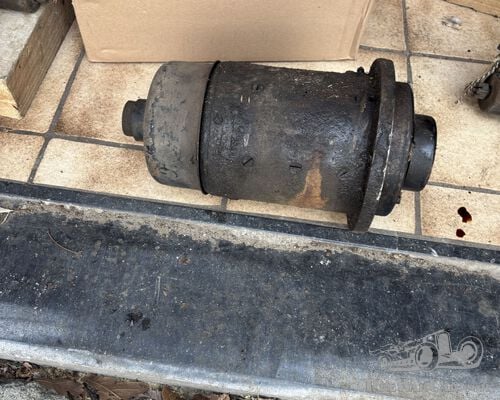
1929 Talbot K74 Limousine – Very comprehensive restoration project
For sale – 1929 Talbot K74 Limousine – Very comprehensive restoration projectAsking price: €19,950 A very rare 1929 Talbot K74..
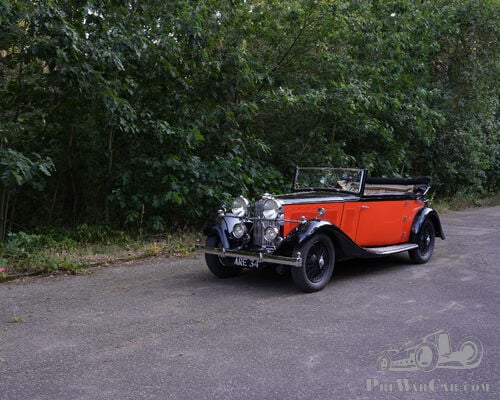
1934 Talbot AV105 Three Position Drophead Coupé
Registration no. ARE 34Chassis no. 35488 Much supporting paperworkRestored exampleVery usa..
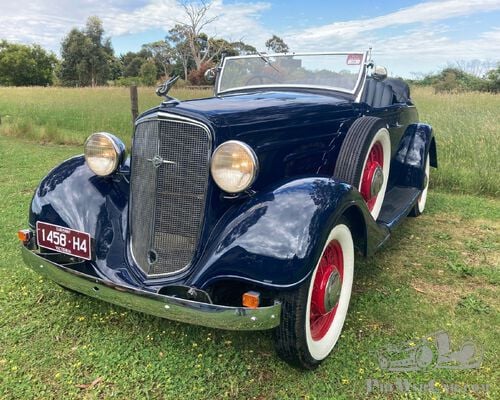
1934 Chevrolet Standard Roadster
1934 Chevrolet Standard Roadster This vehicle was delivered to Australia from Chevrolet and the body was manufactured by Holden Body Works w..