The global magazine and marketplace for classic car enthusiasts, by enthusiasts.


Filter
Classic Maserati, Standard for sale - Maserati, Standard cars for sale
-

1930 Standard Avon Alvis 12/50 Supercharged Special
1930 Standard Avon Alvis 12/50 Supercharged Special Chassis Number: 29035 Registration Number: BF9202 The present owner began building the A-A in 1965. He had enjoyed driving his first real car, a 1929 12/50 Alvis Betleback and when he acquired a 1930 Standard Avon, he found tha.. -
1935 Standard 12 | Brightwells | Auction Ends: Wed 24th Jun
Took part in the 100 Miles Rally in Bruges and various VSCC events; Recent work completed in March 2026 includes a new/reconditioned water pump, refurbished exchange carburettor; upgrades include 12-volt electrics 1935 Standard 12 Deluxe, first registered in November 1935 and powered by a 1,479cc engine. The car has had 11 f..


Maserati
Italy, 1926 to date
(1) Officine Alfieri Maserati SpA, Bologna, 1926 – 1938
(2) Officine Alfieri Maserati spA, Modena, 1938 to date
The famous Italian Maserati car marque gained its international reputation largely through the successes of Maserati racing cars, rather than its sports models. The Maserati brothers from Bologna – Carlo, Bindo, Alfieri, Ettore and Ernesto – had links with motoring going back to pioneer days when Carlo Maserati, the eldest, raced motor cycles and cars and worked successively for Fiat, Bianchi and Junior, while Bindo and Alfieri joined Isotta-Fraschini. Carlo died in 1911 and Alfieri opened a tiny garage near the Ponte Vecchio, Bologna, in 1919.
During World War 1 the Maserati brothers began to manufacture Maserati sparking plugs, and in the early 1920s Alfieri successfully raced a fast ‘special’ Maserati car he built, using one bank of an Isotta-Fraschini V8 aero engine. Next he began racing Diatto cars which he modified extensively, and in 1925 the Maseratis undertook production of two 2-litre supercharged twin-ohc straight-8 Diatto GP cars. A year later Diatto withdrew from racing so the Fratelli took over the cars, reduced their capacity to 1½-litres to comply with the current Formula, and the Officine Alfieri Maserati was founded, using Neptune’s trident, the traditional symbol of Bologna, as their trademark. Driven by Alfieri himself, the new Maserati car won the 1½-litre class in its first race, the 1926 Targa Florio. More Maserati cars were built for private customers, and in 1929 they combined two 2-litre units in one chassis to produce the legendary 16-cylinder Maserati – the sedici cilindri – which exceeded 152mph at Cremona in 1929 and, with a sister 5-litre Maserati car, did well in racing. 1930 brought the famous 2½-litre GP Maserati car which won five major races that year; while more powerful derivatives added further laurels, including the 1933 French and Belgian Grands Prix.
When Alfieri Maserati died in 1932 Ernesto took over the reins of the Maserati cars, and with German domination of GP racing obvious after 1934, turned to the 1½-litre voiturette class, producing neat 4- and 6-cylinder twin-ohc single-seater Maserati cars which gained numerous successes. In 1938 the big Orsi industrial group acquired the Officine Maserati car company, and the three remaining brothers became privileged employees, producing a new 16-valve 4-cylinder Maserati car and the 3-litre straight-8 Maserati 8CTF which won the Indianapolis 500 Miles in 1939 and 1940. The Fratelli’s last effort was the Maserati A6G sports car, with new 6-cylinder single-ohc engine in 1 ½- and 2-litre forms, this Maserati car made its debut at the 1947 Geneva Show.
The brothers who started building the Maserati cars left to form the OSCA concern in Bologna late that year, but the Orsis developed their 4CL voiturette design into the 4CLT/48 with 2-stage supercharging and tubular frame; this Maserati car won races when stronger opposition was absent but was far from fault-free. In 1952 they laid down a new Formula 2 Maserati car, based on the A6G; in 1953 they improved this Maserati car so that Fangio owns the Italian and Modena Grands Prix with a Maserati car, and in 1954 came the highly successful GP 6-cylinder 250F Maserati car built to the 2½-litre Formula. This Maserati car gained more honours for the Trident between 1954 and 1957, and gained for Fangio his fifth World Championship in 1957. By then, however, Maserati cars were expensively involved in Championship sports car racing as well, and the destruction of four highly costly 4½-litre V8 Maserati cars by crashes during the 1957 Venezuela Grand Prix, combined with default on cash payments by Argentina for goods supplied by the Orsi combine, caused the withdrawal of Maserati cars from racing. Thereafter they built expensive sports Maserati cars, but by 1960 were indirectly back in racing with the famous ‘Birdcage’ Types 60 and 61 Maserati cars with multi-tube space frames, and 2- and 2.8-litre 4-cylinder engines respectively, these Maserati cars were raced by private owners. The Maserati 61 won the Nurburgring 1.000km race in 1960 and 1961, and was succeeded by a rear-engined Maserati car with a 3-litre V12 engine. The engine in this Maserati car was the forerunner of the current racing Maserati engine as used in the 1966/1967 Cooper formula 1 chassis.
Since then the Maserati car company has concentrated on high-performance luxury and sporting Maserati cars, developed from the dohc 6-cylinder Maserati 3500 series made until 1966, with servo-assisted 4-wheel disc brakes and semi-elliptic rear suspension. Latterly buyers of Maserati cars had a choice of two power units, a 3.485cc version with 260bhp and a bigger one with 3.692cc and 270bhp; both had Lucas fuel injection as standard and thise Maserati cars could be had with 5-speed all-synchromesh gearbox or Borg-Warner automatic transmission. Since 1964 there had also been a 4-door Maserati car saloon, the Maserati Quattroporte, powered by a dohc 4.136cc V8 engine with four dual-choke Weber carburetors, retailing at 7.500.000 lire. The Maserati cars of 1967, the 6-cylinder Maserati Sebring and the Maserati Mistrale models had 4-litre engines, and a new 4.7-litre V8 Maserati car was introduced with the Maserati Mexico 2-door saloon and the Maserati Ghibli coupé; this latter had four retractable headlamps and did 174mph on 340bhp. A spyder version of the Maserati car was listed in 1970, when both the sixes and the Quattroporte were dropped. In 1968 the Maserati car company had become associated with Citroën of France, subsequently making a V6 engine for the latter’s high-performance SM model. The 1972 Maserati car range included the Mexico, Ghibli and Indy, and the V8 engines, used in their Maserati cars, extended from a 260bhp 4.1-litre up to a 4.9-litre 335bhp unit used in the Maserati Ghibli SS. All these Maserati cars had four Weber carburetters, as did the Maserati car firm’s first road-going mid-engined car, the Maserati Bora two-seater coupé. This Maserati car featured unitary construction, all-independent suspension, and a 5-speed transaxle. Its 4.7-litre engine was cooled by twin electric fans and developed 310bhp. A smaller version of the Maserati Bora was the Maserati Merak. This Maserati car was powered by a carburetor edition of the 3-litre 190bhp V6 engine as used in the Citroën SM.
Source: Georgano, encyclopedia of motorcar; CP
The information is written with the greatest of care. However, if you have any suggested amendments please contact us at office@prewarcar.com
Standard
GB, 1903 – 1963
Standard Motor Co Ltd, Coventry, Warwickshire
R.W. Maudslay’s company started modestly with a single-cylinder Standard car with an under-floor engine of markedly oversquare (5x3in) dimensions, which was the work of Alex Craig who also designed for Maudslay (made by the same family as the Standard cars founder), Lea-Francis, and Singer. A 12/15hp bonneted twin Standard car was also available, while 4-cylinder engines were offered as proprietary units. In 1906 Standard cars offered Britain’s first inexpensive sixes with side valves, 3-speed gearboxes, and shaft drive; a fairly large 24/30hp Standard car being followed by a really big 50hp Standard car at £850, and a 3.3-litre Standard 20 at £450, these Standard cars being energetically marketed in London by Charles Friswell. 6-cylinder Standard cars dominated Standard design for several years, the Standard 20 doing well in its subsequent 4-litre form; a fleet of 70 Standard cars was shipped to India for the Delhi Durbar in 1911. The shouldered radiator of the Standard car first carried the Union Jack badge in 1908. In 1909 a 2.7-litre 4-cylinder 14 with cylinders cast in pairs was being offered for £350, other fours following until the sixes Standard cars were finally dropped at the end of 1912. A big car in miniature, the 9.5hp Standard Rhyl, was announced in 1913 with a 3-speed gearbox, worm drive, and all brakes on the rear wheels, this Standard car was priced at £185. Electric lighting was available on the Standard car in 1915, and at the outbreak of World War 1 there were also two bigger Standard cars, both sv monobloc fours with capacities of 2.4- and 3.3-litres.
In 1919 an enlarged 1.3-litre version of the Standard Rhyl, the Standard SLS, was the staple product of Standard cars, but this had grown up by 1921 into the 11.6hp Standard SLO with exposed overhead valves – these early Vintage Standard cars also had no sides to their radiator shells. There was a short-lived ohv 8hp in 1922, but the most successful mid-Vintage Standard car was the 13.9hp SLO4, this Standard car still was with overhead valves and worm drive, which had rigid side-curtains and the Standard car could be bought for £375 in 1924. From 1923 these Standard cars carried the emblem of the 9th Roman Legion as their radiator mascot. 10.000 Standard cars were sold in 1924, Front-wheel brakes were standard on the 13.9hp Standard cars in 1926. Some less successful 2.2-litre ohv 6-cylinder Standard cars were marketed in 1927, in which year saloon Standard cars could be bought with sliding roofs, while financial difficulties of the Standard car company were circumvented by the hurried introduction of the very reliable 1.155cc worm-drive Standard Nine car with an sv engine and fabric bodywork for 1928. Within a year a roomier, longer-wheelbase version of this Standard car was listed, as well as supercharged and unsupercharged sports two-seater Standard cars, and the first of the Avon Standard Specials, a low-built two-seater styled by the Jensen brothers, had made its appearance. The Avon, both in its original form and in its later manifestations (the work of C.F. Beauvais) continued in a variety of semi-catalogue forms on many Standard car chassis from the Standard Nine to the 20hp Standard car up to 1937. 1929 was the year of chromium plating on Standard cars, of the first of a line of sv sixes with coil ignition and 7-bearing crankshafts that was to persist up to 1940, and of the appointment of Captain J.P. Black, from Hillman, as Managing Director. Under his control Standard cars rode out the Depression with steadily increasing sales, but at the cost of magneto ignition, worm-driven back axles and the traditional radiator, all of which had disappeared on the Standard car by 1931, when Standard car company were offering the Standard Big Nine, a really roomy small saloon for less than £200, and low-priced 16 and 20hp six Standard cars. This range of Standard cars was rounded out in 1932 by a 1-litre Standard Little Nine at £155, and in this year William Lyons, whose 1930 Swallow-bodies Standard cars had anticipated the new 1931 radiator, launched his first S.S. cars. These used specially-built Standard car chassis and his own style of bodywork, and were to evolve into the Jaguar. Standard-built engines were used in all Lyon’s cars up to 1940 and survived on 4-cylinder Jaguars until 1948. Cruciform-braced frames and silent-third gearboxes were features of the 1933 Standard cars, while that year’s complex Standard car range included a couple of short-lived sixes of under 1.500cc, the option of preselector gearboxes on some Standard cars, and a long-wheelbase 20hp Standard car landaulette. Synchromesh, free wheels and integral boots came in 1934, when a new best-seller Standard car was the well-equipped 1.3-litre Standard Ten, and there were six Standard car models for 1935, including a sporting 10/12hp Standard car consisting of a Standard Ten chassis and body, and a 1.6-litre twin-carburettor 12hp engine. Much of the same Standard cars were offered in 1936, but this year also brought the fastback Flying Standard cars with luggage accommodation and spare wheels streamlined into the tail, though retaining the Bendix brakes of earlier versions of Standard cars. Initially offered only in 12, 16, and 20hp sizes, the style of this Standard car was universal by 1937, when buyers had the choice of four 4-cylinder Standard car and two 6-cylinder types, form the Standard Nine at £149 to the Standard Twenty at £299, as well as a rapid compact V8 Standard car with a 2.7-litre 80bhp sv engine in a Standard Twelve chassis. This Standard car failed to catch on, though its fencer’s mask grille was found on all Standard cars from 1938 to 1947, and the engine was used by Raymond Mays. Other makers buying components from Standard were Railton, whose Ten was based on a Standard car chassis, and Morgan, for whom a special ohv 10hp engine was made by the Standard car company from 1939 – 1950.
A 1939 Standard car best seller was the 1-litre Standard Eight at £129, the first British small saloon with independent front suspension: similar layouts were found on Super versions of the Ten and Twelve, but this year’s Flying Standard cars no longer had fastbacks. Of the extensive pre-World War 2 range of Standard cars, only the Eight, Twelve, and Fourteen were continued after the war, the Fourteen using a 1.8-litre engine in the Twelve chassis, although Standard car products now included Triumph, acquired in 1945.
Late in 1947 came the Standard car company’s first true post-war design, the unitary-construction Standard Vanguard with a 2.1-litre ohv wet-liner 4-cylinder engine, full width six-seater bodywork, hydraulic brakes, and a 3-speed gearbox with column change. This Standard car sold for £544, though for some time the Standard car was practically unobtainable on the home market, and was the only Standard car model catalogued between 1949 and 1953. Standard cars were made under licence in Belgium by Imperia, and the Standard car engine also went into the bigger Triumphs, the Ferguson tractor, the earlier Plus-Four Morgan, and, in 2-litre form, into Triumph’s successful TR series. Overdrive became an option in 1950 on Standard cars; the body was restyled in 1953, 1956, and 1959; a diesel version with separate chassis was marketed in 1954 and 1955; and a luxury Sportsman verion with a 90bhp engine, a traditional grille, and overdrive as standard appeared in 1957, though this Standard car was too expensive at £1.231, and did not last long. Towards the end automatic Standard Vanguards were available, but the tough old four Standard car was dropped in 1961.
There were other Standard cars. An 803cc ohv Standard Eight with coil-spring independent front suspension and very basic appointments was announced late in 1953 at £481, followed shortly after by a more luxurious Standard car with 948cc 10hp at £581. These Standard cars were quite best-sellers despite such later options as 2-pedal control, triple overdrive (on the Standard Eight) and the addition of a luxury Pennant version of the Standard Ten in 1957. Fairthrope used this engine, which later served as the basis for the Triumph Herald, but production of the small Standard cars tailed off in 1959. There were other variations on the Vanguard theme: the Standard Ensign with a 1.6-litre 62bhp engine was cooly received, though the Standard car was revived in 1962 with a 75bhp 2.138cc unit and 4-speed gearbox. After the Leyland take-over in 1961, the Standard car company’s efforts concentrated increasingly on the Triumph range, but Standard cars final fling in 1962 was once again Vanguard-based, though the Standard car company broke new ground with a 2-litre short-stroke ohv 6-cylinder engine later used in the Triumph 2000. The last Standard cars were delivered in the summer of 1963. The name died because the term, ‘standard’, when applied to cars, had been debased; it had come to mean the opposite of ‘de luxe’ – and this despite the comfortable appointments of the Luxury Six.
US, 1903 – 1907
Standard/ Standard Tourist
Standard Motor Construction, Jersey City, N.J.
Th Standard car succeeded the US Long Distance. The only model Standard car was a five-seater in wood at $3.250, or in aluminium for $3.500. The engine of this Standard car was a 4-stroke, 4-cylinder one of 25hp.
Italy, 1906 – 1912
Fabbrica Automobili Standard, Turin
Also known as the FAS, the Standard car was a conventional machine with a 14/20hp 4-cylinder engine and 4-speed gearbox. The Standard car company had no known connection with any firm bearing the name Standard.
US, 1909 – 1910
(1) St. Louis Motor Car Co, St. Louis, Mo., 1909
(2) St. Louis Car Co, St. Louis, Mo., 1910
From 1906 to 1909 this Standard car company first made three models of the Mors under the name American Mors, but in 1909 they introduced a car of their own design. This Standard car had an ohv 50hp 6-cylinder engine of 7.8-litre capacity. Five body styles were listed, including a limousine at $4.000. The rear springs were of the platform type.
US, 1910
Standard Gas Electric Power Co, Philadelphia, Pa.
This Standard car had a 4-cylinder, 3.7-litre engine with a 3-speed sliding-gear transmission and shaft drive. The only feature of interest of this Standard car was electric starting. The single model Standard car for 1910 was a four-seater torpedo which weighed 2.000lb.
D, 1911 – 1912
Standard Automobilfabrik GmbH, Berlin-Charlottenburg
This German Standard car was characterized by the use of Henriod rotary-valve engines, but the system proved unsuccessful and production of Standard cars was not on a large scale. Two 4-cylinder Standard car models of 10/28PS and 13/35PS were listed.
US, 1912 – 1915
Standard Electric Car Co, Jackson, Mich.
This electric Standard car used Westinghouse motors and was claimed to have a range of 110 miles on a charge. The Standard car was operated from a tiller on the left-hand side. The controller on the Standard car gave six forward speeds, the maximum speed being 20mph. The Standard Model M, a four-seater closed model, cost $1.885.
US, 1912 – 1923
(1) Standard Steel Car Co, Butler, Pa., 1912 – 1923
(2) Standard Auto Vehicle Co, Butler, Pa., 1923
For most of its life the Standard car was built by a firm whose main product was steel and composite railway carriages and wagons. Up to 1916 the Standard car was a conventional 38hp 6-cylinder car built in touring an closed models, at prices up to $3.600. In 1916 an 8-cylinder Standard car model was introduced which was to become the staple product of the Standard car company. Smaller than the six, this Standard car was rated at 29hp (50bhp) and cost only $1.950 for the most expensive model. For 1917 it was increased to 34hp (80bhp) and by 1921 prices of the Standard cars were up to $5.000. In 1923 a new company acquired the design from the Standard Steel Car Co. They assembled a few of the V8 Standard cars, but did not introduce any new models, and were out of business the same year.
US, 1914
Standard Engineering Co, Chicago, Ill.
This Standard car was a cyclecar powered by an air-cooled 2-cylinder Spacke engine. Transmission was by friction discs, and final drive by single chain.
US, 1920 – 1921
Standard Engineering Co, St. Louis, Mo.
The Standard Steam Car was equipped with a Scott-Newcomb 2-cylinder, horizontal paraffin-burning steam engine and the Standard car was advertised as being able to raise a head of steam in less than 60 seconds. The Standard car carried a Rolls-Royce-type condenser and closely resembled the then well-known Roamer. A touring model was the only body style available. The Standard car was sometimes known as the Scott-Newcomb.
D, 1933 – 1935
Standard Fahrzeugfabrik GmbH, Ludwigsburg
This Standard car firm, owned by Wilhelm Gutbrod, obtained the licence for the production of a small car designed by Josef Ganz. The car appeared under the name of Standard Superior. The Standard car had a 2-cylinder, 2-stroke engine of 396cc developing 12bhp or of 494cc and 16bhp. Special features of this Standard car design were an aerodynamic body, rear engine, centre tubular chassis and independent suspension. Production was given up in 1935, but vans and estate Standard cars were built until 1939. Another car built to Ganz designs was the Swiss Rapid.
Source: Georgano, encyclopedia of motorcar; MCS, GMN, GNG, HON, KM
The information is written with the greatest of care. However, if you have any suggested amendments please contact us at office@prewarcar.com


Featured
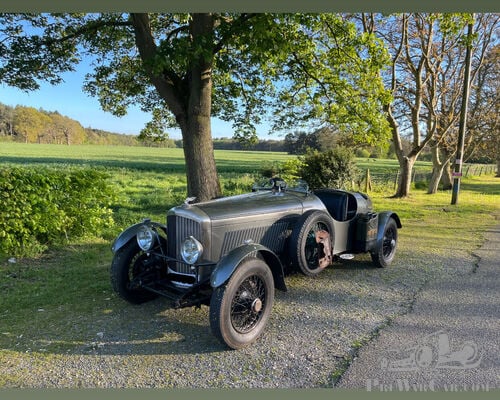
Derby Bentley Special 4-1/4
Sadly i am having to sell on my Bentley special ( Icarus). It is currently a work in progress and still needs finalising/ refining. A great o..
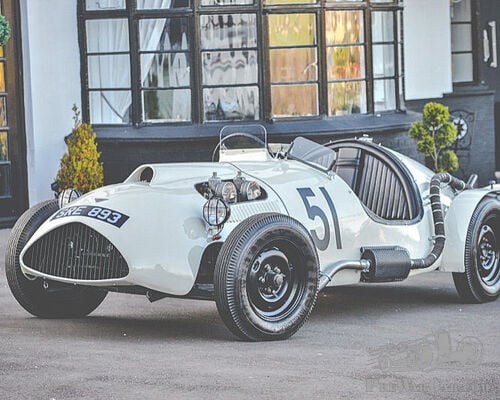
1933 Alvis 3.0 Special - One-Off Alloy Body | Period Competition Car | Featured in “Alvis – A Century of Drivers”
1933 Alvis 3. 0 Special - One-Off Alloy-Body | Period Competition Car | Featured in “Alvis – A Century of Drivers”
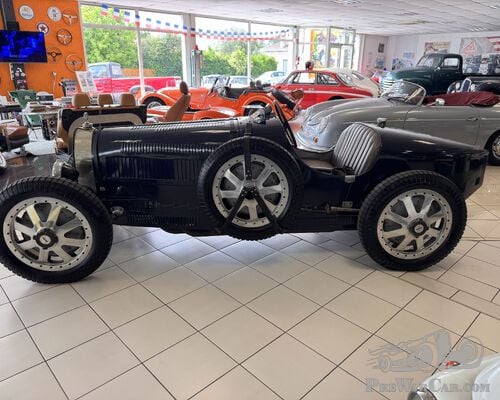
Bugatti 35 B Pur Sang
Bugatti 35 B Pur Sang,importée par un membre délégué de la FFVE il y’a une quinzaine d années.Participation à de nombreux Rallyes Bug..