The global magazine and marketplace for classic car enthusiasts, by enthusiasts.


Filter
Classic Mathis for sale - Mathis cars for sale
Change your filters to get results, or show all
Sorry, there are no results with your filters Cars
.
Mathis
D, 1898 – 1903; 1910 – 1914
France, 1919 – 1935; 1945 – 1950
(1) E.E.C. Mathis, Strasbourg, 1898 – 1914
(2) SA Mathis, Strasbourg, 1919 – 1950
The Mathis car company, like Bugatti, changed its nationality with the return of Alsace-Lorraine to France in 1918. The early Mathis cars made in Strasbourg up to 1903 were experimental prototypes only, though they included a really big 150x160mm 4-cylinder Mathis car rated at 100hp and the first Mathis car product sold to the public were the Hermes machines designed by Ettore Bugatti in 1904 to 1905. Bugatti set up as an independent consulting engineer, and Mathis cars supplemented his business by selling De Dietrich, Panhard, and Rochet-Schneider, as well as acting as Central European respresentative for Fiat and Minerva.
It was not until 1910 that the true Mathis car went on sale, in the form of the Mathis 8/20ps, a straightforward 2-litre L-head Monobloc 4-cylinder Mathis car with 3-bearing crankshaft, 4-speed separate gearbox, and shaft drive. The larger 2.8-litre model of this period was made for Mathis by Stoewer of Stettin. The Mathis car firm’s pre-war reputation was founded largely on well made miniature 4-cylinder machines, notably the 1.100cc Mathis Babylette and the 1.3-litre Mathis Baby. The former had a vertical-gate gear change, all its brakes on the rear wheels, and, surprisingly, a differential. A bolster-tank sports two-seater Mathis car could be bought in England in 1914 for £195. Bigger Mathis cars had full-pressure lubrication, and came in 1½-litre, 1.8-litre (rated rather high in Britain at 16/20hp), and 2.6-litre sizes. There were also some 4.4-litre Mathis cars with Knight double-sleeve-valve engines.
Mathis’s interest in racing expressed itself in rather a peculiar way, since he tended to enter Mathis cars of unsuitable capacity for major races. Thus his 1.8-litre Coup de l’Auto Mathis car of 1912 was set to run with the big cars in the concurrent Grand Prix, and in 1921 he ran a 1½-litre ohv 4-cylinder Mathis car in the French GP, in a year when a 3-litre formula was in force.
After World War 1 the Mathis car emerged as a neat little sv monobloc 8/15hp 4-cylinder with aluminium pistons, fixed head, trough-and-dipper lubrication, thermos-syphon cooling, full electrics, magneto ignition, and 4-speed gearbox. Capacity of the Mathis car was 1.131cc, and in 1921 an anglicized version of the Mathis car was sold in London as the BAC, though later cars of this make had no French associations. The Mathis cars of the early 1920s, often with tiny engines (the Mathis T-type of 1923 had only 628cc), differential-less back axles, splash lubrications (and axle ratios of the order of 6:1, but always with 4 forward speeds) soon brought the Mathis car company into fourth position behind France’s big three – Citroën, Renault, and Peugeot – and production was running at 75 Mathis cars a day in 1927. The miniature 4-cylinder Mathis cars were credited with 63mpg, but in 1923 there was a new departure in the shape of a tiny 6-cylinder Mathis car. The 1.2-litre Mathis L-type with overhead camshafts and detachable head had some sporting pretensions, but more typical was the 1.140cc Mathis P-type tourer with a fixed-head sv power unit, 6:1 top gear, brakeless front axle, and differential-less back end. The wheel-base of the Mathis car was 9ft, and the 4-speed box had central change: both sizes had V-radiators.
Interestingly enough Mathis favoured 4 cylinders, overhead camshafts, and 8-plug heads for the Mathis car entries in the Touring Car GP, and were rewarded with class wins in 1923 and 1924, though their advanced 1925 machines with crab tracks, underslung frames, and aerodynamic bodywork were less successful. The 6-cylinder touring Mathis cars had front-wheel brakes by 1924, and were continued until 1926, but 1925 brought a bigger family saloon Mathis car to compete with Citroën, the 1.6-litre Mathis GM-type 4-cylinder with pressure lubrication, front-wheel brakes, and differential, sold at £295 in England. There was also a short-lived 1.7-litre ohc straight-9 with coil ignition: the output of 35bhp perhaps explains why nothing more was heard of this Mathis car.
By 1927 Mathis were back to one-model policy with their 1.2-litre 4-cylinder Mathis MY at £255 for a fabric saloon. Its specification was entirely conventional with side valves, detachable head, 2-bearing crankshaft, magneto ignition, 6-volt electrics, and 4-speed gearbox was in this Mathis car. A 1.8-litre Emysix followed in 1928 with coil ignition, hypoid final drive, and two separate detachable heads for its monobloc engine: sold under the slogan ‘Ware The Enemy – Weight’, it justified this by turning the scales of this Mathis car at only 2.184lb, and formed the basis for all Strasbourg’s subsequent series-production sixes and eights Mathis cars.
Up to 1935 dull, solid sv family saloons were the staple of the SA Mathis. 4-speed Warner silent-3rd gearboxes appeared on the Emysix in 1929, and in 1930 there were bigger sixes of 2.4 litres and 4.1 litres in the Mathis cars, also with hypoid axles. William C. Durant laid plans to build 4-cylinder Mathis cars in his factories in 1930 under the name Matam (Mathis-America), but the Depression frustrated these. A very short-stroke (70x80mm) 1.2-litre Mathis car, the Mathis PY type with spiral bevel final drive, appeared in 1931, when a 3-litre Mathis car could be bought with hydraulic brakes in England for £476. Two bigger eights of 4.6- and 5.4-litres were made in very small numbers. Mathis car engines were used in one model of the all-independently-sprung Harris-Léon Laisne, and both hydraulics and free wheels were standard on the big Mathis cars in 1932. This year a wide range of Mathis cars embraced everything from the 904cc Mathis TY 4-cylinder up to the 3-litre Mathis FOH type straight-8.
Mathis cars, however, were slipping and an attempt was made to restore sales of Mathis cars with the 1.4-litre Mathis Emyquatre of 1933, which had a box-section frame, independent front suspension, synchromesh and free wheel, and a modern-style 4-door saloon body with no running-boards. 6-cylinder Mathis cars acquired transverse independent front suspension at the same time. In 1934 a further attempt was made to bolster up the Mathis car company by an agreement with Ford whereby the Mathis car factories would be used to manufacture Ford V8s for the French market. Unfortunately Henry Ford and Emile Mathis saw this differently, and what in fact happened was that Matfords rapidly ousted Mathis cars from the production lines, thus fathering a line which survived until 1961, first under Ford and latterly under Simca control. Mathis cars for 1935 had all-round independent suspension, but these Mathis car were the last of their line to be sold to the public.
Emile Mathis once again took possession of his Mathis car factory in 1945, and essayed a comeback with a weird little front-wheel-drive 3-wheeler Mathis car cloaked in egg-shaped coupé body work to the designs of Jean Andreau. The front wheels were independently sprung, and the 700cc flat-twin power unit was water-cooled with one radiator to each cylinder: all-up weight of the Mathis car was a modest 840lb. It soon became apparent that the Government was not going to authorize production of this Mathis car, but Mathis tried again in 1948 with an advanced 2.8-litre front-wheel-drive flat-6. Its output was 80bhp, the gearbox had overdrive on all three ratios, there was independent suspension all round on the Mathis car, and the futuristic saloon body featured a panoramic windscreen. The Mathis car reappeared at the 1949 Salon, but like La Licorne, Delauney-Belleville and Bugatti, the Mathis car firm never managed to get any post-war design into series production. In 1954, the Strasbourg plant was sold to Cirtoën, and another major, if uninspired, French marque vanished into limbo.
Source: Georgano, encyclopedia of motorcar; MCS
The information is written with the greatest of care. However, if you have any suggested amendments please contact us at office@prewarcar.com


Featured
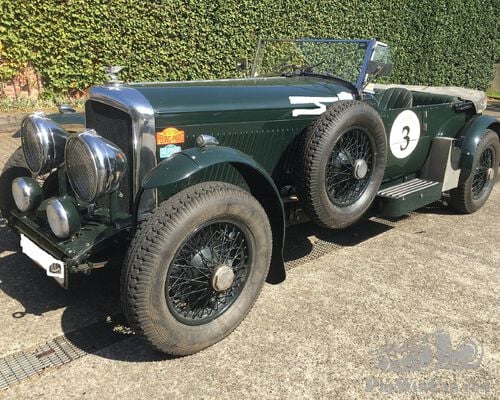
Bentley Derby Special Open Rally Car
This Bentley Derby, manufactured in 1935, has been rebuilt into a short and long-distance rally car. Full rebuilt engine in 2021, Since 2021 low mi..
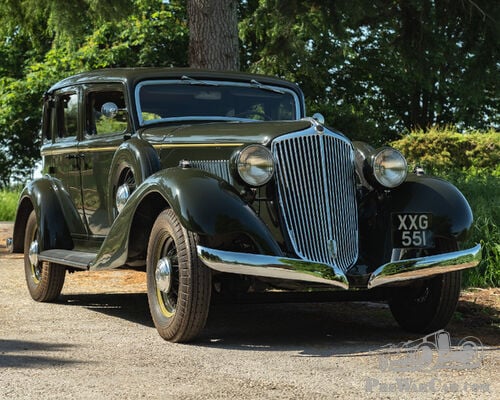
Graham Model 64 Standard Eight 'Blue Streak'
UK Registration No: XXG 551Chassis No: 1801069MOT: ExemptH&H ClassicsKelham Hall | Newark, Nottinghamshire
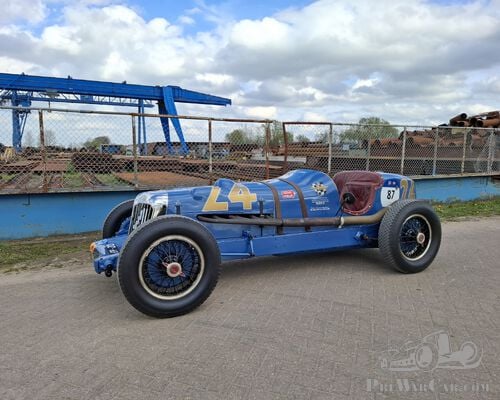
1932 - Graham " Lucenti " Indianapolis
Original participant of the 1932, 1934 and 1935 Indy 500. Best result: finishing 10th overall in the 1934 Indy 500 with driver “Herb” Ardinger...