The global magazine and marketplace for classic car enthusiasts, by enthusiasts.


Filter
Classic Rolland-Pilain, McLaughlin Buick for sale - Rolland-Pilain, McLaughlin Buick cars for sale
-

Rolland Pilain
I am selling a 1913 Rolland Pilain RP 10HP in very good condition. It has a standard registration document in my name, and the MOT will be carried out prior to the sale. -
1922 McLaughlin-Buick 22/45 Special Touring | RM Sotheby's | The Hershey Auction
To Be OFFERED AT AUCTION WITHOUT RESERVE at RM Sothebys' The Hershey Auction event, 7 - 8 October 2026. Offered Without Reserve | $15,000 - $25,000 USD A highly capable and attractive early 1920s touring car A compelling combination of solid Buick engineering and elevated McLaughlin craftsmanshipWell-presented older res.. -
1923 McLaughlin-Buick 23/45 Special Touring | RM Sotheby's | The Hershey Auction
To Be OFFERED AT AUCTION WITHOUT RESERVE at RM Sothebys' The Hershey Auction event, 7 - 8 October 2026. Offered Without Reserve | $18,000 - $25,000 USD A meticulously restored, award-winning example of early Canadian luxury motoring Stored in a barn for over 50 years; discovered in 1979 reportedly showing approximately 17,500 mi..


Rolland-Pilain
France, 1906 – 1931
SA des Etablissements Rolland-Pilain, Tours
Unusual among French marques of its period, Rolland Pilain cars made their greatest impact after World War 1. Their first product was a 20hp 4-cylinder model Rolland Pilain cars with a monobloc engine, though smaller 2.2-litre shaft-driven Rolland Pilain cars were available in 1909 and a 3-speed 1½-litre Rolland Pilain 8/10CV in 1910, in which year the Rolland Pilain car company was also experimenting with ‘valveless’ engines and 4-wheel brakes. Though racing was in the doldrums, the Rolland Pilain car company went to the trouble of building a big chain-driven Rolland Pilain car for the 1911 Grand Prix de France, and a complex 1912 range started with a Rolland Pilain 9CV of 1.7-litres and went up to a chain-driven 4-cylinder 60 Rolland Pilain car of 130x270mm. The 6-cylinder Rolland Pilain 18CV had a ‘valveless’ engine, and even in 1913 chain drive was still optional on the biggest fours of 20CV and 24CV Rolland Pilain cars. Only 1.9-litre and 4-litre 4-cylinder Rolland Pilain cars with sv monobloc engines and unit gearboxes were listed in 1914.
These basic types of Rolland Pilain cars, still with pedal-operated transmission brakes, were available again after World War 1, but far more advanced was the 2.2-litre Rolland Pilain 14/16 of 1921, which boasted not only overhead valves and a detachable head, but also front-wheel brakes (hydraulic at the front and mechanical at the rear). This Rolland Pilain car was still catalogued in 1926. Even more ambitious was the 2-litre twin ohc straight-8 GP Rolland Pilain car of 1922, with desmodromic valves, ball-bearing crankshafts and 4-wheel hydraulic brakes. A victory of a Rolland Pilain car at San Sebastian in 1923 was the limit of the success of Rolland Pilain cars on the circuits, but the type found its way into the catalogue as the Type A22 Rolland Pilain car at 90.000fr, and one of the racers also ran with a 2-litre, 6-cylinder cuff-valve Schmid engine. In 1925 came a 2-litre ohv 4-cylinder Rolland Pilain car with 4-wheel mechanical brakes, selling for £725 in England, while a 1½-litre development, the Rolland Pilain D26, was introduced for 1927. In 1929 Rolland-Pilain car, along with several other French firms, tried a Franco-American theme by introducing a range of big luxury chassis with sv Continental engines. Both the 6-cylinder, 3-litre, and the 4-litre straight-8 Rolland Pilain cars had centralized chassis lubrication, though the elegant bodywork of the Rolland Pilain car was marred by the use of artillery wheels. At the 1930 Paris Salon the Rolland Pilain car company shared a stand with the BNC (also going through a Franco-American phase), but this was the end, though the Rolland Pilain car firm’s Paris depot was still advertising spare parts for Bignan as well as Rolland Pilain cars in 1934.
Source: Georgano, encyclopedia of motorcar; MCS
The information is written with the greatest of care. However, if you have any suggested amendments please contact us at office@prewarcar.com
McLaughlin (-Buick)
CDN, 1908 – 1922 (McLaughlin); 1923 – 1942 (McLaughlin-Buick)
McLaughlin Motor Car Co Ltd, Oshawa, Ont.
The McLaughlin car company’s slogan was ‘Canada’s Standard Car’. In addition to being a slogan it became a statement of fact for McLaughlin cars. Canada was founded in 1867, and so was the McLaughlin Carriage Company, which began by producing two hand-made sleights. By the turn of the century McLaughlin carriages and sleighs were among the best known and most highly regarded in the country. An attempt to build McLaughlin cars from the ground up failed when the chief-engineer fell sick just as assembly was to start, whereupon McLaughlin cars agreed with W.C. Durant to put Buick engines and some other parts into the McLaughlin cars. The agreement was for 15 years, under terms very favourable to McLaughlin.
The first McLaughlin car was produced in 1908. Mechanically, this McLaughlin car was like the contemporary Bucik 4, but the body was all-Canadian. Production the first year was between 150 and 200 McLaughlin cars. Output climbed to 423 the next year and to 1.098 McLaughlin carsby 1914. It rose slowly to around 6.000 yearly, spurting ahead to 15.000 McLaughlin cars in the final year of 1922. McLaughlin car bodies continued to be different from Buick bodies, and considerably more elaborate for as long as they were made of wood. After that the McLaughlin cars became generally similar, though hoods, dashboards and other fittings and trim continued to be more luxurious on McLaughlin cars. A.P. Sloan, president of General Motors, once spotted a McLaughlin car outside the New York City Buick showroom and flew into a rage lest Buick buyers should see the McLaughlin car and demand similar quality. McLaughlin cars were sold on the reputation of McLaughlin carriages. Very early in their car-building enterprise the name for their McLaughlin cars was changed to Buick, but sales fell so drastically that it was changed back to McLaughlin. From about 1910 until the early 1920s, McLaughlin produced a very full range of McLaughlin cars including a four, a light six and the standard six. These McLaughlin cars were each available in all the usual body styles, often offering a choice in trim. The light six was basically the American Oakland with a McLaughlin nameplate.
In 1915 McLaughlin cars also began producing Chevrolets under licence, but again featuring a somewhat better-finished product than the American company. In 1918 the entire McLaughlin car business was sold to General Motors and became General Motors of Canada. When the original 1907 agreement ran out in 1923 the name of the car was changed to McLaughlin-Buick. Differences in the Canadian car became minute and the McLaughlin prefix was dropped entirely early in World War 2.
In 1927 the McLaughlin car company produced a custom touring car for a visit by the Prince of Wales, and in 1939 two huge convertible limousines McLaughlin cars for the visit of the King and Queen.
Source: Georgano, encyclopedia of motorcar; HD
The information is written with the greatest of care. However, if you have any suggested amendments please contact us at office@prewarcar.com


Featured
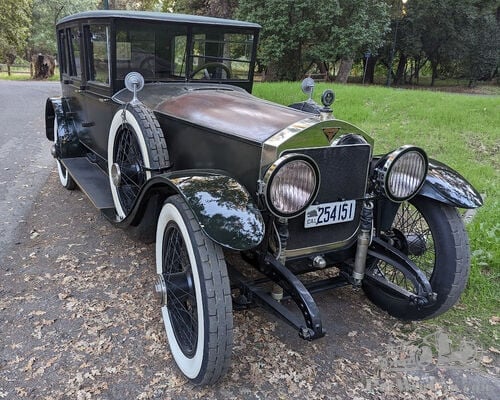
1916 Simplex, Crane model 5
1916 Simplex, Crane MODEL 5CUSTOM MADE HISTORIC PRESERVATION VEHICLE – READY TO TOUR!This Simplex recently completed th..
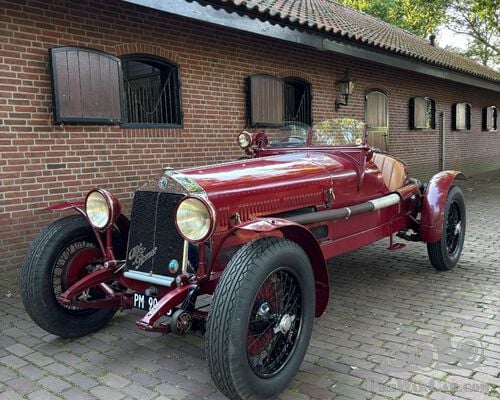
1930 Alfa Romeo 6C 1750 Spider
1930 Alfa Romeo 6C 1750 Spider with complete history from delivery to first owner in 1930 in Firenze till today with copy Libretto/license plate.
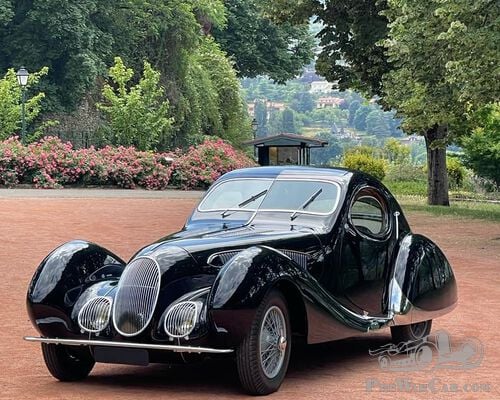
1939 Talbot-Lago T150C “Goutte d’Eau” — Iconic French Coachbuilt Masterpiece
Talbot-Lago T150C ‘Teardrop’ — An Icon of French Automotive Art There are motor cars that define an era. And then there are those tha..