The global magazine and marketplace for classic car enthusiasts, by enthusiasts.


Filter
Classic Hotchkiss, Mercedes (-Benz) for sale - Hotchkiss, Mercedes (-Benz) cars for sale
-

1914 Mercedes 28/60 HP Town Car and Tourer Display Chassis | RM Sotheby's | The Hershey Auction
To Be OFFERED AT AUCTION at RM Sothebys' The Hershey Auction event, 7 - 8 October 2026. $450,000 - $650,000 USD Please check back soon as our dedicated cataloguing team is preparing the description for this lot. To view this car and others currently consigned to this auction, please visit the RM website at rmsothebys.com/auctions/hf26/. -
1942 Mercedes 770K Grosser Offener Tourenwagen
1942 Mercedes 770K Grosser Offener Tourenwagen Available immediately with fresh engine & concours condition. Non Armoured 8 seat configuration. Viewings East of Munich by prior appointment. Full photos & chassis number available to Qualifi.. -
1910 Mercedes Simplex 3.6 Litre 30HP Coachwork by Laclaverie Gaches et Cie
1910 Mercedes Simplex 3.6 Litre 30HP Coachwork by Laclaverie Gaches et CieRegistration No. SV6058Chassis No. 8837Engine No. 11645 Following the departure of Wilhelm Maybach from Mercedes in 1907 the company, along with several others, withdrew from active .. -
Mercedes Benz Speziale Roaster body & parts.
Mercedes Benz Speziale Roaster body & parts. A unique opportunity to purchase an expertly hand-crafted wooden framework for a Mercedes-Benz 500K / 540 K Spezial Roadster which when finished will be similar in appearance to the black & white photograph in our advert. Included are some metal part.. -
1938 Mercedes Benz 170 V Roadster - 1 of 271 cars built
Rare roadster version of the 170 V, one of only 271 builtExtensively restored to a very good state of preservationAdditional partial overhaul in 2020Over 80,000 EUR invested in overhaul/restoration since 2001History of the last 40 years known in GermanyThis Mercedes Benz 170 V Sport Roadster .. -
1936 Mercedes 500K special roadster
1936 Mercedes 500K roadster Coming soon. This car was rebodied with the current roadster body we find on it today. The car was in period returned to the Mercedes factory & had the original engine uprated to 540k spec which is still installed today making it a matching numbers car.The car has been the recent recipient of a fastidious nut &.. -
1928 Mercedes Benz SSK Rebuild
A faithful, high-quality rebuild of an SSK, carried out in 2003 by a renowned specialist in GermanySubsequently owned and actively used by a single owner for 20 years Original 1929 supercharged engine with impressive performanceComprehensive documentation availableEligible to participate in numerous histo.. -
1935 Mercedes-Benz 500 K Normal Roadster by Sindelfingen | RM Sotheby's | The Monterey Auction
To Be OFFERED AT AUCTION at RM Sothebys' The Monterey Auction event, 13 - 15 August 2026. $1,500,000 - $1,700,000 USD One of five known surviving examples among a very limited number of cars originally builtDelivered new to Colombo, Ceylon (Sri Lanka)Benefits from a high-level sympathetic restoration conducted over the .. -
1935 MERCEDES BENZ 200 W21 LWB CABRIOLET
1935 Mercedes Benz 200 W21 LWB Cabriolet Chassis number: 108020Registration Number: Applied for. Produced in 1935, this very rare Mercedes cabriolet is the enbodiment of teutonic quality manufacturing. The Mercedes 200 W21 was in production between 1933 and 1936 as the successor to the W02. This W21 is o.. -
1934 Mercedes Benz 500 K Spezial Roadster - Rebuild
The most beautiful automobile design of the German pre-war eraHigh-quality, faithful and detailed reconstruction of the Spezial Roadster bodywork on the original rolling chassis of a 500 KCraftsmanship of the highest standard, fully functionalCommission (build) record on the delivery availableComprehensiv..


Hotchkiss
France, 1903 – 1955
(1) Hotchkiss et Cie, St. Denis, Seine, 1903 – 1936
(2) Automobiles Hotchkiss, St. Denis, Seine, 1936 – 1955
The American Benjamin Berkeley Hotchkiss set up his ordnance Horchkiss car factory at St. Denis in 1867; the Hotchkiss cars were the result of an arm slump. The work of Terrasse, these first Hotchkiss cars were T-headed fours with pair-cast cylinders, 5-ball-bearing crankshafts, low-tension magneto ignition, round honeycomb radiators, 4-speed gearboxes, and the famous Hotchkiss drive by live axle and open propeller shaft. Initially cylinder capacities of Hotchkiss cars were 4.6-litres and 7.4-litres, but the Hotchkiss car company’s first racers of 1904 were 17.8-litre monsters notable for their aiv and chain drive. Though their 1905 successors conformed once more to touring-car practice, they were even bigger Hotchkiss cars, with 18.815cc and an alleged 130bhp. Hotchkiss’s last racing season was 1906 with their Grand Prix Hotchkiss cars had 16.3-litre L-head units and quick-detachable wire wheels. Though these Hotchkiss cars were unsuccessful, Hotchkiss sold 167 cars that year, with gate change standardized, and a choice of five Hotchkiss car models: a short-lived 4.2-litre petrol brougham, fours of 18, 30 and 42hp, and their first six. The last-mentioned Hotckiss car was the large V-type that evolved into a 9½-litre machine and was still being offered in 1912 as a Hotckiss car. Chassis price was £1.000 and it was capable of 60mph.
The slump following the Agadir crisis led to the abandonment of ball-bearing crankshafts on Hotchkiss cars; at the same time there was a move towards smaller Hotchkiss cars with the 3.1-litre T-type, with side valves in an L-head and high-tension magneto ignition. Two years later came something even smaller and more modern, the 12/16hp Hotchkiss X-type with 2-bearing crankshaft and three forward speeds at £390. Soon monobloc engines spread up the range to the 3.7-litre Hotckiss AB of 1912. From 1911 there were some smaller L-head sixes, the 4.678cc Hotchkiss X6 and the 5½-litre Hotchkiss AC6; 1912 sales were a record 598 Hotchkiss cars. Electric lighting was available from 1913, and all the 1914 Hotchkiss car models – the 2.6-litre Hotchkiss AG, the 4-litre Hotchkiss AF, the 5.7-litre Hotchkiss AC, and the 6-cylinder Hotchkiss AC6 – had semi-elliptic suspension all round.
The wartime demand for Hotchkiss machine guns led to the establishment of a branch factory under the Englishman Harry Ainsworth, this subsequently making engines for W.R. Morris until it was absorbed by him in 1923. At home Hotchkiss sold off their surplus works capacity at Lyons and concentrated on a revised Hotchkiss car again, the AF with full electrics and a horseshoe-shaped radiator in place of the traditional round one. Its successor, the Hotchkiss AH of 1921, had cantilever rear springs and torque tube drive, and a year later came the Hotchkiss AL with ohv, and a detachable head; front-wheel brakes were added for 1923. There was also a prototype luxury Hotchkiss car at the 1921 Paris Salon; this Hotchkiss AK had a 6.6-litre 6-cylinder ohc engine, dual ignition, 4-speed unit gearbox, servo-assisted 4-wheel brakes, and a cruciform-braced frame, but it never went into production.
The return of Ainsworth to St. Denis in 1923, coincided with the construction of a new Hotchkiss car factory and a more realistic type of car, the 2.4-litre 12CV Hotchkiss AM, with 4-cylinder sv engine, 4-speed unit box, four-wheel brakes, wire hwwls, and Hotchkiss drive once more. Between 1924 and 1928 it was the Hotchkiss car company’s staple product, selling at the rate of over a thousand a year and offering a 70mph performance at a modest outlay. It persisted until 1932, acquiring ohv in 1926 and rod-operated brakes in 1928, and its engine was used in some Morris-Léon Bollées. Even better was the Hotchkiss AM80 of 1929, largely the work of Bertarione. This was a short-stroke (80x100mm), 7-bearing ohv 3-litre six that owed a good deal to the AM2, though early cars featured torque tube drive; it was to be the basis from which all subsequent Hotchkisses were evolved. A silent 3rd gearbox featured on 1931 Hotchkiss car models, Hotchkiss drive reappeared in 1932, and 1933 improvements included Bendix brakes, cruciform-braked frames, down-draught carburetors and mechanical fuel pumps. Hotchkiss AM80 engines were also fitted to Sizaire Frères and Tracta cars.
The 1933 Hotchkiss car range was expanded both up and down, with new Hotchkiss 12CV (2-litre) and 13CV (1.3-litre) fours for the economy market, and an 85mph fast tourer, the 100bhp 3½-litre Hotckiss AM80S, for the enthusiast. This Hotchkiss car was based on the car with which Vasselle won the 1932 Monte Carlo Rally. Hotchkiss cars repeated this success in 1933 and 1934: in the latter year the Hotchkiss cars collected two Glazier Cups in the Alpine Trial. There were further wins in the Monte Carlo in 1938 and 1939; on the latter occasion a Grand Sport Hotchkiss car tied with a 3½-litre Delahaye. Radiators were moved forward on the 1934 Hotchkiss cars, and the 3-litre gave way to a 2.650cc 15CV that was not a success and lasted only one season. The 1935 Hotchkiss cars had synchromesh and integral boots, and at the top of the 3½-litre 20CV range was the twin-carburettor Hotckiss Paris-Nice, a 115bhp sports car capable of 95mph. Hydraulic brakes appeared in 1936 on Hotchkiss cars (to be quietly dropped halfway through 1937). The sports 20CV engine was now giving 125-130bhp and when allied to a short 9ft 2in wheelbase resulted in the Hotchkiss Grand Sport, a true 100mph saloon.
By 1938 the horseshoe radiator on the Hotchkiss car was now a wire-mesh grille, but despite the exigencies of French rearmament programmes the Hotchkiss car company managed to deliver 2.751 Hotchkiss cars that year, made up of the two fours, the reinstated 3-litre Hotchkiss 680, and the 3½-litre Hotchkiss 686 in various forms, including seven-seater limousines with the single-carburettor 100bhp engine. Hotchkiss also came to the rescue of the ailing Amilcar concern, helping to make the Grégoire-inspired 1.185cc Compound, a small fwd saloon with unitary construction in Alpax; this was sold in England, though not in France, as a Hotchkiss car. A 1.3-litre ohv development, the Hotchkiss B67, was ready for production when France collapsed in the summer of 1940.
Hotchkiss never really recovered from World War 2, though Peugeot were briefly interested in the Hotchkiss car company and Hotchkiss 686 cars won the first two post-war Monte Carlo Rallies of 1949 and 1950. The Hotchkiss 12CV and Hotchkiss 20CV were back in production, unchanged, by 1946, but the first year’s output was a miserable 117 Hotchkiss cars. Hydraulic brakes and independent front suspension did not appear until 1949 on Hotchkiss cars (though Hotchkiss had experimented with the latter in 1937), and a Cotal electric gearbox became a factory option. The 1951 Hotchkiss car models were ‘facelifted’ with V-screens, recessed headlamps and auxiliary coil rear suspension, but in the meantime there had been an expensive mistake: the acquisition by Hotchkiss of the rights to the Grégoire flat-4. This ingenious device was a development of the 1938 Amilcar theme featuring all-round independent suspension and a 4-speed overdrive gearbox, as well as front wheel drive. Production Hotchkiss car models with 2.2-litre engines were said to achieve 95mph and 30mpg, but the teething troubles were endless, and Hotchkiss only managed to make 250 Hotchkiss cars in the end. There was a shutdown in 1952 and the price of recovery was a merger with Delahaye that led inevitably to concentration on commercial vehicles. The old Hotchkiss cars 13CV and 20CV received another facelift in time for the 1954 Paris Salon, but his was their swansong, though medium-powered trucks continued to be made until 1970, along with a version of the American Jeep built under licence.
GB, 1920
Hotchkiss et Cie, Coventry, Warwickshire
Hotchkiss of Coventry, a British offshoot of the famous French Hotchkiss car firm, was set up during World War 1 to make engines in Britain. Their units became best known as the motive power for Morris and BSA light cars, but before they were taken over by William Morris, Hotchkiss experimented with a small car of their own. The Hotchkiss car consisted of their 1.080cc air-cooled V-twin ohv engine installed with a 3-speed gearbox in a pre-war Morris Oxford chassis. It never went into production.
Source: Georgano, encyclopedia of motorcar; MCS, TRN
The information is written with the greatest of care. However, if you have any suggested amendments please contact us at office@prewarcar.com
Mercedes (Mercedes-Benz)
D, 1901 – 1926: Mercedes
(1) Daimler Motoren Gesellschaft, Bad Cannstatt, 1901 – 1903
(2) Daimler Motoren Gesellschaft, Stuttgart – Untertürkheim, 1903 – 1926
Emil Jellinek, wealthy admirer of Daimler cars, had persuaded the Daimler company and its chief designer Wilhelm Maybach to build a high performance car. This new car was the 35bhp 5.9-litre model which today is known as the forefather of modern motor cars and which owed nothing in appearance to horse-drawn carriages; features included honeycomb radiators, gate change, mechanically-operated inlet valves, and pressed-steel frame. The Mercedes car design was copied by many manufacturers in Europe and America during the following years. This Daimler car was entered by Jellinek for the Nice Week of 1901 under his pseudonym Mercédes, his daughter’s name. Driven by Wilhelm Werner the Mercedes car gained victory in the Nice Speed Trials and the La Turbie Hill Climb, these being the first successes connected with the name of Mercedes cars. Jellinek was already acting as unofficial agent for Daimler cars and had a seat on the board of directors of the Daimler works since 1900. He sold the cars as Mercedes cars because of legal proceedings by Panhard-Levassor, who owned the Daimler licences for France. Sales and racing successes of cars bearing this Mercedes car name led the Daimler works in 1902 to adopt ‘Mercedes’ as a new brand name for private cars. Commercial vehicles were still marketed as Daimlers.
A range of tourers and racing Mercedes cars followed, based on the 35PS Mercedes carmodel. Most prominent of this range were the Mercedes Simplex 18/22, 18/32, 40/45 and 60ps models which had a much lower weight than the 35PS; the ‘Mercedes 60’ had inlet over exhaust and was capable of 70mph for a chassis price of £2.200. The very successful 60 and 90hp racing Mercedes cars were based on the Simplex designs. Among the sporting successes of the Mercedes cars were the Semmering Hill Climb in the years 1901 to 1909, the Gordon Bennett Race in 1903, the Ostend speed Trials in 1904, and also the World Record at Daytona in 1905 was with a Mercedes car. In 1902 Daimler took over the Motorfahrzeug- und Motorenfabrik Berlin AG in Marienfelde, which had been founded by a Daimler director and here Daimler concentrated production of their Daimler Marienfelde commercial vehicles. During a short period in 1906/ 1907 Mercedes Electrique cars were built in Marienfelde under licence from Austro Daimler. One example of this Mercedes car was added to the Kaiser’s stable.
In 1907 Maybach left the Mercedes car company to found a firm of his own, specializing in aero engines. His last designs for Daimler were the 6-cylinder 37/70PS (9.5-litres) and 39/80PS (10.2-litres) Mercedes carmodels, with chain drive and T-head engines, derived from the 120hp racing Mercedes car. Jellinek returned his rights for sole distribution of Mercedes cars in various countries to the Daimler company in 1905 and after selling his shares the man who gave the Mercedes car its name, left the board of directors in 1908.
Paul Daimler followed Maybach as chief engineer and designer of Mercedes cars after spending a few years with Austro-Daimler. After 1908 most Mercedes car models were equipped with shaft instead of chain drive, which was continued for the heavier Mercedes 22/50, 28/60, 23/80 and 37/90PS types. Among numerous racing successes with Mercedes cars, the victory in the 1908 French Grand Prix was a highlight for the Mercedes car company. Lautenschlager drove a 135PS race Mercedes car especially built for this event. In 1909 Daimler acquired a licence for Knight engines and a range of Mercedes car models was produced, including the 4.1-litre Mercedes 16/45 which was made until 1923. In 1909 Mercedes cars applied for registration of the now famous three-pointed star as a trade mark. It was registered and used from 1911 onwards on all Mercedes cars.
From the start Mercedes cars were elegantly designed for high performance and favoured by royalty and the big financiers of the Old and the New World. The Kaiser owned several Mercedes cars. Among the most impressive successes with Mercedes cars were the 1st, 2nd and 3rd places in the 1914 French Grand Prix by Lautenschlager, Wagner and Salzer driving the 4,5-litre, 115bhp shaft-driven racing Mercedes car which was developed for this event. One of these Mercedes cars was brought to the United States and won the 1915 Indianapolis Race driven by Ralph de Palma. This Mercedes car was successful after World War 1, when Count Masetti won the 1921 Italian Grand Prix and the 1922 Targa Florio. A few more first places were gained with Mercedes cars in hill climbs until 1927. The powerful ohc ‘28/95’ 6-cylinder Mercedes car was just going into production when war broke out.
After the war the Mercedes car company also started to experiment with supercharged engines for Mercedes cars, after building blown aero engines during the war. The first production Mercedes cars fitted with a Roots supercharger appeared at the Berlin Motor Show of 1921: the 4-cylinder Mercedes 6/25/40PS, 1,5-litre and the Mercedes 10/40/65PS 2,6-litre models. Paul Daimler retired from the Mercedes car company in 1922 and was succeeded by Ferdinand Porche, who came to Mercedes cars from Austro-Daimler. Two more Mercedes car-models with blown engines were produced, the 6-cylinder Mercedes 15/70/100PS (4-litre) and the Mercedes 24/100/140PS 6-litre. In 1923 the name of Rudolf Caracciola first appeared in association with Mercedes cars when he won the ADAC-Reichsfahrt; for the next 16 years his name was identified with the Mercedes cars racing successes. In 1924 Mercedes cars began to merge their interests with Benz, and amalgamation followed in 1926. Subsequent Mercedes car models were sold under the name of Mercedes-Benz.
D, 1926 to date: Mercedes
Daimler Benz AG, Stuttgart-Untertürkheim; Mannheim
After amalgamation of Mercedes cars and Benz cars in 1926 the Benz 16/50PS model and the Mercedes car models with supercharged engines were continued for some time. New 1926 Mercedes car models were the 6-cylinder Mercedes-Benz 8/38PS 2-litre Stuttgart and the Mercedes-Benz 12/55PS 3.1-litre Mannheim, both conventional and heavy sv machines with coil ignition, 3-speed gearboxes and wood wheels. These Mercedes cars were developed into the 2.6-litre Mercedes-Benz Stuttgart 260 and the 3½-litre Mercedes-Benz Mannheim 350. A new Mercedes car model the Mercedes-Benz Nürburg 460 with an 8-cylinder 4.6-litre engine was added in 1928 and this later grew into the Mercedes-Benz Nürburg 500. These were the last Mercedes car models – except the ‘Grosser Mercedes’ – built to the classic Mercedes car chassis design with U-sectioned frame, rigid axles an semi-elliptic springs. The earlier Mercedes car model 24/100/140PS became the sports model Mercedes-Benz K with shortened wheelbase and a supercharged 6,25-litre 24/110/160PS engine. This Mercedes car was the fastest touring car of its time on the world market. From this Mercedes car a range of very successful types was derived: the Mercedes-Benz S (6,8-litre 26/120/180PS), the Mercedes-Benz SS (7,1-litre 27/140/200PS), Mercedes-Benz SSK (7,1-litre 27/170/225PS), and the Mercedes-Benz SSKL (7,1-litre 27/170/300PS). The Mercedes cars gained numerous victories and places in hill-climbs, and sports carraces. Although the Mercedes cars were not racing cars they nevertheless competed successfully in several events, winnings for Mercedes-Benz cars were, for example, the Ulster TT in 1929, the Irish Grand Prix in 1930, the Mille Miglia and Eifel Race in 1931, and the Avus Race in 1931 and 1932. In 1930 came the first 8-cylinder Grosser Mercedes car with a 7,7-litre engine developing 150bhp, or 200bhp with supercharger. The first version of this Mercedes car was built until 1937 and had the old Mercedes car chassis design, but the succeeding model Mercedes-Benz 770 of 1938 had a modern lay-out with oval tubular frame and swing axles. The engine output of the Mercedes car was increased to 155/230bhp. A maximum speed of over 100mph was possible with this Mercedes-Benz car.
The ‘economy class’ was entered again with a Mercedes car in 1931 using the 6-cylinder, 1.692cc model Mercedes-Benz 170, the first Mercedes car to use independent wheel suspension. The design which followed in Mercedes cars included the rear-engined models Mercedes-Benz 130H, Mercedes-Benz 150H and Mercedes-Benz 170H, with backbone frames, the Mercedes--Benz 260D, the first diesel-engined private Mercedes car to be series produced, and the supercharged Mercedes-Benz 540K sports tourer.
In 1934 Mercedes-Benz took up racing again. For the 750kg Formula an 8-cylinder 3,36-litre supercharged Mercedes car model was designed, developing 354bhp. During the next three years engine capacities of these race Mercedes cars were raised to 5,66-litres giving an output of 646bhp. For 1938 and 1939 a V12 supercharged Mercedes car-model was built to the new 3-litre Formula specification, developing 476 and 483bhp. A 1½-litre, 254bhp Mercedes-Benz racer had to be designed especially for the 1939 Tripoli Grand Prix and 1st and 2nd places in this race were the result. This was one of the last successes for Mercedes-Benz before the outbreak of World War 2, after a long and distinguished record which had begun in 1934 and only been interrupted by Auto-Union, the two firms sharing nearly all major race successes between them. Several world records were also gained by Mercedes-Benz cars. In 1934 the standing-start mile was covered at 117,2mph at Gyor (Hungary), and the flying mile at 193,8mph on the Avus course. In 1936 a world record for the flying 10 miles was set with a V12 aerodynamic-bodied Mercedes-Benz car on the Frankfurt-Darmstadt autobahn with 207.2mph. The Frankfurt autobahn again saw a Mercedes car record early in 1938 when the flying kilometer was covered at 268.9mph, the highest speed ever achieved on a public highway. Caracciola was the driver who gained these world records with Mercedes cars, and also a numer of class records, for Mercedes cars. An aero-engined Mercedes car was being prepared for an attack on the World Land Speed Record in 1939.
The former Benz works at Mannheim were used for the production of private Mercedes-Benz cars until 1939. Since then commercial vehicles have been built in Mannheim and private Mercedes cars in the Stuttgart-Untertürkheim works. At the outbreak of World War 2 the Mercedes car firm were testing a 6-litre V12 intended as a replacement for the Grosser.
World War 2 halted development. The pre-war 1.697cc Mercedes-Benz 170V was taken up again in 1947 and was available as the Mercedes-Benz 170D with a diesel engine. These fours had back-bone-type frames; unitary construction made its appearance in the 1954 ‘Mercedes-Benz 180’ series. The first Mercedes-Benz car with ohc four was the sporting Mercedes-Benz 190SL of 1955. The 6-cylinder models Mercedes-Benz 220 and Mercedes-Benz 300 followed in 1951. The 4-cylinder Mercedes-Benz 170 was progressively increased in size and output from 1.697cc and 38bhp to the 1.988cc and 95bhp of the 200 introduced in 1965. Sports Mercedes car manufacture recommenced in 1952 with the 6-cylinder, 3-litre, 215bhp Mercedes-Benz 300SL with fuel injection, originally a fixed head coupé with gullwing doors, but later sold as a Mercedes-Benz roadster; over 3.250 Mercedes-Benz 300SL cars were made. The Mercedes-Benz 300SL was victorious at Le Mans in 1952. The Mercedes-Benz 300SLR was a sports racing car with an 8-cylinder 3-litre engine of 300bhp and was very successful in competitions. In 1954 Mercedes-Benz cars again took part in formula racing with an 8-cylinder 2.5-litre version. Juan Manuel Fangio was World Champion in 1954 and 1955 on this Mercedes-Benz carmodel. Participation in racing was discontinued after 1955.
The top model of the Mercedes-Benz range of production cars was added in 1964. It was the Mercedes-Benz 600, a luxury car with an 8-cylinder 6.3-litre 250bhp engine, continuing the tradition of the pre-war Grosser Mercedes. This Mercedes-Benz car is available in two wheelbase lengths, 10ft 6in and 12ft 10in. The latter has an overall length of 20ft 6in and is also available with a 6-door body. Early in 1968 the Mercedes-Benz range was revised with a restyled body and new independent rear suspension for the Mercedes-Benz 200, Mercedes-Benz 230 and Mercedes-Benz 250 models. A new 280 engine was introduced, used in the bodies of the former Mercedes-Benz 300 saloons and Mercedes-Benz 250SL sports car. Bridging the gap between the Mercedes-Benz 300 and the Mercedes-Benz 600 was the Mercedes-Benz 300SEL, a Mercedes-Benz 300 saloon using the big 6.3-litre V8 engine. Power-assisted steering, automatic transmission and airconditioning were standard, and this Mercedes-Benz car was capable of 137mph, though attempts to race the Mercedes-Benz car at Spa in 1969 proved abortive. In May 1968 the Mercedes-Benz company delivered its two millionth private Mercedes-Benz car since the end of the war, and in 1969 came a tantalizing prototype sports coupé, the Mercedes-Benz C-111 with rear-mounted fuel-injection 3-rotor Wankel engine developing 280bhp, a 5-speed ZF transaxle, limited-slip differential, and all-disc brakes. Weight of this Mercedes-Benz car was under 2.640lb. By 1970 the Mercedes-Benz car had been redesigned to take a 4-rotor unit with an equivalent capacity of 4.8-litres and an output of 350bhp; top speed was around 190mph. New production models were the Mercedes-Benz 300SEL 3.5 saloon and Mercedes-Benz 280SE 3.5 coupé, powered by 230bhp 3½-litre dohc V8 units with fuel injection; by 1971 this engine had also been applied to the Mercedes-Benz 350SL sports coupé, features of which were trailing-arm rear suspension and a foot-operated parking brake.
Smallest of the 1972 – 1973 Mercedes-Benz carrange was the 2-litre Mercedes-Benz 200, available with 4-cylinder petrol or diesel engine, and during 1972 the medium-sized Mercedes-Benz 280SE gave way to a new 2.8-litre dohc model. Output of this Mercedes-Benz car was 160bhp with carburetors or 185bhp with fuel injection.
Source: Georgano, encyclopedia of motorcar; HON
The information is written with the greatest of care. However, if you have any suggested amendments please contact us at office@prewarcar.com


Featured
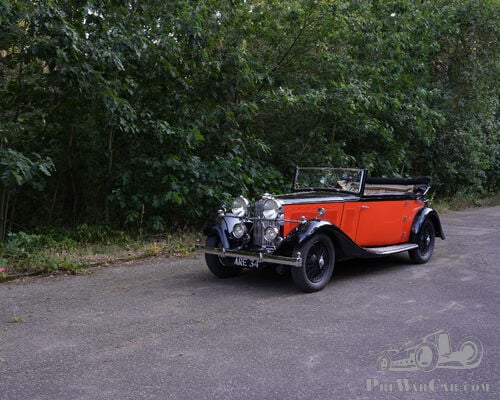
1934 Talbot AV105 Three Position Drophead Coupé
Registration no. ARE 34Chassis no. 35488 Much supporting paperworkRestored exampleVery usa..
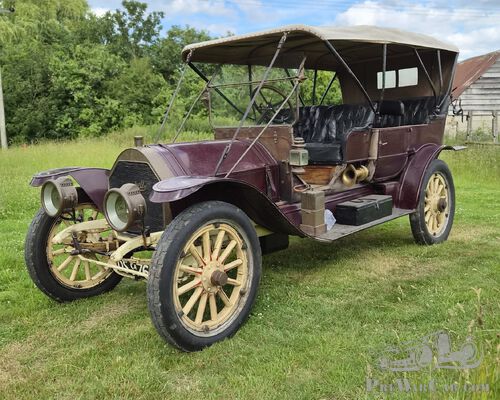
1910 Mitchell Model S - 50HP Six Cylinder
Based in Racine, Wisconsin and being the largest wagon manufacturer in the USA, Mitchell-Lewis produced their first motor car in 1903. Sales grew ..
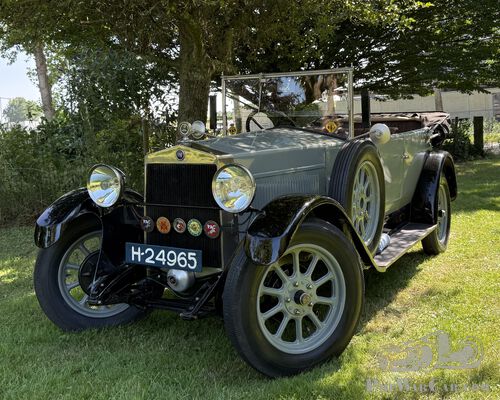
Fiat 509 Torpedo / Spider – Exceptionally Original and Complete
A Rare and Highly Original Example with Long-Term Dutch HistoryOffered for sale is an exceptionally original and remarkably complete Fiat 50..