The global magazine and marketplace for classic car enthusiasts, by enthusiasts.


Filter
Classic Sunbeam, Mercedes (-Benz) for sale - Sunbeam, Mercedes (-Benz) cars for sale
-

1914 Mercedes 28/60 HP Town Car and Tourer Display Chassis | RM Sotheby's | The Hershey Auction
To Be OFFERED AT AUCTION at RM Sothebys' The Hershey Auction event, 7 - 8 October 2026. $450,000 - $650,000 USD Please check back soon as our dedicated cataloguing team is preparing the description for this lot. To view this car and others currently consigned to this auction, please visit the RM website at rmsothebys.com/auctions/hf26/. -
1942 Mercedes 770K Grosser Offener Tourenwagen
1942 Mercedes 770K Grosser Offener Tourenwagen Available immediately with fresh engine & concours condition. Non Armoured 8 seat configuration. Viewings East of Munich by prior appointment. Full photos & chassis number available to Qualifi.. -
1910 Mercedes Simplex 3.6 Litre 30HP Coachwork by Laclaverie Gaches et Cie
1910 Mercedes Simplex 3.6 Litre 30HP Coachwork by Laclaverie Gaches et CieRegistration No. SV6058Chassis No. 8837Engine No. 11645 Following the departure of Wilhelm Maybach from Mercedes in 1907 the company, along with several others, withdrew from active .. -
Mercedes Benz Speziale Roaster body & parts.
Mercedes Benz Speziale Roaster body & parts. A unique opportunity to purchase an expertly hand-crafted wooden framework for a Mercedes-Benz 500K / 540 K Spezial Roadster which when finished will be similar in appearance to the black & white photograph in our advert. Included are some metal part.. -
1938 Mercedes Benz 170 V Roadster - 1 of 271 cars built
Rare roadster version of the 170 V, one of only 271 builtExtensively restored to a very good state of preservationAdditional partial overhaul in 2020Over 80,000 EUR invested in overhaul/restoration since 2001History of the last 40 years known in GermanyThis Mercedes Benz 170 V Sport Roadster .. -
1936 Mercedes 500K special roadster
1936 Mercedes 500K roadster Coming soon. This car was rebodied with the current roadster body we find on it today. The car was in period returned to the Mercedes factory & had the original engine uprated to 540k spec which is still installed today making it a matching numbers car.The car has been the recent recipient of a fastidious nut &.. -
1924 Sunbeam 4.5 litre 24/70 tourer
1924 Sunbeam 4.5 litre 24/70 tourer Chassis Number: 7079DRegistration number: BF7480 A magnificent late 4.5 litre Sunbeam tourer. The car was first supplied to the antipodes in engine & chassis form, prior to receiving its current Australian body. It is featured in the recognised authority o.. -
1928 Mercedes Benz SSK Rebuild
A faithful, high-quality rebuild of an SSK, carried out in 2003 by a renowned specialist in GermanySubsequently owned and actively used by a single owner for 20 years Original 1929 supercharged engine with impressive performanceComprehensive documentation availableEligible to participate in numerous histo.. -
1935 Mercedes-Benz 500 K Normal Roadster by Sindelfingen | RM Sotheby's | The Monterey Auction
To Be OFFERED AT AUCTION at RM Sothebys' The Monterey Auction event, 13 - 15 August 2026. $1,500,000 - $1,700,000 USD One of five known surviving examples among a very limited number of cars originally builtDelivered new to Colombo, Ceylon (Sri Lanka)Benefits from a high-level sympathetic restoration conducted over the .. -
1935 MERCEDES BENZ 200 W21 LWB CABRIOLET
1935 Mercedes Benz 200 W21 LWB Cabriolet Chassis number: 108020Registration Number: Applied for. Produced in 1935, this very rare Mercedes cabriolet is the enbodiment of teutonic quality manufacturing. The Mercedes 200 W21 was in production between 1933 and 1936 as the successor to the W02. This W21 is o..


Sunbeam
GB, 1899 – 1937, 1953 to date
(1) John Marston Ltd, Wolverhampton, Staffs., 1899 – 1905
(2) Sunbeam Motor Car Co Ltd, Wolverhampton, Staffs., 1905 – 1935
(3) Sunbeam Motors Ltd, London W.11, 1936 – 1937
(4) Sunbeam-Talbot Ltd, Ryton-on-Dunsmore, Warwickshire, 1953 – 1970
(5) Chrysler United Kingdom Ltd, Ryton-on-Dunsmore, Warwickshire, 1970 to date
John Marston’s tinplate and japanware firm, which had been making bicycles since 1887, built its first 4hp belt-driven prototype Sunbeam car in 1899, followed by another machine with a twin-cylinder engine in 1901. The first model Sunbeam car to see series production was, however, the diamond-formation and allegedly skidproof Sunbeam-Mabley voiturette with 2¾hp De Dion engine, a number of which were sold for £130 in the 1901-1904 period. More conventional was the 12hp Sunbeam car marketed under T.C. Pullinger’s direction in 1903, which was based on a Berliet design and had a flitch-plate frame, chain drive with Sunbeam cars patent oil-bath chain cases, and a 2.4-litre 4-cylinder engine with automatic inlet valves. A 3.6-litre 6-cylinder Sunbeam car was on the market briefly in 1904, but Sunbeam cars soon progressed to Shaw-designed T-head fours, though another short-lived six Sunbeam car appeared in 1907. Sunbeam cars great years started in 1909 when Louis Coatalen joined the Sunbeam car firm from Hillman. In that season the Sunbeam car company was offering three L-head fours with chain drive, and capacities of 3.4, 4.5 and 6.3-litres, plus an odd 3.2-litre twin-cylinder Station Cart Sunbeam car. Coatalen’s first effort was a T-headed 14/18hp Sunbeam car, available with either shaft or chain drive. This Sunbeam car was followed a year later by a 2.4-litre 12/16 on similar lines, but with pressure lubrication and on overdrive gearbox, while overhead valves were tried out on a racing Sunbeam car, the Nautilus, at Brooklands in 1910. An improved 12/16 Sunbeam car of 3-litres’ capacity with monobloc engine ran in the 1911 Coupe de l’Auto race, foreshadowing an immensely successful touring development which Sunbeam car sold initially for £375. This Sunbeam car had an L-head engine and was made up to 1921. In 74bhp racing guise the Sunbeam car scored 1-2-3 victory in the 1912 Coupe de l’Auto, following this up with a 3rd place in 1913. In 1914 Sunbeam car company built Henri-inspired twin-ohc 4-cylinder racers both for the Tourist Trophy and for the French Grand Prix, and at the outbreak of World War 1 the Sunbeam car range consisted of the 12/16 in standard and sporting forms, a 4-litre 16/20 Sunbeam car of similar general design, and a 6.1-litre 6-cylinder Sunbeam car rated at 25/30hp, all offered with electric lighting. The Sunbeam car company concentrated on aero engines during the war years, though a 4.9-litre twin-ohc 6-cylinder Sunbeam ca was sent to Indianapolis in 1916 and took 3rd place, while Rovers took over production of the 12/16 for the Flighting Services. Renamed the 16, this Sunbeam car reappeared in civilian form with full electrical equipment at £790, along with a smaller vesion of the pre-war 25/30 Sunbeam car powered by a 4½-litre engine.
The Sunbeam car company amalgamated with Talbot and Darracq in 1920 to form the STD combine, and the next five years saw an energetic racing programme of Sunbeam cars. Twin-ohc 108bhp straight-8 Sunbeam cars were made for the 3-litre formula of the immediate post-war years, followed by some unsuccessful 2-litre fours, and finally the twin-ohc 6-cylinder ‘Fiats in green paint’, designed by Bertarione, which won the French and Spanish GPs in 1923, and this Sunbeam car ran supercharged in 1924, as well as having a long and distinguished competition career in later years. Chassagne won the Tourist Trophy on a 3-litre straight-8 Sunbeam car in 1922, while one of the regular 3-litre sports Sunbeam cars finished 2nd at Le Mans in 1925. Sunbeam cars took the World’s Land Speed Record five times in the 1922-1927 period: Lee Guiness started with 133.75mph on the 350hp V12 sprint Sunbeam car, a figure which Campbell subsequently raised, first to 146mph on the 4-litre V12, a Sunbeam car which was also used for road racing, and the following year he became the first man to exceed 200mph on land with the twin-engined chain-drive 45-litre Sunbeam car. Sunbeam cars last record car, the Silver Bullet of 1930, was unsuccessful.
Touring Sunbeam carss of the 1920s were cars of great refinement if not outstanding performance. The basic 16 and 24hp types Sunbeam cars were redesigned with push-rod overhead valves in 19222, ohc sporting versions being also listed, while a more modest 2-litre 14hp Sunbeam car with unit gearbox was available at £725. Front-wheel brakes arried on the 6-cylinder 16/50 Sunbeam car in 1924, and were optional also on the 14/40 Sunbeam car which replaced the 14hp model. An impressive 3-litre 6-cylinder twin-ohc sports Sunbeam car with dry-sump engine was made in small numbers between 1925 and 1930, but the Sunbeam car was ‘too fast for its chassis’ as well as being expensive to make and buy. A big straight-8 Sunbeam car with a push-rod engine, available in 4.8-litre and 5.4-litre forms, was introduced in 1926 at prices from £1.295 up and front-wheel brakes became standard on all Sunbeam cars. All Sunbeam cars had the V-radiator by 1927, when the fours were dropped, and the standard touring sixes were the 2-litre 16hp at £550, the 2.9-litre 20hp Sunbeam car at £750, and the 3.6-litre 25hp at £950, all with plate clutches, spiral bevel final drive, and cantilever rear suspension. Thereafter Sunbeam car design changed little, and sales of Sunbeam cars declined though quality was maintained. Semi-elliptic springs were found at the rear of the smaller 1930 Sunbeam carmodels, in 1931 the Sunbeam cars acquired hydraylic brakes and radiator shutters, and the 16’s engine was enlarged to 2.2-litres. The 1932 Sunbeam cars’ silent-third gearboxes gave way to synchromesh on 1933 16 and 20hp Sunbeams. That year there was also a 2.9-litre Speed Model Sunbeam car with crash box at £745, though its main competitor was STD’s other fast tourer, the Talbot 105. The old Sunbeam car firm’s last new model was a ponderous 1.6-litre ohv four, the Sunbeam Dawn of 1934, with preselector gearbox and independent front suspension. This Sunbeam car was offered again in 1935, along with the 20, the 25, and the Speed Model, but the collapse of the STD combine brought receivership and purchased by Rootes, and an ohv Roesch-designed 4½-litre straight-8 Sunbeam car announced for 1937 never went into production. There were no Sunbeams in 1938, and when the Sunbeam-Talbot range was announced for 1939 the Sunbeam car was based on the later Rootes Talbots.
The name of Sunbeam cars did not reappear until 1953, when it was given to a sports two-seater Sunbeam car of the 2.3-litre ohv 4-cylinder Sunbeam-Talbot 90, the Sunbeam Alpine, which sold for £1.269, and this Sunbeam car collected four Coupes des Alpes in that year’s Alpine Rally, following this up with a Gold Cup (for Stirling Moss) and a Coupe des Dames (for Sheila Van Damm) in 1954. In 1955 the basic 90 saloon Sunbeam car was marketed as the Sunbeam MK III, and further laurels included the Malling/ Fadum win in that year’s Monte Carlo rally. The type Sunbeam car was listed until 1957, being joined in 1956 by a Hillman Minx-based sports saloon, the Sunbeam Rapier, with a 1.4-litre square 4-cylinder 62bhp engine, unitary construction, and overdrive as standard equipment, at £986. This Sunbeam car did well in subsequent Alpines and Monte Carlo Rallies, as well as winning its class in the 1956 Mille Miglia, and by 1958 the Sunbeam car had grown up to 1½-litres and 68bhp, acquiring a less Hillman-like grill in the process, though overdrive was now an extra. A sports two-seater Sunbeam car, another Alpine, with integral construction, was listed for 1960, and subsequent evolution was on regular Rootes lines: diaphragm clutches in 1964, with the option of automatic on the Alpine, all-synchromesh gearboxes in 1965, and 1.7-litre 5-bearing engines in 1966. 1964 brought two new developments of the basic theme Sunbeam car, an Italian-bodied Venezia sports saloon based on the Humber Sceptre, and the Tiger Sunbeam car, which was an Alpine with rack-and-pinion steering and a 4.3-litre, 164bhp Ford V8 engine, this despite the Rootes-Chrysler conncection. In 1966, the Rapier V, Alpine V, and Tiger comprised the Sunbeam car name. A 51bhp Sunbeam car-version of the Imp was available in the home market in 1967, and this Sunbeam car was followed by the more sporting Stiletto coupé for 1968.
An entirely new Rapier Sunbeam car on Hillman Hunter lines was announced for that year, its fastback styling inspired by Plymouth’s Barracuda. It had an 88bhp engine, a close-ratio gearbox, and overdrive as standard.
During 1968 the old Sunbeam Alpine was discontinued (the Tiger had already gone), and the Rapier range was rounded out, first by the H120 of 1969 with twin-carburettor Holbay-tuned engine giving 105bhp and Rostyle wheels, and then by the Alpine, a simplified version of the basic theme introduced for 1970. These three fastback Sunbeam cars were still being made in 1973, along with the Sunbeam Sport based on the Imp saloon. The Stiletto was discontinued during 1972.
Source: Georgano, encyclopedia of motorcar; MCS
The information is written with the greatest of care. However, if you have any suggested amendments please contact us at office@prewarcar.com
Mercedes (Mercedes-Benz)
D, 1901 – 1926: Mercedes
(1) Daimler Motoren Gesellschaft, Bad Cannstatt, 1901 – 1903
(2) Daimler Motoren Gesellschaft, Stuttgart – Untertürkheim, 1903 – 1926
Emil Jellinek, wealthy admirer of Daimler cars, had persuaded the Daimler company and its chief designer Wilhelm Maybach to build a high performance car. This new car was the 35bhp 5.9-litre model which today is known as the forefather of modern motor cars and which owed nothing in appearance to horse-drawn carriages; features included honeycomb radiators, gate change, mechanically-operated inlet valves, and pressed-steel frame. The Mercedes car design was copied by many manufacturers in Europe and America during the following years. This Daimler car was entered by Jellinek for the Nice Week of 1901 under his pseudonym Mercédes, his daughter’s name. Driven by Wilhelm Werner the Mercedes car gained victory in the Nice Speed Trials and the La Turbie Hill Climb, these being the first successes connected with the name of Mercedes cars. Jellinek was already acting as unofficial agent for Daimler cars and had a seat on the board of directors of the Daimler works since 1900. He sold the cars as Mercedes cars because of legal proceedings by Panhard-Levassor, who owned the Daimler licences for France. Sales and racing successes of cars bearing this Mercedes car name led the Daimler works in 1902 to adopt ‘Mercedes’ as a new brand name for private cars. Commercial vehicles were still marketed as Daimlers.
A range of tourers and racing Mercedes cars followed, based on the 35PS Mercedes carmodel. Most prominent of this range were the Mercedes Simplex 18/22, 18/32, 40/45 and 60ps models which had a much lower weight than the 35PS; the ‘Mercedes 60’ had inlet over exhaust and was capable of 70mph for a chassis price of £2.200. The very successful 60 and 90hp racing Mercedes cars were based on the Simplex designs. Among the sporting successes of the Mercedes cars were the Semmering Hill Climb in the years 1901 to 1909, the Gordon Bennett Race in 1903, the Ostend speed Trials in 1904, and also the World Record at Daytona in 1905 was with a Mercedes car. In 1902 Daimler took over the Motorfahrzeug- und Motorenfabrik Berlin AG in Marienfelde, which had been founded by a Daimler director and here Daimler concentrated production of their Daimler Marienfelde commercial vehicles. During a short period in 1906/ 1907 Mercedes Electrique cars were built in Marienfelde under licence from Austro Daimler. One example of this Mercedes car was added to the Kaiser’s stable.
In 1907 Maybach left the Mercedes car company to found a firm of his own, specializing in aero engines. His last designs for Daimler were the 6-cylinder 37/70PS (9.5-litres) and 39/80PS (10.2-litres) Mercedes carmodels, with chain drive and T-head engines, derived from the 120hp racing Mercedes car. Jellinek returned his rights for sole distribution of Mercedes cars in various countries to the Daimler company in 1905 and after selling his shares the man who gave the Mercedes car its name, left the board of directors in 1908.
Paul Daimler followed Maybach as chief engineer and designer of Mercedes cars after spending a few years with Austro-Daimler. After 1908 most Mercedes car models were equipped with shaft instead of chain drive, which was continued for the heavier Mercedes 22/50, 28/60, 23/80 and 37/90PS types. Among numerous racing successes with Mercedes cars, the victory in the 1908 French Grand Prix was a highlight for the Mercedes car company. Lautenschlager drove a 135PS race Mercedes car especially built for this event. In 1909 Daimler acquired a licence for Knight engines and a range of Mercedes car models was produced, including the 4.1-litre Mercedes 16/45 which was made until 1923. In 1909 Mercedes cars applied for registration of the now famous three-pointed star as a trade mark. It was registered and used from 1911 onwards on all Mercedes cars.
From the start Mercedes cars were elegantly designed for high performance and favoured by royalty and the big financiers of the Old and the New World. The Kaiser owned several Mercedes cars. Among the most impressive successes with Mercedes cars were the 1st, 2nd and 3rd places in the 1914 French Grand Prix by Lautenschlager, Wagner and Salzer driving the 4,5-litre, 115bhp shaft-driven racing Mercedes car which was developed for this event. One of these Mercedes cars was brought to the United States and won the 1915 Indianapolis Race driven by Ralph de Palma. This Mercedes car was successful after World War 1, when Count Masetti won the 1921 Italian Grand Prix and the 1922 Targa Florio. A few more first places were gained with Mercedes cars in hill climbs until 1927. The powerful ohc ‘28/95’ 6-cylinder Mercedes car was just going into production when war broke out.
After the war the Mercedes car company also started to experiment with supercharged engines for Mercedes cars, after building blown aero engines during the war. The first production Mercedes cars fitted with a Roots supercharger appeared at the Berlin Motor Show of 1921: the 4-cylinder Mercedes 6/25/40PS, 1,5-litre and the Mercedes 10/40/65PS 2,6-litre models. Paul Daimler retired from the Mercedes car company in 1922 and was succeeded by Ferdinand Porche, who came to Mercedes cars from Austro-Daimler. Two more Mercedes car-models with blown engines were produced, the 6-cylinder Mercedes 15/70/100PS (4-litre) and the Mercedes 24/100/140PS 6-litre. In 1923 the name of Rudolf Caracciola first appeared in association with Mercedes cars when he won the ADAC-Reichsfahrt; for the next 16 years his name was identified with the Mercedes cars racing successes. In 1924 Mercedes cars began to merge their interests with Benz, and amalgamation followed in 1926. Subsequent Mercedes car models were sold under the name of Mercedes-Benz.
D, 1926 to date: Mercedes
Daimler Benz AG, Stuttgart-Untertürkheim; Mannheim
After amalgamation of Mercedes cars and Benz cars in 1926 the Benz 16/50PS model and the Mercedes car models with supercharged engines were continued for some time. New 1926 Mercedes car models were the 6-cylinder Mercedes-Benz 8/38PS 2-litre Stuttgart and the Mercedes-Benz 12/55PS 3.1-litre Mannheim, both conventional and heavy sv machines with coil ignition, 3-speed gearboxes and wood wheels. These Mercedes cars were developed into the 2.6-litre Mercedes-Benz Stuttgart 260 and the 3½-litre Mercedes-Benz Mannheim 350. A new Mercedes car model the Mercedes-Benz Nürburg 460 with an 8-cylinder 4.6-litre engine was added in 1928 and this later grew into the Mercedes-Benz Nürburg 500. These were the last Mercedes car models – except the ‘Grosser Mercedes’ – built to the classic Mercedes car chassis design with U-sectioned frame, rigid axles an semi-elliptic springs. The earlier Mercedes car model 24/100/140PS became the sports model Mercedes-Benz K with shortened wheelbase and a supercharged 6,25-litre 24/110/160PS engine. This Mercedes car was the fastest touring car of its time on the world market. From this Mercedes car a range of very successful types was derived: the Mercedes-Benz S (6,8-litre 26/120/180PS), the Mercedes-Benz SS (7,1-litre 27/140/200PS), Mercedes-Benz SSK (7,1-litre 27/170/225PS), and the Mercedes-Benz SSKL (7,1-litre 27/170/300PS). The Mercedes cars gained numerous victories and places in hill-climbs, and sports carraces. Although the Mercedes cars were not racing cars they nevertheless competed successfully in several events, winnings for Mercedes-Benz cars were, for example, the Ulster TT in 1929, the Irish Grand Prix in 1930, the Mille Miglia and Eifel Race in 1931, and the Avus Race in 1931 and 1932. In 1930 came the first 8-cylinder Grosser Mercedes car with a 7,7-litre engine developing 150bhp, or 200bhp with supercharger. The first version of this Mercedes car was built until 1937 and had the old Mercedes car chassis design, but the succeeding model Mercedes-Benz 770 of 1938 had a modern lay-out with oval tubular frame and swing axles. The engine output of the Mercedes car was increased to 155/230bhp. A maximum speed of over 100mph was possible with this Mercedes-Benz car.
The ‘economy class’ was entered again with a Mercedes car in 1931 using the 6-cylinder, 1.692cc model Mercedes-Benz 170, the first Mercedes car to use independent wheel suspension. The design which followed in Mercedes cars included the rear-engined models Mercedes-Benz 130H, Mercedes-Benz 150H and Mercedes-Benz 170H, with backbone frames, the Mercedes--Benz 260D, the first diesel-engined private Mercedes car to be series produced, and the supercharged Mercedes-Benz 540K sports tourer.
In 1934 Mercedes-Benz took up racing again. For the 750kg Formula an 8-cylinder 3,36-litre supercharged Mercedes car model was designed, developing 354bhp. During the next three years engine capacities of these race Mercedes cars were raised to 5,66-litres giving an output of 646bhp. For 1938 and 1939 a V12 supercharged Mercedes car-model was built to the new 3-litre Formula specification, developing 476 and 483bhp. A 1½-litre, 254bhp Mercedes-Benz racer had to be designed especially for the 1939 Tripoli Grand Prix and 1st and 2nd places in this race were the result. This was one of the last successes for Mercedes-Benz before the outbreak of World War 2, after a long and distinguished record which had begun in 1934 and only been interrupted by Auto-Union, the two firms sharing nearly all major race successes between them. Several world records were also gained by Mercedes-Benz cars. In 1934 the standing-start mile was covered at 117,2mph at Gyor (Hungary), and the flying mile at 193,8mph on the Avus course. In 1936 a world record for the flying 10 miles was set with a V12 aerodynamic-bodied Mercedes-Benz car on the Frankfurt-Darmstadt autobahn with 207.2mph. The Frankfurt autobahn again saw a Mercedes car record early in 1938 when the flying kilometer was covered at 268.9mph, the highest speed ever achieved on a public highway. Caracciola was the driver who gained these world records with Mercedes cars, and also a numer of class records, for Mercedes cars. An aero-engined Mercedes car was being prepared for an attack on the World Land Speed Record in 1939.
The former Benz works at Mannheim were used for the production of private Mercedes-Benz cars until 1939. Since then commercial vehicles have been built in Mannheim and private Mercedes cars in the Stuttgart-Untertürkheim works. At the outbreak of World War 2 the Mercedes car firm were testing a 6-litre V12 intended as a replacement for the Grosser.
World War 2 halted development. The pre-war 1.697cc Mercedes-Benz 170V was taken up again in 1947 and was available as the Mercedes-Benz 170D with a diesel engine. These fours had back-bone-type frames; unitary construction made its appearance in the 1954 ‘Mercedes-Benz 180’ series. The first Mercedes-Benz car with ohc four was the sporting Mercedes-Benz 190SL of 1955. The 6-cylinder models Mercedes-Benz 220 and Mercedes-Benz 300 followed in 1951. The 4-cylinder Mercedes-Benz 170 was progressively increased in size and output from 1.697cc and 38bhp to the 1.988cc and 95bhp of the 200 introduced in 1965. Sports Mercedes car manufacture recommenced in 1952 with the 6-cylinder, 3-litre, 215bhp Mercedes-Benz 300SL with fuel injection, originally a fixed head coupé with gullwing doors, but later sold as a Mercedes-Benz roadster; over 3.250 Mercedes-Benz 300SL cars were made. The Mercedes-Benz 300SL was victorious at Le Mans in 1952. The Mercedes-Benz 300SLR was a sports racing car with an 8-cylinder 3-litre engine of 300bhp and was very successful in competitions. In 1954 Mercedes-Benz cars again took part in formula racing with an 8-cylinder 2.5-litre version. Juan Manuel Fangio was World Champion in 1954 and 1955 on this Mercedes-Benz carmodel. Participation in racing was discontinued after 1955.
The top model of the Mercedes-Benz range of production cars was added in 1964. It was the Mercedes-Benz 600, a luxury car with an 8-cylinder 6.3-litre 250bhp engine, continuing the tradition of the pre-war Grosser Mercedes. This Mercedes-Benz car is available in two wheelbase lengths, 10ft 6in and 12ft 10in. The latter has an overall length of 20ft 6in and is also available with a 6-door body. Early in 1968 the Mercedes-Benz range was revised with a restyled body and new independent rear suspension for the Mercedes-Benz 200, Mercedes-Benz 230 and Mercedes-Benz 250 models. A new 280 engine was introduced, used in the bodies of the former Mercedes-Benz 300 saloons and Mercedes-Benz 250SL sports car. Bridging the gap between the Mercedes-Benz 300 and the Mercedes-Benz 600 was the Mercedes-Benz 300SEL, a Mercedes-Benz 300 saloon using the big 6.3-litre V8 engine. Power-assisted steering, automatic transmission and airconditioning were standard, and this Mercedes-Benz car was capable of 137mph, though attempts to race the Mercedes-Benz car at Spa in 1969 proved abortive. In May 1968 the Mercedes-Benz company delivered its two millionth private Mercedes-Benz car since the end of the war, and in 1969 came a tantalizing prototype sports coupé, the Mercedes-Benz C-111 with rear-mounted fuel-injection 3-rotor Wankel engine developing 280bhp, a 5-speed ZF transaxle, limited-slip differential, and all-disc brakes. Weight of this Mercedes-Benz car was under 2.640lb. By 1970 the Mercedes-Benz car had been redesigned to take a 4-rotor unit with an equivalent capacity of 4.8-litres and an output of 350bhp; top speed was around 190mph. New production models were the Mercedes-Benz 300SEL 3.5 saloon and Mercedes-Benz 280SE 3.5 coupé, powered by 230bhp 3½-litre dohc V8 units with fuel injection; by 1971 this engine had also been applied to the Mercedes-Benz 350SL sports coupé, features of which were trailing-arm rear suspension and a foot-operated parking brake.
Smallest of the 1972 – 1973 Mercedes-Benz carrange was the 2-litre Mercedes-Benz 200, available with 4-cylinder petrol or diesel engine, and during 1972 the medium-sized Mercedes-Benz 280SE gave way to a new 2.8-litre dohc model. Output of this Mercedes-Benz car was 160bhp with carburetors or 185bhp with fuel injection.
Source: Georgano, encyclopedia of motorcar; HON
The information is written with the greatest of care. However, if you have any suggested amendments please contact us at office@prewarcar.com


Featured
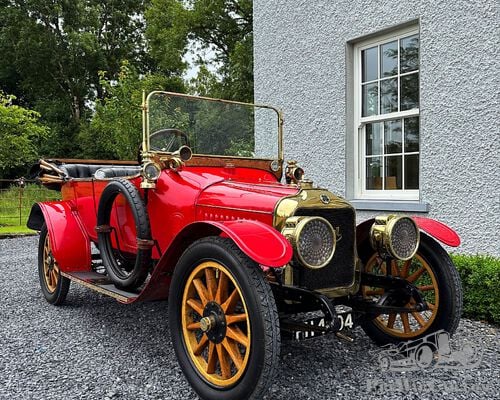
1914 Brasier
1914 Brasier Tourer 9ABrasier were a French manufacturer who were in business from 1901 until 1930, when the company became victim of the gr..
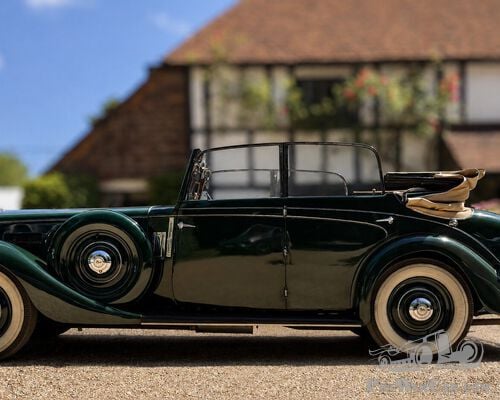
1936 Armstrong Siddeley 20/25 Cabriolet with Tickford coachwork by Salmons & Sons, Newport Pagnell
This exceptionally rare Armstrong Siddeley 20/25 Cabriolet with original Tickford coachwork by Salmons & Sons of Newport Pagnell was first reg..
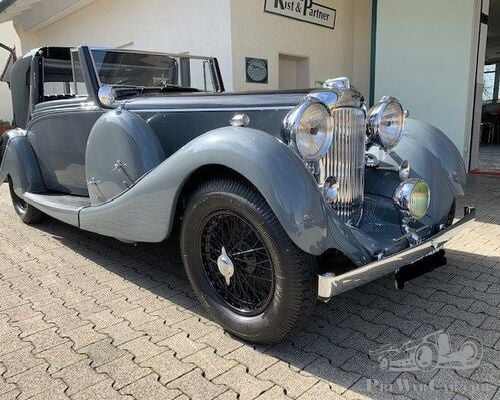
Lagonda LG 45 Coupe de Ville Sedanca by Mayfair
The successor to the M45, the LG45 was built around the same highly capable, competition-proven 4.5-litre Meadows inline-six engine, but featured r..