The global magazine and marketplace for classic car enthusiasts, by enthusiasts.


Filter
Classic Rolland-Pilain, Mercury for sale - Rolland-Pilain, Mercury cars for sale
-

Rolland Pilain
I am selling a 1913 Rolland Pilain RP 10HP in very good condition. It has a standard registration document in my name, and the MOT will be carried out prior to the sale. -
1939 Mercury Eight Convertible Hot Rod | RM Sotheby's | The Hershey Auction
To Be OFFERED AT AUCTION WITHOUT RESERVE at RM Sothebys' The Hershey Auction event, 7 - 8 October 2026. Offered Without Reserve | $30,000 - $40,000 USD A rare and authentic Series 99A Convertible from the first year of Mercury productionRestored in the late 1980s, retaining its pre-war hot rod modifications and components -
1939 Mercury Convertible Coupe | RM Sotheby's | The Hershey Auction
To Be OFFERED AT AUCTION WITHOUT RESERVE at RM Sothebys' The Hershey Auction event, 7 - 8 October 2026. Offered Without Reserve | $35,000 - $50,000 USD An especially attractive example of a landmark Mercury from the brand’s inaugural yearHighly authentic, believed to retain much of its factory upholsteryFormerly owned b..


Rolland-Pilain
France, 1906 – 1931
SA des Etablissements Rolland-Pilain, Tours
Unusual among French marques of its period, Rolland Pilain cars made their greatest impact after World War 1. Their first product was a 20hp 4-cylinder model Rolland Pilain cars with a monobloc engine, though smaller 2.2-litre shaft-driven Rolland Pilain cars were available in 1909 and a 3-speed 1½-litre Rolland Pilain 8/10CV in 1910, in which year the Rolland Pilain car company was also experimenting with ‘valveless’ engines and 4-wheel brakes. Though racing was in the doldrums, the Rolland Pilain car company went to the trouble of building a big chain-driven Rolland Pilain car for the 1911 Grand Prix de France, and a complex 1912 range started with a Rolland Pilain 9CV of 1.7-litres and went up to a chain-driven 4-cylinder 60 Rolland Pilain car of 130x270mm. The 6-cylinder Rolland Pilain 18CV had a ‘valveless’ engine, and even in 1913 chain drive was still optional on the biggest fours of 20CV and 24CV Rolland Pilain cars. Only 1.9-litre and 4-litre 4-cylinder Rolland Pilain cars with sv monobloc engines and unit gearboxes were listed in 1914.
These basic types of Rolland Pilain cars, still with pedal-operated transmission brakes, were available again after World War 1, but far more advanced was the 2.2-litre Rolland Pilain 14/16 of 1921, which boasted not only overhead valves and a detachable head, but also front-wheel brakes (hydraulic at the front and mechanical at the rear). This Rolland Pilain car was still catalogued in 1926. Even more ambitious was the 2-litre twin ohc straight-8 GP Rolland Pilain car of 1922, with desmodromic valves, ball-bearing crankshafts and 4-wheel hydraulic brakes. A victory of a Rolland Pilain car at San Sebastian in 1923 was the limit of the success of Rolland Pilain cars on the circuits, but the type found its way into the catalogue as the Type A22 Rolland Pilain car at 90.000fr, and one of the racers also ran with a 2-litre, 6-cylinder cuff-valve Schmid engine. In 1925 came a 2-litre ohv 4-cylinder Rolland Pilain car with 4-wheel mechanical brakes, selling for £725 in England, while a 1½-litre development, the Rolland Pilain D26, was introduced for 1927. In 1929 Rolland-Pilain car, along with several other French firms, tried a Franco-American theme by introducing a range of big luxury chassis with sv Continental engines. Both the 6-cylinder, 3-litre, and the 4-litre straight-8 Rolland Pilain cars had centralized chassis lubrication, though the elegant bodywork of the Rolland Pilain car was marred by the use of artillery wheels. At the 1930 Paris Salon the Rolland Pilain car company shared a stand with the BNC (also going through a Franco-American phase), but this was the end, though the Rolland Pilain car firm’s Paris depot was still advertising spare parts for Bignan as well as Rolland Pilain cars in 1934.
Source: Georgano, encyclopedia of motorcar; MCS
The information is written with the greatest of care. However, if you have any suggested amendments please contact us at office@prewarcar.com
Mercury
US, 1904
Mercury Machine Co, Pittsburgh, Pa.
The Mercury car was a two-seater with a 2-cylinder water-cooled engine of 7hp. A liding-gear transmission was used and the weight of the Mercury car was 1.250lb. The price of the Mercury car was $295 and a top cost $100 extra.
GB, 1905
Ivanhoe Motor Co, Cricklewood, London N.W.
The Mercury car company made a small number of 24hp 4-cylinder Mercury cars which they also called Ivanhoes. In 1906 they became agents for Weigel and planned to show these cars on their stand at Olympia, but permission was refused because they had said in their application that they would show Ivanhoes. In fact, only second-hand Mercury cars were shown on the stand, but they stressed that the Weigel could be seen at the works.
GB, 1914 – 1923
(1) Medina Engineering Co Ltd, Twickenham, Middlesex, 1914 – 1920
(2) Mercury Cars (production) Ltd., Twickenham, Middlesex, 1920 – 1923
The Mercury car was a conventional light car with a 10hp 4-cylinder monobloc engine and shaft drive. One Mercury car model only was made before the war, but in 1920 there were three Mercury cars, a 9.5, 10.2 and 11.9hp. Bodies were the usual two- and four-seaters.
US, 1914
Mercury Cyclecar Co, Detroit, Mich.
The Mercury cyclecar differed little from other of that breed, except that Mercury car had a self-supporting body which eliminated the chassis frame; in other words integral construction. The engine was a 9hp 2-cylinder air-cooled unit, and the Mercury car used friction transmission and belt final drive. Body styles were a monocarp, a tandem two-seater and a light van.
US, 1918 – 1920
Mercury Cars Inc, Hollis, N.Y.
A small, assembled car of limited production, the Mercury car used a Duesenberg or Weidely 4-cylinder engine and the Mercury car was equipped with a door in the floor to give the driver ready access to the service brake mechanism.
US, 1938 to date
Ford Motor Co, Detroit, Mich.
The Mercury car, a product of Ford’s Lincoln Division, was intended to rival GM’s Oldsmobile and Buick, and widen Ford penetration of the American market. The Mercury car was in effect an enlarged Model 91 Ford V8 with a 3.9-litre 95bhp engine. At $957 the Mercury car cost $230 more than its smaller sister, but the Mercury car was $40 less than Buick’s cheapest 4-door sedan. Hydraulic brakes were standard from the start on Mercury cars and evolution followed established Ford lines, with no drastic changes until 1949, when the new low silhouette, hypoid rear axle, and coil-spring independent front suspension were incorporated on the Mercury car. Capacity of the engine of the Mercury car went up to 4.2-litres and the front-end styling of the Mercury car emphasized the association with Lincoln. Mercury cars, like Ford, progressed to overhead valves and oversquare cylinder dimensions and in 1955 buyers of the Mercury car had a choice of two V8 engines of 188 and 198bhp. An inexpensive Mercury Medalist series was added in 1956 and in 1957 the standard power unit was a 255bhp. Mercury cars became bigger and more expensive in 1958 and 1959 to avoid clashing with the Edsel range from the same stable, and a 6.3-litre, 360bhp engine was available in Mercury cars.
In 1961 Mercury cars broke with tradition, and offered for the first time something other than a V8; not only was there the option of a 3.6-litre six in the regular Mercury car range, but there was also a semi-compact Mercury car, the 2.4-litre Mercury Comet, a Mercury car with a 9ft 6in wheelbase parallel with Ford’s Falcon. The Mercury Comet sold for $2.084 in 1962, when the largest of the standard V8s was a rather modest 4.8-litre. 1963 saw a return to bigger things on Mercury cars, with 6.4-litre and 6.8-litre engines available in the top-price Mercury Monterey models, which also included a Breezeway sedan with forward-sloped rear window as already used on Ford of Britain’s 1960 Anglia. Though the Mercury Comet was retained for 1966 with a 3.3-litre engine, the biggest Mercury cars looked like Lincoln’s Continental on a reduced scale; the wheelbase of the Mercury car is 10ft 3in, with 6.4-litre, 6.7-litre and 7-litre engines available. For the more sporting motorist there was the Mercury Comet Cyclone with compact dimensions and a 6.4-litre V8 unit. A 1967 sports coupé version, the Mercury Cougar, heralded a return to the waterfall-type radiator grille on the Mercury car so generally popular in the early 1950s.
Subsequent Mercury car developments were aimed at keeping station in the tricky medium-priced market, with the sporting element represented by the Mercury Cyclone and Mercury Cougar coupés (with V8 engines of up to 390bhp) and the luxury sector covered by the Marquis Brougham, which in 1969 form aped the Lincoln with its concealed headlamps, and came with 7-litre V8 unit and automatic as standard. Regular family Mercury cars were the Montego on a 9ft 9in wheelbase, and the stock Mercury car of 10ft 4in. In 1971 there was a Mercury edition of Ford’s Maverick compact, the Comet. Wheelbase was 8ft 7in, and engine options of the Mercury car were sixes of 2.8-litres, 3.3-litres or 4.1-litres, or a small 4.9-litre 210bhp V8. Basic price was a low $2.217, and it was continued into 1972 along with the Cougar, Montego, Monterey, Colony Park and Marquis lines, though new Federal regulations took their toll for Mercury cars, and the most powerful engine option gave only 266bhp, as against 375 in 1970. Mercury Montegos had front disc brakes as standard, as had 1973 Mercury Cougars, which came with a traditional radiator grill in Humber-Sunbeam style. Most of the 1973 improvements on Mercury cars concerned safety (e.g. reinforced bumpers and radial-ply tyres as standard on the big sedans). Ford’s Lincoln-Mercury Division also distributed the German Ford Capri with 2-litre or 2.6-litre engine.
Source: Georgano, encyclopedia of motorcar; GMN, GNG, KM, MCS
The information is written with the greatest of care. However, if you have any suggested amendments please contact us at office@prewarcar.com


Featured
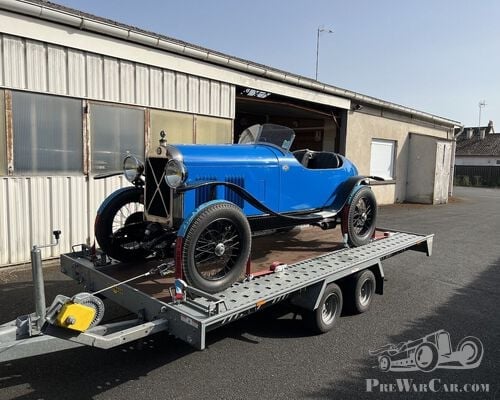
Salmson VAL 3 Séries 7
1927 Salmson VAL3 Series 7. Completely restored a few years ago, in very good overall condition, both bodywork and mechanics. Bordino-style bodywor..
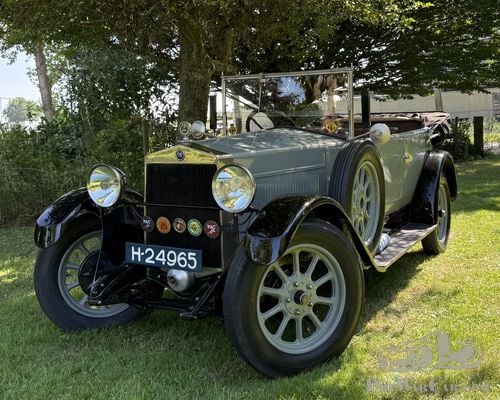
Fiat 509 Torpedo / Spider – Exceptionally Original and Complete
A Rare and Highly Original Example with Long-Term Dutch HistoryOffered for sale is an exceptionally original and remarkably complete Fiat 50..
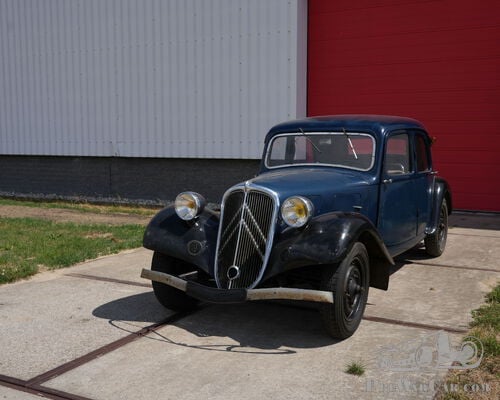
1935 Citroën Traction Avant
Early-production Traction AvantExceptionally original, unrestored conditionRecently part of a major museum collection