The global magazine and marketplace for classic car enthusiasts, by enthusiasts.


Filter
Classic Metallurgique for sale - Metallurgique cars for sale
-

1929 Rolls Royce Phantom 1 Springfield LHD Brewster Lonsdale Landaulette
1929 Rolls Royce Phantom 1 Springfield LHD Brewster Lonsdale Landaulette Chassis Number: S324KP Registration Number: BS9362 Currently undergoing a major service & set up with noted marque expert James Black. At the same time the Autovac is being reinstated to replace the cur.. -
Te koop, Renault NN Torpedo Commercial 1926
Deze Renault betreft een restauratie object voorzien van Franse papieren Carte Grise plus Certificat de Cession D'un Véhicle gedateerd 2003. Tevens een Renault NN rollend chassis voor eventuele onderdelen eveneens met Franse papieren. Te bezichtigen in Bemmel (Nederland). Vraagprijs voor beiden voertuigen € 6000,= dus voor beide auto's die in éé.. -
1937 Cord 812 Supercharged Cabriolet | RM Sotheby's | The Hershey Auction
To Be OFFERED AT AUCTION WITHOUT RESERVE at RM Sothebys' The Hershey Auction event, 7 - 8 October 2026. Offered Without Reserve | $300,000 - $350,000 USD Offered from 27 years of loving enthusiast ownershipFormerly owned by Harrah’s Automobile Collection and William Cord HummelKnown history since 1952; never fully resto.. -
1908 Cadillac Model S Runabout | RM Sotheby's | The Hershey Auction
To Be OFFERED AT AUCTION WITHOUT RESERVE at RM Sothebys' The Hershey Auction event, 7 - 8 October 2026. Offered Without Reserve | $6,000 - $12,000 USD A tangible link to the formative years of one of America’s most important automotive marquesPowered by a 10-hp single-cylinder engine, paired with a two-speed transmission, Brown-.. -
Rolland Pilain
I am selling a 1913 Rolland Pilain RP 10HP in very good condition. It has a standard registration document in my name, and the MOT will be carried out prior to the sale. -
The famous white Riley 12/4 from 1936 with Race History ex New Zealand
The famous white Riley of racing driver Mrs. Ivy Stephenson , Riley 12/4 Kestrel Special from 1936A car which was built as a race car and still can be successfully raced today!- A known car with racing history in New Zealand -Restored in excellent state and condition-Comprehensively files and documentation .. -
1933 Rolls Royce 20/25 Sedanca by Thrupp & Maberly
1933 Rolls Royce 20/25 Sedanca by Thrupp & Maberly Chassis Number: GRW27 Registration Number: VTK777 Simply the best we have ever seen. This car won prizes in class at the recent RREC national rally at Burghley house. A massive nut & bolt re.. -
1934 Rolls-Royce 20/25 Gurney Nutting Owen 3 position drop head
1934 Rolls-Royce 20/25 Gurney Nutting Owen 3 position drop headChassis number: GLZ75Registration number: ALW565Chassis number GLZ 75 was off test 10th July 1933 for supply to HR Owen as a ‘stock’ car. The chassis was delivered to Gurney Nutting & Co Ltd. on The Kings Road for Owen Sedanca Coupe Coachwork which the car st.. -
1913 Wolseley 24/30HP Two-Seater
1913 Wolseley 24/30HP Two-Seater Chassis no. 20034Registration no. J1296Engine no. 34/1134 1913 Wolseley 24/30HP Two-Seater for sale: A large and imposing Edwardian two seat tourer, this 24/30hp model sports Wolseleys large 5 litre six cylinder engine giving ample power and easy modern day cruising spe.. -
a real Speedster
A real Speedster with hot cams, big vales, big bores, etc. Will go 100 kmh. Technical absolute top. comes with some spare parts and fresh MOT.




Métallurgique
Belgium, 1898 – 1928
SA L’Auto Métallurgique, Marchienne-au-Pont
The Metallurgique car was to become the most renowned sporting make of Belgium, but it started life with a 4½hp, 2-cylinder car on Daimler lines. 2- and 4-cylinder chain-driven Metallurgique cars on a similar pattern followed. From 1905, however, a major change began on Metallurgique cars. A range of lively, beautifully-made, modern Metallurgique cars, from an 8hp twin to two big fours, all featuring variable valve lift, steel frames and live axles, was offered. The Metallurgique cars were designed by Ernst Lehmann, formerly of Daimler. In case the owner wished to fit electric lighting on their Metallurgique car, a dynamo for battery-changing was provided. In 1906, there appeared the superb Metallurgique 60/80hp fast tourer. Its 4-cylinder ioe engine gave 100bhp at 1.400rpm. A year later this Metallurgique car and all other models acquired the sharp V-radiator that was to become the Metallurgique cars trademark. The 1908 range of Metallurgique cars included the Metallurgique 40hp, a smaller version of the great Metallurgique 60/80, while a year later came the 26hp Metallurgique car, which was to be the most famous model of all. These three Metallurgique car types all had 4-speed gearboxes, a refinement comparatively rare in Belgium, that was extended to all Metallurgique cars in 1911.
Most Métallurgique cars made in Belgium were exported to Britain, and a German factory (Bergmann) was set up. All bodies on the Metallurgique car were by Vanden Plas and were beautiful creations. A sports version of the 26hp Metallurgique car providing 75bhp with the aid of light pistons and large valves, was listed in 1912. The other big Métallurgique cars acquired sporting variants, too, but a small four also arrived, the Metallurgique 10/12hp of 1.7-litres. Sv engines were to be had in the more ‘touring’ Metallurgique cars of 1913. The 5-litre 26bhp was continued after World War 1, with the addition of Adex-type diagonally-compensated 4-wheel brakes. New in 1921 was a 3-litre sports Metallurgique car, one of which made the fastest lap in the 1922 Spa Grand Prix. However, a truly modern Métallurgique car arrived in that year; a 2-litre, 4-cylinder fast tourer Metallurgique car, in the postwar French tradition designed by Paul Bastien (who was later responsible for the Stutz Vertical Eight). The engine used a chain-driven overhead camshaft, there were front-wheel brakes, and the steering was notably light of this Metallurgique car. This fine machine was the Metallurgique car company’s mainstay until the acquisition of the Metallurgique car factory by Minerva and its machinery by Imperia in 1927. So ended a name with a remarkably consistent record of good cars.
Source: Georgano, encyclopedia of motorcar; TRN
The information is written with the greatest of care. However, if you have any suggested amendments please contact us at office@prewarcar.com


Featured
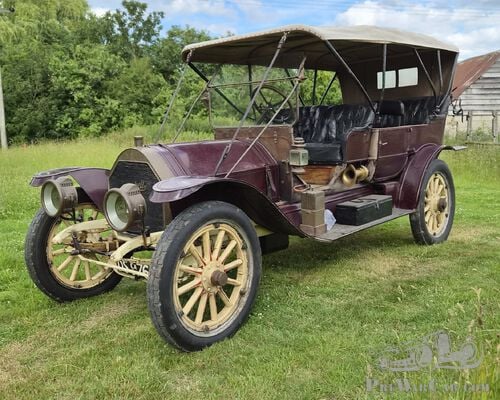
1910 Mitchell Model S - 50HP Six Cylinder
Based in Racine, Wisconsin and being the largest wagon manufacturer in the USA, Mitchell-Lewis produced their first motor car in 1903. Sales grew ..
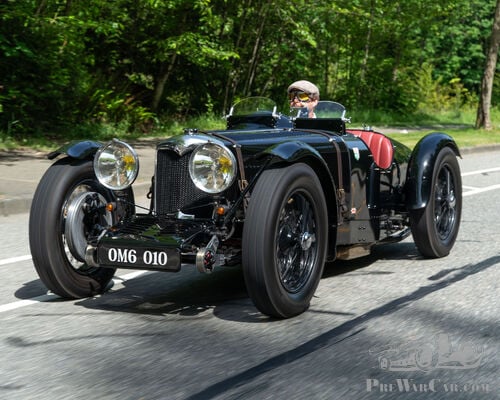
Riley 14/6 Special 1933
The ExperienceStep into the golden age of British motoring. This 1933 Riley 14/6 Special is a masterclass in pre-w..
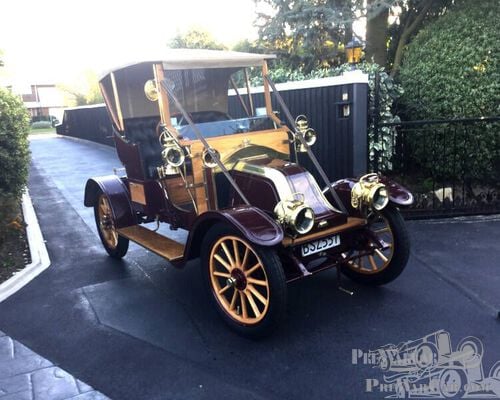
Renault /AX 1913 - named
Purchased fully renovated from New Zealand and imported to the UK. We have owned her for over10 years. Gigi is currently living in France where she..