The global magazine and marketplace for classic car enthusiasts, by enthusiasts.


Filter
Classic Mitchell, Ariès for sale - Mitchell, Ariès cars for sale
-

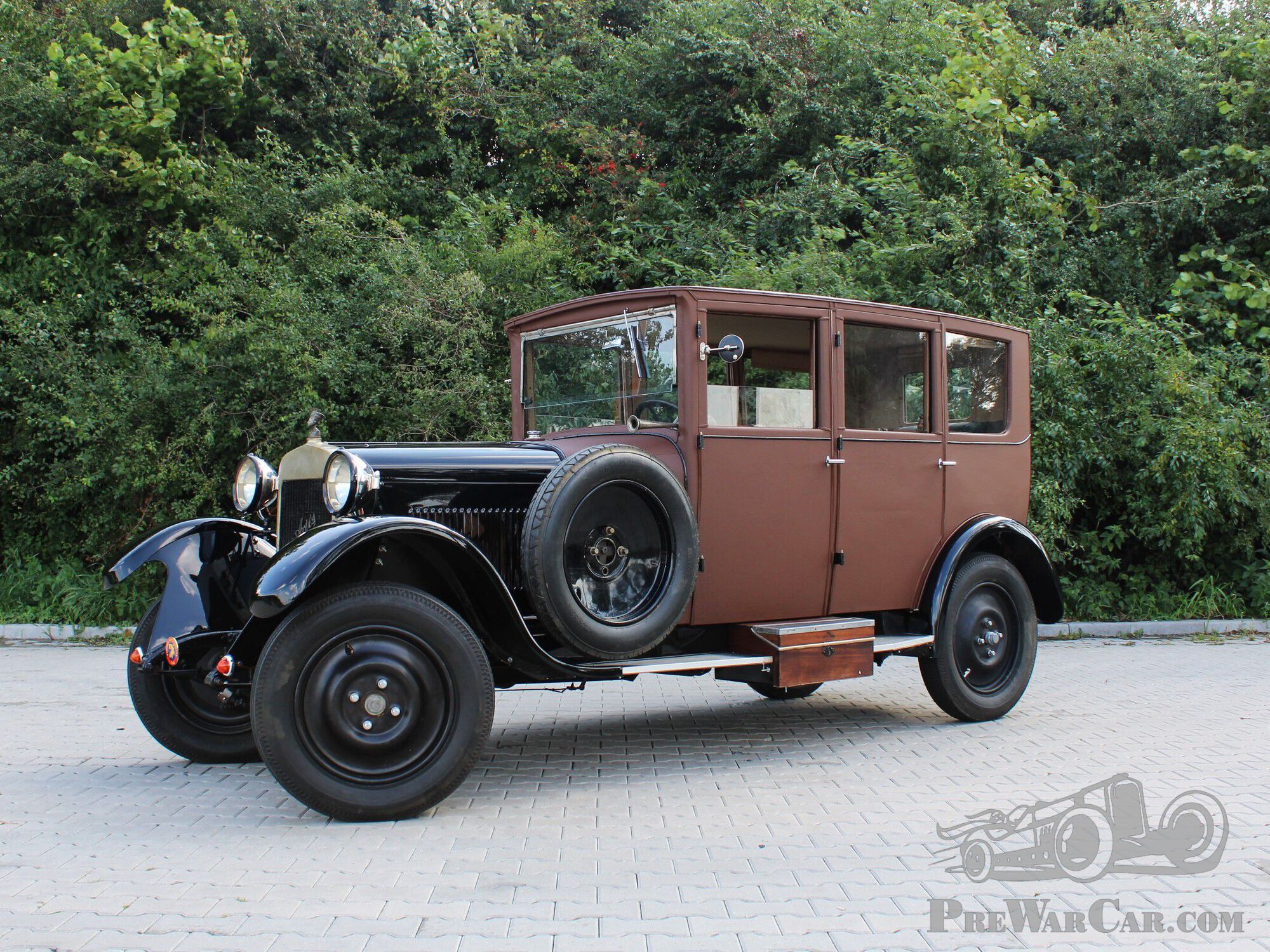
Aries CC4S Saloon 1925
Aries CC4S Saloon 1925 Company HistoryThe Ariès was built in Villeneuve de La Garenne and was the initiative of Baron Charles Petiet, who founded the company in 1902.In its early years, Ariès produced luxury cars where the chauffeur and the important/wealthy passengers sat separately. Later, in 1910, Ariès began producing c.. -
Mitchell Type R Raceabout 1911
A “racing” car from the early 1910s,Equipped with an impressive overhead valve engine that delivers 30 HP.The engine has a starter motor and starts easily.The gearbox has 3 gears and operates normally.This Mitchell rides well.The Mitchell was part of the famous Lindley Bothwell collection in Los Angeles (USA) f.. -
Mitchell Type R Raceabout 1911
A “racing” car from the early 1910s, Equipped with an impressive overhead valve engine that delivers 30 HP. The engine has a starter motor and starts easily. The gearbox has 3 gears and operates normally. This Mitchell rides well. The Mitchell was part of the famous Lindley Bo..


Mitchell
US, 1903 – 1923
(1) Mitchell Motor Car Co, Racine, Wisc., 1903 – 1910
(2) Mitchell-Lewis Motor Co, Racine, Wisc., 1910 – 1916
(3) Mitchell Motors Co Inc, Racine, Wisc., 1916 – 1923
Mitchell and Lweis had been wagon builders since 1834, and their first Mitchell car was a light two-seater powered by a 7hp air-cooled 2-cylinder engine, using single chain drive, and priced at $1.200. In 1905 a 9hp engine was used on the Mitchell car, and air or water cooling was available. 4-cylinder engines of 18 and 30hp appeared in the 1906 Mitchell car range, and in 1907 shaft drive was employed on all Mitchell car models. Until 1910, 20 and 35hp fours were made, having pair-cast cylinders in 1910 when they were joined by a 50hp 6-cylinder Mitchell car. In 1913 a new range of T-head engines was introduced in a Mitchell car designed by René Petard and known as the ‘American-built French car’. A 40hp four and 50 and 60hp sixes were made in this Mitchell car range, which had high-cowled torpedo-style bodies and electric starters. Piston strokes were very long at 7 inches. At this time it was said that the Mitchell car company made 96% of all components. In 1916 a short-lived Mitchell 48hp V8 was made, and the following year the Mitchell car company settled down to making a range of conventional sixes of no great distinction. In 1920 a sloping radiator gave rise to the epithet, ‘the drunken Mitchell’ and this was hastily replaced by a vertical radiator for 1921. However, the company had lost a lot of money on their 1920 Mitchell car models, and few of the redesigned Mitchell cars were sold, as they lacked any distinctive qualities.
The 6-cylinder engines of the Mitchell car had acapacity of 4.7-litres. After production ceased in 1923, the Mitchell car factory was bought by Nash.
Source: Georgano, encyclopedia of motorcar; GNG
The information is written with the greatest of care. However, if you have any suggested amendments please contact us at office@prewarcar.com
Ariès
France, 1903 – 1938
SA Ariès, Courbevoie, Seine
The first Ariès motor vehicle was the delivery truck of 1903, which was powered by an Aster 2-cylinder engine. The Paris Salon of that year saw the first Ariès car, which was also Aster-powered. It was designed by Baron Charles Petiet. These Ariès were unremarkable machines, except for the feature of De Dion-type drive, the rear wheels being driven by shafts above a ‘dead’ axle. Not all Ariès were so furnished; some Ariès models were available with the choice of live axle or chain drive. By 1905, 4-cylinder Ariès cars as well as a twin were listed. Engines were still by Aster. 1908 brought a six and a narrow V4 engine of 60mm x 100mm, so compact that it was mistaken for a single and in 1910 Ariès catalogued the smallest 6-cylinder car in the world. All models had De Dion-type drive. The production of commercial Ariès vehicles took precedence over passenger cars towards the end of the decade. One Ariès for sale of the 1913 range, following the fashion, used a Knight double sleeve-valve engine.
After making Hispano-Suiza engines during World War 1, Ariès went back to cars, but still in a small way. Among the longest-lived models were the Ariès 15CV for sale and its close relative the Ariès 12CV, touring cars using a 4-cylinder sv engine with a cubic capacity of around three litres, and a 4-speed gearbox. From 1922 there was an Ariès Sport model with overhead camshaft and front wheel brakes. The smallest Ariès, the 5CV Ariès Type CC2 was worthy of more attention. It had a single overhead-camshaft engine of 1.085cc and (from 1924) four forward speeds. The 1929 Ariès CC4S sports model, with two plugs per cylinder, was a fast car. The Ariès 15CV was still there, but by the end of 1930 both it and the Ariès CC4S had gone, making way for the 1½-litre Aries CB4 and its successor the slightly bigger Ariès CC4N, current until 1934. The 4-cylinder, 10CV Ariès Super of 1934-1938 boasted a 2-speed rear axle.
Source: Georgano, encyclopedia of motorcar; TRN
The information is written with the greatest of care. However, if you have any suggested amendments please contact us at office@prewarcar.com


Featured
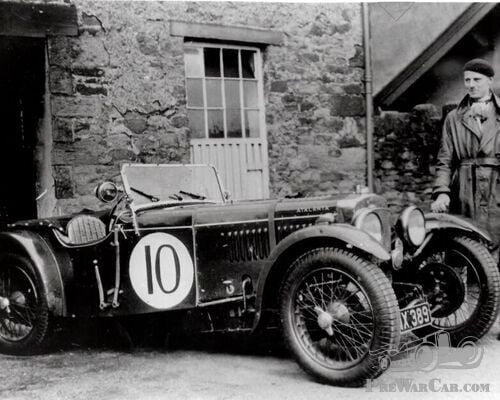
Fraser Nash TT Replica
AHX 389 ( chassis no. 2073, engine no. 10367).An important and correct short-chassis TT Replica with known history from new. Ex. H. P..
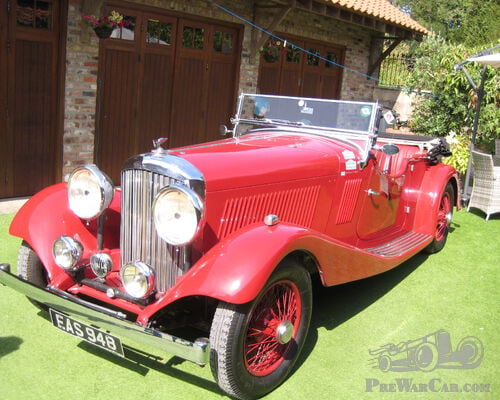
1935 Bentley 3.5 ltr. VDP 4str. Tourer
Chassis B 123 CW was first registered 14th March 1935, and in the late eighties underwent a " body-off" restoration and fitted with VANDEN PLAS
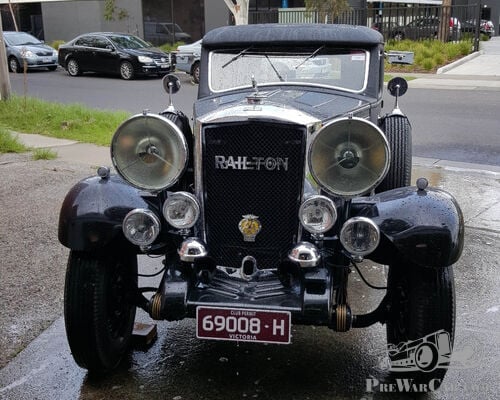
Railton straight 8 sports coupe for rallying REDUCED PRICE run with the bentleys at a fraction of the price
1934 Railton Sports CoupeBuilt for long distance rallyingRebuilt 2017built up at a cost of $160,000AUD, OFFERED FOR SALE AT A ..