The global magazine and marketplace for classic car enthusiasts, by enthusiasts.


Filter
Classic Mitchell, Hansa for sale - Mitchell, Hansa cars for sale
-

Mitchell Type R Raceabout 1911
A “racing” car from the early 1910s,Equipped with an impressive overhead valve engine that delivers 30 HP.The engine has a starter motor and starts easily.The gearbox has 3 gears and operates normally.This Mitchell rides well.The Mitchell was part of the famous Lindley Bothwell collection in Los Angeles (USA) f.. -
Mitchell Type R Raceabout 1911
A “racing” car from the early 1910s, Equipped with an impressive overhead valve engine that delivers 30 HP. The engine has a starter motor and starts easily. The gearbox has 3 gears and operates normally. This Mitchell rides well. The Mitchell was part of the famous Lindley Bo.. -
Two Hansa cars from 1937, offered together as a restoration project pair
OverviewTwo 1937 Hansa (Borgward) cars, stored indoors for decades, offered together. Both are largely complete: bodies (roof, doors, fenders, windscreen frame), chassis with front axle and radiator, wheels, interior (seats, steering wheel), plus engine and gearbox present on both cars. Condition is consistent with long-term dry storage —..


Mitchell
US, 1903 – 1923
(1) Mitchell Motor Car Co, Racine, Wisc., 1903 – 1910
(2) Mitchell-Lewis Motor Co, Racine, Wisc., 1910 – 1916
(3) Mitchell Motors Co Inc, Racine, Wisc., 1916 – 1923
Mitchell and Lweis had been wagon builders since 1834, and their first Mitchell car was a light two-seater powered by a 7hp air-cooled 2-cylinder engine, using single chain drive, and priced at $1.200. In 1905 a 9hp engine was used on the Mitchell car, and air or water cooling was available. 4-cylinder engines of 18 and 30hp appeared in the 1906 Mitchell car range, and in 1907 shaft drive was employed on all Mitchell car models. Until 1910, 20 and 35hp fours were made, having pair-cast cylinders in 1910 when they were joined by a 50hp 6-cylinder Mitchell car. In 1913 a new range of T-head engines was introduced in a Mitchell car designed by René Petard and known as the ‘American-built French car’. A 40hp four and 50 and 60hp sixes were made in this Mitchell car range, which had high-cowled torpedo-style bodies and electric starters. Piston strokes were very long at 7 inches. At this time it was said that the Mitchell car company made 96% of all components. In 1916 a short-lived Mitchell 48hp V8 was made, and the following year the Mitchell car company settled down to making a range of conventional sixes of no great distinction. In 1920 a sloping radiator gave rise to the epithet, ‘the drunken Mitchell’ and this was hastily replaced by a vertical radiator for 1921. However, the company had lost a lot of money on their 1920 Mitchell car models, and few of the redesigned Mitchell cars were sold, as they lacked any distinctive qualities.
The 6-cylinder engines of the Mitchell car had acapacity of 4.7-litres. After production ceased in 1923, the Mitchell car factory was bought by Nash.
Source: Georgano, encyclopedia of motorcar; GNG
The information is written with the greatest of care. However, if you have any suggested amendments please contact us at office@prewarcar.com
Hansa
D, 1906 – 1939
(1) Hansa Automobil – Gesellschaft mbH, Varel, 1906 – 1914, Bielefeld, 1913 – 1914
(2) Hansa-Lloyd-Werke AG, Varel, 1914 – 1929, Bremen, 1929 – 1931
(3) Hansa-Lloyd und Goliath-Werke Borgward & Tecklenborg, Bremen, 1931 – 1937
(4) Hansa Lloyd-Goliath-Werke Carl F.W. Borgward, Bremen, 1937 – 1939
The Hansa works were founded with the intention of producing small cars. The first was a Hansa 7/9ps car with a single-cylinder 720cc De Dion engine based on the French Alcyon. The Hansa appeared in 1906, and was sold under the name HAG. After a few more models with proprietary engines such as Fafnir the Hansa 6/14ps appeared in 1907 with a 4-cylinder engine of the Hansa company’s own design. A wide range of models was offered during the following years. Among them were the Hansa Types D (10/30PS, 2.612cc) and Hansa E (15/50PS, 3.815cc) of 1911 with overhead valves, a feature which was rare at that time. Hansa cars were produced in considerable numbers and Hansa cars were renowned for their high technical standard and their good workmanship.
In 1913 Hansa took over the Westfalia works at Bielefeld and Hansa cars were built there in 1913 and 1914. The Hansa Type F (2.515cc) took part successfully in the 1914 Austrian Alpine Trial. In 1914 Hansa merged with Lloyd, the firm adopting the name Hansa-Lloyd. The production of Hansa cars was carried on until World War 1. After the war Hansa concentrated on light and medium-sized cars which were marketed as Hansa. The Lloyd factory specialized in the heavier cars and commercials, which were sold as Hansa-Lloyds. Post-war models were the Hansa P 8/36PS with a 4-cylinder 2.063cc engine, also available in a short-wheelbase sports version, and two cars, a 13/60PS (6-cylinder, 3.262cc) and a 16/70PS (8-cylinder, 3.996cc) which were equipped with American Continental engines.
In 1929 Hansa was taken over by Borgward-Goliath. Production in the Varel works ceased and Hansa private cars were subsequently built only in Bremen. The Hansa Konsul, Hansa Senator, Hansa Matador and Hansa Imperator were family and prestige cars with 4-, 6-, and 8-cylinder engines with capacities up to 5.8-litres and outputs to 100bhp. The 3.2-litre Hansa Senator was an unusually large four for the period, and the Hansa Matador had a 2.6-litre Continental engine, and the combination of independent rear suspension and a backbone frame. In 1933 the small Hansa 400 was introduced. It had a 2-cylinder 2-stroke rear engine of 400cc and was later available with a 500cc engine. A new model, the Hansa 1100, with all independent suspension appeared in 1934. It was in production until 1939 and became very popular. Other models were the 6-cylinder ‘Hansa 1700’ (also available in a twin-carburettor sports version), the ‘Hansa 2000’ and the ‘Hansa 3500’ Privat.
After 1938 Hansa cars were marketed as Borgwards. In 1958 the Hansa name was revived for the flat-four Goliath; it had previously been used as a type name for some Borgwards.
Source: Georgano, encyclopedia of motorcar; HON
The information is written with the greatest of care. However, if you have any suggested amendments please contact us at office@prewarcar.com


Featured
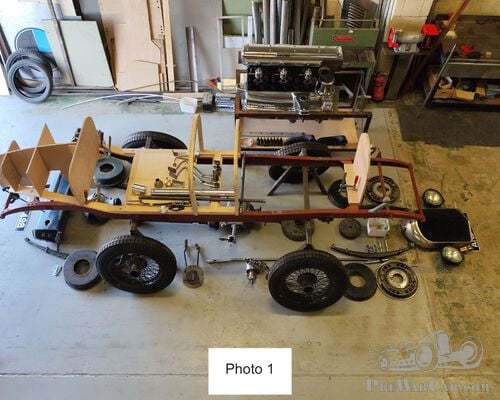
Bentley 3/6 litre sports racing car kit with V5C
I am a specialist vintage and classic car restorer with decades of hands-on experience. For some time I have been collecting parts for a special pr..
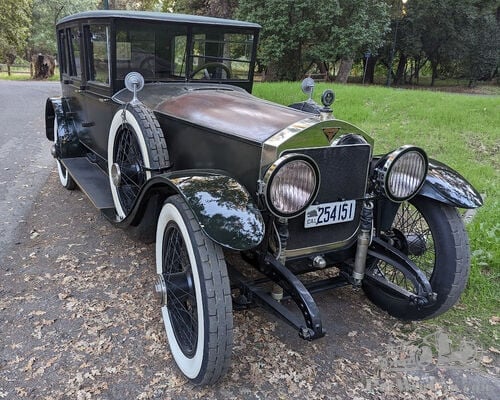
1916 Simplex, Crane model 5
1916 Simplex, Crane MODEL 5CUSTOM MADE HISTORIC PRESERVATION VEHICLE – READY TO TOUR!This Simplex recently completed th..
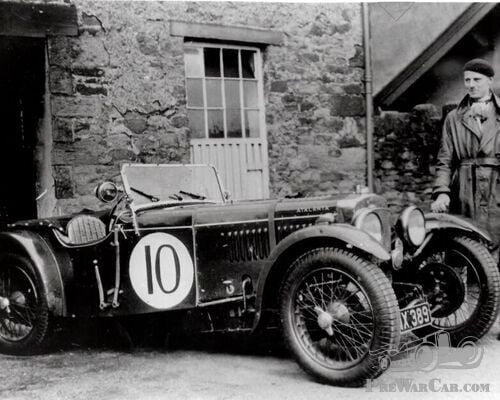
Fraser Nash TT Replica
AHX 389 ( chassis no. 2073, engine no. 10367).An important and correct short-chassis TT Replica with known history from new. Ex. H. P..