The global magazine and marketplace for classic car enthusiasts, by enthusiasts.


Filter
Classic Mitchell, Haynes-Apperson for sale - Mitchell, Haynes-Apperson cars for sale
-

Mitchell Type R Raceabout 1911
A “racing” car from the early 1910s,Equipped with an impressive overhead valve engine that delivers 30 HP.The engine has a starter motor and starts easily.The gearbox has 3 gears and operates normally.This Mitchell rides well.The Mitchell was part of the famous Lindley Bothwell collection in Los Angeles (USA) f.. -
1900 Haynes Apperson Twin Cylinder - VCC Dated
1900 Haynes Apperson Twin Cylinder PhaetonRegistration No. BS8275Engine No. 17VCC Dating Cert No. 2255 Elwood Haynes of Kokomo, Indiana, US, was one of the first Americans to build a motorcar. A brilliant metallurgist, Haynes invented Stellite stainless steel, by the age of 27 he had devised a process for produ.. -
Mitchell Type R Raceabout 1911
A “racing” car from the early 1910s, Equipped with an impressive overhead valve engine that delivers 30 HP. The engine has a starter motor and starts easily. The gearbox has 3 gears and operates normally. This Mitchell rides well. The Mitchell was part of the famous Lindley Bo..


Mitchell
US, 1903 – 1923
(1) Mitchell Motor Car Co, Racine, Wisc., 1903 – 1910
(2) Mitchell-Lewis Motor Co, Racine, Wisc., 1910 – 1916
(3) Mitchell Motors Co Inc, Racine, Wisc., 1916 – 1923
Mitchell and Lweis had been wagon builders since 1834, and their first Mitchell car was a light two-seater powered by a 7hp air-cooled 2-cylinder engine, using single chain drive, and priced at $1.200. In 1905 a 9hp engine was used on the Mitchell car, and air or water cooling was available. 4-cylinder engines of 18 and 30hp appeared in the 1906 Mitchell car range, and in 1907 shaft drive was employed on all Mitchell car models. Until 1910, 20 and 35hp fours were made, having pair-cast cylinders in 1910 when they were joined by a 50hp 6-cylinder Mitchell car. In 1913 a new range of T-head engines was introduced in a Mitchell car designed by René Petard and known as the ‘American-built French car’. A 40hp four and 50 and 60hp sixes were made in this Mitchell car range, which had high-cowled torpedo-style bodies and electric starters. Piston strokes were very long at 7 inches. At this time it was said that the Mitchell car company made 96% of all components. In 1916 a short-lived Mitchell 48hp V8 was made, and the following year the Mitchell car company settled down to making a range of conventional sixes of no great distinction. In 1920 a sloping radiator gave rise to the epithet, ‘the drunken Mitchell’ and this was hastily replaced by a vertical radiator for 1921. However, the company had lost a lot of money on their 1920 Mitchell car models, and few of the redesigned Mitchell cars were sold, as they lacked any distinctive qualities.
The 6-cylinder engines of the Mitchell car had acapacity of 4.7-litres. After production ceased in 1923, the Mitchell car factory was bought by Nash.
Source: Georgano, encyclopedia of motorcar; GNG
The information is written with the greatest of care. However, if you have any suggested amendments please contact us at office@prewarcar.com
Haynes Apperson
US, 1898 – 1904
The Haynes Apperson Co, Kokomo, Ind.
Although Elwood Haynes had built his first car in 1894, none Haynes was made for sale until he joined forces with the Apperson brothers. By the end of 1898 Haynes-Apperson cars were being made in two-, four- and six-seater models, all powered by a rear-mounted horizontally-opposed 2-cylinder engine of 3.120cc. The Haynes Apperson car had three forward speeds, spur gear transmission, and tiller steering. For three years this design of the Haynes Apperson car was made without great change, although the straight dash gave way to a sloping version. In November 1901 the Appersons left the Haynes Apperson car firm to make cars under their own name, but the Haynes-Apperson name continued on the cars for nearly three years longer. By 1903 the left-hand tiller steering had been replaced by a wheel, but this was still mounted on the left side, an unusual feature at the time on American cars. On 1904 Haynes Apperson car models the engine was moved to the front under a conventional bonnet, although it was still a horizontally-opposed twin. Prices ranged from $1.450 for a two-seater runabout to $2.550 for a five-seater tonneau. From June 1904 the Haynes Apperson cars began to be referred to as Haynes, and the 1905 cars with vertical 4-cylinder engines were always known under this name. The Haynes Apperson car company name was not changed until September 1905.
Source: Georgano, encyclopedia of motorcar; GNG
The information is written with the greatest of care. However, if you have any suggested amendments please contact us at office@prewarcar.com


Featured
1929 Talbot K74 Limousine – Very comprehensive restoration project
For sale – 1929 Talbot K74 Limousine – Very comprehensive restoration projectAsking price: €19,950 A very rare 1929 Talbot K74..
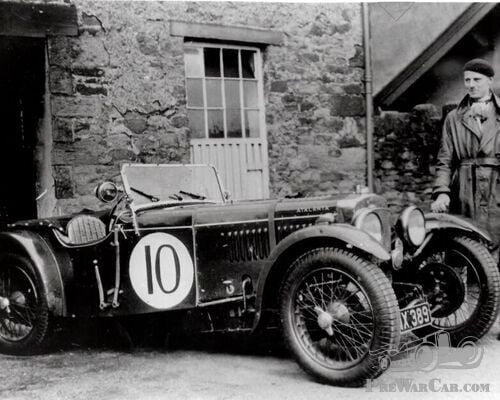
Fraser Nash TT Replica
AHX 389 ( chassis no. 2073, engine no. 10367).An important and correct short-chassis TT Replica with known history from new. Ex. H. P..
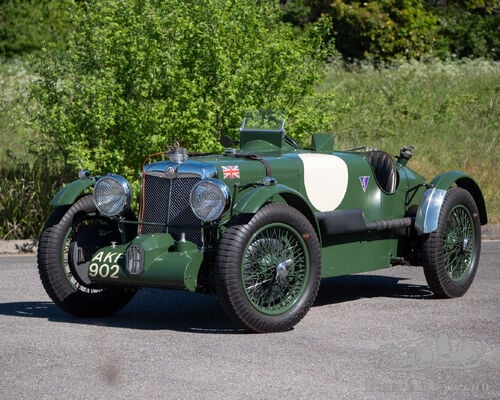
K3 Replica on KN Chassis
"The K3 Magnette must rank in the history books as the most famous and successful of all the record breaking MGs. With only 33 examples produced durin..