The global magazine and marketplace for classic car enthusiasts, by enthusiasts.


Filter
Classic Mitchell, Mercer for sale - Mitchell, Mercer cars for sale
-

Mitchell Type R Raceabout 1911
A “racing” car from the early 1910s,Equipped with an impressive overhead valve engine that delivers 30 HP.The engine has a starter motor and starts easily.The gearbox has 3 gears and operates normally.This Mitchell rides well.The Mitchell was part of the famous Lindley Bothwell collection in Los Angeles (USA) f.. -
Mitchell Type R Raceabout 1911
A “racing” car from the early 1910s, Equipped with an impressive overhead valve engine that delivers 30 HP. The engine has a starter motor and starts easily. The gearbox has 3 gears and operates normally. This Mitchell rides well. The Mitchell was part of the famous Lindley Bo.. -
1913 Mercer Model 35-J Raceabout | RM Sotheby's | The Monterey Auction
To Be OFFERED AT AUCTION at RM Sothebys' The Monterey Auction event, 13 - 15 August 2026. $2,750,000 - $3,500,000 USD America’s greatest and most legendary early sports carA genuine raceabout with exceptionally well-known historyFormerly owned by Paul Cadwell, Webster Knight II, and Burt UpjohnDesirable late-pr..


Mitchell
US, 1903 – 1923
(1) Mitchell Motor Car Co, Racine, Wisc., 1903 – 1910
(2) Mitchell-Lewis Motor Co, Racine, Wisc., 1910 – 1916
(3) Mitchell Motors Co Inc, Racine, Wisc., 1916 – 1923
Mitchell and Lweis had been wagon builders since 1834, and their first Mitchell car was a light two-seater powered by a 7hp air-cooled 2-cylinder engine, using single chain drive, and priced at $1.200. In 1905 a 9hp engine was used on the Mitchell car, and air or water cooling was available. 4-cylinder engines of 18 and 30hp appeared in the 1906 Mitchell car range, and in 1907 shaft drive was employed on all Mitchell car models. Until 1910, 20 and 35hp fours were made, having pair-cast cylinders in 1910 when they were joined by a 50hp 6-cylinder Mitchell car. In 1913 a new range of T-head engines was introduced in a Mitchell car designed by René Petard and known as the ‘American-built French car’. A 40hp four and 50 and 60hp sixes were made in this Mitchell car range, which had high-cowled torpedo-style bodies and electric starters. Piston strokes were very long at 7 inches. At this time it was said that the Mitchell car company made 96% of all components. In 1916 a short-lived Mitchell 48hp V8 was made, and the following year the Mitchell car company settled down to making a range of conventional sixes of no great distinction. In 1920 a sloping radiator gave rise to the epithet, ‘the drunken Mitchell’ and this was hastily replaced by a vertical radiator for 1921. However, the company had lost a lot of money on their 1920 Mitchell car models, and few of the redesigned Mitchell cars were sold, as they lacked any distinctive qualities.
The 6-cylinder engines of the Mitchell car had acapacity of 4.7-litres. After production ceased in 1923, the Mitchell car factory was bought by Nash.
Source: Georgano, encyclopedia of motorcar; GNG
The information is written with the greatest of care. However, if you have any suggested amendments please contact us at office@prewarcar.com
Mercer
US, 1910 – 1925; 1931
(1) Mercer Autocar Co, Trenton, N.J., 1910
(2) Mercer Automobile Co, Trenton, N.J., 1910 – 1925
(3) Elcar Motor Car Co, Elkhart, Ind., 1931
The Mercer car was named after Mercer County, New Jersey, where the Mercer car was made. The most famous Mercer car of all was the Mercer Type 35 Runabout of 1911, designed by Finlay R. Porter. The specification of this Mercer car was ordinary enough, embracing at first a 5-litre, 4-cylinder, Continental-built T-head engine that produced a little over 10bhp per litre at a leisurely 1.700rpm. There were 3 forward speeds. The classic ‘body work’ consisted of a bolster tank, two bucket seats, and a monocle windscreen. However, in common with other speedsters, the Mercer car weighed very little and could pull a high axle ratio, which helped the Mercer car to attain a guaranteed 70mph. In 1912, by contrast, a few Mercer cars were made with the Owen Magnetic’s Entz transmission. A more efficient, L-head engine giving up to 89bhp at 3.000rpm according to tune was substituted in 1915. Also, the Mercer car had a 4-speed gearbox. This 22 Series was designed by E.H. Delling. However, some of the old Raceabout’s character was lost, in that the body of the new version had sides and a bench-type front seat, instead of the two stark bucket seats of the first type. Indeed, full touring Mercer cars were offered as well. The Mercer Series 4 and 5, beginning in 1919, had yet another designer in A.C. Schultz, and even had an electric starter. Nevertheless, these Mercer cars were still European in concept in that the engines had a fixed head and a magneto, and drove through a plate clutch and, however much they had compromised with popular taste, the Mercer car could still attain 75mph. A six with an ohv engine made by Rochester was introduced at the same time, and sixes alone were made from 1923. The old line of Mercer cars finally died two years later. However magnificent they may have been, the Mercer car bore too little relation to what the public wanted to survive. Production never exceeded 500 Mercer cars a year. An attempt was made by the Elcar Motor Co and the engine by Continental. The latter was a straight-8 providing 140bhp and 100mph.
Source: Georgano, encyclopedia of motorcar; TRN
The information is written with the greatest of care. However, if you have any suggested amendments please contact us at office@prewarcar.com


Featured
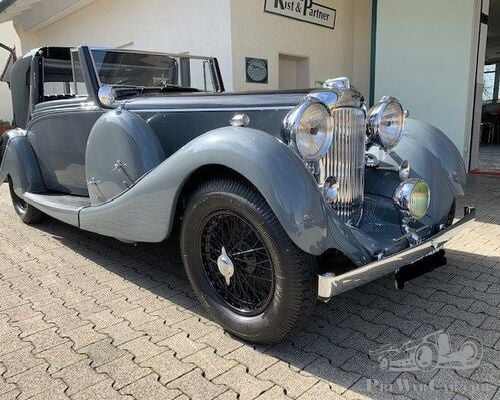
Lagonda LG 45 Coupe de Ville Sedanca by Mayfair
The successor to the M45, the LG45 was built around the same highly capable, competition-proven 4.5-litre Meadows inline-six engine, but featured r..
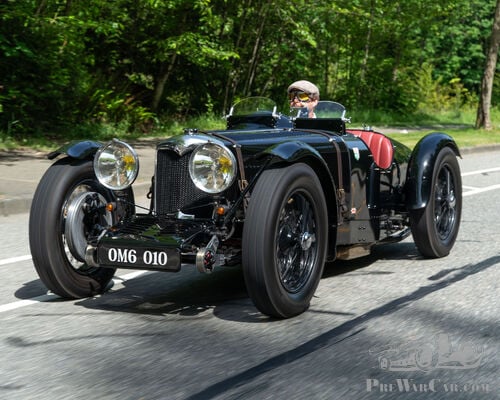
Riley 14/6 Special 1933
The ExperienceStep into the golden age of British motoring. This 1933 Riley 14/6 Special is a masterclass in pre-w..
1929 Talbot K74 Limousine – Very comprehensive restoration project
For sale – 1929 Talbot K74 Limousine – Very comprehensive restoration projectAsking price: €19,950 A very rare 1929 Talbot K74..