The global magazine and marketplace for classic car enthusiasts, by enthusiasts.


Filter
Classic Mitchell, Pilain for sale - Mitchell, Pilain cars for sale
-

Société des Automobiles Pilain
The 1911 Pilain is the Type 4.0, equipped with a four-cylinder engine and a single Zenith carburetor. This car has undergone a comprehensive restoration over the past few years. Since the original body was too deteriorated to restore, it was decided to install an alternative body. The current elegant body is sourced from a Bianchi, which perfect.. -
Mitchell Type R Raceabout 1911
A “racing” car from the early 1910s,Equipped with an impressive overhead valve engine that delivers 30 HP.The engine has a starter motor and starts easily.The gearbox has 3 gears and operates normally.This Mitchell rides well.The Mitchell was part of the famous Lindley Bothwell collection in Los Angeles (USA) f.. -
Mitchell Type R Raceabout 1911
A “racing” car from the early 1910s, Equipped with an impressive overhead valve engine that delivers 30 HP. The engine has a starter motor and starts easily. The gearbox has 3 gears and operates normally. This Mitchell rides well. The Mitchell was part of the famous Lindley Bo..


Mitchell
US, 1903 – 1923
(1) Mitchell Motor Car Co, Racine, Wisc., 1903 – 1910
(2) Mitchell-Lewis Motor Co, Racine, Wisc., 1910 – 1916
(3) Mitchell Motors Co Inc, Racine, Wisc., 1916 – 1923
Mitchell and Lweis had been wagon builders since 1834, and their first Mitchell car was a light two-seater powered by a 7hp air-cooled 2-cylinder engine, using single chain drive, and priced at $1.200. In 1905 a 9hp engine was used on the Mitchell car, and air or water cooling was available. 4-cylinder engines of 18 and 30hp appeared in the 1906 Mitchell car range, and in 1907 shaft drive was employed on all Mitchell car models. Until 1910, 20 and 35hp fours were made, having pair-cast cylinders in 1910 when they were joined by a 50hp 6-cylinder Mitchell car. In 1913 a new range of T-head engines was introduced in a Mitchell car designed by René Petard and known as the ‘American-built French car’. A 40hp four and 50 and 60hp sixes were made in this Mitchell car range, which had high-cowled torpedo-style bodies and electric starters. Piston strokes were very long at 7 inches. At this time it was said that the Mitchell car company made 96% of all components. In 1916 a short-lived Mitchell 48hp V8 was made, and the following year the Mitchell car company settled down to making a range of conventional sixes of no great distinction. In 1920 a sloping radiator gave rise to the epithet, ‘the drunken Mitchell’ and this was hastily replaced by a vertical radiator for 1921. However, the company had lost a lot of money on their 1920 Mitchell car models, and few of the redesigned Mitchell cars were sold, as they lacked any distinctive qualities.
The 6-cylinder engines of the Mitchell car had acapacity of 4.7-litres. After production ceased in 1923, the Mitchell car factory was bought by Nash.
Source: Georgano, encyclopedia of motorcar; GNG
The information is written with the greatest of care. However, if you have any suggested amendments please contact us at office@prewarcar.com
Pilain
France, 1902 – 1920
SA des Automobiles Pilain, Lyons
François Pilain made his first Pilain cars, with 2- and 4-cylinder engines, in 1902, but had dropped the twin in his Pilain car by 1904. The drive of the Pilain car was independent of the rear axle, but two shafts to internally-toothed rings, with a dead axle beneath. The principle on the Pilain car was the same as that used by De Dion, the aim being to allow the axle to move in relation to the frame without recourse to chain drive. The engines of the Pilain car had side valves in a T-head, and there were 4 forward speeds. Round radiators and low-tension magneto ignition were featured, and 1906 Pilain cars came in 4.1-litre and 8.6-litre sizes, both with 4-cylinder engines. High-tension ignition and pressure lubrication followed on Pilain cars in 1908. There was a 1.9-litre Pilain car with monobloc engine in 1909, and a small 2.4-litre six in 1912. A wide 1913 range Pilain cars covered everything from a 1-litre lightweight up to 6.3-litres, including an ultra-long-stroke 4.2-litre (85x185mm) four. The Pilain car was an expensive if excellent machine that did not long outlive World War 1 in its original form. The Pilain car was then developed into the extraordinary S.L.I.M.
France, 1930 – 1935
E. Pilain, Levallois-Perret, Seine
Emile Pilain, who had been responsible for the original Rolland-Pillain, produced a light Pilain car on his own account in 1930 for the mass market. This Pilain car was a 919cc, watercooled sv four, with a 3-speed gearbox and Perrot brakes. It was rated at 5CV, and in 1932 there was also a 1.2-litre version Pilain car with free wheel.
Source: Georgano, encyclopedia of motorcar; TRN
The information is written with the greatest of care. However, if you have any suggested amendments please contact us at office@prewarcar.com


Featured
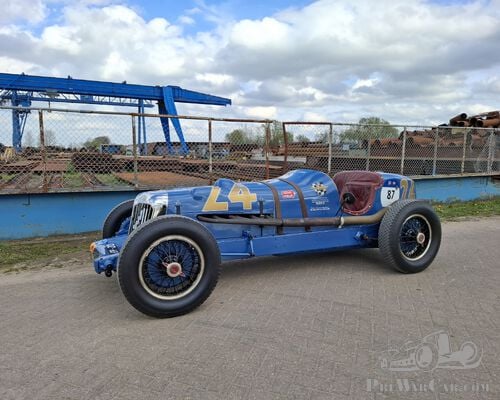
1932 - Graham " Lucenti " Indianapolis
Original participant of the 1932, 1934 and 1935 Indy 500. Best result: finishing 10th overall in the 1934 Indy 500 with driver “Herb” Ardinger...
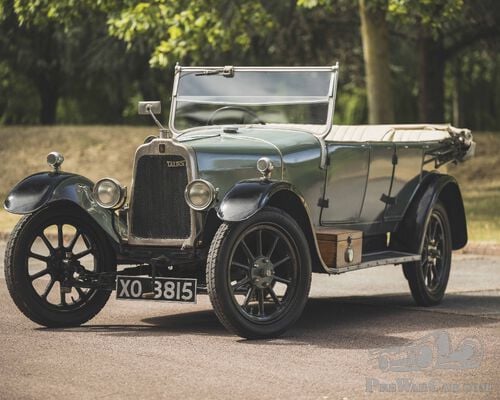
Rare RHD, low miles & great history file
This is an ONLINE-ONLY AUCTION at THE MARKET. The price shown here is the lower estimate. To see all the details, description, 250+ high-res photog..
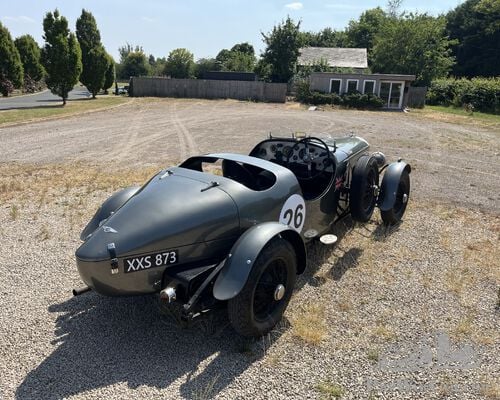
Derby Bentley Special 4-1/4
Sadly i am having to sell on my Bentley special ( Icarus) A great opportunity to be able to buy a Derby special to finish with your own touch..