The global magazine and marketplace for classic car enthusiasts, by enthusiasts.


Filter
Classic Mitchell, Premier for sale - Mitchell, Premier cars for sale
-

Mitchell Type R Raceabout 1911
A “racing” car from the early 1910s,Equipped with an impressive overhead valve engine that delivers 30 HP.The engine has a starter motor and starts easily.The gearbox has 3 gears and operates normally.This Mitchell rides well.The Mitchell was part of the famous Lindley Bothwell collection in Los Angeles (USA) f.. -
1907 Premier Model 24
Right out of our Titanic Museum display, representing the cars from that era. We chose this car because of it's quality and beauty, it is the type of car that is a pleasure to look at. This 1907 Premier Model 24 Runabout is a prime example from this rarely seen marque that continues to benefit from an older, high-quality concours-level restorati.. -
Mitchell Type R Raceabout 1911
A “racing” car from the early 1910s, Equipped with an impressive overhead valve engine that delivers 30 HP. The engine has a starter motor and starts easily. The gearbox has 3 gears and operates normally. This Mitchell rides well. The Mitchell was part of the famous Lindley Bo..


Mitchell
US, 1903 – 1923
(1) Mitchell Motor Car Co, Racine, Wisc., 1903 – 1910
(2) Mitchell-Lewis Motor Co, Racine, Wisc., 1910 – 1916
(3) Mitchell Motors Co Inc, Racine, Wisc., 1916 – 1923
Mitchell and Lweis had been wagon builders since 1834, and their first Mitchell car was a light two-seater powered by a 7hp air-cooled 2-cylinder engine, using single chain drive, and priced at $1.200. In 1905 a 9hp engine was used on the Mitchell car, and air or water cooling was available. 4-cylinder engines of 18 and 30hp appeared in the 1906 Mitchell car range, and in 1907 shaft drive was employed on all Mitchell car models. Until 1910, 20 and 35hp fours were made, having pair-cast cylinders in 1910 when they were joined by a 50hp 6-cylinder Mitchell car. In 1913 a new range of T-head engines was introduced in a Mitchell car designed by René Petard and known as the ‘American-built French car’. A 40hp four and 50 and 60hp sixes were made in this Mitchell car range, which had high-cowled torpedo-style bodies and electric starters. Piston strokes were very long at 7 inches. At this time it was said that the Mitchell car company made 96% of all components. In 1916 a short-lived Mitchell 48hp V8 was made, and the following year the Mitchell car company settled down to making a range of conventional sixes of no great distinction. In 1920 a sloping radiator gave rise to the epithet, ‘the drunken Mitchell’ and this was hastily replaced by a vertical radiator for 1921. However, the company had lost a lot of money on their 1920 Mitchell car models, and few of the redesigned Mitchell cars were sold, as they lacked any distinctive qualities.
The 6-cylinder engines of the Mitchell car had acapacity of 4.7-litres. After production ceased in 1923, the Mitchell car factory was bought by Nash.
Source: Georgano, encyclopedia of motorcar; GNG
The information is written with the greatest of care. However, if you have any suggested amendments please contact us at office@prewarcar.com
Premier
US, 1903 – 1925
(1) Premier Motor Mfg Co, Indianapolis, Ind.
(2) Premier Motor Corp, Indianapolis, Ind.
The Premier car started life as a conventional machine made on modern lines, with a pressed-steel frame, mechanically-operated inlet valves, and shaft drive. A four-cylinder air-cooled Premier car was made in 1905. The designer of the Premier car was G.A. Weidely, who made his name with proprietary engines. A line of conventional water-cooled big fours and six-cylinder Premier cars followed, starting with a 24/28hp Premier car in 1907. From 1913, sixes alone were built, the ‘Premier 48’ at $3.250 having a capacity of over 8 litres. The special racing Premier cars of 1916 had a twin ohc, 4-cylinder, 16-valve engine reminiscent of the Peugeot. The touring Premier car of 1919 – 1920 was notable mainly for its use of the Cutler-Hammer Magnetic Gear Shift, an electric transmission system controlled by a lever mounted on the steering wheel. The ohv 4.8-litre engine of the Premier car was an unusually advanced six, with aluminium block, crankcase and pistons, and iron liners.
GB, 1906 – 1907; 1912 – 1913
Premier Motor Co Ltd, Birmingham
The Premier car company were concessionaires for the Italian Marchand car, and the 1906 4-cylinder Premier car was, in fact, a Marchand. Towards the end of 1906 Premier cars launced a short-lived two-seater of their own design powered by a 10/12hp Aster engine, but no further Premier cars appeared until the cyclecar boom of 1912. This brought two distinct designs of Premier cars: the PMC Motorette 3-wheeler with a rear-mounted 6hp single-cylinder engine driving the rear wheel by chains; and the more conventional Premier car, a 4-wheeler using an 8hp 2-cylinder engine, and chain drive.
D, 1913 – 1914
Justus Christian Braun Premier – Werke AG, Nuremberg
After producing the Kaiser cars this firm offered a new model in 1913 under the name of Premier. This Premier car was a two-seater sports car with a 1.030cc 4/12PS engine. This Premier car was also built in the company’s Austrian factory at Eger and was marketed as the Omega.
Source: Georgano, encyclopedia of motorcar; TRN, GNG, HON
The information is written with the greatest of care. However, if you have any suggested amendments please contact us at office@prewarcar.com


Featured
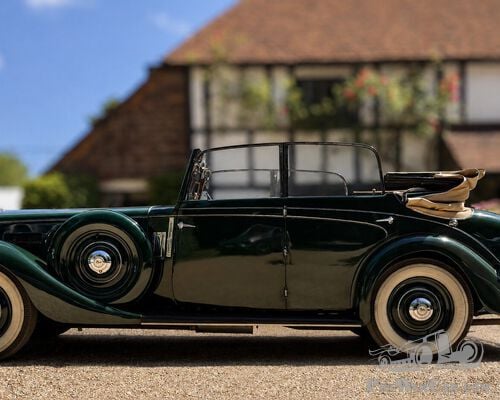
1936 Armstrong Siddeley 20/25 Cabriolet with Tickford coachwork by Salmons & Sons, Newport Pagnell
This exceptionally rare Armstrong Siddeley 20/25 Cabriolet with original Tickford coachwork by Salmons & Sons of Newport Pagnell was first reg..
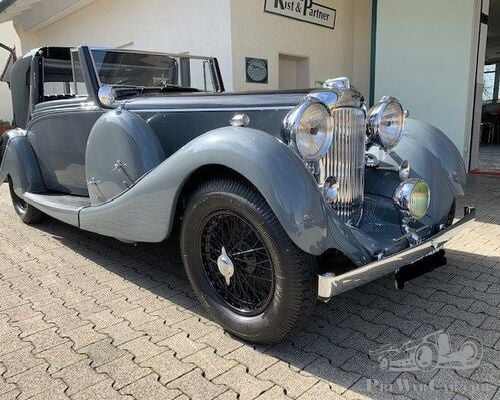
Lagonda LG 45 Coupe de Ville Sedanca by Mayfair
The successor to the M45, the LG45 was built around the same highly capable, competition-proven 4.5-litre Meadows inline-six engine, but featured r..
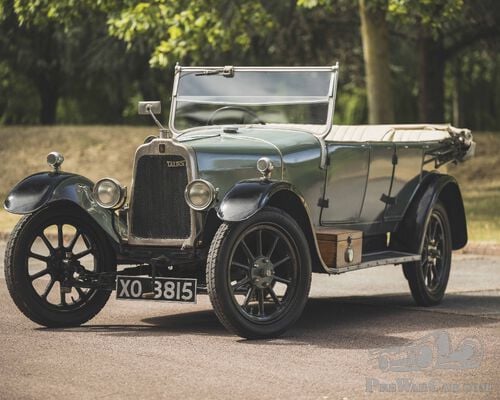
Rare RHD, low miles & great history file
This is an ONLINE-ONLY AUCTION at THE MARKET. The price shown here is the lower estimate. To see all the details, description, 250+ high-res photog..