The global magazine and marketplace for classic car enthusiasts, by enthusiasts.


Filter
Classic Mitchell, Regal for sale - Mitchell, Regal cars for sale
-

Mitchell Type R Raceabout 1911
A “racing” car from the early 1910s,Equipped with an impressive overhead valve engine that delivers 30 HP.The engine has a starter motor and starts easily.The gearbox has 3 gears and operates normally.This Mitchell rides well.The Mitchell was part of the famous Lindley Bothwell collection in Los Angeles (USA) f.. -
Regal Underslung Model T 1913
The Regal Motor Company was founded in 1908 in Detroit, USA, and became known for its conventional chassis concept, the “Underslung,” an extra-low concept with the axles mounted above the chassis. This resulted in a lower top dead center and greater stability; advertisements also stated that the car could not tip over. -
Mitchell Type R Raceabout 1911
A “racing” car from the early 1910s, Equipped with an impressive overhead valve engine that delivers 30 HP. The engine has a starter motor and starts easily. The gearbox has 3 gears and operates normally. This Mitchell rides well. The Mitchell was part of the famous Lindley Bo..


Mitchell
US, 1903 – 1923
(1) Mitchell Motor Car Co, Racine, Wisc., 1903 – 1910
(2) Mitchell-Lewis Motor Co, Racine, Wisc., 1910 – 1916
(3) Mitchell Motors Co Inc, Racine, Wisc., 1916 – 1923
Mitchell and Lweis had been wagon builders since 1834, and their first Mitchell car was a light two-seater powered by a 7hp air-cooled 2-cylinder engine, using single chain drive, and priced at $1.200. In 1905 a 9hp engine was used on the Mitchell car, and air or water cooling was available. 4-cylinder engines of 18 and 30hp appeared in the 1906 Mitchell car range, and in 1907 shaft drive was employed on all Mitchell car models. Until 1910, 20 and 35hp fours were made, having pair-cast cylinders in 1910 when they were joined by a 50hp 6-cylinder Mitchell car. In 1913 a new range of T-head engines was introduced in a Mitchell car designed by René Petard and known as the ‘American-built French car’. A 40hp four and 50 and 60hp sixes were made in this Mitchell car range, which had high-cowled torpedo-style bodies and electric starters. Piston strokes were very long at 7 inches. At this time it was said that the Mitchell car company made 96% of all components. In 1916 a short-lived Mitchell 48hp V8 was made, and the following year the Mitchell car company settled down to making a range of conventional sixes of no great distinction. In 1920 a sloping radiator gave rise to the epithet, ‘the drunken Mitchell’ and this was hastily replaced by a vertical radiator for 1921. However, the company had lost a lot of money on their 1920 Mitchell car models, and few of the redesigned Mitchell cars were sold, as they lacked any distinctive qualities.
The 6-cylinder engines of the Mitchell car had acapacity of 4.7-litres. After production ceased in 1923, the Mitchell car factory was bought by Nash.
Source: Georgano, encyclopedia of motorcar; GNG
The information is written with the greatest of care. However, if you have any suggested amendments please contact us at office@prewarcar.com
Regal
France, 1903
O.C. Selbach, Paris
Regal cars was one of the names under which Lacoste et Battmann cars were sold. Originally the Regal car was a light two-seater with a 6hp De Dion engine, later Régal cars were powered by 2- and 4-cylinder engines by Aster and Mutel.
US, 1907 – 1920
Regal Motor Car Co, Detroit, Mich.
In 1907 Regal made 50 of their 20hp 4-cylinder Regal cars, but the following year the Regal car company took them all back, and gave the owners a new 1908 model Regal cars free. Apparently this generosity by the Regal car company was not repeated in following years, and they settled down to making a range of conventional 4-cylinder Regal cars. The best-known Regal car was the 3.2-litre 18/20hp ‘underslung’ model, which, like the American Underslung, had frame members which passed underneath the axles. The Underslung Regal car was made in open two-seater, and closed coupé form. Other Regal car models were the 20/30hp and 40hp which had normal chassis design. Regal cars were imported into England by Seabrook of Great Eastern Street, and from 1911 to 1915 the Regal cars sold in England were known as RMCs or Seabrook-RMCs. In 1915 a 10/15hp four of 2.1-litres with unit construction of engine and gearbox was introduced on a Regal car, together with a short-lived V8. At the 1919 Olympia Show Seabrooks showed a large RMC tourer powered by a 3.8-litre 6-cylinder engine, but shortly afterwards American production of Regal cars ceased, and Seabrooks began to make their own light cars.
CDN, 1910
This Regal car was a 30hp car made as a touring car or runabout at Walkerville, Ont. The Regal car had no connection with the better known Regal cars.
CDN, 1914 – 1917
Canadian Regal Motor Car Co, Berlin, Ont.
The Regal car was a light-weight touring car which resembled the Detroit model Regal car bearing the same name. The Regal car was available with a Lycoming 4-cylinder engine at $875 or a V8 at $1.350, it had a radiator filler concealed under the bonnet. The Regal car company was under the direction of Henry Nyberg, who had built the US Nyberg car before going to Canada. In 1917 the Regal car company moved to a new plant and started producing Dominion trucks. About 200 Canadian Regal cars were built.
Source: Georgano, encyclopedia of motorcar; GNG, GB
The information is written with the greatest of care. However, if you have any suggested amendments please contact us at office@prewarcar.com


Featured
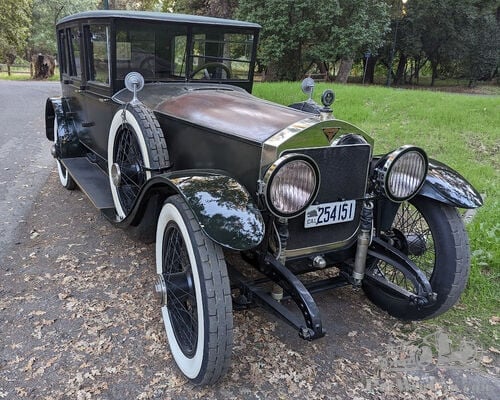
1916 Simplex, Crane model 5
1916 Simplex, Crane MODEL 5CUSTOM MADE HISTORIC PRESERVATION VEHICLE – READY TO TOUR!This Simplex recently completed th..
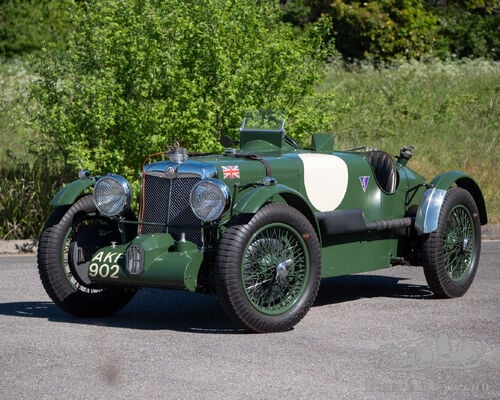
K3 Replica on KN Chassis
"The K3 Magnette must rank in the history books as the most famous and successful of all the record breaking MGs. With only 33 examples produced durin..
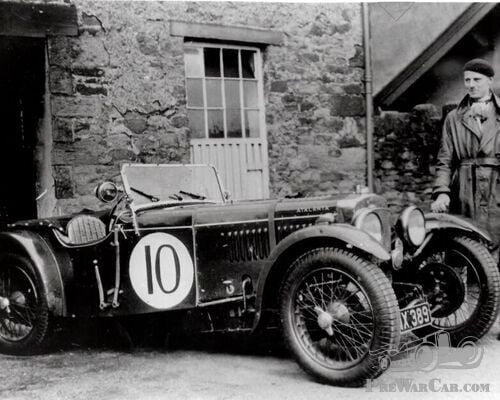
Fraser Nash TT Replica
AHX 389 ( chassis no. 2073, engine no. 10367).An important and correct short-chassis TT Replica with known history from new. Ex. H. P..