The global magazine and marketplace for classic car enthusiasts, by enthusiasts.


Filter
Classic Moon for sale - Moon cars for sale
-

1935 Rolls Royce Phantom 2 Brewster dual cowl tourer
1935 Rolls Royce Phantom 2 Brewster dual cowl tourer Chassis Number: 111TA Regitration Number: BXR2 Off test in March of 1935. This Phantom originally wore a sports Saloon body by Hooper. After being shipped to the USA the current Brewster dual cowl body was installed upon the car which it has now worn f.. -
1939 Derby Bentley Overdrive MX series Drophead Coupe by Vanden Plas.
1939 Derby Bentley Overdrive MX series Drop Head Coupe by Vanden Plas. Chassis number: B105MXRegistration number: WXW40 The best of the best: This ultra desirable Overdrive Derby Bentley was in the long term ownership of Peter Blond, a well known Sothebys director who headed the auction houses car department. D.. -
1937 Bentley ‘Turner Supercharged Special’
Bentley ‘Turner Supercharged Special’, year 1937. Chassis (VIN) number B16KT, engine number A8BJ, original UK registration number DYV 289. Colours: ‘two-tone’ green body and with black wire wheels combined with a ‘two tone’ leather interior with red/green seats and red carpet. The car comes with a dark green soft to.. -
Bugatti type 52 Crosthwaite and Gardener
Bugatti Type 52 tool room copyThis is a Tool Room Copy of the junior electric cars modelled on Type 35s created for Bugattis clients I from 1927-36. There was a short and long chassis versions, the long chassis was 10 cm longer.Renown engineers Crosthwaite and Gardener famous for their Bugatti and Auto Union built this exac.. -
Amazing Delahaye 135 from 1936, 3 x Mille Miglia Participant
Delahaye 135 from 1936The pre-war Delahaye’s were highly successful in competition at many events including Le Mans and Monte Carlo rallies. The 3.5-litre Delahaye 135 offered here was built in 1936 on the short (2,700mm) chassis (its dimensions correspond to the original). This lovely example with chassis number '47212' was comple.. -
1920 Rolls-Royce Silver Ghost Brougham de Ville
Sensational Kellner style Brougham de Ville coachwork.Same ownership for over 30 years and subject to a meticulous restoration.One of the most fashionable and stylish formal bodied Silver Ghosts, guaranteed to turn heads!Very rarely do such outstanding and attractive formal bodied cars come to market. This Sil.. -
1937 Rolls-Royce Phantom III Sports Limousine
The most complex and arguably the most refined pre-war Rolls-Royce.A highly original example carrying attractive Barker Sports Limousine Coachwork.One owner for 51 years and retains its stunning original trim.Significant mechanical work recently carried out by ourselves.A highly original car carrying .. -
1925 Rolls Royce 20hp Landaulette by Elkington.
1925 Rolls Royce 20hp Landaulette by Elkington. Chassis Number: YM2250 Registration Number: GPK41 The car was originally sold to H Tyrell Gray of 68 Harley Street London W1 who later adopted his parents surnames in hyphenated form Tyrell-Gray. Prior to delivery the car was.. -
1933 Alfa Romeo 8c Monza
1933 Alfa Romeo 8c Monza Chassis Number: TBARegistration Number: TBA An original matching numbers Alfa 8c Monza with a newer Monza style body on the original chassis shortened some years ago by noted expert Paul Grist. A well known & nicely patinated car that absolutely looks the part & goes equally wel.. -
1931 Invicta 4.5 Litre Low Chassis By Salmons & Sons.
1931 Invicta 4.5 Litre Low Chassis By Salmons & Sons. Chassis Number: S161 Registration: Belgium BGX303 Totally original 1931 Invicta S type, believed to be the only S-type bodied by Salmon and Son.Recently restored and in the best condition.Absolutely ne..


Moon
US, 1905 – 1930
Moon Motor Car Co, St. Louis, Mo.
Like so many American car manufacturers, Moon started life making buggies; buggies were to the American industry what bicycles were to Europe. The first Moon cars were designed by Louis P. Mooers, who had been responsible for the Peerless. The Model A Moon car of 1906 was a conventional, expensive 30/35hp 4-cylinder with a Rutenber engine and shaft drive. In 1912, 5.2- and 5.8-litre four Moon cars with dual ignition were sold. A six was introduced in 1913, and three years later the four had vanished, in favour of 3.6- and 5-litre Continental-powered Moon cars. The 1919 Moon car was a good-looking, well-made, though assembled, machine powered by a 3.6-litre engine by Continental. The radiator of the Moon car was by now a copy of that of the Rolls-Royce, showing the class of market at which the Moon car was aimed. There was an ohv engine in the Moon car of 1921, and a smaller, side-valve unit, also by Continental, was listed as well. Moon cars refinements included four main bearings (a rarity in American 6-cylinder engines of the time), demountable rims on detachable wheels and, from 1924, Lockheed hydraulic 4-wheel brakes were fitted to Moon cars. Two years later there arrived the Moon Diana (named after the moon goddess) which had an sv straight-8 engine of 4-litres, and this Moon car imitated the radiator shape of the luxurious Minerva from Belgium; the 1927 2.8-litre Moon Six also appeared with this radiator. The first Moon car to use an 8-cylinder engine was the Moon Aerotype of 1928, a 4.4-litre side-valve machine. A new six-cylinder Moon car, the Moon 6-72, accompanied it and was continued into 1929. That year brought one of the best-looking of the Moon car company’s products, the Moon Prince of Windsor, named after the Prince of Wales. The specification of this Moon car was a 4.4-litre straight-8 engine and a 4-speed gearbox – an unusual refinement, this – in a dropped frame with hydraulic brakes and automatic chassis lubrication. Unfortunately, this attempt by the Moon car company to produce a European-type high-quality car ended after Moon cars acquired control of New Era Motors Inc., the firm which brought out the front-wheel-drive Ruxton. The new venture promptly collapsed, killing two famous names, Moon and Kissel.
Source: Georgano, encyclopedia of motorcar; TRN
The information is written with the greatest of care. However, if you have any suggested amendments please contact us at office@prewarcar.com


Featured
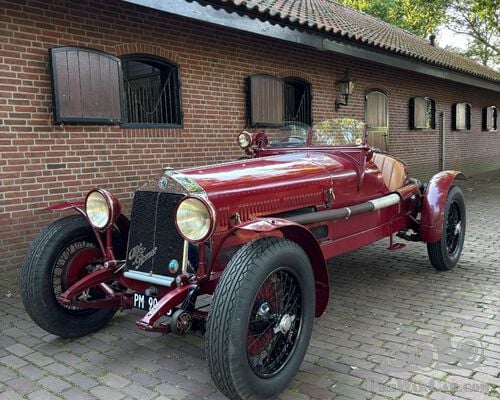
1930 Alfa Romeo 6C 1750 Spider
1930 Alfa Romeo 6C 1750 Spider with complete history from delivery to first owner in 1930 in Firenze till today with copy Libretto/license plate.
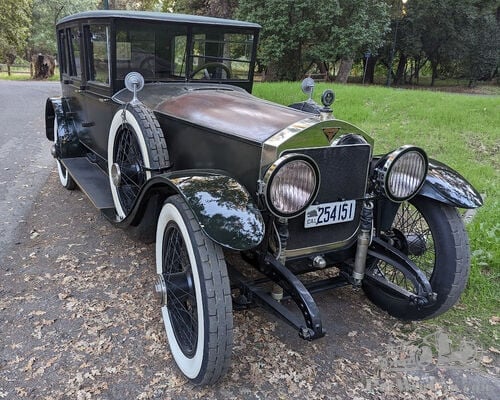
1916 Simplex, Crane model 5
1916 Simplex, Crane MODEL 5CUSTOM MADE HISTORIC PRESERVATION VEHICLE – READY TO TOUR!This Simplex recently completed th..
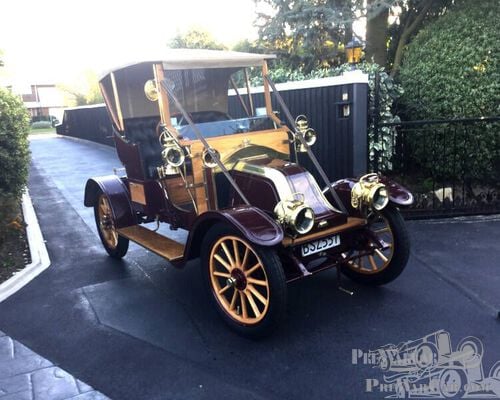
Renault /AX 1913 - named
Purchased fully renovated from New Zealand and imported to the UK. We have owned her for over10 years. Gigi is currently living in France where she..