The global magazine and marketplace for classic car enthusiasts, by enthusiasts.


Filter
Classic Invicta, Morgan for sale - Invicta, Morgan cars for sale
-

Te koop Morgan Aero 1927
De Morgan Aero is geproduceerd van 1920 tot rond 1933. Dit voertuig met chassisnummer B718 is van 1927. De driewieler is in goed rijdbare en in originele staat, video’s hierover zijn het bewijs. De aandrijving (koppeling & bak) en dynamo zijn op kwalitatief gezien technisch verantwoorde wijze enigszins aangepast, waarmee de technische betrou.. -
1928 INVICTA 4.5 Litre HIGH CHASSIS LC-Type
1928 INVICTA 4.5 Litre HIGH CHASSIS LC-TypeChassis Number: LC253Registration Number: DS7872A real Performance car & seriously fast. This car has benefitted from a recent restoration & rebuild in excess of 400,000 euros by vintage car specialists Historic Cometition services. The 4.5 litre engine has been bored ou.. -
1931 Invicta S-Type Low Chassis
1931 Invicta S-Type Low ChassisCarbodies Tourer, Chassis S42, nicknamed “Sandstone”Raced by Charles Mortimer in the 1950s at Silverstone and PrescottLater owned by Broadway director and Juilliard Professor John StixLovin.. -
Invicta 4.5 Litre
Invicta 4½-liter (Series A)Built in 1931 (first registration January 2, 1931, built in 1930). Chassis number A204, engine number 7918. Exterior color Oxford blue combined with a black chassis and black wire wheels. Blue leather interior trimmed with blue carpet and a black mohair hood. .. -
1931/32 INVICTA 12/45hp
1931/32 INVICTA 12/45hp in original condition. Opportunity to buy a rare car ! I bought this chassis underslung Invicta in London in 1967 and it was kept in our museum collection of rare cars always inside ever since. A 6cylinder prewar AC engine and gearbox will be supplied with the car. Suitable to make a Special of but I would restore this pr.. -
Invicta 4.5Litre Low Chassis Type S (A). Superb vintage sports tourer
Most vintage cars have a certain presence to them but very few have got the same presence as the Invicta Type S with its dramatic, low chassis.It is believed just 1,000 Invictas of all types were build before the company had to bow down in the autumn of 1933 as a result of the early 1930s economic depression. Invicta existed for less than.. -
1934 Invicta S Type by Carbodies
‘Invicta Cars’ was founded and run by the successful businessman, Noel Macklin. He was born in 1886, educated at Eton and in the Great War served as a Captain in the Royal Horse Artillery. He was wounded and invalided out in 1915. He established the Invicta Company in buildings on his estate in Cobham, Surrey in 1925. He had the financial backin..





Invicta
GB, 1900 – 1905
H.E. Richardson, Finchley, London N.
The Invicta car from Finchley was seen as a bicycle, a motor cycle and as a voiturette. Rather surprisingly for such a small concern, the latter two were powered by engines of the firm’s own manufacture.
Italy, 1906
Stabilimento Meccanico Carlo Mantovani & Cia, Turin
Carlo Mantovani had been technical director of Bender and Martiny (Perfecta) and he built a few light cars named Invicta cars with side-chain drive and 3-speed gearboxes in their old factory. The 6/8hp Invicta car was a twin and the 10/12hp a four with pair-cast cylinders; neither lasted long
GB, 1913 – 1914
Clark’s Engineering Works, Leamington, Warwickshire
The short-lived Invicta car from Leamington was one of the cyclecar breed. The Invicta car was powered by a watercooled V-twin JAP engine of 8hp, driving through a 3-speed gearbox and shaft primary drive to chain final drive.
GB, 1925 – 1938, 1946 – 1950
(1) Invicta Cars, Cobham, Surrey, 1925 – 1933
(2) Invicta Cars, Chelsea, London S.W.3, 1933 – 1938
(3) Invicta Car Development Co Ltd, Virginia Water, Surrey, 1946 – 1950
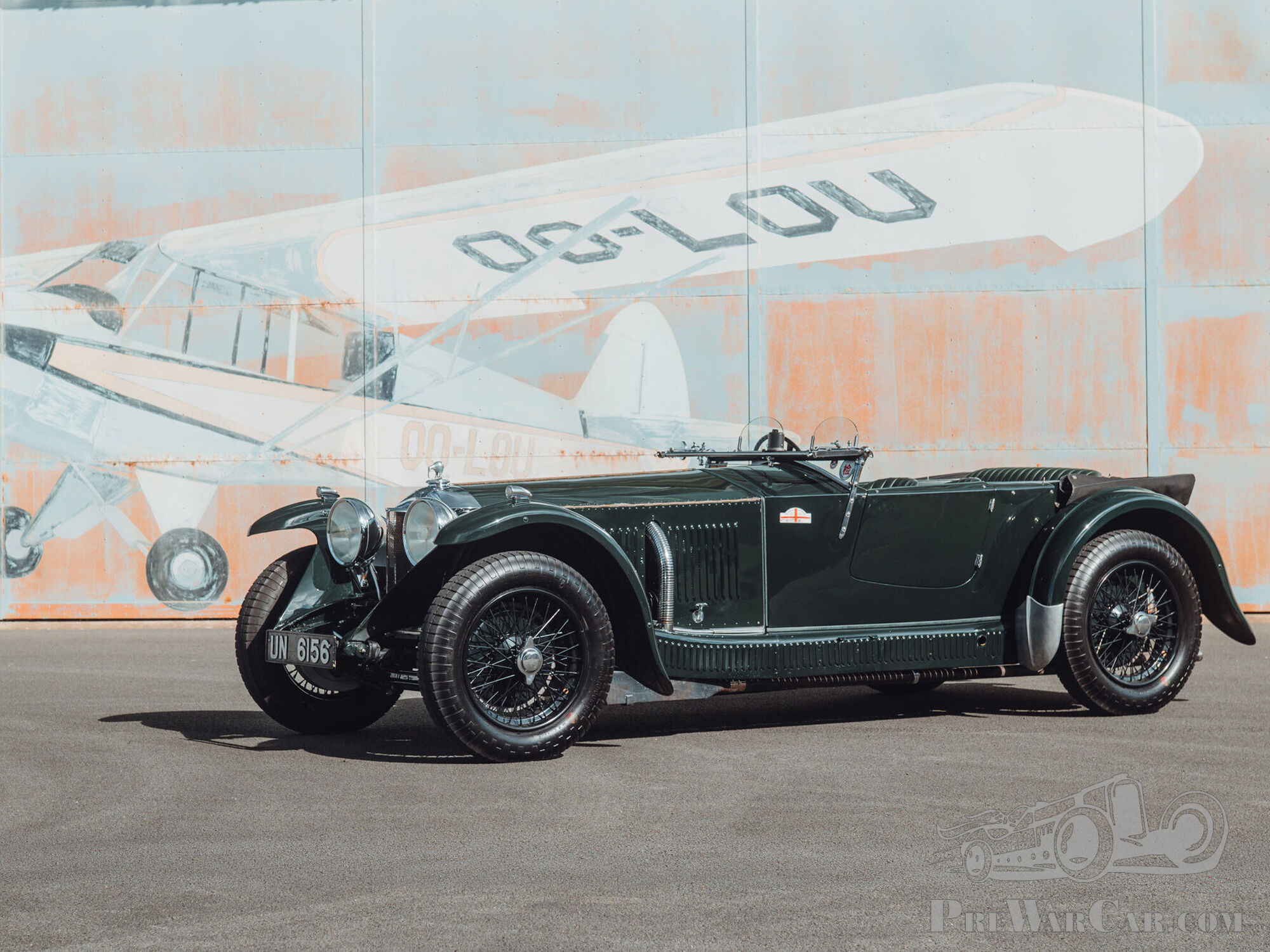
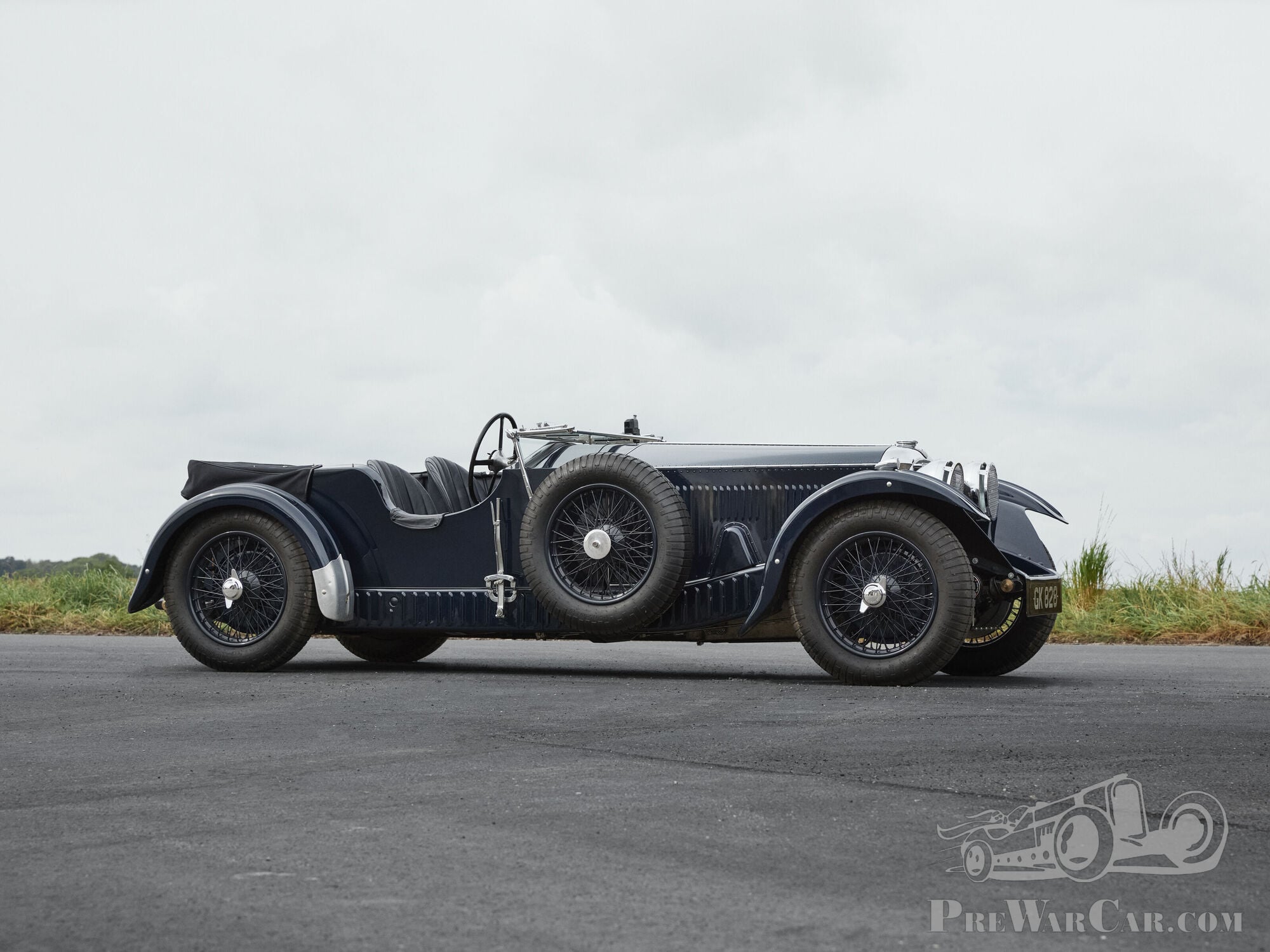
In 1925 Noel Macklin and Oliver Lyle, both of them with experience of motor design and Macklin a former manufacturer as well (Eric Campbell, Silver Hawk) introduced a type of car, the Invicta car, that was quite new to the British market. The idea behind the Invicta car was to combine in an assembled car the American concept of flexibility and performance with British quality and road-holding, thus getting the best of both worlds. The engine in the Invicta car, the Meadows 2½-litre, 6-cylinder engine had push-rod overhead valves. Its low-speed torque permitted the Invicta car to accelerate from a walking pace to 60mph in top gear, but a four-speed gearbox was provided, all the same, and the Invicta car make’s sustained high-speed cruising capabilities became legendary after winning the Dewar Trophy for long-distance reliability runs in 1927 and 1929. In outward appearance the first Invicta car was very staid, and it was marred by the fact that the brakes on the Invicta car were poor. The rivets down the bonnet were copied from the Rolls-Royce. During 1926, an engine with a bigger bore, providing 3 litres, was offered on Invicta cars alongside the original unit, and by 1927 was the only one sold. In that year real speed arrived for the fist time in the shape of the 4½-litre Invicta car. This Invicta car had a larger bore still, with an 85mph maximum and really shattering acceleration in spite of pulling a 3.9:1 axle ratio. By late 1929, the 3-litre Invicta car had been dropped. The 1931 4½-litre came in two types: the Invicta 4½-litre high-chassis, and the Invicta 4½-litre ‘100-mph’ low-chassis model. The latter Invicta car was lowered by underslinging the rear springs. This invicta car was capable of 95mph.
Unfortunately the splendid Invicta car was always expensive, and its roadholding reputation was damaged among sportsmen, who were by now its most important customers, by a highly-publicized accident to S.C.H. Davis at Brooklands in 1931. In spite of a win in the Monte Carlo Rally of an Invicta car, a Coupe des Glaciers in the Alpine Trial that year and almost equal success in the same events in 1932, only about 1.000 Invicta cars were made before production ceased in 1935. Invicta tried to stave off the end by introducing a small Invicta car for a more popular market in 1932. This Invicta 12/45 was not a success because the single overhead-camshaft 6-cylinder engine, amade by Blackburne, was of only 1½-litres’ capacity. However efficient this Invicta car was, it could not cope with its heavy chassis without the aid of an axle ratio of 6:1. This gave the famed flexibility, but not the performance you would expect on an Invicta car. The 12/45 was supplemented in 1933 by the supercharged Invicta 12/90, but only a handful were made. Both Invicta cars were seen with Wilson self-changing gearbox, the weight of which cannot have helped. After Invicta ended, Macklin went on to make the Railton, a machine with the traditional Invicta car performance characteristics allied to low price. For 1938, three new Invicta cars, in 2½-, 3- and 4-litre form, were planned. All these Invicta cars were to have 6-cylinder, overhead-valve engines, all-synchromesh gearboxes, and independent front suspension by transverse spring. Nothing was seen of these Invicta cars, the chassis of which seem to have been disguised Darracqs and the bodies similar to those of the 3-litre D670 Delage.
The old Invicta name was revived briefly after World War 2, when it was attached to a luxury car called the Invicta Black Prince, powered by a 6-cylinder Meadows engine of three litres, with two overhead camshafts and two plugs per cylinder. This unit produced 120bhp at 5.000rpm. Unlike earlier Invicta cars, the car’s other characteristics were highly unconventional. There was no gearbox in the Invicta car; instead, a Brockhouse hydrokinetic turbo transmitter that provided automatic transmission on any ratio between 15:1 and 4,27:1. Suspension was independent all round, by torsion bars. But the new Invicta car was another horribly expensive car, although plans envisaged an output of 250 a year, it met the same fate as its predecessors after only a score or so had been made. AFN Ltd, manufacturers of the Frazer Nash, acquired the assets of the dead firm.
Source: Georgano, encyclopedia of motorcar; TRN
The information is written with the greatest of care. However, if you have any suggested amendments please contact us at office@prewarcar.com
Morgan
GB, 1905 – 1906
Morgan and Co Ltd, Leighton Buzzard, Beds.
Made by a well-known firm of coachbuilders, the Morgan car was a conventional shaft-driven car with 5.8-litre T-head 4-cylinder Mutel engine, distinguished only by the Sparks-Boothby hydraulic clutch on the Morgan car, soon abandoned in favour of an ordinary leather cone. Only about five Morgan cars were made and their lack of success resulted in Morgan cars becoming Adler concessionaires in 1907, and abandoning motor manufacture.
GB, 1910 to date
Morgan Motor Co Ltd, Malvern Link, Worcs.
This Morgan car was the best-known, and best, of the British 3-wheelers that were popular while the horsepower tax gave the Morgan cars an advantage. H.F.S. Morgan’s tricycle was also the first of its type, this Morgan car going into production in 1910. At the front of a tubular chassis frame was an sv, air-cooled V-twin motor-cycle engine of 1.100cc by JAP, transversely mounted. Transmission of the Morgan car was by dog clutches and chains, providing two forward speeds. The steering was direct. The front wheels of the Morgan car, had independent front suspension, by sliding pillars and coil springs. There were two seats. A reasonable amount of power plus light weight meant an excellent performance of the Morgan cars. The Morgan car was safer than most 3-wheelers because its road-holding was above average. This recipe made the Morgan car popular with sportsmen, for whom the Morgan Grand Prix model was produced in 1914: the first catalogued competition Morgan car. Soon afterwards, an exiguous four-seater Morgan car, the forerunner of the Morgan Family model of the 1920s, was listed.
After World War 1, Morgan carscontinued to cater for all markets. Names changed, but the Morgan Sports or Morgan Standard model was the normal two-seater, also available in De Luxe form; the Morgan Family model was the more capacious type Morgan car, and the long-tailed Morgan Aero, later the Morgan Super Sports, was the Morgan car intended for serious speed work. Engines of Morgan cars were water- or air-cooled to choice, most being supplied by JAP, or by Blackburne in the case of the competition Morgan cars. From 1925 all the latter’s power units had overhead valves. By 1927 the Super Sports Morgan car could attain 80mph in standard trim, while the less sporting Morgan cars now had internal expanding front wheel brakes and electric starting. Geared-down steering and (if required) three forward speeds followed on Morgan cars in 1929. Even so, Morgan cars were losing customers to new, cheap sports cars such as the M-type MG. Three speeds and reverse in a normal gearbox (though still with chain final drive) were available from 1931 and standard on the Morgan car after 1932, and a modified 8hp Ford 4-cylinder engine could later be had in the Morgan car instead of the twin. Four years later the first 4-wheeled Morgan car was introduced, the excellent little Morgan 4/4. This Morgan car used an 1.122cc 4-cylinder Coventry-Climax engine with overhead inlet valves, developing 34bhp. The Morgan car was still light in weight, and retained the Morgan independent front suspension, so the performance and handling qualities of Morgan cars were well up to form. The Morgan car could attain 75mph. The twins were last catalogued in 1939.
Just before World War 2, a 1.267cc Standard 10hp engine with ohv head was substituted in the Morgan 4/4. When this was no longer available, from 1950, Morgan fitted a tuned Standard Vanguard unit in the Morgan car giving 70bhp. In this Morgan Plus Four, as the Morgan car was renamed, performance became still more lively, and when the 90bhp Triumph TR2 engine became available in 1954, maximum speed of the Morgan car rose to 100mph for the first time. With the advent of the Morgan Plus Four, there was no longer a small Morgan car, but this gap was made good in 1955, when the Morgan Series 2 4/4 arrived. This Morgan car used the very hard-wearing 1.172cc sv Ford Ten engine which had powered F4 Morgan. (The latter was the last 3-wheeler Morgan car, which had been made until 1950.) The result was a cheap, pleasant and reliable sports Morgan car of the old school. Later, the ohv Ford 105E engine was substituted. The latest version Morgan car had a 1.599cc 98bhp engine, a 4-speed all-synchromesh gearbox, front disc brakes, and the traditional Morgan suspension. The Morgan Plus Four kept pace with Triumph’s TR engine development, also acquiring disc brakes and, eventually, the 2.138cc 105bhp TR4 unit. A streamlined coupé, the Morgan Plus Four Plus of 1964, was a brief deviation from the classical Morgan car line which met with little approval and was discontinued after only 50 of these Morgan cars had been sold. When Triumph changed to a six during 1968, Morgan cars adopted a new engine for their bigger Morgan cars, and the Morgan Plus Four became the Morgan Plus Eight, powered by Rover’s 3 ½-litre 160bhp V8 and capable of 125mph. The 1973 versions of the Morgan car use the 4-speed all-synchromesh Rover gearbox in place of the Moss box previously fitted.
Source: Georgano, encyclopedia of motorcar; MCS, TRN
The information is written with the greatest of care. However, if you have any suggested amendments please contact us at office@prewarcar.com


Featured

1915 Rolls-Royce Silver Ghost Barker Tourer
⁃ An exceptionally rare original bodied pre-war Silver Ghost⁃ Desirable Barker tourer in exciting barn find condition⁃ ..
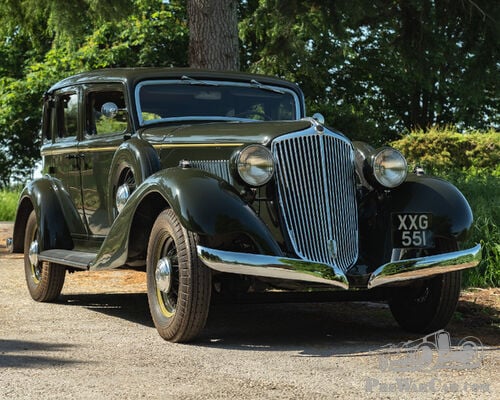
Graham Model 64 Standard Eight 'Blue Streak'
UK Registration No: XXG 551Chassis No: 1801069MOT: ExemptH&H ClassicsKelham Hall | Newark, Nottinghamshire
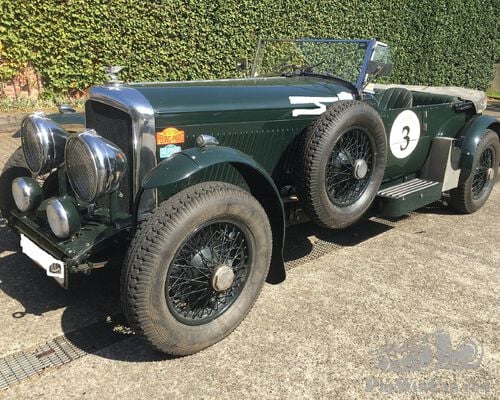
Bentley Derby Special Open Rally Car
This Bentley Derby, manufactured in 1935, has been rebuilt into a short and long-distance rally car. Full rebuilt engine in 2021, Since 2021 low mi..