The global magazine and marketplace for classic car enthusiasts, by enthusiasts.


Filter
Classic Marmon, Morgan for sale - Marmon, Morgan cars for sale
-

Te koop Morgan Aero 1927
De Morgan Aero is geproduceerd van 1920 tot rond 1933. Dit voertuig met chassisnummer B718 is van 1927. De driewieler is in goed rijdbare en in originele staat, video’s hierover zijn het bewijs. De aandrijving (koppeling & bak) en dynamo zijn op kwalitatief gezien technisch verantwoorde wijze enigszins aangepast, waarmee de technische betrou.. -
Marmon Type 70 Sedan 1930 for sale
Marmon-Roosevelt straight eight sedan. Model 97, Type 70. The body was built by Hayes Corp. Roosevelt is the companion make to Marmon, nevertheless the Marmon label is featured on the car. The car makes a striking impression with it's six wire wheels and handsome headlights. It runs and drives but it requires work. The restoration is older and .. -
1931 Marmon Sedan 88
MARMON - SEDAN 88 Year 1931GasolineHistorical, 8 cylinders, very good condition.


Marmon
US, 1902 – 1933
(1) Nordyke and Marmon Co, Indianapolis, Ind., 1902 – 1925
(2) Marmon Motor Car Co, Indianapolis, Inc., 1926 – 1933
Howard Marmon’s first cars were advanced machines, featuring air-cooled V4 engines of oversquare dimensions, with mechanically-operated overhead valves and pressure lubrication. Something approaching independent front suspension was achieved on Marmon cars by the use of double-three-point suspension, with a separate sub-frame for engine and transmission. Only the 2-speed gearbox of planetary type conformed on the Marmon cars to American practice of the period. These Marmon cars persisted until 1908, though 1907 brought the introduction of selective sliding-type gearboxes on the Marmon car and a short-lived 60hp V8. In 1908 buyers of Marmon cars had the choice of air or water cooling and cylinder heads were detachable. The following year Marmon went over to conventional T-head in-line fours rated at 40/45hp and 50/60hp, and two years later only the 5.2-litre Model 32 Marmon car with rear-axle gearbox was listed. Marmon cars did well in contemporary competition, with 54 1st places logged with a Marmon car between 1909 and 1912; Ray Harroun won the first Indianapolis 500 in 1911 with a specially-built 6-cylinder Marmon car, the well-known Marmon Wasp. An enormous 9.3-litre six rated at 48hp was available in 1914.
In 1916 the advanced ohv 6-cylinder Marmon 34 with aluminium cylinder block, body, bonnet and radiator shell, and double transverse rear suspension was introduced. The engine capacity of this Marmon car was 5½-litres, and its output 74bhp; developments of this Marmon car were still listed as late as 1927, acquiring Delco coil ignition in 1920, and the option of a Marmon car with front wheel brakes in 1923. The Marmon cars were expensive: $5.000 was asked for a touring car in 1921. A not very successful 3.1-litre ohv straight-8 in the Marmon car appeared in 1927, but the following season only Marmon cars with eights were made, the cheapest sv Marmon 68 selling for $1.395. In 1928 Marmon also entered some front-wheel-drive Marmon cars at Indianapolis, but they were in fact only revamped Millers. The Marmon car company sold 22.300 Marmon cars in 1929, thanks to a cheap new straight-8 at under $1.000, the Marmon Roosevelt. This brandname, however, did not last, for the Marmon car appeared in the 1930 programme as the Marmon R, along with three other eights, the sv 69, and two big ohv Marmon cars with 4-speed gearboxes and capacities of the 4.9- and 5.2-litres respectively.
Marmon cars swansong was the magnificent 9.1-litre 200bhp 16-cylinder model of 1931. This Marmon car was beautifully proportioned, and had an alloy engine. The list price of the Marmon car was $4.925; there was a companion Marmon 8-125 in 1932, but only the Marmon Sixteen was listed for 1933. At the very end Marmon was testing a Marmon car with a 150bhp V12 with independent front suspension, De Dion rear axle, and tubular backbone frame, but this never saw production.
Source: Georgano, encyclopedia of motorcar; MCS
The information is written with the greatest of care. However, if you have any suggested amendments please contact us at office@prewarcar.com
Morgan
GB, 1905 – 1906
Morgan and Co Ltd, Leighton Buzzard, Beds.
Made by a well-known firm of coachbuilders, the Morgan car was a conventional shaft-driven car with 5.8-litre T-head 4-cylinder Mutel engine, distinguished only by the Sparks-Boothby hydraulic clutch on the Morgan car, soon abandoned in favour of an ordinary leather cone. Only about five Morgan cars were made and their lack of success resulted in Morgan cars becoming Adler concessionaires in 1907, and abandoning motor manufacture.
GB, 1910 to date
Morgan Motor Co Ltd, Malvern Link, Worcs.
This Morgan car was the best-known, and best, of the British 3-wheelers that were popular while the horsepower tax gave the Morgan cars an advantage. H.F.S. Morgan’s tricycle was also the first of its type, this Morgan car going into production in 1910. At the front of a tubular chassis frame was an sv, air-cooled V-twin motor-cycle engine of 1.100cc by JAP, transversely mounted. Transmission of the Morgan car was by dog clutches and chains, providing two forward speeds. The steering was direct. The front wheels of the Morgan car, had independent front suspension, by sliding pillars and coil springs. There were two seats. A reasonable amount of power plus light weight meant an excellent performance of the Morgan cars. The Morgan car was safer than most 3-wheelers because its road-holding was above average. This recipe made the Morgan car popular with sportsmen, for whom the Morgan Grand Prix model was produced in 1914: the first catalogued competition Morgan car. Soon afterwards, an exiguous four-seater Morgan car, the forerunner of the Morgan Family model of the 1920s, was listed.
After World War 1, Morgan carscontinued to cater for all markets. Names changed, but the Morgan Sports or Morgan Standard model was the normal two-seater, also available in De Luxe form; the Morgan Family model was the more capacious type Morgan car, and the long-tailed Morgan Aero, later the Morgan Super Sports, was the Morgan car intended for serious speed work. Engines of Morgan cars were water- or air-cooled to choice, most being supplied by JAP, or by Blackburne in the case of the competition Morgan cars. From 1925 all the latter’s power units had overhead valves. By 1927 the Super Sports Morgan car could attain 80mph in standard trim, while the less sporting Morgan cars now had internal expanding front wheel brakes and electric starting. Geared-down steering and (if required) three forward speeds followed on Morgan cars in 1929. Even so, Morgan cars were losing customers to new, cheap sports cars such as the M-type MG. Three speeds and reverse in a normal gearbox (though still with chain final drive) were available from 1931 and standard on the Morgan car after 1932, and a modified 8hp Ford 4-cylinder engine could later be had in the Morgan car instead of the twin. Four years later the first 4-wheeled Morgan car was introduced, the excellent little Morgan 4/4. This Morgan car used an 1.122cc 4-cylinder Coventry-Climax engine with overhead inlet valves, developing 34bhp. The Morgan car was still light in weight, and retained the Morgan independent front suspension, so the performance and handling qualities of Morgan cars were well up to form. The Morgan car could attain 75mph. The twins were last catalogued in 1939.
Just before World War 2, a 1.267cc Standard 10hp engine with ohv head was substituted in the Morgan 4/4. When this was no longer available, from 1950, Morgan fitted a tuned Standard Vanguard unit in the Morgan car giving 70bhp. In this Morgan Plus Four, as the Morgan car was renamed, performance became still more lively, and when the 90bhp Triumph TR2 engine became available in 1954, maximum speed of the Morgan car rose to 100mph for the first time. With the advent of the Morgan Plus Four, there was no longer a small Morgan car, but this gap was made good in 1955, when the Morgan Series 2 4/4 arrived. This Morgan car used the very hard-wearing 1.172cc sv Ford Ten engine which had powered F4 Morgan. (The latter was the last 3-wheeler Morgan car, which had been made until 1950.) The result was a cheap, pleasant and reliable sports Morgan car of the old school. Later, the ohv Ford 105E engine was substituted. The latest version Morgan car had a 1.599cc 98bhp engine, a 4-speed all-synchromesh gearbox, front disc brakes, and the traditional Morgan suspension. The Morgan Plus Four kept pace with Triumph’s TR engine development, also acquiring disc brakes and, eventually, the 2.138cc 105bhp TR4 unit. A streamlined coupé, the Morgan Plus Four Plus of 1964, was a brief deviation from the classical Morgan car line which met with little approval and was discontinued after only 50 of these Morgan cars had been sold. When Triumph changed to a six during 1968, Morgan cars adopted a new engine for their bigger Morgan cars, and the Morgan Plus Four became the Morgan Plus Eight, powered by Rover’s 3 ½-litre 160bhp V8 and capable of 125mph. The 1973 versions of the Morgan car use the 4-speed all-synchromesh Rover gearbox in place of the Moss box previously fitted.
Source: Georgano, encyclopedia of motorcar; MCS, TRN
The information is written with the greatest of care. However, if you have any suggested amendments please contact us at office@prewarcar.com


Featured
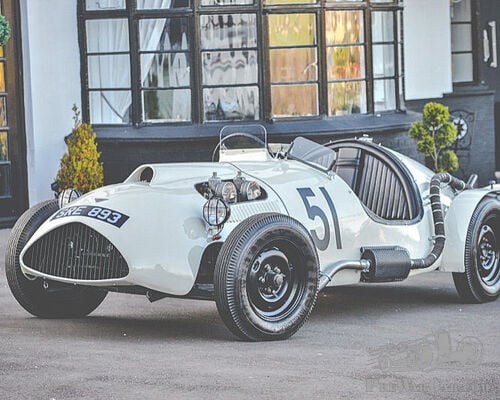
1933 Alvis 3.0 Special - One-Off Alloy Body | Period Competition Car | Featured in “Alvis – A Century of Drivers”
1933 Alvis 3. 0 Special - One-Off Alloy-Body | Period Competition Car | Featured in “Alvis – A Century of Drivers”
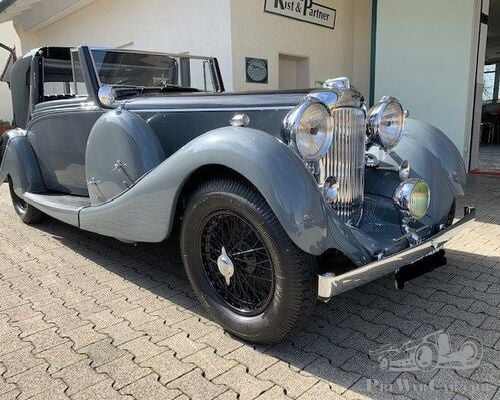
Lagonda LG 45 Coupe de Ville Sedanca by Mayfair
The successor to the M45, the LG45 was built around the same highly capable, competition-proven 4.5-litre Meadows inline-six engine, but featured r..
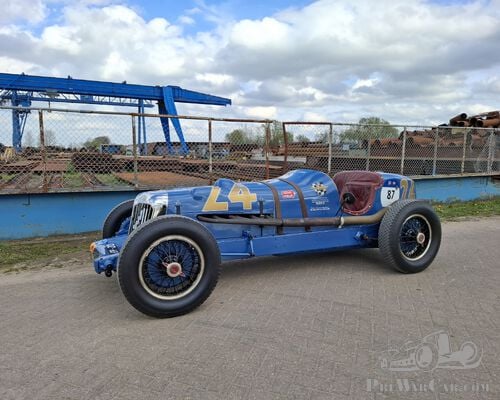
1932 - Graham " Lucenti " Indianapolis
Original participant of the 1932, 1934 and 1935 Indy 500. Best result: finishing 10th overall in the 1934 Indy 500 with driver “Herb” Ardinger...