The global magazine and marketplace for classic car enthusiasts, by enthusiasts.


Filter
Classic Mathis, Morgan for sale - Mathis, Morgan cars for sale
-

Te koop Morgan Aero 1927
De Morgan Aero is geproduceerd van 1920 tot rond 1933. Dit voertuig met chassisnummer B718 is van 1927. De driewieler is in goed rijdbare en in originele staat, video’s hierover zijn het bewijs. De aandrijving (koppeling & bak) en dynamo zijn op kwalitatief gezien technisch verantwoorde wijze enigszins aangepast, waarmee de technische betrou..

Mathis
D, 1898 – 1903; 1910 – 1914
France, 1919 – 1935; 1945 – 1950
(1) E.E.C. Mathis, Strasbourg, 1898 – 1914
(2) SA Mathis, Strasbourg, 1919 – 1950
The Mathis car company, like Bugatti, changed its nationality with the return of Alsace-Lorraine to France in 1918. The early Mathis cars made in Strasbourg up to 1903 were experimental prototypes only, though they included a really big 150x160mm 4-cylinder Mathis car rated at 100hp and the first Mathis car product sold to the public were the Hermes machines designed by Ettore Bugatti in 1904 to 1905. Bugatti set up as an independent consulting engineer, and Mathis cars supplemented his business by selling De Dietrich, Panhard, and Rochet-Schneider, as well as acting as Central European respresentative for Fiat and Minerva.
It was not until 1910 that the true Mathis car went on sale, in the form of the Mathis 8/20ps, a straightforward 2-litre L-head Monobloc 4-cylinder Mathis car with 3-bearing crankshaft, 4-speed separate gearbox, and shaft drive. The larger 2.8-litre model of this period was made for Mathis by Stoewer of Stettin. The Mathis car firm’s pre-war reputation was founded largely on well made miniature 4-cylinder machines, notably the 1.100cc Mathis Babylette and the 1.3-litre Mathis Baby. The former had a vertical-gate gear change, all its brakes on the rear wheels, and, surprisingly, a differential. A bolster-tank sports two-seater Mathis car could be bought in England in 1914 for £195. Bigger Mathis cars had full-pressure lubrication, and came in 1½-litre, 1.8-litre (rated rather high in Britain at 16/20hp), and 2.6-litre sizes. There were also some 4.4-litre Mathis cars with Knight double-sleeve-valve engines.
Mathis’s interest in racing expressed itself in rather a peculiar way, since he tended to enter Mathis cars of unsuitable capacity for major races. Thus his 1.8-litre Coup de l’Auto Mathis car of 1912 was set to run with the big cars in the concurrent Grand Prix, and in 1921 he ran a 1½-litre ohv 4-cylinder Mathis car in the French GP, in a year when a 3-litre formula was in force.
After World War 1 the Mathis car emerged as a neat little sv monobloc 8/15hp 4-cylinder with aluminium pistons, fixed head, trough-and-dipper lubrication, thermos-syphon cooling, full electrics, magneto ignition, and 4-speed gearbox. Capacity of the Mathis car was 1.131cc, and in 1921 an anglicized version of the Mathis car was sold in London as the BAC, though later cars of this make had no French associations. The Mathis cars of the early 1920s, often with tiny engines (the Mathis T-type of 1923 had only 628cc), differential-less back axles, splash lubrications (and axle ratios of the order of 6:1, but always with 4 forward speeds) soon brought the Mathis car company into fourth position behind France’s big three – Citroën, Renault, and Peugeot – and production was running at 75 Mathis cars a day in 1927. The miniature 4-cylinder Mathis cars were credited with 63mpg, but in 1923 there was a new departure in the shape of a tiny 6-cylinder Mathis car. The 1.2-litre Mathis L-type with overhead camshafts and detachable head had some sporting pretensions, but more typical was the 1.140cc Mathis P-type tourer with a fixed-head sv power unit, 6:1 top gear, brakeless front axle, and differential-less back end. The wheel-base of the Mathis car was 9ft, and the 4-speed box had central change: both sizes had V-radiators.
Interestingly enough Mathis favoured 4 cylinders, overhead camshafts, and 8-plug heads for the Mathis car entries in the Touring Car GP, and were rewarded with class wins in 1923 and 1924, though their advanced 1925 machines with crab tracks, underslung frames, and aerodynamic bodywork were less successful. The 6-cylinder touring Mathis cars had front-wheel brakes by 1924, and were continued until 1926, but 1925 brought a bigger family saloon Mathis car to compete with Citroën, the 1.6-litre Mathis GM-type 4-cylinder with pressure lubrication, front-wheel brakes, and differential, sold at £295 in England. There was also a short-lived 1.7-litre ohc straight-9 with coil ignition: the output of 35bhp perhaps explains why nothing more was heard of this Mathis car.
By 1927 Mathis were back to one-model policy with their 1.2-litre 4-cylinder Mathis MY at £255 for a fabric saloon. Its specification was entirely conventional with side valves, detachable head, 2-bearing crankshaft, magneto ignition, 6-volt electrics, and 4-speed gearbox was in this Mathis car. A 1.8-litre Emysix followed in 1928 with coil ignition, hypoid final drive, and two separate detachable heads for its monobloc engine: sold under the slogan ‘Ware The Enemy – Weight’, it justified this by turning the scales of this Mathis car at only 2.184lb, and formed the basis for all Strasbourg’s subsequent series-production sixes and eights Mathis cars.
Up to 1935 dull, solid sv family saloons were the staple of the SA Mathis. 4-speed Warner silent-3rd gearboxes appeared on the Emysix in 1929, and in 1930 there were bigger sixes of 2.4 litres and 4.1 litres in the Mathis cars, also with hypoid axles. William C. Durant laid plans to build 4-cylinder Mathis cars in his factories in 1930 under the name Matam (Mathis-America), but the Depression frustrated these. A very short-stroke (70x80mm) 1.2-litre Mathis car, the Mathis PY type with spiral bevel final drive, appeared in 1931, when a 3-litre Mathis car could be bought with hydraulic brakes in England for £476. Two bigger eights of 4.6- and 5.4-litres were made in very small numbers. Mathis car engines were used in one model of the all-independently-sprung Harris-Léon Laisne, and both hydraulics and free wheels were standard on the big Mathis cars in 1932. This year a wide range of Mathis cars embraced everything from the 904cc Mathis TY 4-cylinder up to the 3-litre Mathis FOH type straight-8.
Mathis cars, however, were slipping and an attempt was made to restore sales of Mathis cars with the 1.4-litre Mathis Emyquatre of 1933, which had a box-section frame, independent front suspension, synchromesh and free wheel, and a modern-style 4-door saloon body with no running-boards. 6-cylinder Mathis cars acquired transverse independent front suspension at the same time. In 1934 a further attempt was made to bolster up the Mathis car company by an agreement with Ford whereby the Mathis car factories would be used to manufacture Ford V8s for the French market. Unfortunately Henry Ford and Emile Mathis saw this differently, and what in fact happened was that Matfords rapidly ousted Mathis cars from the production lines, thus fathering a line which survived until 1961, first under Ford and latterly under Simca control. Mathis cars for 1935 had all-round independent suspension, but these Mathis car were the last of their line to be sold to the public.
Emile Mathis once again took possession of his Mathis car factory in 1945, and essayed a comeback with a weird little front-wheel-drive 3-wheeler Mathis car cloaked in egg-shaped coupé body work to the designs of Jean Andreau. The front wheels were independently sprung, and the 700cc flat-twin power unit was water-cooled with one radiator to each cylinder: all-up weight of the Mathis car was a modest 840lb. It soon became apparent that the Government was not going to authorize production of this Mathis car, but Mathis tried again in 1948 with an advanced 2.8-litre front-wheel-drive flat-6. Its output was 80bhp, the gearbox had overdrive on all three ratios, there was independent suspension all round on the Mathis car, and the futuristic saloon body featured a panoramic windscreen. The Mathis car reappeared at the 1949 Salon, but like La Licorne, Delauney-Belleville and Bugatti, the Mathis car firm never managed to get any post-war design into series production. In 1954, the Strasbourg plant was sold to Cirtoën, and another major, if uninspired, French marque vanished into limbo.
Source: Georgano, encyclopedia of motorcar; MCS
The information is written with the greatest of care. However, if you have any suggested amendments please contact us at office@prewarcar.com
Morgan
GB, 1905 – 1906
Morgan and Co Ltd, Leighton Buzzard, Beds.
Made by a well-known firm of coachbuilders, the Morgan car was a conventional shaft-driven car with 5.8-litre T-head 4-cylinder Mutel engine, distinguished only by the Sparks-Boothby hydraulic clutch on the Morgan car, soon abandoned in favour of an ordinary leather cone. Only about five Morgan cars were made and their lack of success resulted in Morgan cars becoming Adler concessionaires in 1907, and abandoning motor manufacture.
GB, 1910 to date
Morgan Motor Co Ltd, Malvern Link, Worcs.
This Morgan car was the best-known, and best, of the British 3-wheelers that were popular while the horsepower tax gave the Morgan cars an advantage. H.F.S. Morgan’s tricycle was also the first of its type, this Morgan car going into production in 1910. At the front of a tubular chassis frame was an sv, air-cooled V-twin motor-cycle engine of 1.100cc by JAP, transversely mounted. Transmission of the Morgan car was by dog clutches and chains, providing two forward speeds. The steering was direct. The front wheels of the Morgan car, had independent front suspension, by sliding pillars and coil springs. There were two seats. A reasonable amount of power plus light weight meant an excellent performance of the Morgan cars. The Morgan car was safer than most 3-wheelers because its road-holding was above average. This recipe made the Morgan car popular with sportsmen, for whom the Morgan Grand Prix model was produced in 1914: the first catalogued competition Morgan car. Soon afterwards, an exiguous four-seater Morgan car, the forerunner of the Morgan Family model of the 1920s, was listed.
After World War 1, Morgan carscontinued to cater for all markets. Names changed, but the Morgan Sports or Morgan Standard model was the normal two-seater, also available in De Luxe form; the Morgan Family model was the more capacious type Morgan car, and the long-tailed Morgan Aero, later the Morgan Super Sports, was the Morgan car intended for serious speed work. Engines of Morgan cars were water- or air-cooled to choice, most being supplied by JAP, or by Blackburne in the case of the competition Morgan cars. From 1925 all the latter’s power units had overhead valves. By 1927 the Super Sports Morgan car could attain 80mph in standard trim, while the less sporting Morgan cars now had internal expanding front wheel brakes and electric starting. Geared-down steering and (if required) three forward speeds followed on Morgan cars in 1929. Even so, Morgan cars were losing customers to new, cheap sports cars such as the M-type MG. Three speeds and reverse in a normal gearbox (though still with chain final drive) were available from 1931 and standard on the Morgan car after 1932, and a modified 8hp Ford 4-cylinder engine could later be had in the Morgan car instead of the twin. Four years later the first 4-wheeled Morgan car was introduced, the excellent little Morgan 4/4. This Morgan car used an 1.122cc 4-cylinder Coventry-Climax engine with overhead inlet valves, developing 34bhp. The Morgan car was still light in weight, and retained the Morgan independent front suspension, so the performance and handling qualities of Morgan cars were well up to form. The Morgan car could attain 75mph. The twins were last catalogued in 1939.
Just before World War 2, a 1.267cc Standard 10hp engine with ohv head was substituted in the Morgan 4/4. When this was no longer available, from 1950, Morgan fitted a tuned Standard Vanguard unit in the Morgan car giving 70bhp. In this Morgan Plus Four, as the Morgan car was renamed, performance became still more lively, and when the 90bhp Triumph TR2 engine became available in 1954, maximum speed of the Morgan car rose to 100mph for the first time. With the advent of the Morgan Plus Four, there was no longer a small Morgan car, but this gap was made good in 1955, when the Morgan Series 2 4/4 arrived. This Morgan car used the very hard-wearing 1.172cc sv Ford Ten engine which had powered F4 Morgan. (The latter was the last 3-wheeler Morgan car, which had been made until 1950.) The result was a cheap, pleasant and reliable sports Morgan car of the old school. Later, the ohv Ford 105E engine was substituted. The latest version Morgan car had a 1.599cc 98bhp engine, a 4-speed all-synchromesh gearbox, front disc brakes, and the traditional Morgan suspension. The Morgan Plus Four kept pace with Triumph’s TR engine development, also acquiring disc brakes and, eventually, the 2.138cc 105bhp TR4 unit. A streamlined coupé, the Morgan Plus Four Plus of 1964, was a brief deviation from the classical Morgan car line which met with little approval and was discontinued after only 50 of these Morgan cars had been sold. When Triumph changed to a six during 1968, Morgan cars adopted a new engine for their bigger Morgan cars, and the Morgan Plus Four became the Morgan Plus Eight, powered by Rover’s 3 ½-litre 160bhp V8 and capable of 125mph. The 1973 versions of the Morgan car use the 4-speed all-synchromesh Rover gearbox in place of the Moss box previously fitted.
Source: Georgano, encyclopedia of motorcar; MCS, TRN
The information is written with the greatest of care. However, if you have any suggested amendments please contact us at office@prewarcar.com


Featured
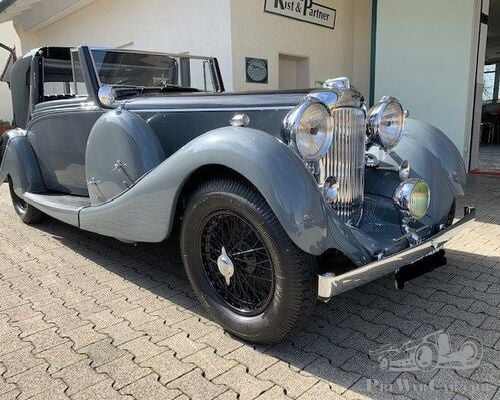
Lagonda LG 45 Coupe de Ville Sedanca by Mayfair
The successor to the M45, the LG45 was built around the same highly capable, competition-proven 4.5-litre Meadows inline-six engine, but featured r..
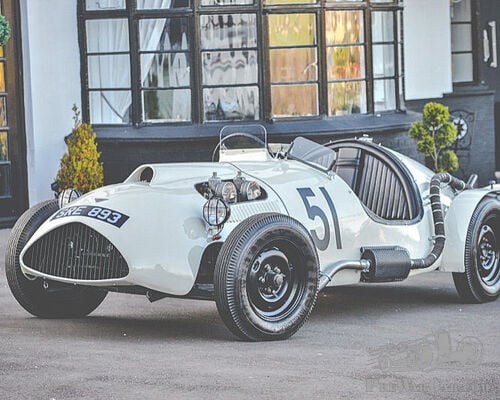
1933 Alvis 3.0 Special - One-Off Alloy Body | Period Competition Car | Featured in “Alvis – A Century of Drivers”
1933 Alvis 3. 0 Special - One-Off Alloy-Body | Period Competition Car | Featured in “Alvis – A Century of Drivers”
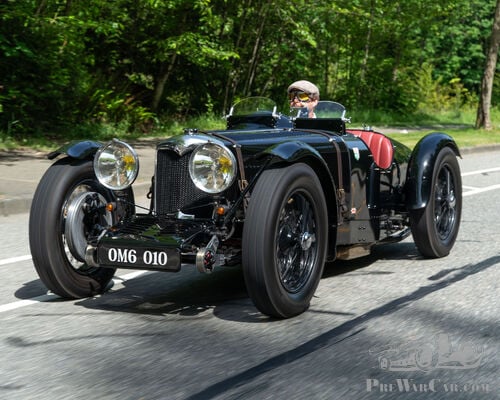
Riley 14/6 Special 1933
The ExperienceStep into the golden age of British motoring. This 1933 Riley 14/6 Special is a masterclass in pre-w..