The global magazine and marketplace for classic car enthusiasts, by enthusiasts.


Filter
Classic Morgan, Pontiac for sale - Morgan, Pontiac cars for sale
-

Te koop Morgan Aero 1927
De Morgan Aero is geproduceerd van 1920 tot rond 1933. Dit voertuig met chassisnummer B718 is van 1927. De driewieler is in goed rijdbare en in originele staat, video’s hierover zijn het bewijs. De aandrijving (koppeling & bak) en dynamo zijn op kwalitatief gezien technisch verantwoorde wijze enigszins aangepast, waarmee de technische betrou.. -
Pontiac Racing Baquet
Pontiac Racing Baquet ,1933, 8 cylinders 4100 cc 249 cu with 115 hp, incredible nice car with full aluminium patina and cracked body Incredible car! The engine has been kept mostly original. Only a twin carburetor setup has been fitted on the engine to gain a bit more power. The 3-speed gearbox has been maintained. The electrics h..


Morgan
GB, 1905 – 1906
Morgan and Co Ltd, Leighton Buzzard, Beds.
Made by a well-known firm of coachbuilders, the Morgan car was a conventional shaft-driven car with 5.8-litre T-head 4-cylinder Mutel engine, distinguished only by the Sparks-Boothby hydraulic clutch on the Morgan car, soon abandoned in favour of an ordinary leather cone. Only about five Morgan cars were made and their lack of success resulted in Morgan cars becoming Adler concessionaires in 1907, and abandoning motor manufacture.
GB, 1910 to date
Morgan Motor Co Ltd, Malvern Link, Worcs.
This Morgan car was the best-known, and best, of the British 3-wheelers that were popular while the horsepower tax gave the Morgan cars an advantage. H.F.S. Morgan’s tricycle was also the first of its type, this Morgan car going into production in 1910. At the front of a tubular chassis frame was an sv, air-cooled V-twin motor-cycle engine of 1.100cc by JAP, transversely mounted. Transmission of the Morgan car was by dog clutches and chains, providing two forward speeds. The steering was direct. The front wheels of the Morgan car, had independent front suspension, by sliding pillars and coil springs. There were two seats. A reasonable amount of power plus light weight meant an excellent performance of the Morgan cars. The Morgan car was safer than most 3-wheelers because its road-holding was above average. This recipe made the Morgan car popular with sportsmen, for whom the Morgan Grand Prix model was produced in 1914: the first catalogued competition Morgan car. Soon afterwards, an exiguous four-seater Morgan car, the forerunner of the Morgan Family model of the 1920s, was listed.
After World War 1, Morgan carscontinued to cater for all markets. Names changed, but the Morgan Sports or Morgan Standard model was the normal two-seater, also available in De Luxe form; the Morgan Family model was the more capacious type Morgan car, and the long-tailed Morgan Aero, later the Morgan Super Sports, was the Morgan car intended for serious speed work. Engines of Morgan cars were water- or air-cooled to choice, most being supplied by JAP, or by Blackburne in the case of the competition Morgan cars. From 1925 all the latter’s power units had overhead valves. By 1927 the Super Sports Morgan car could attain 80mph in standard trim, while the less sporting Morgan cars now had internal expanding front wheel brakes and electric starting. Geared-down steering and (if required) three forward speeds followed on Morgan cars in 1929. Even so, Morgan cars were losing customers to new, cheap sports cars such as the M-type MG. Three speeds and reverse in a normal gearbox (though still with chain final drive) were available from 1931 and standard on the Morgan car after 1932, and a modified 8hp Ford 4-cylinder engine could later be had in the Morgan car instead of the twin. Four years later the first 4-wheeled Morgan car was introduced, the excellent little Morgan 4/4. This Morgan car used an 1.122cc 4-cylinder Coventry-Climax engine with overhead inlet valves, developing 34bhp. The Morgan car was still light in weight, and retained the Morgan independent front suspension, so the performance and handling qualities of Morgan cars were well up to form. The Morgan car could attain 75mph. The twins were last catalogued in 1939.
Just before World War 2, a 1.267cc Standard 10hp engine with ohv head was substituted in the Morgan 4/4. When this was no longer available, from 1950, Morgan fitted a tuned Standard Vanguard unit in the Morgan car giving 70bhp. In this Morgan Plus Four, as the Morgan car was renamed, performance became still more lively, and when the 90bhp Triumph TR2 engine became available in 1954, maximum speed of the Morgan car rose to 100mph for the first time. With the advent of the Morgan Plus Four, there was no longer a small Morgan car, but this gap was made good in 1955, when the Morgan Series 2 4/4 arrived. This Morgan car used the very hard-wearing 1.172cc sv Ford Ten engine which had powered F4 Morgan. (The latter was the last 3-wheeler Morgan car, which had been made until 1950.) The result was a cheap, pleasant and reliable sports Morgan car of the old school. Later, the ohv Ford 105E engine was substituted. The latest version Morgan car had a 1.599cc 98bhp engine, a 4-speed all-synchromesh gearbox, front disc brakes, and the traditional Morgan suspension. The Morgan Plus Four kept pace with Triumph’s TR engine development, also acquiring disc brakes and, eventually, the 2.138cc 105bhp TR4 unit. A streamlined coupé, the Morgan Plus Four Plus of 1964, was a brief deviation from the classical Morgan car line which met with little approval and was discontinued after only 50 of these Morgan cars had been sold. When Triumph changed to a six during 1968, Morgan cars adopted a new engine for their bigger Morgan cars, and the Morgan Plus Four became the Morgan Plus Eight, powered by Rover’s 3 ½-litre 160bhp V8 and capable of 125mph. The 1973 versions of the Morgan car use the 4-speed all-synchromesh Rover gearbox in place of the Moss box previously fitted.
Source: Georgano, encyclopedia of motorcar; MCS, TRN
The information is written with the greatest of care. However, if you have any suggested amendments please contact us at office@prewarcar.com
Pontiac
US, 1907 – 1908
Pontiac Spring and Wagon Works, Pontiac, Mich.
The Pontiac car was a two-seater high-wheeler with right-hand steering by wheel. The Pontiac car was powered by a 2-cylinder, water-cooled engine mounted under the body. The drive of the Pontiac car was through a friction transmission and double chains to the rear wheels. The cost of the Pontiac car was $600.
US, 1915
Pontiac Chassis Co, Pontiac, Mich.
A chassis without body was all that this Pontiac car company marketed. This Pontiac car chassis was furnished with a 4-cylinder engine, by Perkins, rated at 25hp, driving through a 3-speed transmission.
US, 1926 to date
(1) Oakland Motor Car Co, Pontiac, Mich., 1926 – 1932
(2) Pontiac Motor Co, Pontiac, Mich., 1933 to date
Oakland’s Pontiac Six was intended as a lower-priced running mate, and prices of this conventional 3-litre sv six Pontiac cars started at $825. Only closed bodies were offered initially, but a sales of over 140.000 Pontiac cars was an indication of acceptance, especially when followed by an increase to 210.890 Pontiac cars in 1928. The 1930 Pontiac cars closely resembled Buick’s Marquette, and had 3.3-litre engines, the six being joined in 1932 by a V8 which Pontiac car was really a revamped 1931 Oakland.
In 1933 Pontiac car company scored an important success with a 3.7-litre, 77bhp straight-8 Pontiac car selling for less than $600 with General Motors’ new no-draught ventilation, the 6-cylinder Pontiac cars being dropped for the time being. The 1934 Pontiac cars had Dubonnet-type independent front suspension, and ‘turret-top’ all-steel bodies. Fencer’s mask radiator grilles were found on the 1935 Silver Streak line of Pontiac cars. Capacities of the six and the eight were 3.6-litres and 4.1-litres respectively in 1937. In 1939 Pontiac car company’s cheaper cars had body shells very similar to those of the Chevrolet, as befitted a make which ranked next in the GM hierarchy – though in fact only $20 separated the cheapest Pontiac car, the 4-door sedan from the corresponding Oldsmobile model.
Pontiac cars Torpedo Streamliners brought back the fastback style in 1941, and the immediate pre-war Pontiac cars were continued with little alteration until 1949, when the whole group’s products were restyled, and Pontiacs emerged with lower bodies, redesigned X-frames, and the option of Hydramatic transmission. Though maintaining high sales – they beat Plymouth cars into 4th place overall in 1954 – Pontiac cars remained conservative in engine design, and the well-tried 127bhp sv straight-8 Pontiac car was not supplanted until 1955, when all US-produced Pontiac cars received a 4.7-litre ohv V8. The L-head six was retained for some Pontiac cars made for the Canadian market.
Along with some of the other staider American makes, such as Plymouth and Mercury, the Pontiac car company stove to build their reputation on performance in the later 1950s; the 1958 Pontiac Super Tempest attained 330bhp, and in 1959 Pontiac car came out with a wide-track chassis and concentrated on a 6.4-litre V8 available in a variety of powers from 245 to 345hp.
The Pontiac Car Division’s compact, the Pontiac Tempest arrived in 1961, and was an unusual ohv oversquare four of 3.2-litres’ capacity, mounted in a unitary-construction hull, with its 3-speed synchromesh gearbox in the rear axle. Floor change was standardon the Pontiac car: it was listed at $2.240. A small V8 Pontiac car was available as an option in 1963. The big Pontiac cars went over to GM’s perimeter-type frame in 1963, when the V8 engine was available in a variety of guises on the Pontiac car, from a ‘cooking’ 215bhp version burning regular-grade petrol at $2.725 up to the sporting Pontiac Grand Prix coupé with 303bhp and a revolution counter as standard equipment, at $3.489. The Tempest’s 4-cylinder engine was dropped on the Pontiac car in 1965 in favour of a 140bhp six or 5.4-litre eight. Sporting qualities were emphasized in 1966, by which time the Pontiac Tempest had grown from a 9ft 4in wheelbase to 9ft 8in, and the range of Pontiac cars included the Pontiac GTO Grand Prix and 2 plus 2 models, all Pontiac cars disposing of more than 330bhp from engines of 6.4 and 6.9 litres’ capacity. In 1967, 3.8-litre ohc 6-cylinder engines were introduced: in the sporting Pontiac Firebird Sprint this unit developed 215bhp.
By 1970 the more sporting Pontiac cars (GTO, Firebird and Grand Prix) had front disc brakes, and all full-sized Pontiac cars came with automatic transmission as regular equipment. New for 1971 was a compact Pontiac car, the Pontiac Ventura II on a 9ft 3in wheelbase. The 1972 Pontiac car range covered most sectors of the market, from the Pontiac Ventura at $2.394 up to the luxury Pontiac Grand Ville with 220bhp 7.456cc V8 engine at $4.368. For the sporting motorist there were the Pontiac Le Mans Sport, the Pontiac GTO, and a wide selection of Pontiac Firebirds up to the Pontiac Trans Am with 300bhp V8 unit, giving the Pontiac car a top speed of about 120mph. Peculiar to Canada was the Laurentian, a hybrid Chevrolet-Pontiac on a 10ft 3½in wheelbase, available with 110bhp 6-cylinder or 165bhp V8 unit. In the main 1973’s improvements concerned styling, the Pontiac cars being longer and wider, but new Pontiac cars were the Grand Am 2- and 4-door hardtops, with 6½- or 7½-litre V8 engines, power steering, power disc front brakes and 3-speed automatic gearbox.
Source: Georgano, encyclopedia of motorcar; MCS
The information is written with the greatest of care. However, if you have any suggested amendments please contact us at office@prewarcar.com


Featured
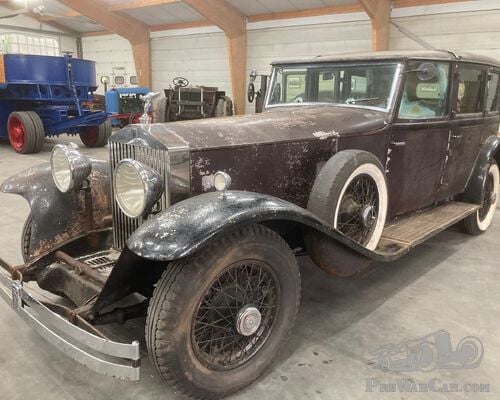
Rolls-Royce
Rolls-Royce Phantom ll chassisnummer 287 AJS. bouwjaar 1932, Links gestuurd, Brewster Keswick Sedance Towncar
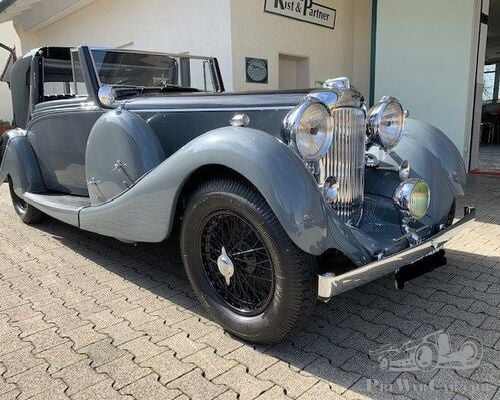
Lagonda LG 45 Coupe de Ville Sedanca by Mayfair
The successor to the M45, the LG45 was built around the same highly capable, competition-proven 4.5-litre Meadows inline-six engine, but featured r..
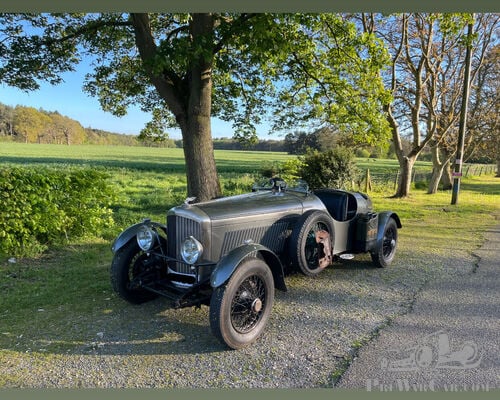
Derby Bentley Special 4-1/4
Sadly i am having to sell on my Bentley special ( Icarus). It is currently a work in progress and still needs finalising/ refining. A great o..