The global magazine and marketplace for classic car enthusiasts, by enthusiasts.


Filter
Classic Isotta Fraschini, Morris for sale - Isotta Fraschini, Morris cars for sale
-

Isotta Fraschini 8A Cesare Sala
This 1927 Tipo 8A was delivered from the factory to coachbuilder Cesare Sala in Milan. One of Italy’s most prestigious and skilled coachbuilders, Sala was a popular choice for Isotta’s customers, together with fellow Milan concern Castagna. Sala had made its name in the pre-automobile era, supplying fine horse-drawn carriages to European royalty.. -
1928 Morris Cowley
The Morris Cowley as used in the new TV series (all creatures great and small) yes Tristians car, it’s a lovely barn find, all original and in usable condition, five new tyre and tubes, new exhaust system, new fan belt, new speedo cable, starts first time on the button, fully charging, all lights and indicators, brake lights etc work, loverly .. -
Morris Eight Special Boattail – With an Eye for Detail
This 1936 Morris 8 Special "Spitzheck" (pointed-tail) is one of those vehicles that does not merely provide transportation, but tells a story. A story of a time when cars were still conceived, designed, and built by human hands.A time when every detail had a purpose, and driving pleasure came first.This Morris Special Spitzheck is .. -
Short wheelbase 1930 Isotta Fraschini tipo 8A project
Short wheelbase 1930 Isotta Fraschini tipo 8A project. Enginenumber 1420 Chassisnumber unknown. Wheelbase 3400mm. Rare and ideal opportunity to complete this exciting project of the famous Isotta. The engine is in good condition and turns over freely with a healthy compression. The car has the big hubs with matching wheels as used on some 8A and 8A.. -
Morris 8 1936 Rolling Chassis + Series E Engine + 4 speed Gearbox
Rare opportunity to acquire a Morris 8 1936 Rolling chassis to build a 1930s style special. Complete Rolling chassis includes following parts.Complete Chassis frame, Rear Axle with Crown Wheel & Pinion and Prop shaft, rear leaf springs, , front shock absorbers, 5 spoked 17” wheels, bishop cam Steering box (Overhauled), steering.. -
Morris Twenty Five. A very rare, large Morris.
This is your chance to acquire one of the few large Morris cars that were built. Connoisseurs know that Morris mainly built rather small to medium-sized vehicles. This Twenty-Five has the largest engine ever built by Morris in a passenger car, with a displacement of 3.5 litres and 6 cylinders. An incredible 10 litres of engine oil fit into the o.. -
Circa 1935 Morris Eight 2 door Saloon
Circa 1935 Morris Eight 2 door Saloon in approx 80 % restored condition but still dismantled.Carnumber 121660. All panels, guards, runningboards, doors etc were done ready to be painted. The whole upholstery was done as well. The chassis was fully restored as well as both axles, driveshaft and springs. The dashboard is also read..


Isotta-Fraschini
Italy, 1900 – 1949
(1) Società Milanese d’Automobili Isotta, Fraschini & Cia, Milan, 1900 – 1904
(2) Fabbrica Automobili Isotta-Fraschini, Milan, 1904 – 1949
Cesare Isotta and Vincenzo Fraschini went into partnership in 1899, importing French cars (Mors, Renault) and proprietary engines (Aster); when their company was floated a year later the first Isotta Fraschini cars to bear their names were thinly disguised Renaults with shaft drive and 5hp single-cylinder Aster power units. A 12hp twin Isotta Fraschini car appeared in 1902, but the first wholly Italian designed Isotta Fraschini cars were not seen until 1903. These new Isotta Fraschini cars followed the fashionable Mercédès idiom with pair-cast 4-cylinder engines, side valves in a T-head, low tension magneto ignition, 4-speed gearboxes and side-chain drive. Initially three Isotta Fraschini carmodels were listed – a 4.180cc Isotta Fraschini 12, a 5.426cc Isotta Fraschini 16 and a 7.433cc Isotta Fraschini 24 – and there were few major changes until 1908, though foot accelerators and high tension ignition came in 1906 on Isotta Fraschini cars, and compressed-air starters were offered briefly in 1907, when the largest Isotta Fraschini carcar in the catalogue was the 11.3-litre Isotta Fraschini Tipo C.
Like FIAT and Itala, theIsotta Fraschini carfirm was quick to recognize the prestige value of racing: in 1905 they built an unsuccessful 17.2-litre machine with gear-driven ohc; in 1907 Minoia won the Coppa Florio with a Isotta Fraschini car; and in 1908 Trucco won the Targa Florio. The last year brought numerous successes in the USA, where 40 Isotta Fraschini cars were sold. By 1906 Isotta Fraschini were Italy’s second-ranking manufacturers, after FIAT, but they were hard hit by the Agadir Crisis, and in 1907 there was a successful takeover bid by Lorraine-Dietrich of France, whose intention it was to integrate the Milan Isotta Fraschini car-factory into their organization. By 1909, however, Isotta Fraschini were independent again and had sold a manufacturing licence to Praga in Prague.
A novelty in 1908 was a 1.327cc racing voiturette with ohc 4-cylinder monobloc engine said to run up to 3.500rpm; this Isotta Fraschini car went into limited production as the FENC type. More important, a successful uncoupled 4-wheel braking system was evolved by Oreste Fraschini and Giustino Cattaneo (who had joined theIsotta Fraschini car firm in 1905 and was to be responsible for all Isotta Fraschini cars up to 1935). This was available on production Isotta Fraschini cars by 1911, and three years later was standardized on the larger Isotta Fraschini cars. The 1909 range included a modern sv monobloc four, the ENC, available in 2.1-litre and 2.2-litre forms, though the old combination of T-head engine and chain drive persisted until 1913. The smaller Isotta Fraschini cars of 1914 closely paralleled the offerings of FIAT and Itala, coming in 2.3-litre, 3-litre and 4.4-litre sizes, with monobloc engines, 4-speed gearboxes, and optional electrics. However, for the enthusiast the Isotta Fraschini car company offered some 16-valve ohc sports cars with 4-wheel brakes and chain drive – the 6.2-litre Isotta Fraschini TM and the 10.6-litre Isotta Fraschini KM. The latter boasted dual magneto ignition, could be had with pear-shaped or V-radiator, and this Isotta Fraschini car was capable of 85-90mph on 140bhp. A Isotta Fraschini car with 130bhp 7.2-litre engine was raced unsuccessfully at Indianapolis in 1913, and there was also a shaft-driven variant of the TM, designated the Isotta Fraschini TC.
After World War 1 Cattaneo switched to a one-model Isotta Fraschini car programme with the Isotta Fraschini Tipo 8, a 5.880cc 9-bearing pushrod ohv straight-8 with alloy block, magneto ignition, 3-speed unit gearbox, central ball change, multi-plate clutch, semi-elliptic springing, and coupled 4-wheel brakes. Output was 80bhp at a low 2.200rpm, and the Isotta Fraschini car was conceived from the start as a chauffeur-driven carriage – hence the ponderous handling that attracted unfavourable comparisons with the contemporary 32CV Hispano-Suiza. Most straight-8s were exported: of 1.370 delivered Isotta Fraschini cars between 1919 and 1935 about 450 went to the United States and there were agencies in eight foreign capitals. In 1925 the Isotta Fraschini Tipo 8 gave way to the 7.4-litre Isotta Fraschini 8A with servo brakes, higher gear ratios, and an output of 110 – 120bhp; the 135 bhp Isotta Fraschini 8ASS sports version was said to do 104mph. By 1929 a Isotta Fraschini carlimousine cost £2.900 in London or $22.750 in New York. Two years later came the last of Isotta Fraschini car with a straight-8, the Isotta Fraschini 8B. This had a redesigned engine capable of 3.000rpm, coil ignition, and a stiffer and deeper frame; from 1932 Isotta Fraschini car was available with a 4-speed preselective gearbox, a conversion initiated by Antione Lago, then the Isotta Fraschini company London agent. In 1934 a 4-speed synchromesh box was offered, but by now sales were down to a trickle (only 25-30 8Bs were made all told, as against 950 8As) and the Isotta Fraschini car company, after unsuccessful negotiations for a merger with Henry Ford, elected to concentrate on aero engines. In 1936 Isotta Fraschini joined the Caproni organization, and their only roadgoing products were diesel trucks made under MAN-licence.
There was a final comeback of Isotta Fraschini cars in 1947 with the Rapi-designed 8C Monterosa – Isotta Fraschini never marketed a six. This Isotta Fraschini car had a 90 degrees ohc V8 engine mounted at the rear of a platform chassis, with independent front suspension by rubber in compression and swing-axle rear suspension. The 5-speed all-synchromesh gearbox incorporated an overdrive top, brakes were hydraulic, and a curious feature was an ignition warning light that went out in the event of trouble. Various cylinder capacities were tried: the 1947 Paris Salon Isotta Fraschini car had a 3.4-litre unit, but production models were to have had 2.544cc engines. Prototype Isotta Fraschini cars wore aerodynamic convertible and closed coachwork by Touring of Milan, but less than 20 Isotta Fraschini 8Cs had been built when the factory was shut down by order of the Italian government. The name Isotta Fraschini was acquired by the Breda armaments firm, who attempted a revival of the diesel commercial vehicle range as late as 1958
Source: Georgano, encyclopedia of motorcar; MCS
The information is written with the greatest of care. However, if you have any suggested amendments please contact us at office@prewarcar.com
Morris
GB, 1913 to date
(1) W.R.M. Motors Ltd, Cowley, Oxford, 1913 – 1919
(2) Morris Motors Ltd, Cowley, Oxford, 1919 – 1970
(3) Austin-Morris Division, British Leyland Motor Corp Ltd, Cowley, Oxford, 1970 to date
W.R. Morris (later Lord Nuffield), an Oxford cycle and motor agent, launched his Morris-Oxford light car in 1913. This Morris car was made from proprietary parts, the engine being a 1-litre T-head four by White and Poppe. At £175 the Morris car was one of the best of the true light cars (as opposed to cyclecars) and over 1.000 Morris cars had been sold by the end of 1914. A larger model, the famous Morris Cowley, arrived on the scene in 1915; this Morris car was assembled from American components, the engine being by Continental. After World War 1 Morris cars marketed two 1½-litre L-head sv fours, with power units by Hotchkiss of Coventry; the Morris Cowley differed from the Morris Oxford mainly in its more austere equipment and the absence of a starter. In an inflationary climate, Morris cars was brave enough to reduce the prices of its Morris cars(a Morris Cowley two-seater cost £465 in October 1920, £299.10s a year later, and £225 in October 1922) and ensured a steady flow of Morris carproduction by acquiring his suppliers, such as Hotchkiss, Wrigley (transmissions) and Hollick and Pratt (bodies).
The Morris ‘bullnoses’ were soon best-sellers backed by a nation-wide service organization of Morris cars, and in 1925 Morris outsold all his competitors with 54.000 Morris cars. From 1924 to 1926 the staple Morris cars were the 1½-litre Morris Cowley and the 1.8-litre Morris Oxford, both with 3-speed gearboxes and the wet-plate clutches which persisted on some Morris carmodels right up to 1939. The Morris Oxford acquired front wheel brakes in 1925, and they were available as an option on Morris Cowleys a year later. 1927 Morris cars produced the flat radiator and also a venture into the export market with the unsuccessful Empire Oxford Morris car of 2½-litres, which had a 4-speed box and worm drive. Equally unsuccessful was a plan to market Gallicized Morris cars built in the Léon Bollée plant at Le Mans.
Meanwhile Cecil Kimber had produced the first of the Morris-Oxford-based MG sports cars, and a new name had been born. Morris had made a few six-cylinder Morris cars in the early 1920s, but his first serious attempt in this direction with Morris cars was a 2½-litre ohc model for 1928, the engine of this Morris car inspired by the Wolseley 16/45, a make which had come under Morris control the previous year. 1929 saw another ohc Morris car, the 847cc Morris Minor at £125. Never a best-seller, the Morris car none the less served as the basis for MG’s Midget. The 1930 6-cylinder Morris cars had hydraulic brakes, extended down the range until they were universal by 1934 on all Morris cars, and in 1931 Morris managed to offer a simplified sv two-seater version of the Morris Minor for £100. The early 1930s proved very difficult for the Morris car company, which had no obvious best-seller and too many different models of Morris cars. Sliding roofs and electric fuel pumps by the Morris-owned S.U. concern were innovations for 1932 and 1933 Morris cars pioneered the semaphore-type traffic indicator in Britain. That year Morris cars sv 1.3-litre Morris Ten-Four came out as an answer to Austin’s Ten and Hillman’s Minx. All 1934 Morris cars had synchromesh and the bigger sixes the added refinement of a free wheel.
The best-seller Morris car came at last in 1935 with the 918cc sv Series I Morris Eight, which retailed at £132.10s for a fully-equipped Morris car saloon and helped reach their first million Morris cars by the summer of 1939. In a bigger category were the Series II Morris carmodels with modern styling, 3-speed gearboxes, and built-in jacking systems, ranging from a revised Morris Ten-Four up to a 3½-litre 6-cylinder Morris Twenty-Five at £280. These Morris cars were contemporary with the Series I, though introduced some months after that Morris car. All 1938 Morris cars except for the Morris Eight had push-rod ohv engines (already applied to Wolseley and MG). Later that year Riley was absorbed into the Nuffield Morris car empire. Two 1939 winners were a revised Series E 8hp with a 4-speed gearbox and headlamps faired into the wings of the Morris car, and the 1.140cc ohv Series M Ten, which introduced integral construction to Cowley and this Morris car was made after World War 2 by Hindusthan in India.
Only the 8 and 10 Morris cars were made in the first post-war years, the first really new Morris car for ten years being the 1949 Morris cars designed by Alex Issigonis. Of these the MM series Morris Minor used the old 8hp sv engine, but boasted integral construction, rack-and-pinion steering and torsion-bar independent front suspension and set a new standard in popular car handling. A million of the basic design Morris cars had been sold by January 1961. Its companion Morris carmodels, also chassisless, and with independent front suspension were a new sv 1½-litre Morris Oxford and the 2.2-litre ohc Morris MS Type Six.
The amalgamation of Nuffield and Austin to form the British Motor Corporation in 1952 resulted in a gradual process of rationalization. First the Morris Minor went over to Austin’s 803cc ohv A30 engine in 1953. The Series II Oxford Morris car and its less powerful companion, the Morris Cowley, of 1954 had Morris hulls, but their engines were also ohv Austins. In 1955 the Morris carrange was completed by a new Isis using the 2.6-litre BMC 6-cylinder unit – this Morris car was discontinued in 1958. In the late 1950s some Morris cars were made and sold in Australia under the Morris car name which were in fact more closely akin to other makes in the BMC group. The 6-cylinder Morris Marshall was really an Austin A105, while both the Major and its Austin counterpart, the Lancer, were based on the Wolseley 1500.
With the arrival of the Farina-styled 1½-litre Morris car saloons in 1959, differences between Austin and Morris cars had been reduced to house colours and radiator emblems. The front-wheel-drive Mini (1960) was shared between the two makes and though its bigger stablemate, the 1100 of 1963 with Hydrolastic suspension, was initially a Nuffield monopoly Morris car, the inevitable Austin variant followed a year later. In the case of the third front-wheel-drive model, the 1800, Austin were ahead of Morris cars in introducing it by nearly eighteen months. The 1968 Morris car range comprised the fwd Mini, 1100/1300, and 1800 as well as the conventional 1.600cc Oxford and the indestructible Morris Minor 1000, now with 1.098cc engine and still selling close on 60.000 Morris cars a year. This sole survivor of independent Morris car design did not disappear until the end of 1970. Minis became a separate make that year. From 1971 Morris car versions of the 1100 and 1300 disappeared; the name was reserved for the Marina, an orthodox rear-wheel-driven family saloon with Minor 1000 front suspension, semi-elliptics at the rear, and drum brakes on the simpler variant Morris cars. Push-rod 1.300cc and 1.800cc B.L.M.C. 4-cylinder engines were used, and the original 2-door coupé and 4-door saloon were joined by a station wagon Morris car in 1973. The largest fwd cars were still available with Morris car badges – there was a version of the 6-cylinder 2200 in 1972.
Source: Georgano, encyclopedia of motorcar; MCS
The information is written with the greatest of care. However, if you have any suggested amendments please contact us at office@prewarcar.com


Featured
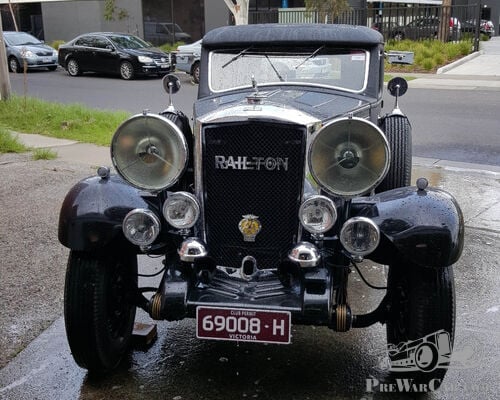
Railton straight 8 sports coupe for rallying REDUCED PRICE run with the bentleys at a fraction of the price
1934 Railton Sports CoupeBuilt for long distance rallyingRebuilt 2017built up at a cost of $160,000AUD, OFFERED FOR SALE AT A ..
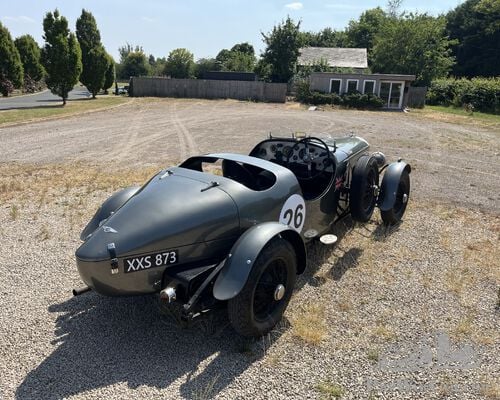
Derby Bentley Special 4-1/4
Sadly i am having to sell on my Bentley special ( Icarus) A great opportunity to be able to buy a Derby special to finish with your own touch..
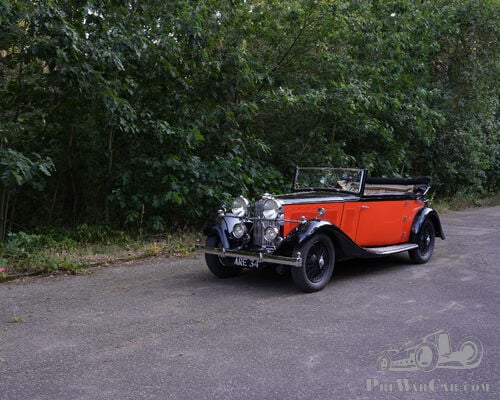
1934 Talbot AV105 Three Position Drophead Coupé
Registration no. ARE 34Chassis no. 35488 Much supporting paperworkRestored exampleVery usa..