The global magazine and marketplace for classic car enthusiasts, by enthusiasts.


Filter
Classic Morris, Plymouth for sale - Morris, Plymouth cars for sale
-

Morris Ten-Four Saloon 1934
Morris Ten-Four Saloon 1934Company / History The Morris motor company has a long and interesting history. The brand became successful thanks to William Richard Morris. He originally started out producing bicycles before moving into automobile manufacturing. The first Morris car was produced in 1913.. -
Morris Eight Special Boattail – With an Eye for Detail
This 1936 Morris 8 Special "Spitzheck" (pointed-tail) is one of those vehicles that does not merely provide transportation, but tells a story. A story of a time when cars were still conceived, designed, and built by human hands.A time when every detail had a purpose, and driving pleasure came first.This Morris Special Spitzheck is .. -
1940 Plymouth P10 Deluxe Convertible Coupe | RM Sotheby's | The Hershey Auction
Sold | $43,680 USD One of 6,986 Deluxe Convertible Coupes produced for 1940Benefits from an excellent rotisserie restoration under previous ownershipL-head inline six-cylinder engine; three-speed manual with overdriveWonderfully presented in Boatswain Blue over red leather Richly appointed with a remark.. -
1932 Plymouth Model PB Sport Roadster | RM Sotheby's | The Hershey Auction
Sold | $22,400 USD One of just 2,163 Sport Roadsters produced for 1932Final year for Plymouth's original Silver Dome four-cylinder engineEquipped with dual side-mounted spares, rumble seat, and folding rear luggage rackOne of Plymouth's most attractive and desirable pre-war open body styles By 1932, .. -
Morris Twenty Five. A very rare, large Morris.
This is your chance to acquire one of the few large Morris cars that were built. Connoisseurs know that Morris mainly built rather small to medium-sized vehicles. This Twenty-Five has the largest engine ever built by Morris in a passenger car, with a displacement of 3.5 litres and 6 cylinders. An incredible 10 litres of engine oil fit into the o.. -
Circa 1935 Morris Eight 2 door Saloon
Circa 1935 Morris Eight 2 door Saloon in approx 80 % restored condition but still dismantled.Carnumber 121660. All panels, guards, runningboards, doors etc were done ready to be painted. The whole upholstery was done as well. The chassis was fully restored as well as both axles, driveshaft and springs. The dashboard is also read..


Morris
GB, 1913 to date
(1) W.R.M. Motors Ltd, Cowley, Oxford, 1913 – 1919
(2) Morris Motors Ltd, Cowley, Oxford, 1919 – 1970
(3) Austin-Morris Division, British Leyland Motor Corp Ltd, Cowley, Oxford, 1970 to date
W.R. Morris (later Lord Nuffield), an Oxford cycle and motor agent, launched his Morris-Oxford light car in 1913. This Morris car was made from proprietary parts, the engine being a 1-litre T-head four by White and Poppe. At £175 the Morris car was one of the best of the true light cars (as opposed to cyclecars) and over 1.000 Morris cars had been sold by the end of 1914. A larger model, the famous Morris Cowley, arrived on the scene in 1915; this Morris car was assembled from American components, the engine being by Continental. After World War 1 Morris cars marketed two 1½-litre L-head sv fours, with power units by Hotchkiss of Coventry; the Morris Cowley differed from the Morris Oxford mainly in its more austere equipment and the absence of a starter. In an inflationary climate, Morris cars was brave enough to reduce the prices of its Morris cars(a Morris Cowley two-seater cost £465 in October 1920, £299.10s a year later, and £225 in October 1922) and ensured a steady flow of Morris carproduction by acquiring his suppliers, such as Hotchkiss, Wrigley (transmissions) and Hollick and Pratt (bodies).
The Morris ‘bullnoses’ were soon best-sellers backed by a nation-wide service organization of Morris cars, and in 1925 Morris outsold all his competitors with 54.000 Morris cars. From 1924 to 1926 the staple Morris cars were the 1½-litre Morris Cowley and the 1.8-litre Morris Oxford, both with 3-speed gearboxes and the wet-plate clutches which persisted on some Morris carmodels right up to 1939. The Morris Oxford acquired front wheel brakes in 1925, and they were available as an option on Morris Cowleys a year later. 1927 Morris cars produced the flat radiator and also a venture into the export market with the unsuccessful Empire Oxford Morris car of 2½-litres, which had a 4-speed box and worm drive. Equally unsuccessful was a plan to market Gallicized Morris cars built in the Léon Bollée plant at Le Mans.
Meanwhile Cecil Kimber had produced the first of the Morris-Oxford-based MG sports cars, and a new name had been born. Morris had made a few six-cylinder Morris cars in the early 1920s, but his first serious attempt in this direction with Morris cars was a 2½-litre ohc model for 1928, the engine of this Morris car inspired by the Wolseley 16/45, a make which had come under Morris control the previous year. 1929 saw another ohc Morris car, the 847cc Morris Minor at £125. Never a best-seller, the Morris car none the less served as the basis for MG’s Midget. The 1930 6-cylinder Morris cars had hydraulic brakes, extended down the range until they were universal by 1934 on all Morris cars, and in 1931 Morris managed to offer a simplified sv two-seater version of the Morris Minor for £100. The early 1930s proved very difficult for the Morris car company, which had no obvious best-seller and too many different models of Morris cars. Sliding roofs and electric fuel pumps by the Morris-owned S.U. concern were innovations for 1932 and 1933 Morris cars pioneered the semaphore-type traffic indicator in Britain. That year Morris cars sv 1.3-litre Morris Ten-Four came out as an answer to Austin’s Ten and Hillman’s Minx. All 1934 Morris cars had synchromesh and the bigger sixes the added refinement of a free wheel.
The best-seller Morris car came at last in 1935 with the 918cc sv Series I Morris Eight, which retailed at £132.10s for a fully-equipped Morris car saloon and helped reach their first million Morris cars by the summer of 1939. In a bigger category were the Series II Morris carmodels with modern styling, 3-speed gearboxes, and built-in jacking systems, ranging from a revised Morris Ten-Four up to a 3½-litre 6-cylinder Morris Twenty-Five at £280. These Morris cars were contemporary with the Series I, though introduced some months after that Morris car. All 1938 Morris cars except for the Morris Eight had push-rod ohv engines (already applied to Wolseley and MG). Later that year Riley was absorbed into the Nuffield Morris car empire. Two 1939 winners were a revised Series E 8hp with a 4-speed gearbox and headlamps faired into the wings of the Morris car, and the 1.140cc ohv Series M Ten, which introduced integral construction to Cowley and this Morris car was made after World War 2 by Hindusthan in India.
Only the 8 and 10 Morris cars were made in the first post-war years, the first really new Morris car for ten years being the 1949 Morris cars designed by Alex Issigonis. Of these the MM series Morris Minor used the old 8hp sv engine, but boasted integral construction, rack-and-pinion steering and torsion-bar independent front suspension and set a new standard in popular car handling. A million of the basic design Morris cars had been sold by January 1961. Its companion Morris carmodels, also chassisless, and with independent front suspension were a new sv 1½-litre Morris Oxford and the 2.2-litre ohc Morris MS Type Six.
The amalgamation of Nuffield and Austin to form the British Motor Corporation in 1952 resulted in a gradual process of rationalization. First the Morris Minor went over to Austin’s 803cc ohv A30 engine in 1953. The Series II Oxford Morris car and its less powerful companion, the Morris Cowley, of 1954 had Morris hulls, but their engines were also ohv Austins. In 1955 the Morris carrange was completed by a new Isis using the 2.6-litre BMC 6-cylinder unit – this Morris car was discontinued in 1958. In the late 1950s some Morris cars were made and sold in Australia under the Morris car name which were in fact more closely akin to other makes in the BMC group. The 6-cylinder Morris Marshall was really an Austin A105, while both the Major and its Austin counterpart, the Lancer, were based on the Wolseley 1500.
With the arrival of the Farina-styled 1½-litre Morris car saloons in 1959, differences between Austin and Morris cars had been reduced to house colours and radiator emblems. The front-wheel-drive Mini (1960) was shared between the two makes and though its bigger stablemate, the 1100 of 1963 with Hydrolastic suspension, was initially a Nuffield monopoly Morris car, the inevitable Austin variant followed a year later. In the case of the third front-wheel-drive model, the 1800, Austin were ahead of Morris cars in introducing it by nearly eighteen months. The 1968 Morris car range comprised the fwd Mini, 1100/1300, and 1800 as well as the conventional 1.600cc Oxford and the indestructible Morris Minor 1000, now with 1.098cc engine and still selling close on 60.000 Morris cars a year. This sole survivor of independent Morris car design did not disappear until the end of 1970. Minis became a separate make that year. From 1971 Morris car versions of the 1100 and 1300 disappeared; the name was reserved for the Marina, an orthodox rear-wheel-driven family saloon with Minor 1000 front suspension, semi-elliptics at the rear, and drum brakes on the simpler variant Morris cars. Push-rod 1.300cc and 1.800cc B.L.M.C. 4-cylinder engines were used, and the original 2-door coupé and 4-door saloon were joined by a station wagon Morris car in 1973. The largest fwd cars were still available with Morris car badges – there was a version of the 6-cylinder 2200 in 1972.
Source: Georgano, encyclopedia of motorcar; MCS
The information is written with the greatest of care. However, if you have any suggested amendments please contact us at office@prewarcar.com
Plymouth
US, 1928 to date
Chrysler Corporation, Detroit, Mich.
The 4-cylinder 21hp Plymouth car appeared in 1928 at a list price of $725 for a sedan. This Plymouth car replaced the earlier 4-cylinder Chryslers and represented a serious challenge for Ford and Chevrolet in their lowest price class. The Plymouth car had side valves, internal-expanding hydraulic brakes and ribbon-type radiator and gave the Plymouth car a close resemblance to the 1928 Chryslers and De Sotos, and Plymouth cars sold over 100.000 in its first year, even improving its sales position in the bleak economic climate of 1932. Plymouth cars adhered to four cylinders until 1933, when the Plymouth PD-series 6-cylinder was listed at less than $600. 1934 de luxe models of Plymouth cars had independent front suspension, but this was dropped after a year and did not reappear for some time on Plymouth cars. The standard engine in the later 1930 Plymouth cars had a capacity of 3.3-litres, rather smaller than that used in comparable Chevrolets and Fords: a small-bore 2.8-litre version Plymouth car was made for export up to 1939, but the name Plymouth was not usually found on Plymouth cars sold in England, which were nominally Chrysler Kew and Wimbledon sixes. After World War 2 evolution followed that of other Chrysler Corporation cars closely, the old-fashioned styling losing the Plymouth car division its long-held third place in American sales to Buick. Further, Plymouth cars retained the L-head six as its staple power unit right up to 1955, when Flight Sweep versions were introduced with over-square ohv V8 engines on accepted American lines in a variety of powers from 157 to 177bhp. The capacity of these Plymouth cars had 4.3-litres, while the six, now of 3.8-litres, remained available. These 1955 Plymouth cars were lower and longer than their predecessors and could be obtained with synchromesh, overdrive or automatic gearboxes.
The Plymouth Fury models of the ensuing decade represented a breakaway from the traditional Plymouth stolid family car, while the Plymouth Car Division was also responsible for Chrysler’s contribution to the compacts, the Plymouth Valiant launched for 1960. This Plymouth car had rather more European styling than its competitors, with a dummy spare-wheel moulding on the tail; interesting items of specification were the unitary construction of the Plymouth car, alternator ignition, and inclined in-line 2.8-litre ohv 6-cylinder engine. The influence of the Plymouth GT car on America resulted in the Plymouth Barracuda of 1965, a fastback coupé using the Valiant’s 8ft 10in wheelbase and a 4½-litre V8 power unit. Plymouth cars, like Ford and Chevrolet, was aiming at comprehensive coverage of the low and medium price market in 1966, with the compact Plymouth Valiant, the sports-compact Plymouth Barracuda, the medium-sized Plymouth Belvedere, the full-size Plymouth Fury, and the luxurious ‘VIP’ 4-door hardtop Plymouth car, offered only with a 5.2-litre V8 engine and selling for $2.930. An increasing emphasis on sporting Plymouth cars was detectable by 1968, when in addition to the established Barracuda there were two other sports coupés Plymouth car, the Plymouth GTX and the Plymouth Road Runner. All three Plymouth cars were available with 4-speed manual gearboxes and the 6.981cc 425bhp hemi-head V8 also used by Dodge. In 1970, when Valiant prices started at a low $2.172, there was also a Valiant sports coupé, the Plymouth Duster.
In 1971 Plymouth car company added a sub-compact to their Plymouth car range when they offered the 1½-litre Hillman Avenger as the Plymouth Cricket. The 1972 range of Plymouth cars embraced the Valiant on a 9ft wheelbase, the Barracudas and Satellites, and the full-size Furys with V8 engines and automatic transmission as standard. Engines in the Plymouth cars ranged from the Valiant’s 3.2-litre and 3.7-litre sixes up to the largest Chrysler unit, a V8 of 7.210cc. Electronic ignition was offered on the costliest Barracuda model. Casualties of new Federal regulations were the hemi-head engine and convertibles, and the same range Plymouth cars with minor improvements, among them manually-operated sun roofs, was offerd in 1973.
Source: Georgano, encyclopedia of motorcar; MCS
The information is written with the greatest of care. However, if you have any suggested amendments please contact us at office@prewarcar.com



Featured
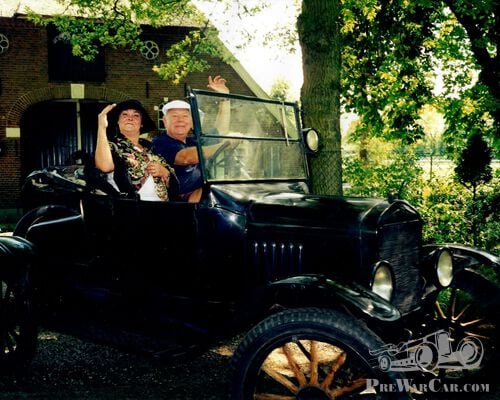
Zeer originele Ford Model T runabout
2 zits cabrio, motor is los, niet gerestaureerd, volledig orgineel, ingevoerd uit california in 1998, van de 2e eigenaar (m'n Oom) die hem van zn b..
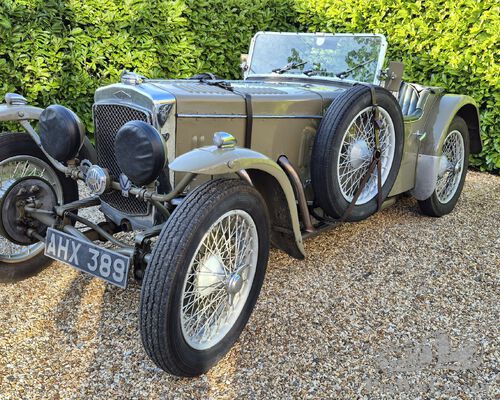
Fraser Nash TT Replica
AHX 389 ( chassis no. 2073, engine no. 10367).An important and correct short-chassis TT Replica with known history from new. Ex. H. P..
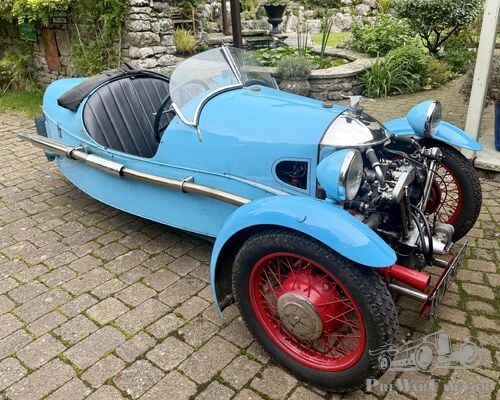
1933 Morgan Three-Wheeler Super Sports, Beetle Back • Show-Specification Car
First registered24 March 1933RegistrationXJ 6336 - original and transferableChassis numberD174Engine numberDTZE 94 H 31..