The global magazine and marketplace for classic car enthusiasts, by enthusiasts.


Filter
Classic Star, Morris for sale - Star, Morris cars for sale
-

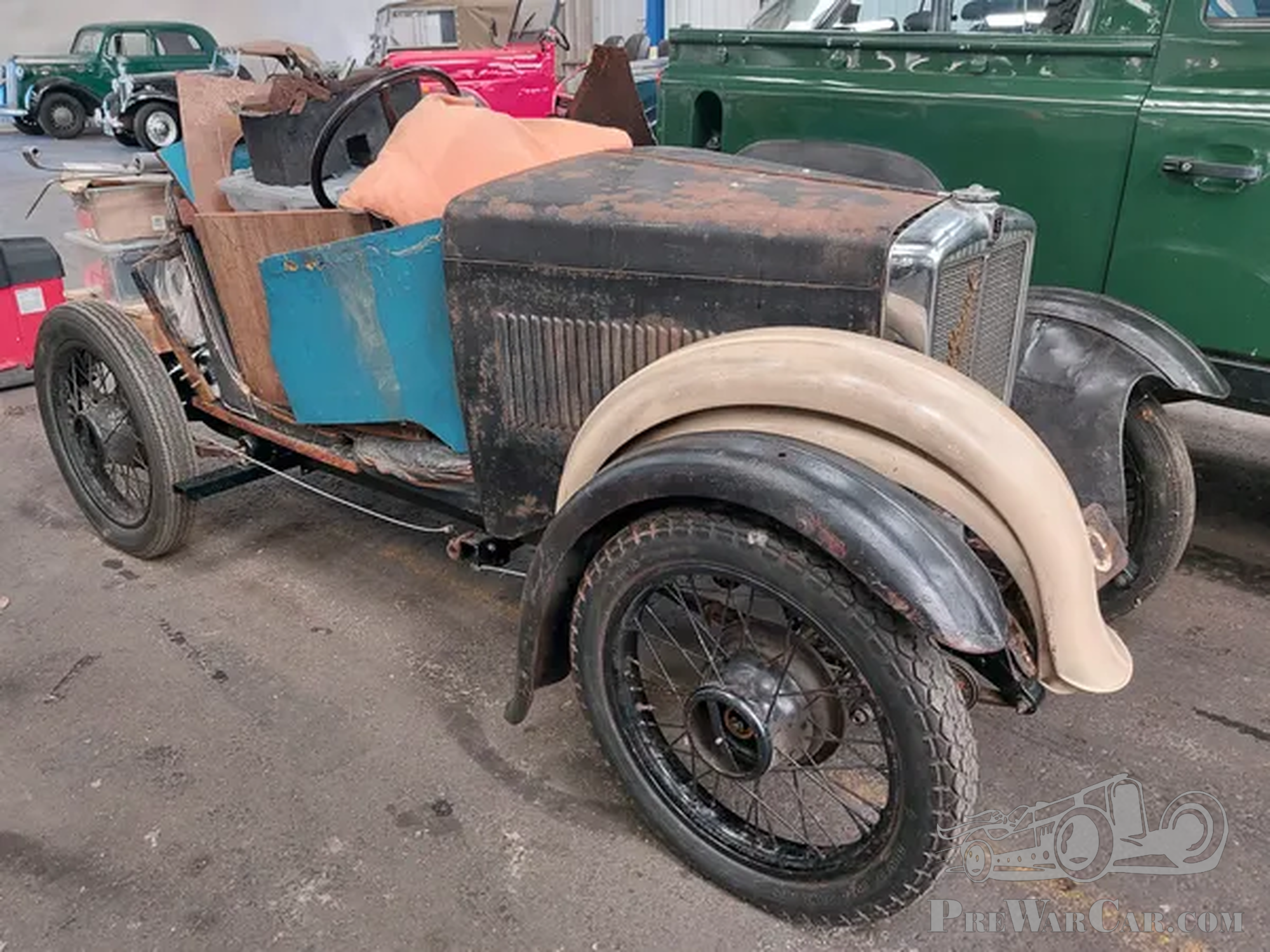
Morris 8 1936 Rolling Chassis + Series E Engine + 4 speed Gearbox
Rare opportunity to acquire a Morris 8 1936 Rolling chassis to build a 1930s style special. Complete Rolling chassis includes following parts.Complete Chassis frame, Rear Axle with Crown Wheel & Pinion and Prop shaft, rear leaf springs, , front shock absorbers, 5 spoked 17” wheels, bishop cam Steering box (Overhauled), steering.. -
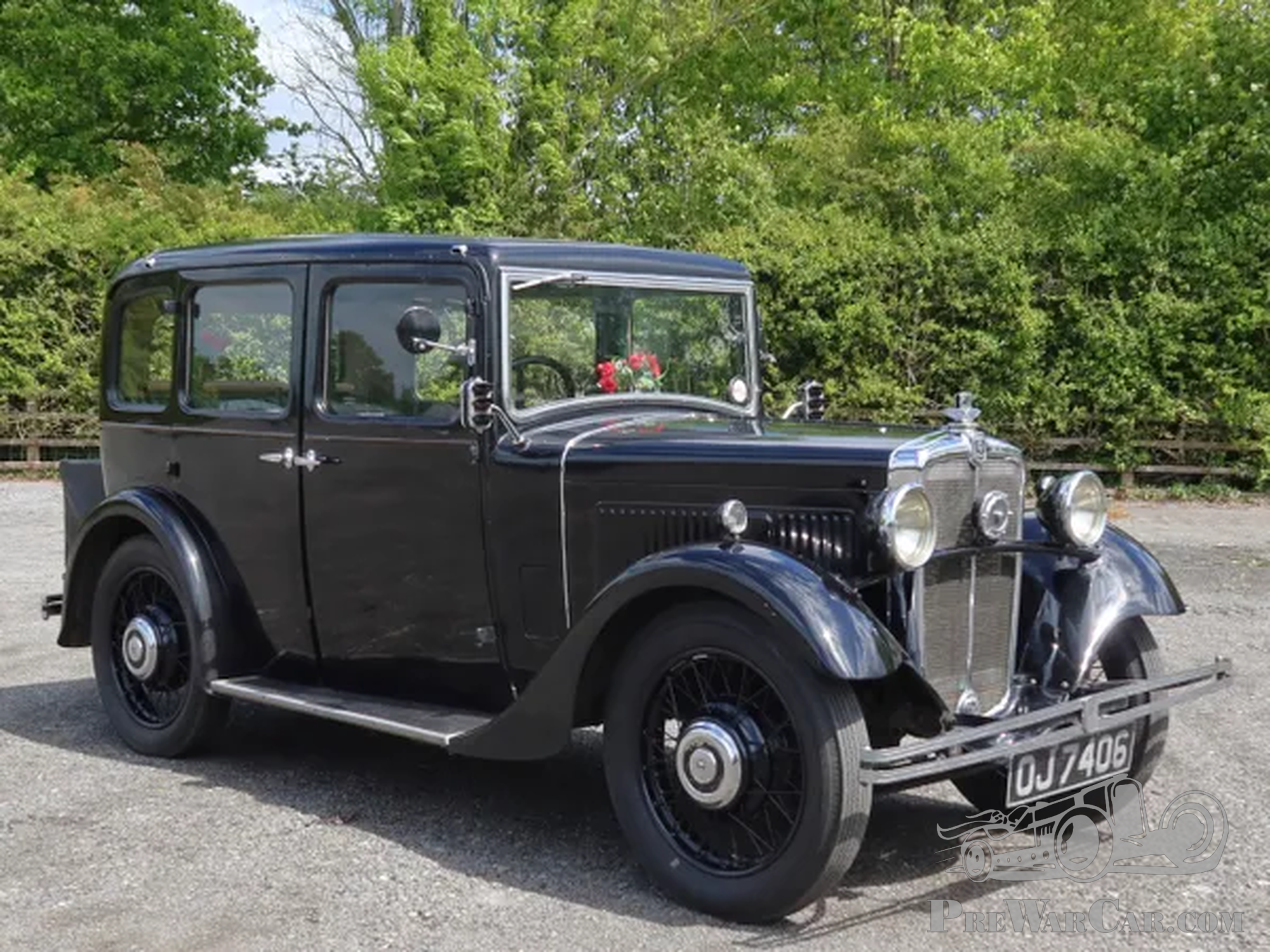
1932 Morris Ten Saloon | Brightwells | Auction Ends: Wed 24th Jun
In the current ownership for 47 years; body-off restoration in the early 1980s and in regular use since; only 1,450 miles on rebuilt engine; Wilcot Robot indicators; Dunhill luggage trunk; a gorgeous little Morris that is a credit to its long-term ownerWhile 20% of the UK’s roads were tarmac in the early-1920s, by the early-1930s t.. -
Morris Eight Special Boattail – With an Eye for Detail
This 1936 Morris 8 Special "Spitzheck" (pointed-tail) is one of those vehicles that does not merely provide transportation, but tells a story. A story of a time when cars were still conceived, designed, and built by human hands.A time when every detail had a purpose, and driving pleasure came first.This Morris Special Spitzheck is .. -
Morris Twenty Five. A very rare, large Morris.
This is your chance to acquire one of the few large Morris cars that were built. Connoisseurs know that Morris mainly built rather small to medium-sized vehicles. This Twenty-Five has the largest engine ever built by Morris in a passenger car, with a displacement of 3.5 litres and 6 cylinders. An incredible 10 litres of engine oil fit into the o.. -
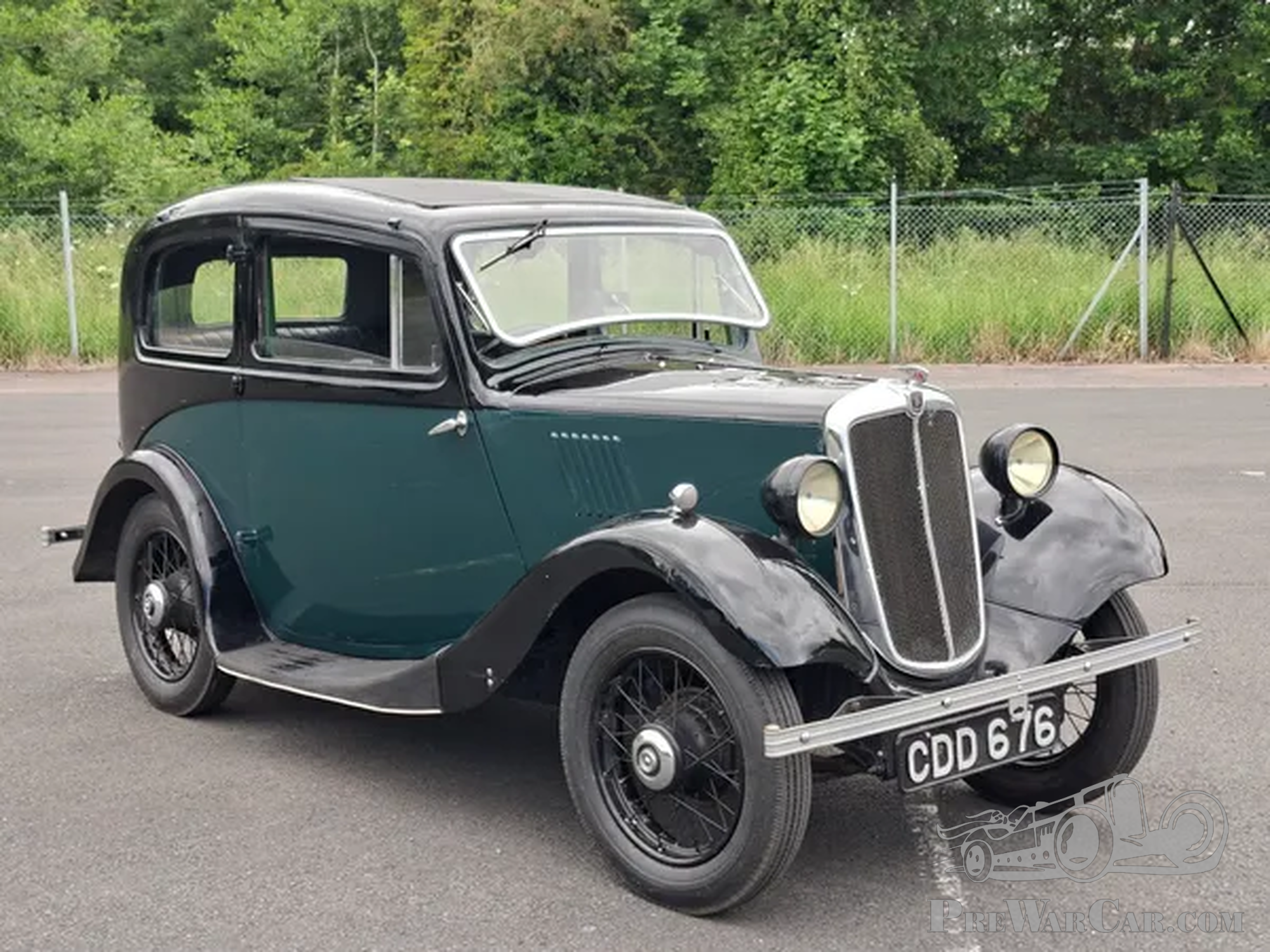
Circa 1935 Morris Eight 2 door Saloon
Circa 1935 Morris Eight 2 door Saloon in approx 80 % restored condition but still dismantled.Carnumber 121660. All panels, guards, runningboards, doors etc were done ready to be painted. The whole upholstery was done as well. The chassis was fully restored as well as both axles, driveshaft and springs. The dashboard is also read..



Star
GB, 1898 – 1932
Star/ Starling/ Stuart
(1) Star Motor Co, Wolverhampton, Staffs., 1898 – 1902
(2) Star Engineering Co, Wolverhampton, Staffs., 1902 – 1909
(3) Star Cycle Co, Wolverhampton, Staffs., 1905 – 1909
(4) Star Engineering Co Ltd, Wolverhampton, Staffs., 1909 – 1928
(5) Star Motor Co Ltd, Wolverhampton, Staffs., 1928 – 1932
Edward Lisle Sr’s Star Motor Co, an offshoot of the Star Cycle Co, produced its first Star car in 1898, and offered the Star car for sale in the following year. The Star car was a Benz-based machine, with a single-cylinder, water-cooled 3½hp engine, belt primary drive and chain final drive. It was an improvement in that water circulation on the Star car was assisted by a pump. In 1900 there followed a 2-cylinder Star car with 3 forward speeds, still on Benz lines. 1901 brougth De Dion-engined single-cylinder Star cars, and 1902 an 8hp twin of Panhard type in addition. Other, larger Star cars of Panhard ancestry joined the 8hp, up to a 20hp four Star car. By 1904, although a De Dion-powered single and Panhard-type twin were still there, the bigger machines were of Mercédès pattern, these Star cars came with honeycomb radiators, mechanically-operated inlet valves and pressed-steel frames. All veteran Star cars up to 1914 were extremely well-made, well-furnished, conventional, rather expensive cars lacking in technical originality, showing a line of development appearance in the 1907 range. The best-known Star car of the veteran period was the excellent 15hp Star car of 1909, a shaft-driven 2.8-litre four which had become the 3-litre 15.9hp by 1914. A great variety of other Star cars, basically similar models were turned out, not only by Star but also by the Star Cycle Co. The latter, run by Edward Lisle Jr, had made motor tricycles and bicycles, and produced the Starling car in 1905. It had 2 forward speeds and a De Dion single-cylinder engine, but was otherwise of Panhard type, with armoured wood frame and chain drive. One year later the Star car company supplemented it with the more modern Stuart car, which had 2-cylinders, 3-speeds and shaft drive. This name was dropped in 1908, all models being called Starlings, but these too, disappeared in 1909 when Star cars cheaper line was entrusted to the new Brion Motor Co, a more indepented concern that was still run by Edward Lisle Jr. So popular was the Star car that its makers were among the six largest in the country before 1914.
The 15.9hp Star car was continued after World War 1, together with another sv four Star car of pre-war origin, the 20hp Star car of 3.8-litres. A modern light Star car of fashionable type, the 11.9hp, arrived in 1921. This Star car used a 1.795cc sv engine with a detachable head, made in unit with a 3-speed gearbox which had central change. By 1924, the 11.9 Star car had grown up into the 2-litre 12/25hp Star car. It shared cylinder dimensions with the 18hp Star car, which was a new 3-litre six. The 12/25 Star car could be had as a very fine fast touring car with overhead valves and 54bhp, in which form the Star car was called 12/40hp. Thereafter, the Star car range reverted to its pre-war complexity. By 1927, there were three sv Star car models and two additional and more up-to-date Star cars with overhead valves. The 14/40hp Star car, new in 1926, was a solid 2-litre, ohv machine which in spite of having only 4-cylinders and 3 forward speeds, this Star car was a notably smooth and flexible car, thanks to a 5-bearing crankshaft. The ohv 20/60hp Star car, a 2½-litre six with the same bore and stroke as the 14/40 and a 7-bearing crankshaft, was the most luxurious Star car. A light six, the popular ohv 18/50hp, joined the Star car range in 1928, the year of the Star car company’s acquisition by Guy, and replaced the 14/40 Star car for 1929. By this time, the sv Star cars had gone, leaving the two sixes. As the 18hp Star Comet and the 21hp Star Planet, these Star cars were revised with handsome bodies and very full, luxurious equipment, including one-shot chassis lubrication, thermostatically-controlled radiator shutters and a built-in jacking system. Two other engines, of 14hp (2-litres) and 24hp (3.6-litres) were also obtainable in Star cars for 1932, as alternative Comet and Planet power units. These Star car were the last new Star cars, for they were too expensive to make, and the times favoured the mass-produced economy car. Production of Star cars ended in March 1932, but the unsold stock was sold by McKenzie and Denley of Birmingham, and the Star car was quoted in the Buyer’s Guide lists until 1935.
US, 1903 – 1904
(1) Star Automobile Co, Cleveland, Ohio
(2) H.S. Moore, Cleveland, Ohio
This Star car was driven by a single-cylinder, watercooled engine of 1.9-litres, mounted beneath the front seat, with false bonnet and coil radiator in front. A champion planetary transmission and double chain drive was used on this Star car. Both two- and five-seater Star cars were made, the latter with rear entrance.
US, 1908
Star Automobile Co, Chicago, Ill.
Star runabouts were offered in three models, selling for $500, $600 and $700 respectively. The smallest Star car was an open two-seater, and shaft drive was employed on all Star cars.
US, 1908
Model Automobile Co, Peru, Ind.
The short-lived Star car from Peru was offered in conventional 2- and 4-cylinder forms. The twin was chain-driven, while the big, expensive four Star car ($4.000) had shaft drive.
US, 1922 – 1928
Durant Motor Co of New Jersey, Elizabeth, N.J.; Lansing, Mich; Oakland, Calif.
William Crapo Durant’s Star Four was one of the most serious attempts to take away some of the Model T Ford’s market, for the cheapest practical car. Unlike the Ford, the Star car was an assembled machine.The Star car had a 2.2-litre, 4-cylinder engine by Continental, and was conventional in design in every way except the gearbox, which was separate; a feature common to all the vehicles in Durant’s empire, but very unusual in American mass-produced cars by the early 1920s. The touring Star car cost only $443 in 1923, which helped Star to be the seventh biggest seller in America that year. The Star car was sold outside the United States as the Rugby. In 1926, a 2.8-litre six Star car was introduced. Front wheel brakes appeared in 1927 but a year later the Star car make disappeared in the collapse of the Durant interests. By this time, 250 Star cars a day were being turned out. Only the Four was still called the Star car for the 1928 model year, as the Six was now known as the Durant Model 55.
Source: Georgano, encyclopedia of motorcar; TRN, GMN, MJWW, TRN
The information is written with the greatest of care. However, if you have any suggested amendments please contact us at office@prewarcar.com
Morris
GB, 1913 to date
(1) W.R.M. Motors Ltd, Cowley, Oxford, 1913 – 1919
(2) Morris Motors Ltd, Cowley, Oxford, 1919 – 1970
(3) Austin-Morris Division, British Leyland Motor Corp Ltd, Cowley, Oxford, 1970 to date
W.R. Morris (later Lord Nuffield), an Oxford cycle and motor agent, launched his Morris-Oxford light car in 1913. This Morris car was made from proprietary parts, the engine being a 1-litre T-head four by White and Poppe. At £175 the Morris car was one of the best of the true light cars (as opposed to cyclecars) and over 1.000 Morris cars had been sold by the end of 1914. A larger model, the famous Morris Cowley, arrived on the scene in 1915; this Morris car was assembled from American components, the engine being by Continental. After World War 1 Morris cars marketed two 1½-litre L-head sv fours, with power units by Hotchkiss of Coventry; the Morris Cowley differed from the Morris Oxford mainly in its more austere equipment and the absence of a starter. In an inflationary climate, Morris cars was brave enough to reduce the prices of its Morris cars(a Morris Cowley two-seater cost £465 in October 1920, £299.10s a year later, and £225 in October 1922) and ensured a steady flow of Morris carproduction by acquiring his suppliers, such as Hotchkiss, Wrigley (transmissions) and Hollick and Pratt (bodies).
The Morris ‘bullnoses’ were soon best-sellers backed by a nation-wide service organization of Morris cars, and in 1925 Morris outsold all his competitors with 54.000 Morris cars. From 1924 to 1926 the staple Morris cars were the 1½-litre Morris Cowley and the 1.8-litre Morris Oxford, both with 3-speed gearboxes and the wet-plate clutches which persisted on some Morris carmodels right up to 1939. The Morris Oxford acquired front wheel brakes in 1925, and they were available as an option on Morris Cowleys a year later. 1927 Morris cars produced the flat radiator and also a venture into the export market with the unsuccessful Empire Oxford Morris car of 2½-litres, which had a 4-speed box and worm drive. Equally unsuccessful was a plan to market Gallicized Morris cars built in the Léon Bollée plant at Le Mans.
Meanwhile Cecil Kimber had produced the first of the Morris-Oxford-based MG sports cars, and a new name had been born. Morris had made a few six-cylinder Morris cars in the early 1920s, but his first serious attempt in this direction with Morris cars was a 2½-litre ohc model for 1928, the engine of this Morris car inspired by the Wolseley 16/45, a make which had come under Morris control the previous year. 1929 saw another ohc Morris car, the 847cc Morris Minor at £125. Never a best-seller, the Morris car none the less served as the basis for MG’s Midget. The 1930 6-cylinder Morris cars had hydraulic brakes, extended down the range until they were universal by 1934 on all Morris cars, and in 1931 Morris managed to offer a simplified sv two-seater version of the Morris Minor for £100. The early 1930s proved very difficult for the Morris car company, which had no obvious best-seller and too many different models of Morris cars. Sliding roofs and electric fuel pumps by the Morris-owned S.U. concern were innovations for 1932 and 1933 Morris cars pioneered the semaphore-type traffic indicator in Britain. That year Morris cars sv 1.3-litre Morris Ten-Four came out as an answer to Austin’s Ten and Hillman’s Minx. All 1934 Morris cars had synchromesh and the bigger sixes the added refinement of a free wheel.
The best-seller Morris car came at last in 1935 with the 918cc sv Series I Morris Eight, which retailed at £132.10s for a fully-equipped Morris car saloon and helped reach their first million Morris cars by the summer of 1939. In a bigger category were the Series II Morris carmodels with modern styling, 3-speed gearboxes, and built-in jacking systems, ranging from a revised Morris Ten-Four up to a 3½-litre 6-cylinder Morris Twenty-Five at £280. These Morris cars were contemporary with the Series I, though introduced some months after that Morris car. All 1938 Morris cars except for the Morris Eight had push-rod ohv engines (already applied to Wolseley and MG). Later that year Riley was absorbed into the Nuffield Morris car empire. Two 1939 winners were a revised Series E 8hp with a 4-speed gearbox and headlamps faired into the wings of the Morris car, and the 1.140cc ohv Series M Ten, which introduced integral construction to Cowley and this Morris car was made after World War 2 by Hindusthan in India.
Only the 8 and 10 Morris cars were made in the first post-war years, the first really new Morris car for ten years being the 1949 Morris cars designed by Alex Issigonis. Of these the MM series Morris Minor used the old 8hp sv engine, but boasted integral construction, rack-and-pinion steering and torsion-bar independent front suspension and set a new standard in popular car handling. A million of the basic design Morris cars had been sold by January 1961. Its companion Morris carmodels, also chassisless, and with independent front suspension were a new sv 1½-litre Morris Oxford and the 2.2-litre ohc Morris MS Type Six.
The amalgamation of Nuffield and Austin to form the British Motor Corporation in 1952 resulted in a gradual process of rationalization. First the Morris Minor went over to Austin’s 803cc ohv A30 engine in 1953. The Series II Oxford Morris car and its less powerful companion, the Morris Cowley, of 1954 had Morris hulls, but their engines were also ohv Austins. In 1955 the Morris carrange was completed by a new Isis using the 2.6-litre BMC 6-cylinder unit – this Morris car was discontinued in 1958. In the late 1950s some Morris cars were made and sold in Australia under the Morris car name which were in fact more closely akin to other makes in the BMC group. The 6-cylinder Morris Marshall was really an Austin A105, while both the Major and its Austin counterpart, the Lancer, were based on the Wolseley 1500.
With the arrival of the Farina-styled 1½-litre Morris car saloons in 1959, differences between Austin and Morris cars had been reduced to house colours and radiator emblems. The front-wheel-drive Mini (1960) was shared between the two makes and though its bigger stablemate, the 1100 of 1963 with Hydrolastic suspension, was initially a Nuffield monopoly Morris car, the inevitable Austin variant followed a year later. In the case of the third front-wheel-drive model, the 1800, Austin were ahead of Morris cars in introducing it by nearly eighteen months. The 1968 Morris car range comprised the fwd Mini, 1100/1300, and 1800 as well as the conventional 1.600cc Oxford and the indestructible Morris Minor 1000, now with 1.098cc engine and still selling close on 60.000 Morris cars a year. This sole survivor of independent Morris car design did not disappear until the end of 1970. Minis became a separate make that year. From 1971 Morris car versions of the 1100 and 1300 disappeared; the name was reserved for the Marina, an orthodox rear-wheel-driven family saloon with Minor 1000 front suspension, semi-elliptics at the rear, and drum brakes on the simpler variant Morris cars. Push-rod 1.300cc and 1.800cc B.L.M.C. 4-cylinder engines were used, and the original 2-door coupé and 4-door saloon were joined by a station wagon Morris car in 1973. The largest fwd cars were still available with Morris car badges – there was a version of the 6-cylinder 2200 in 1972.
Source: Georgano, encyclopedia of motorcar; MCS
The information is written with the greatest of care. However, if you have any suggested amendments please contact us at office@prewarcar.com


Featured
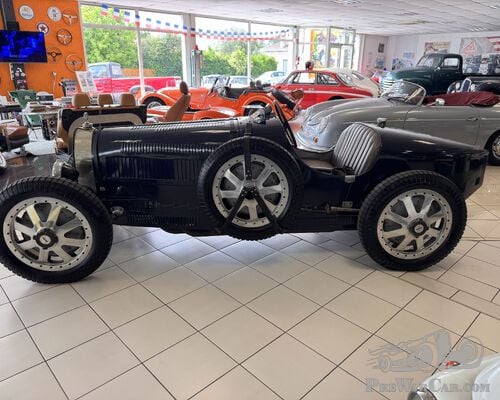
Bugatti 35 B Pur Sang
Bugatti 35 B Pur Sang,importée par un membre délégué de la FFVE il y’a une quinzaine d années.Participation à de nombreux Rallyes Bug..
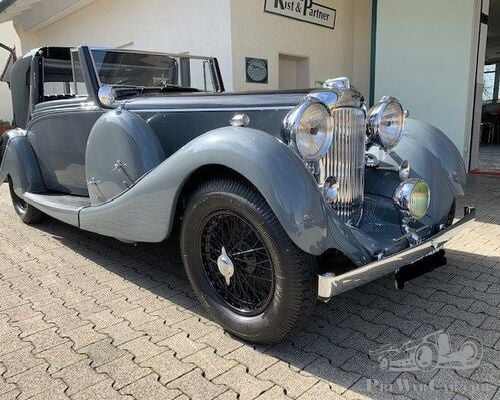
Lagonda LG 45 Coupe de Ville Sedanca by Mayfair
The successor to the M45, the LG45 was built around the same highly capable, competition-proven 4.5-litre Meadows inline-six engine, but featured r..