The global magazine and marketplace for classic car enthusiasts, by enthusiasts.


Filter
Classic Morris, Volkswagen for sale - Morris, Volkswagen cars for sale
-

1938 Morris 12/4 Series III | Brightwells | Auction Ends: Wed 05th Aug
Produced for only a short period before the outbreak of the Second World War brought civilian car production to a halt; driven to the sale; powered by the model's 1,550cc overhead-valve four-cylinder engine with cross-flow cylinder head, driving through a four-speed gearbox with synchromesh on the upper three ratios Few pre-.. -
1936 Morris 8 Tourer | Brightwells | Auction Ends: Wed 05th Aug
Beautifully presented and full of period charm; the engine and gearbox have been replaced with a later Series E unit incorporating the desirable four-speed gearbox; particularly attractive interior which presents well and adds greatly to the car's overall appeal; a highly usable pre-war convertible Few pre-war cars offer suc.. -
1934 Morris 10/6 Saloon | Brightwells | Auction Ends: Wed 05th Aug
Charming vintage saloon; resprayed body; out of long tern ownership before being purchased through a deceased estate earlier on this year Elegant, practical and dependable, the Morris 10/6 was one of Britain's most popular family cars of the early 1930s. Powered by Morris's smooth six-cylinder engine, it offered noticeably m.. -
1928 Morris Cowley
The Morris Cowley as used in the new TV series (all creatures great and small) yes Tristians car, it’s a lovely barn find, all original and in usable condition, five new tyre and tubes, new exhaust system, new fan belt, new speedo cable, starts first time on the button, fully charging, all lights and indicators, brake lights etc work, loverly .. -
1936 Morris 12 | Brightwells | Auction Ends: Wed 05th Aug
First registered in December 1936; 4 speed gearbox conversion; matching numbers; extensive work carries out 7000 miles ago This is a charming and increasingly rare 1936 Morris 12/4 Sliding Head Saloon, a delightful pre-war British classic that has benefitted from extensive mechanical restoration while retaining its period ch.. -
1937 Morris Eight Saloon | Brightwells | Auction Ends: Wed 05th Aug
Running and driving; tax and MOT exempt; its current owner since October 2012 This charming 1937 Morris 8 Saloon, finished in an attractive green and black colour scheme, is powered by a 796cc petrol engine. This pre-war vintage machine has had eight former keepers and has been with its current owner since October 2012. -
Morris Eight Special Boattail – With an Eye for Detail
This 1936 Morris 8 Special "Spitzheck" (pointed-tail) is one of those vehicles that does not merely provide transportation, but tells a story. A story of a time when cars were still conceived, designed, and built by human hands.A time when every detail had a purpose, and driving pleasure came first.This Morris Special Spitzheck is .. -
Morris 8 1936 Rolling Chassis + Series E Engine + 4 speed Gearbox
Rare opportunity to acquire a Morris 8 1936 Rolling chassis to build a 1930s style special. Complete Rolling chassis includes following parts.Complete Chassis frame, Rear Axle with Crown Wheel & Pinion and Prop shaft, rear leaf springs, , front shock absorbers, 5 spoked 17” wheels, bishop cam Steering box (Overhauled), steering.. -
Morris Twenty Five. A very rare, large Morris.
This is your chance to acquire one of the few large Morris cars that were built. Connoisseurs know that Morris mainly built rather small to medium-sized vehicles. This Twenty-Five has the largest engine ever built by Morris in a passenger car, with a displacement of 3.5 litres and 6 cylinders. An incredible 10 litres of engine oil fit into the o..




Morris
GB, 1913 to date
(1) W.R.M. Motors Ltd, Cowley, Oxford, 1913 – 1919
(2) Morris Motors Ltd, Cowley, Oxford, 1919 – 1970
(3) Austin-Morris Division, British Leyland Motor Corp Ltd, Cowley, Oxford, 1970 to date
W.R. Morris (later Lord Nuffield), an Oxford cycle and motor agent, launched his Morris-Oxford light car in 1913. This Morris car was made from proprietary parts, the engine being a 1-litre T-head four by White and Poppe. At £175 the Morris car was one of the best of the true light cars (as opposed to cyclecars) and over 1.000 Morris cars had been sold by the end of 1914. A larger model, the famous Morris Cowley, arrived on the scene in 1915; this Morris car was assembled from American components, the engine being by Continental. After World War 1 Morris cars marketed two 1½-litre L-head sv fours, with power units by Hotchkiss of Coventry; the Morris Cowley differed from the Morris Oxford mainly in its more austere equipment and the absence of a starter. In an inflationary climate, Morris cars was brave enough to reduce the prices of its Morris cars(a Morris Cowley two-seater cost £465 in October 1920, £299.10s a year later, and £225 in October 1922) and ensured a steady flow of Morris carproduction by acquiring his suppliers, such as Hotchkiss, Wrigley (transmissions) and Hollick and Pratt (bodies).
The Morris ‘bullnoses’ were soon best-sellers backed by a nation-wide service organization of Morris cars, and in 1925 Morris outsold all his competitors with 54.000 Morris cars. From 1924 to 1926 the staple Morris cars were the 1½-litre Morris Cowley and the 1.8-litre Morris Oxford, both with 3-speed gearboxes and the wet-plate clutches which persisted on some Morris carmodels right up to 1939. The Morris Oxford acquired front wheel brakes in 1925, and they were available as an option on Morris Cowleys a year later. 1927 Morris cars produced the flat radiator and also a venture into the export market with the unsuccessful Empire Oxford Morris car of 2½-litres, which had a 4-speed box and worm drive. Equally unsuccessful was a plan to market Gallicized Morris cars built in the Léon Bollée plant at Le Mans.
Meanwhile Cecil Kimber had produced the first of the Morris-Oxford-based MG sports cars, and a new name had been born. Morris had made a few six-cylinder Morris cars in the early 1920s, but his first serious attempt in this direction with Morris cars was a 2½-litre ohc model for 1928, the engine of this Morris car inspired by the Wolseley 16/45, a make which had come under Morris control the previous year. 1929 saw another ohc Morris car, the 847cc Morris Minor at £125. Never a best-seller, the Morris car none the less served as the basis for MG’s Midget. The 1930 6-cylinder Morris cars had hydraulic brakes, extended down the range until they were universal by 1934 on all Morris cars, and in 1931 Morris managed to offer a simplified sv two-seater version of the Morris Minor for £100. The early 1930s proved very difficult for the Morris car company, which had no obvious best-seller and too many different models of Morris cars. Sliding roofs and electric fuel pumps by the Morris-owned S.U. concern were innovations for 1932 and 1933 Morris cars pioneered the semaphore-type traffic indicator in Britain. That year Morris cars sv 1.3-litre Morris Ten-Four came out as an answer to Austin’s Ten and Hillman’s Minx. All 1934 Morris cars had synchromesh and the bigger sixes the added refinement of a free wheel.
The best-seller Morris car came at last in 1935 with the 918cc sv Series I Morris Eight, which retailed at £132.10s for a fully-equipped Morris car saloon and helped reach their first million Morris cars by the summer of 1939. In a bigger category were the Series II Morris carmodels with modern styling, 3-speed gearboxes, and built-in jacking systems, ranging from a revised Morris Ten-Four up to a 3½-litre 6-cylinder Morris Twenty-Five at £280. These Morris cars were contemporary with the Series I, though introduced some months after that Morris car. All 1938 Morris cars except for the Morris Eight had push-rod ohv engines (already applied to Wolseley and MG). Later that year Riley was absorbed into the Nuffield Morris car empire. Two 1939 winners were a revised Series E 8hp with a 4-speed gearbox and headlamps faired into the wings of the Morris car, and the 1.140cc ohv Series M Ten, which introduced integral construction to Cowley and this Morris car was made after World War 2 by Hindusthan in India.
Only the 8 and 10 Morris cars were made in the first post-war years, the first really new Morris car for ten years being the 1949 Morris cars designed by Alex Issigonis. Of these the MM series Morris Minor used the old 8hp sv engine, but boasted integral construction, rack-and-pinion steering and torsion-bar independent front suspension and set a new standard in popular car handling. A million of the basic design Morris cars had been sold by January 1961. Its companion Morris carmodels, also chassisless, and with independent front suspension were a new sv 1½-litre Morris Oxford and the 2.2-litre ohc Morris MS Type Six.
The amalgamation of Nuffield and Austin to form the British Motor Corporation in 1952 resulted in a gradual process of rationalization. First the Morris Minor went over to Austin’s 803cc ohv A30 engine in 1953. The Series II Oxford Morris car and its less powerful companion, the Morris Cowley, of 1954 had Morris hulls, but their engines were also ohv Austins. In 1955 the Morris carrange was completed by a new Isis using the 2.6-litre BMC 6-cylinder unit – this Morris car was discontinued in 1958. In the late 1950s some Morris cars were made and sold in Australia under the Morris car name which were in fact more closely akin to other makes in the BMC group. The 6-cylinder Morris Marshall was really an Austin A105, while both the Major and its Austin counterpart, the Lancer, were based on the Wolseley 1500.
With the arrival of the Farina-styled 1½-litre Morris car saloons in 1959, differences between Austin and Morris cars had been reduced to house colours and radiator emblems. The front-wheel-drive Mini (1960) was shared between the two makes and though its bigger stablemate, the 1100 of 1963 with Hydrolastic suspension, was initially a Nuffield monopoly Morris car, the inevitable Austin variant followed a year later. In the case of the third front-wheel-drive model, the 1800, Austin were ahead of Morris cars in introducing it by nearly eighteen months. The 1968 Morris car range comprised the fwd Mini, 1100/1300, and 1800 as well as the conventional 1.600cc Oxford and the indestructible Morris Minor 1000, now with 1.098cc engine and still selling close on 60.000 Morris cars a year. This sole survivor of independent Morris car design did not disappear until the end of 1970. Minis became a separate make that year. From 1971 Morris car versions of the 1100 and 1300 disappeared; the name was reserved for the Marina, an orthodox rear-wheel-driven family saloon with Minor 1000 front suspension, semi-elliptics at the rear, and drum brakes on the simpler variant Morris cars. Push-rod 1.300cc and 1.800cc B.L.M.C. 4-cylinder engines were used, and the original 2-door coupé and 4-door saloon were joined by a station wagon Morris car in 1973. The largest fwd cars were still available with Morris car badges – there was a version of the 6-cylinder 2200 in 1972.
Source: Georgano, encyclopedia of motorcar; MCS
The information is written with the greatest of care. However, if you have any suggested amendments please contact us at office@prewarcar.com
Volkswagen
D, 1936 to date
(1) Dr. Ing.h.c. F. Porsche GmbH, Stuttgart, 1936 – 1937
(2) Gesellschaft zur Vorbereitung des Volkswagens, Berlin; Stadt des KdF-Wagens, 1937 – 1938
(3) Volkswagenwerk GmbH, Berlin Wolfsburg, 1938 – 1960
(4) Volkswagenwerk AG, Wolfsburg, 1960 to date
The development of the Volkswagen car is closely linked with the name Ferdinand Porsche. After World War 1 he tried to realize one of his favourite schemes: a small economical car for a wide public. One of his attempts was the Austro-Daimler Sascha. He continued his efforts while working for Daimler-Benz at Stuttgart. His plan was brought a step nearer to fruition when he set up his own office at Stuttgart. There he designed small cars for Zündapp in 1932 with 5-cylinder radial engines, and for NSU in 1933 with 4-cylinder horizontally opposed units. But neither Zündapp nor NSU were able to invest vast sums during the Depression years and neither design was put into production, although a few prototypes were built.
In 1934 Porsche was directed by the Nazi government of the day to develop a small car and to build three prototypes. These prototypes Volkswagen cars were constructed by Porsche and his team in his own garage. They were ready in 1936 and the design became known as the VW3. Another series of 30 prototypes Volkswagen cars (VW30) was built in 1937 by Daimler-Benz and in Porsche’s newly founded workshops at Stuttgart-Zuffenhausen, the site of the present Porsche works. In 1938 the final version Volkswagen car, the VW38, was introduced. These types Volkswagen car had 704 or 984cc air-cooled engines. Also in 1938 the foundation stone for the new Volkswagen car factory was laid, and the name KdF-Wagen was officially adopted. KdF was the abbreviation for ‘Kraft durch Freude’ (strength through Joy), the Nazi organization which sponsored and financed the development of the Volkswagen car, controlling it through its newly founded Gesellschaft zur Vorbereitung des Volkswagen cars.
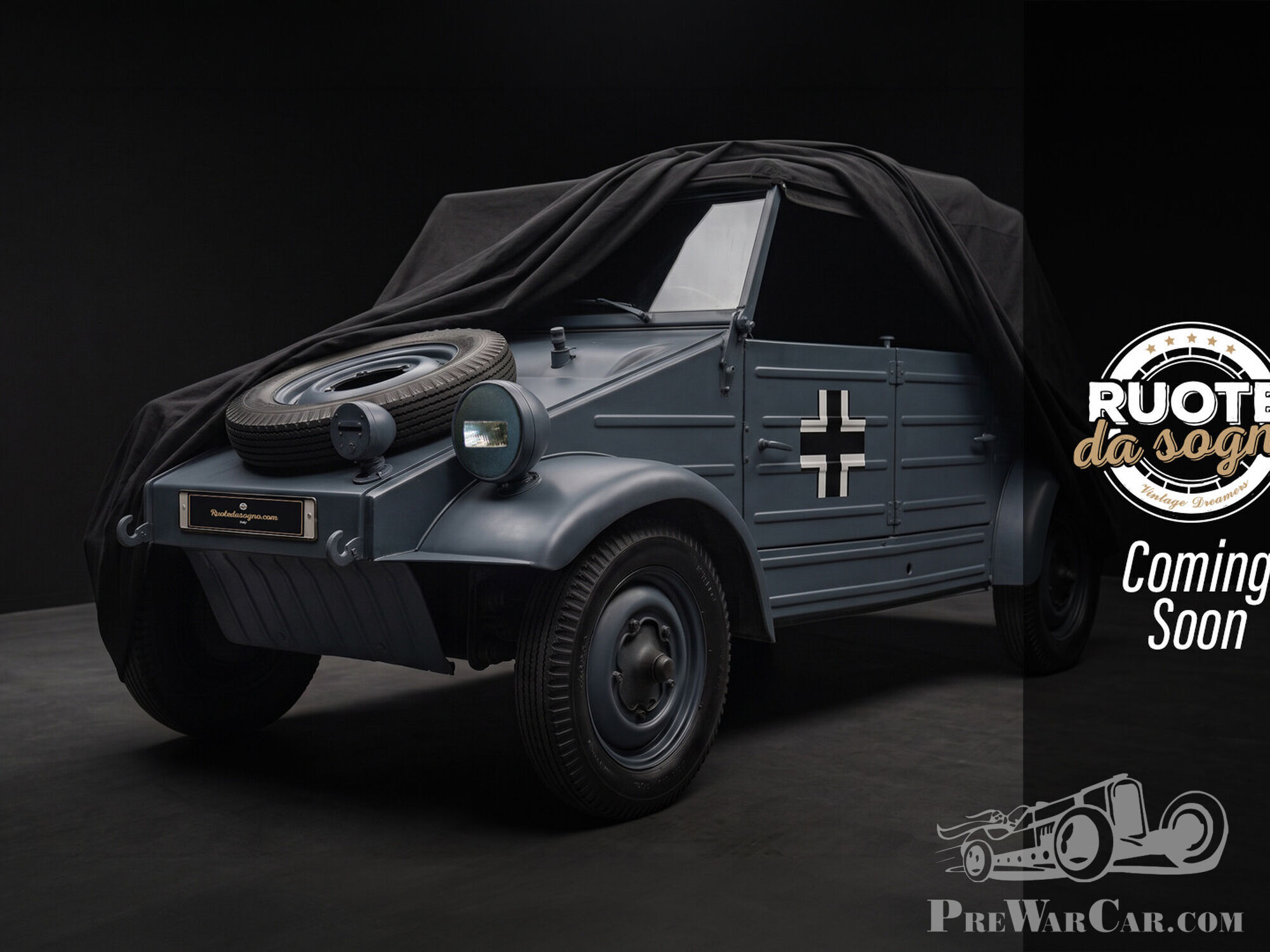
In his Stuttgart workshops, Porsche built three streamlined, Volkswagen-based sports cars with tuned engines for the intended Berlin-Rome Race of 1939, but this event was cancelled as a result of the outbreak of World War 2. They can be regarded as the forerunners of the Porsche sports car which appeared after the war. Until 1939 no Volkswagen cars were available for the public and only prototype Volkswagen cars existed. During the war the Volkswagen car was built in various versions for the armed forces with an increased engine capacity of 1.131cc. The Jeep-type Kübelwagen and an amphibious Volkswagen car, the latter with 4-wheel drive, were produced in large numbers and were the first Volkswagen cars to become widely known. After the war the Volkswagen car factory came under British control and a number of Volkswagen cars were assembled from parts. In 1945 a total of 1.785 Volkswagen cars was produced, this number being increased to 10.020 Volkswagen cars in 1946, all of them delivered to the British army. These private versions Volkswagen cars used the 1.131cc engine, developing 25bhp. In 1949 the Volkswagen car factory was released from British control and returned to German administration.
The Volkswagen car works themselves produced only the saloon version Volkswagen car but several convertible Volkswagen cars were offered by various firms. The four-seater convertible Volkswagen car by Karmann – one of Germany’s oldest coach-building firms – and the Karmann-Ghia two-seater convertible and coupé versions Volkswagen cars became part of the official sales programme. The Volkswagen car became known as a car which made no changes in body style although the technical details of the Volkswagen car were constantly improved. In 1954 the engine of the Volkswagen car was developed to 1.192cc and 30bhp and a further increase in engine output to 34bhp came in 1960. In 1961 the five millionth Volkswagen car was produced. In the same year a new model Volkswagen car was introduced, the Volkswagen 1500 with a 1.493cc 45bhp engine and new body, followed two years later by the 1500S Volkswagen car developing 45bhp. 1965 saw the ‘Beetle’ Volkswagen car with a 1.285cc 40bhp engine and the introduction of another new model the 1600TL Volkswagen car with a 1.584cc 54bhp engine. Since 1966 the Beetle Volkswagen car has also been available with the 1.493cc engine. The 1968 versions Volkswagen car of the 1500 Beetle and 1600 were available with a selective automatic transmission; at the same time 12-volt electrics were standardized on all Volkswagen cars save the basic 1200. In 1969 Volkswagen cars attempted to broaden their range with the Volkswagen 411, still an air-cooled flat-4, but this Volkswagen car was now featuring unitary construction, McPherson strut independent front suspension, and a new type of semi-trailing link independent rear suspension already tried on 1600s. The 1.679cc pushrod engine of the Volkswagen car developed 68bhp, and the Volkswagen car was sold as a 4-door saloon or estate car. The 1970 Volkswagen cars could be had with fuel injection. Another new Volkswagen car was the VW 181, an open jeep-type vehicle available in civilian or military guises. Sales that year were 1.621.197 Volkswagen cars. Prices for the Volkswagen cars ranged from DM4.626 for a 1200 saloon up to DM8.755 for the most expensive 411.
The Volkswagen 411, however, did not prove a great commercial success, and for 1971 Volkswagen cars took advantage of their ownership of the Audi-NSU combine to issue the latter firm’s piston-engined Ri80 derivative, the K70, under their own imprint. This development smacked of heresy at Wolfsburg, for the new Volkswagen car had a vertical 5-bearing water-cooled 4-cylinder ohc engine mounted at the front and driving the front wheels. The Volkswagen car came in 75bhp and 90bhp forms; other differences from the NSU prototype were the 4-speed manual gearbox, a wheelbase 6½in shorter, and a far lower price – DM 9.450 as against the DM17.300 asked for the Ro80. The Volkswagen Beetle was now available with a 60bhp 1.584cc engine and front disc brakes, McPherson strut front suspension being used on this version Volkswagen car. During 1972 the Volkswagen car firm began production of electrically-propelled light vans and Kombis. On 17 February 1972 the Volkswagen Beetle officially broke the Model-T Ford’s record of 15.007.003 units of an individual model. The 1973 Volkswagen Beetles had panoramic windscreens, an came in 1.2-litre, 1.3-litre and 1.6-litre sizes, with disc brakes available on all Volkswagen cars but the 1200. At the same time the 411E Volkswagen car with fuel injection was replaced by an improved 412E. The 1600 series Volkswagen car, the Karmann-Ghia coupés and the K70 were continued, as was the open VW 181.
Volkswagen cars are currently manufactured or assembled in several foreign countries and is one of the biggest car manufacturers in the world.
Source: Georgano, encyclopedia of motorcar; HON
The information is written with the greatest of care. However, if you have any suggested amendments please contact us at office@prewarcar.com


Featured
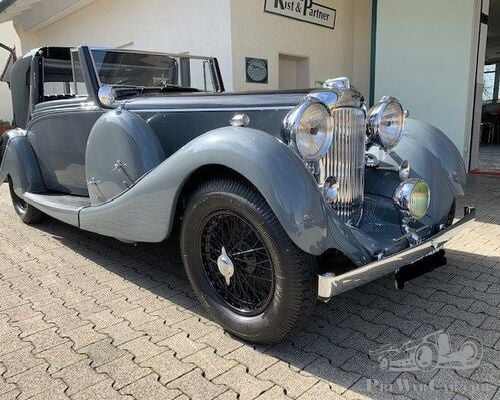
Lagonda LG 45 Coupe de Ville Sedanca by Mayfair
The successor to the M45, the LG45 was built around the same highly capable, competition-proven 4.5-litre Meadows inline-six engine, but featured r..
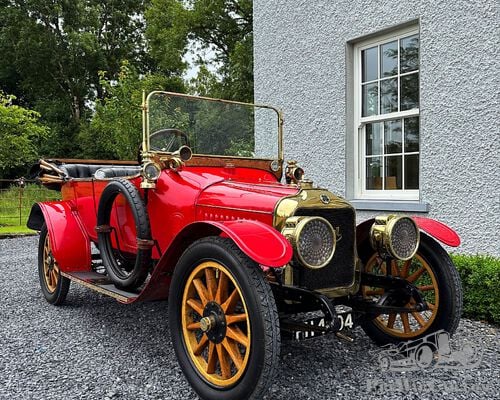
1914 Brasier
1914 Brasier Tourer 9ABrasier were a French manufacturer who were in business from 1901 until 1930, when the company became victim of the gr..
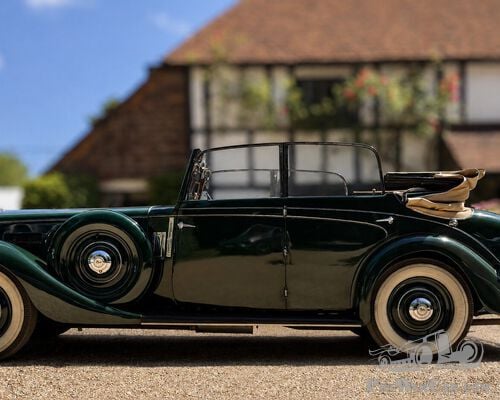
1936 Armstrong Siddeley 20/25 Cabriolet with Tickford coachwork by Salmons & Sons, Newport Pagnell
This exceptionally rare Armstrong Siddeley 20/25 Cabriolet with original Tickford coachwork by Salmons & Sons of Newport Pagnell was first reg..