The global magazine and marketplace for classic car enthusiasts, by enthusiasts.


Filter
Classic Motobloc for sale - Motobloc cars for sale
Change your filters to get results, or show all
Sorry, there are no results with your filters Cars
.
Motobloc
France, 1902 – 1930
(1) G. Carde, Fils et Cie, Bordeaux
(2) SA Motobloc, Bordeaux
The Schaudel of 1898, which became the Motobloc car or Schaudel Motobloc car, featured unit construction of engine and gearbox, the earliest known instance of this form of design and the reason for the name Motobloc. Furthermore, the change-speed gears were actually in the crankcase. The power unit of the Schaudel Motobloc car was a transversely-mounted, inclined twin with chain drive. This odd little voiturette survived until 1904, after which it was perpetuated only as a van chassis, and a conventional vertical 4-cylinder engine – still made in unit with the gearbox – was substituted. This was a highly efficient unit that soon acquired overhead inlet valves, and it was also very smooth, thanks to the positioning of the flywheel between the two parts of cylinders. A mid-mounted flywheel was also used in the 6-cylinder engine of 1909 and on all Motobloc car models throughout the 1920s. Only fours were made up to 1927, ranging from 1.327cc to 3-litres in capacity. Independent front suspension was introduced on the Motobloc car in 1928, and the 1929/ 1930 range consisted of a Motobloc 9CV, 1.453cc four, and two sixes, a 10CV (1.683cc) and a 15CV (3.013cc).
Source: Georgano, encyclopedia of motorcar; TRN
The information is written with the greatest of care. However, if you have any suggested amendments please contact us at office@prewarcar.com


Featured
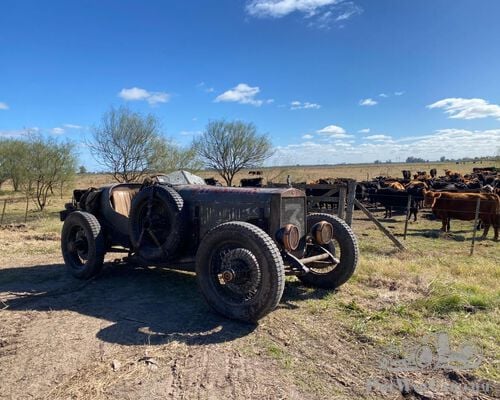
Studebaker 1927 for sale
Authentic race car of the time - Everything is working - All parts of its original mechanics - I have the history of the car - 6 cylinders - Ready ..
1929 Talbot K74 Limousine – Very comprehensive restoration project
For sale – 1929 Talbot K74 Limousine – Very comprehensive restoration projectAsking price: €19,950 A very rare 1929 Talbot K74..
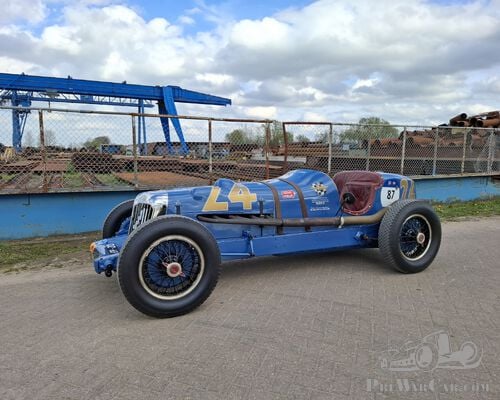
1932 - Graham " Lucenti " Indianapolis
Original participant of the 1932, 1934 and 1935 Indy 500. Best result: finishing 10th overall in the 1934 Indy 500 with driver “Herb” Ardinger...